
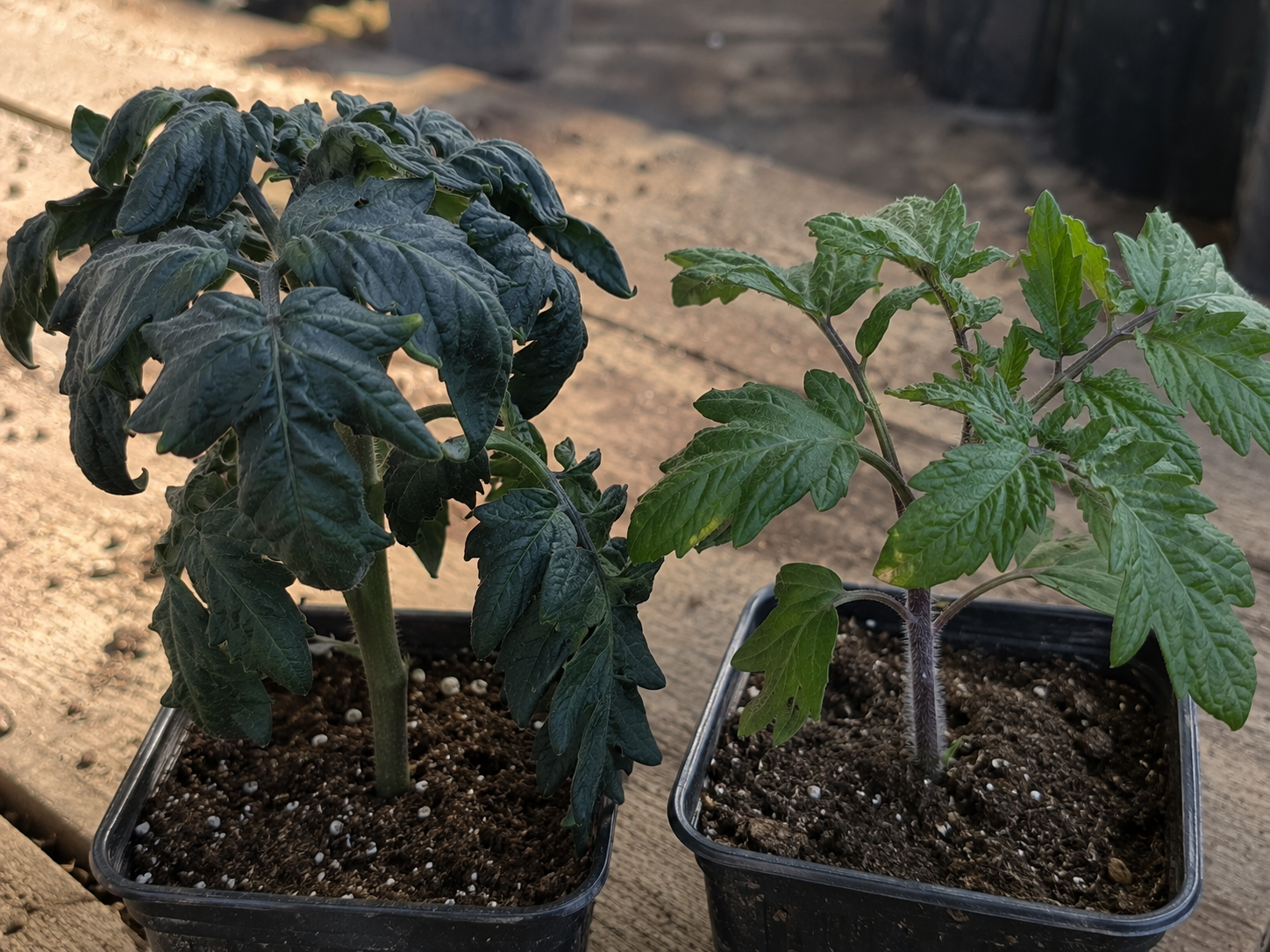
Your tomato plants are huge. Dark green, thick stems, leaves everywhere. They look like they should be producing bushels of tomatoes. Instead, nothing. A few flowers that drop off. Maybe one small fruit that takes forever to ripen.
The problem started before you even planted them. Those perfect-looking seedlings at the nursery were overfed with nitrogen to look good on the shelf. Now the plants are stuck in vegetative mode, growing leaves instead of fruit.
TL;DR: The darkest, thickest tomato seedlings at the store are usually overfed with nitrogen. They look impressive but produce fewer flowers and less fruit. Healthy tomato seedlings have medium-green leaves, a slight purple tint on the stem, and no flowers yet. If you already planted overfed seedlings, you can fix them, but it takes a few specific steps.
Why nurseries overfeed seedlings with nitrogen
It's not malicious. It's economics.
Nurseries need seedlings that sell. What sells is a plant that looks lush, deep green, and bigger than everything next to it on the shelf. Nitrogen makes that happen fast. It's the cheapest way to push rapid leaf growth and that dark, impressive color.
The catch: nitrogen pushes tomato plants into vegetative overdrive. The plant puts all its energy into leaves and stems instead of flowers and fruit. Tomatoes take up less than 30 percent of their seasonal nitrogen before fruit set. The rest is supposed to come later, during fruiting. When a nursery front-loads all that nitrogen into a 6-week-old seedling, it throws off the entire growth cycle.
You bring home a plant that looks ready to produce. In reality, it's weeks away from even trying to flower, and it may drop its first blossoms before they set fruit.
What overfed tomato seedlings look like
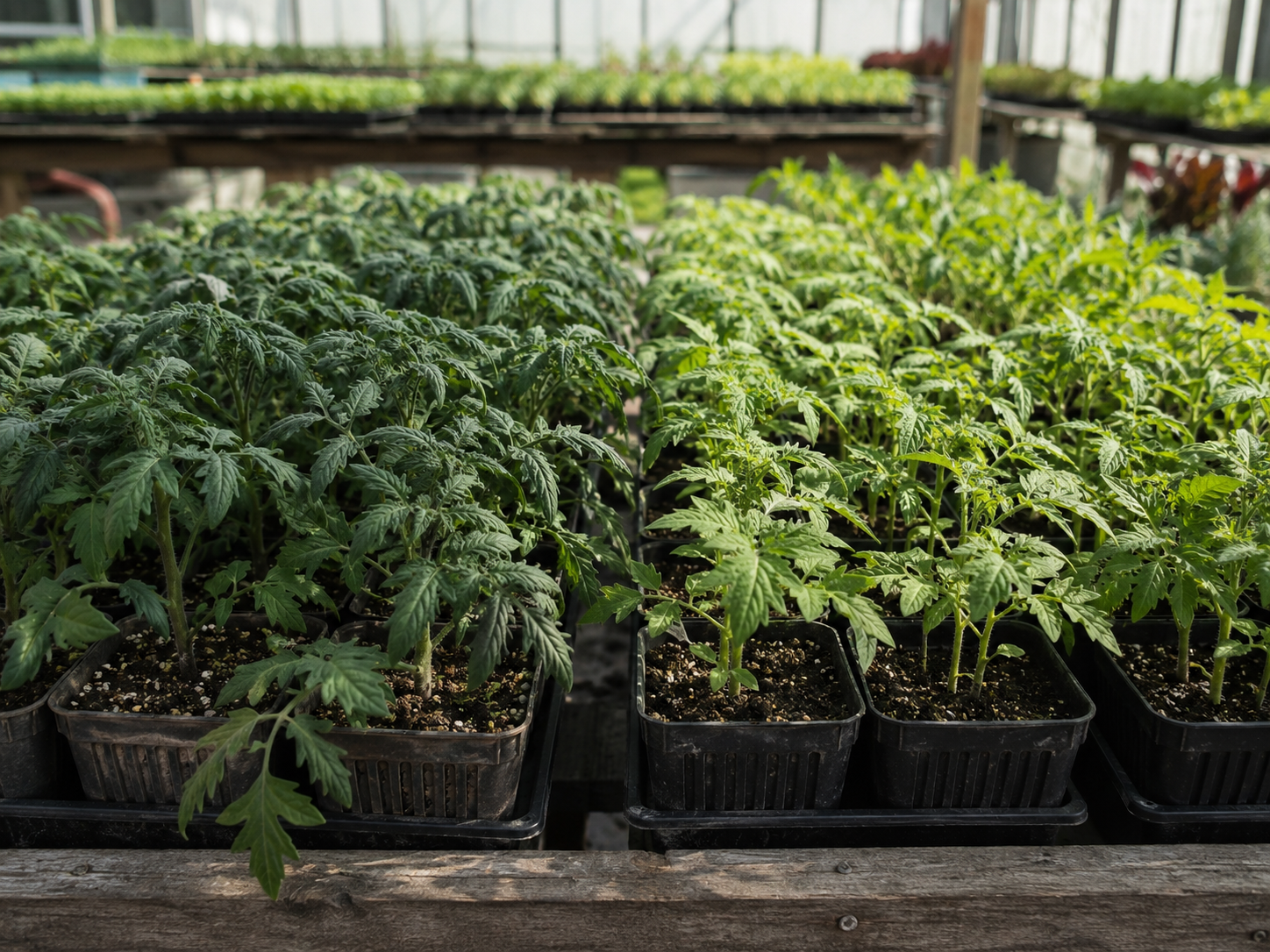
You're probably standing in the garden center right now, trying to pick the "best" one. Here's what you've been taught to look for, and why it's wrong.
What looks good but isn't:
Leaves that are very dark green, almost blue-green. Thick, stiff stems that seem unnaturally sturdy for a young plant. Dense foliage that makes the plant look bushy and full. All signs of nitrogen excess.
As the problem gets worse, leaf tips curl downward into a claw shape, edges roll under, and a waxy sheen appears on the leaf surface. Looks healthy to an untrained eye. Anyone who grows tomatoes regularly sees overfed.
What healthy actually looks like:
A good tomato seedling has medium-green leaves. Not pale, not dark. The stem may have a slight purple tint, which is normal and means the plant is getting the right balance of phosphorus. It's compact but not artificially thick, about as wide as it is tall, roughly 6 to 8 inches, with no flowers or fruit yet.
The leaves should be evenly colored throughout the plant. If lower leaves are yellow and upper leaves are dark green, that's a red flag. The plant was recently hit with a heavy nitrogen dose to green it up for sale.
The 7-point check before you buy
Use this at the nursery. Takes 30 seconds per plant.
1. Leaf color: medium green, not dark. Blue-green or blackish-green means nitrogen overload. Pale yellow-green means underfeeding or root problems. You want a clean, even, medium green.
2. Stem color: slight purple tint is good. A faint purple or reddish cast on the stem and leaf undersides signals healthy phosphorus uptake. Deep purple throughout means phosphorus deficiency. Skip that one.
3. No flowers or fruit. A seedling that's already flowering was stressed into early reproduction. It rushed to make seeds instead of building roots. You'll get a weak plant with poor yields. If there are flowers, pinch them off before transplanting.
4. Compact shape, not leggy. The plant should be roughly as broad as it is tall. Tall and thin means it grew in low light and stretched toward whatever it could find. Those stems are weak and prone to snapping.
5. Clean leaves, no spots. Flip a few leaves over. Look for insects (whiteflies, aphids), black or brown spots (fungal disease), or sticky residue. Any of those, walk away.
6. Roots: white, not circling. Gently tip the plant out of its pot if you can. Healthy roots are white and reach the edges of the soil without wrapping around themselves. Brown, mushy, or tightly wound roots mean the plant is rootbound or rotting.
7. Pot size: 3 to 4 inch pots, not cell packs. Plants in individual pots develop stronger root systems with less transplant shock than seedlings crammed into shared flats.
What happens when you plant overfed seedlings
Say you already bought them. Maybe you didn't know. Maybe there was nothing else at the store. Here's what you're dealing with.
The plant goes into the ground with a nitrogen surplus. For the first few weeks, it grows like crazy. Tall stems, huge leaves, looks fantastic. You think you picked a winner.
Then flowering time comes and nothing happens. A few flowers appear and drop off before setting fruit. The plant keeps growing leaves. Your neighbors' tomatoes are setting fruit while yours is still doing its best impression of a decorative shrub.
This is called "vegetative lock." The plant has so much nitrogen available that it has no hormonal signal to shift from the growth phase to the reproductive phase. It's stuck making leaves because, from its perspective, conditions are too good to stop growing and start reproducing.
How to fix overfed tomato seedlings you already planted
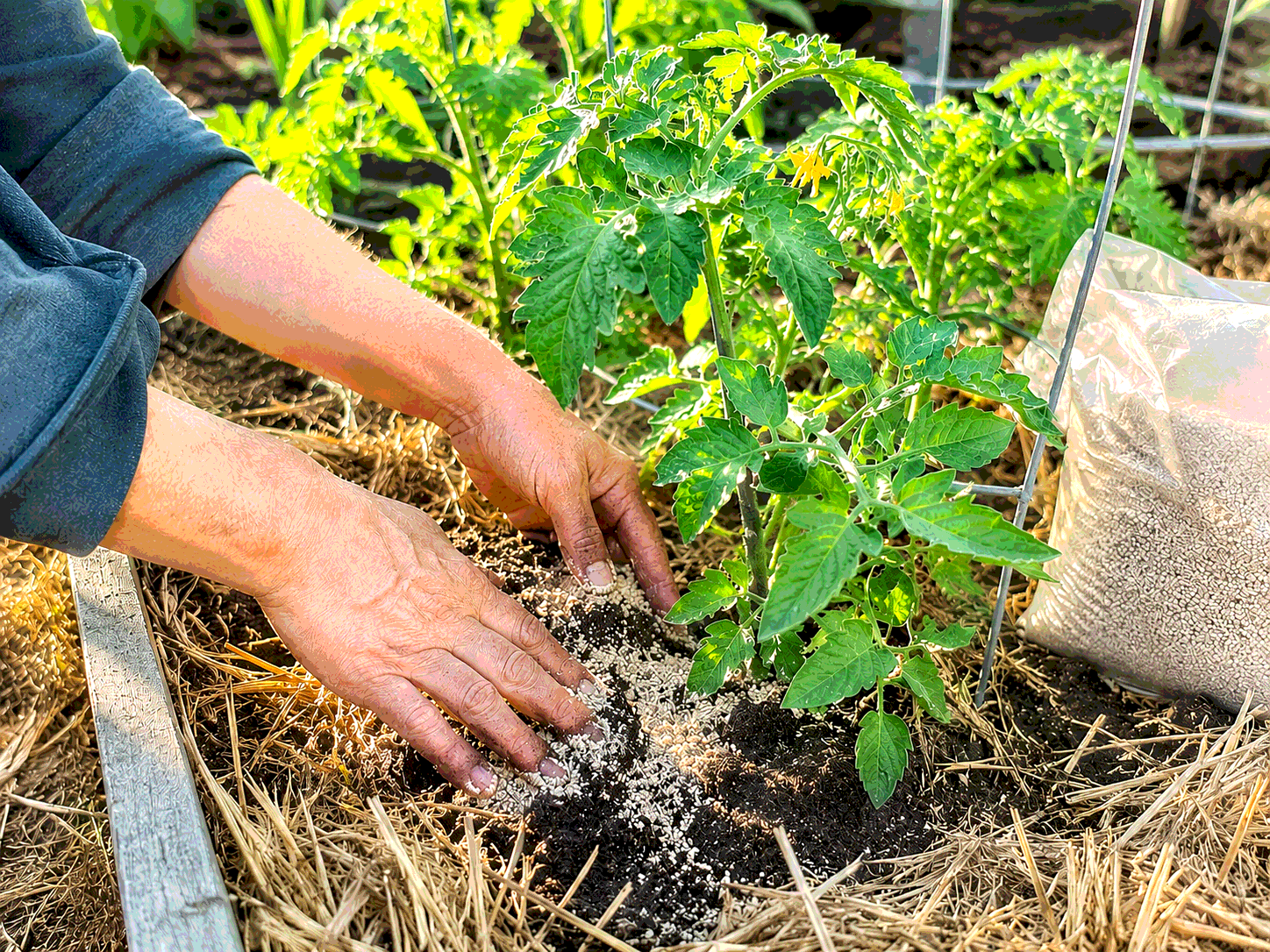
Not a death sentence. You can push the plant toward flowering. Here's the fix, step by step:
Step 1. Stop all nitrogen fertilizer. No balanced fertilizer (10-10-10), no compost tea, no fish emulsion, no manure. Nothing with nitrogen for at least 3 to 4 weeks. The plant needs to burn through the excess already in its system.
Step 2. Add phosphorus. Phosphorus drives flower and fruit production. Work bone meal into the top few inches of soil around the base of each plant, about 2 tablespoons per plant. Water it in well.
Step 3. Add potassium. Potassium supports fruit development and helps the plant transition out of vegetative growth. Wood ash (1 tablespoon per plant, worked into the soil) or a potassium-specific supplement. Don't overdo the ash, too much raises soil pH.
Step 4. Reduce watering slightly. Not to the point of drought stress, but enough to signal the plant that conditions aren't unlimited. A slight reduction triggers a hormonal shift toward reproduction. Water deeply every 5 to 7 days instead of lightly every day.
Step 5. Mulch with straw or sawdust. Both are high in carbon and low in nitrogen. As they break down, soil microbes consume available nitrogen to decompose them, pulling excess nitrogen out of the root zone. Spread a 2 to 3 inch layer around the base of each plant.
Step 6. Prune lower suckers. Remove the first two or three suckers from the bottom of the plant. This reduces the leaf mass the plant is supporting and sends energy toward flowering shoots higher up.
Give it 2 to 3 weeks. You should see flower clusters forming. Once the first fruits set, you can gradually resume a low-nitrogen, high-phosphorus feeding schedule.
What to look for if you're growing your own seedlings
If you start tomatoes from seed, the rules are simpler because you control the inputs.
- Don't fertilize at all until the first true leaves appear.
- Then use a diluted, balanced fertilizer at half strength, once a week.
- Switch to a low-nitrogen, high-phosphorus mix about 2 weeks before transplanting.
The goal is a compact, medium-green plant with a slightly purple-tinged stem. If your seedlings are very dark green, you've been feeding too much nitrogen. Back off and let them grow into it.
Leggy seedlings (tall, thin, reaching for light) are a light problem, not a feeding problem. Move them closer to a window or use a grow light for 14 to 16 hours a day. Brushing the tops gently with your hand a few times a day stimulates thicker stem growth.
FAQ
Why are my tomato plants dark green with no fruit?
Excess nitrogen is the most common cause. When tomato plants get too much nitrogen, they channel all their energy into leaf and stem growth instead of producing flowers and fruit. This is especially common with store-bought seedlings that were heavily fertilized to look impressive at the nursery. Cut nitrogen, add phosphorus and potassium, and the plant will usually start flowering within 2 to 3 weeks.
What color should healthy tomato seedlings be?
Medium green. Not dark, not pale. Leaves should be evenly colored throughout the plant. A slight purple tint on the stem and leaf undersides is actually a good sign, indicating healthy phosphorus levels. Very dark green, blue-green, or blackish-green leaves are a sign of nitrogen excess.
Should I buy tomato seedlings that already have flowers?
No. Seedlings that are already flowering were stressed into early reproduction, which means they skipped building a strong root system. You'll get a weaker plant with lower yields. If you can only find flowering seedlings, pinch off all the flowers before transplanting to let the plant focus on roots first.
How do I fix a tomato plant that's all leaves and no fruit?
Stop all nitrogen fertilizer for 3 to 4 weeks. Add 2 tablespoons of bone meal per plant for phosphorus. Reduce watering slightly to trigger a hormonal shift toward reproduction. Mulch with straw or sawdust to absorb excess soil nitrogen. You should see flowers within 2 to 3 weeks.
Is it better to grow tomatoes from seed or buy seedlings?
Both work, but growing from seed gives you full control over feeding and light. Store-bought seedlings save 6 to 8 weeks of growing time, but you need to check for nitrogen overfeeding before buying. If you do buy seedlings, look for medium-green leaves, compact shape, no flowers, and a slight purple tint on the stem.
Can you tell if a tomato seedling was overfed with nitrogen?
Yes. The signs are very dark green leaves (almost blue-green), unusually thick stems for the plant's age, leaf tips curling downward into a claw shape, and dense bushy foliage. The leaves may also feel thicker and have a waxy sheen. Any combination of these signs means excess nitrogen.
Is there a gardening app that helps track tomato care?
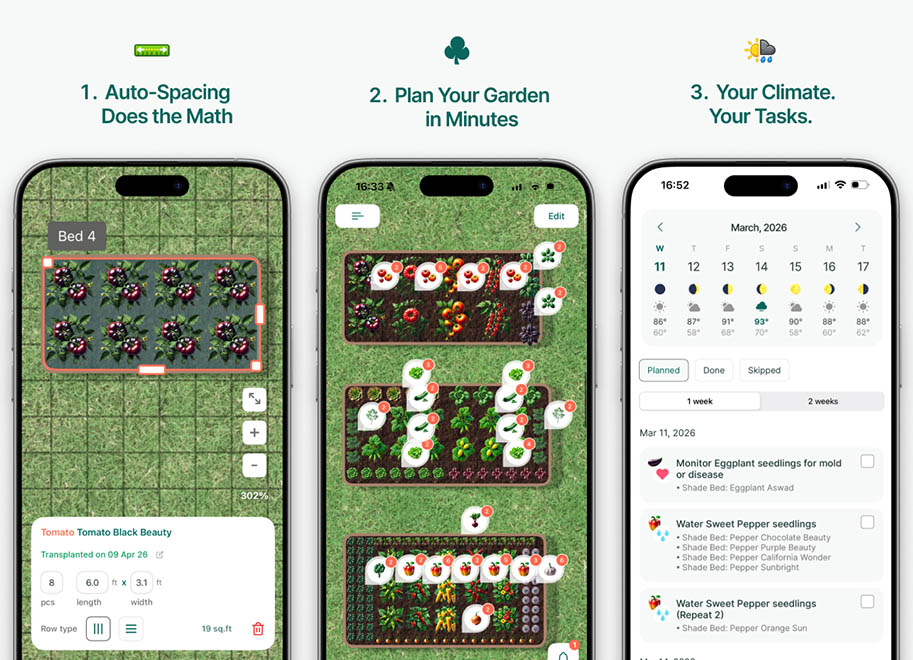
Yes. The easyDacha garden planner app builds a full care calendar for your tomato plants based on your planting date and climate zone — including fertilizer schedules that prevent nitrogen overfeeding.
Download the app at easydacha.com/download.
Download the app at easydacha.com/download.
Get your tomato feeding schedule right from the start
The real fix for nitrogen overfeeding isn't a rescue technique — it's never getting there in the first place. Tomatoes need different nutrients at different stages: more nitrogen early in vegetative growth, then a sharp shift to phosphorus and potassium once flowers appear.
The easyDacha garden planner app tracks those stages automatically. Add tomato plants to your garden map and the app schedules the right fertilizer at the right time — including the shift from growth-phase feeding to fruiting-phase feeding. No guesswork, no accidental overfeeding.
Try easyDacha and get care plan for 7 days. for free →. The gardening app that builds your full care schedule. Cancel anytime.