
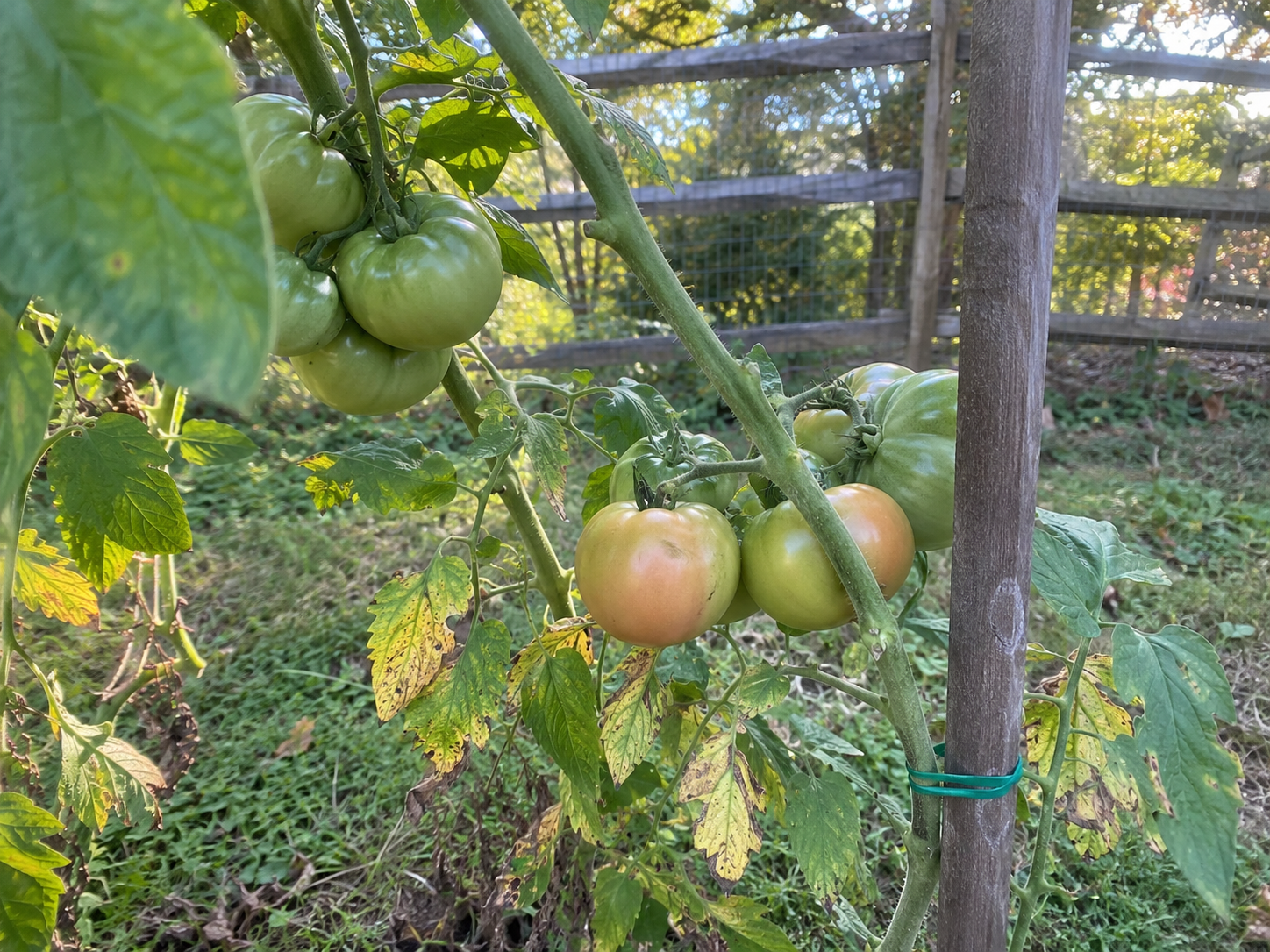
You are staring at a plant loaded with green tomatoes and a few late flowers, and the forecast just said frost. Your first instinct is to wait and hope. That instinct costs people a crop every fall. The good news: whether green tomatoes ripen before frost comes down to two things you can check in five minutes. Once you know your frost date and which fruit is mature, you can save almost every tomato on the vine.
TL;DR: Green tomatoes ripen before frost only if they have reached the mature green stage, meaning full size with a glossy, pale-green skin. Pick those when frost is within two weeks, then ripen them indoors at 65 to 70°F for one to two weeks.
Will green tomatoes ripen before frost? Do the math
Start with your average first frost date, then look at your fruit. That combination gives you a clear yes or no.
Step 1: Find your first frost date. This is the single most important number of your fall garden. In colder areas like USDA zone 3 and zone 4, first frost often lands in mid September. In zone 5 and zone 6 it comes in early to mid October. In zone 7 and warmer, you may have until November.
Step 2: Count the nights. Tomatoes stop ripening once nights drop below 50°F. A light frost near 32°F damages fruit and leaves. So your real deadline is the first night under 50°F, not the frost itself.
Step 3: Check which fruit is mature. Pick up a green tomato. If it is full size, firm, and the skin has turned glossy pale green or greenish white, it has reached the mature green tomato stage and will ripen off the vine. If it is small, hard, and matte dark green, it is immature and will not ripen well.
The decision is simple. If frost is more than two weeks out and nights stay above 50°F, leave mature fruit on the plant a little longer. If frost is closer or nights are already dipping, this is when to pick green tomatoes before frost, so clear every mature green one now.
How to ripen green tomatoes indoors
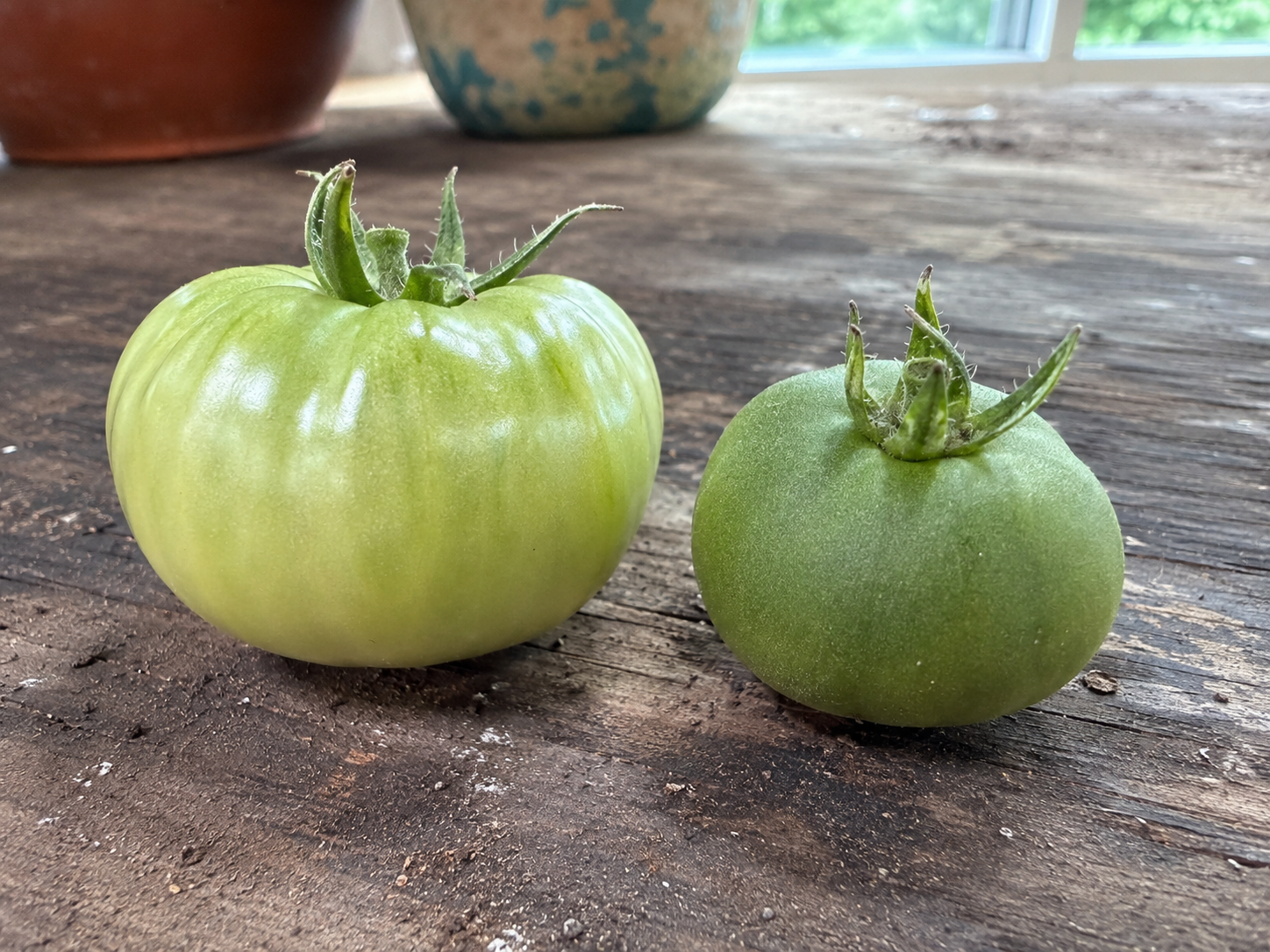
Bring the mature green fruit inside and give it warmth, not sun. Here is how to ripen green tomatoes indoors, step by step.
Pick clean and dry. Harvest mature green tomatoes on a dry day. Snip or twist them off gently. Leave a short stem on if you can. Skip any with cracks, soft spots, or bruises, since damaged fruit rots instead of ripening.
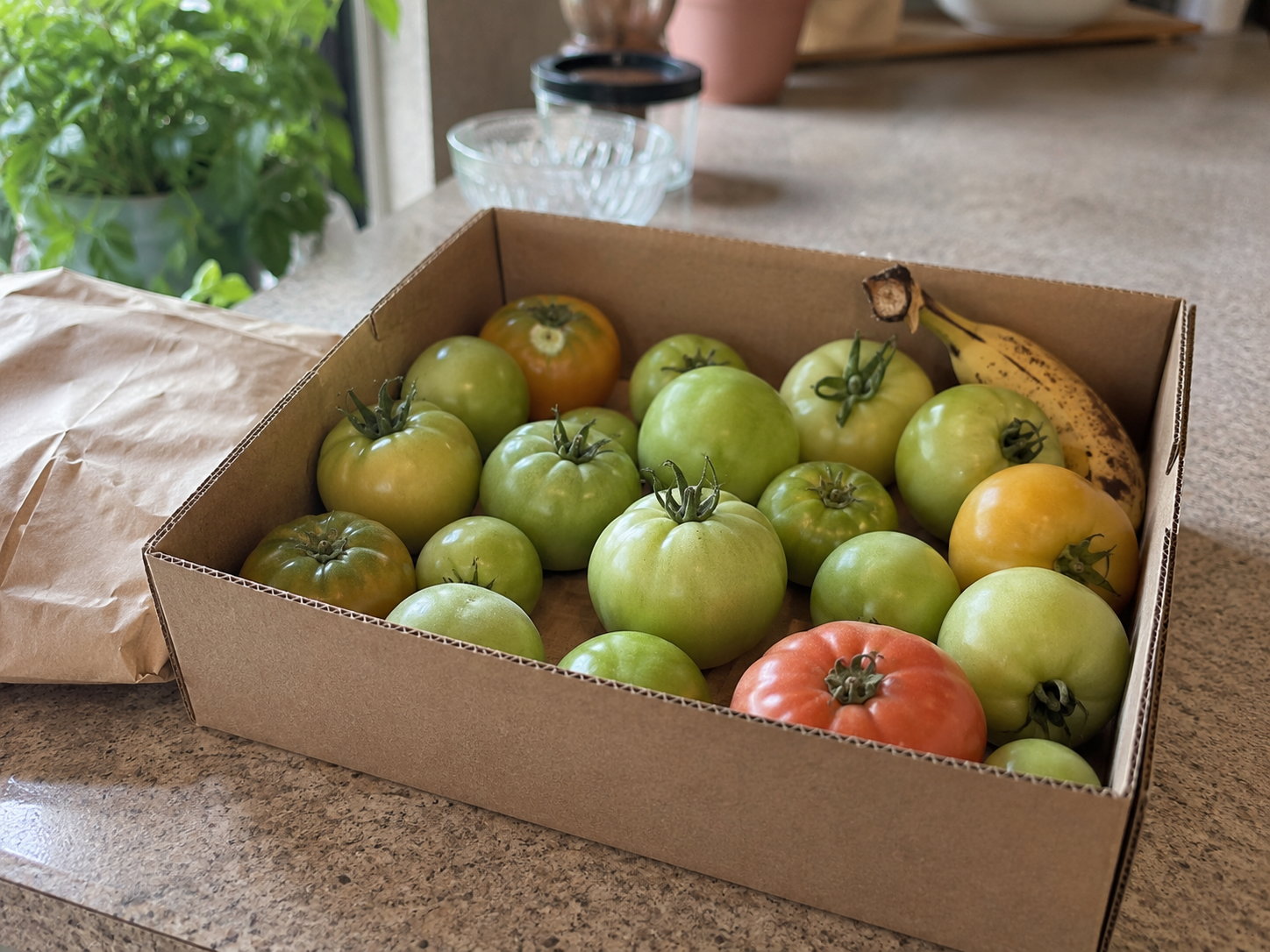
Choose your speed. Ripening green tomatoes in a paper bag is the fastest method. Add a ripe apple or banana, close the bag, and check every few days. That fruit gives off ethylene gas, the natural signal that turns tomatoes red. For a slower, staggered harvest, lay tomatoes in a single layer in a shallow box, not touching, and keep them in a warm, dark spot.
Hold the temperature. Keep ripening tomatoes at 65 to 70°F, out of direct sun. Warmth ripens them, light does not. Never refrigerate a ripening tomato, because cold flattens the flavor and texture for good.
Store the fruit stem-side down. Resting a tomato on its shoulder instead of the stem scar slows moisture loss and helps it keep longer on the counter.
Most mature green tomatoes turn red in one to two weeks this way. That is how to ripen green tomatoes before frost without losing flavor. Wrapped in paper in a cool spot near 55 to 65°F, they ripen more slowly and can hold for several weeks, so you get fresh tomatoes long after the plant is gone.
Timing all of this by hand is the hard part, because your frost date, your last safe pick day, and each plant move differently. easyDacha pins your local first frost date from your ZIP code and builds the countdown into your two-week task list, so you see exactly when to pick and when to cover. If you want a garden planner app that tracks the whole season for your beds, set up your free plan in easyDacha.
Why this works
A tomato does most of its ripening chemistry after it hits full size, not while it is turning red. Once fruit reaches the mature green stage, the seeds are formed and the plant has done its job. From there the fruit can finish on your counter.
Ethylene is the trigger. Ripe apples, bananas, and tomatoes all release this gas, and it tells nearby fruit to soften and change color. A closed paper bag concentrates it, which is why bagged tomatoes ripen faster than loose ones.
Warmth drives the process. The color pigments develop best between 65 and 70°F. Below 50°F they barely move, and cold storage stops ripening and dulls taste. That is the whole reason you bring the fruit indoors instead of gambling on cold nights outside.
Will indoor-ripened tomatoes taste as good?
Yes, mature green tomatoes ripened indoors taste close to vine-ripened, and they often keep longer. Flavor is mostly set by the time a tomato reaches full size, so finishing the color inside does not cost you much.
A few simple rules protect the taste:
- Only ripen mature green fruit. Immature tomatoes never develop real flavor.
- Keep them at room temperature the whole time.
- Never put a ripening tomato in the fridge.
- Eat or cook any that start to soften first.
Green tomatoes that refuse to turn red are not wasted either. They fry, pickle, and make relish beautifully while still firm and green.
What NOT to do
Do not wait for a hard frost to pick. Once fruit freezes it turns mushy and cannot be saved. Pick before the first night under 50°F.
Do not ripen tomatoes on a sunny windowsill. Direct sun heats and softens the skin without helping the inside. It leads to uneven color and rot.
Do not pile fruit in a deep bowl. Tomatoes touching in a heap trap moisture and spread rot from one to the next. Keep them in a single layer.
Do not refrigerate to buy time. Cold permanently kills the flavor and stalls ripening. A cool pantry, not the fridge, is the slow-down spot.
Best for which plants
This mature-green rescue works across the whole tomato family and a few neighbors:
- Slicing and beefsteak tomatoes ripen well off the vine once they reach full size. Big fruit takes the longest, so pick these first.
- Paste and Roma tomatoes ripen reliably indoors and are perfect for sauce, so a green-picked batch is not a loss.
- Cherry and grape tomatoes turn fast and often finish on the counter in days. Pick whole trusses that are starting to blush.
- Peppers and eggplant also hold and finish indoors, though peppers are happiest ripening in a warm, bright room.
Determinate, or bush, tomatoes tend to hold one big flush, so you often clear the whole plant at once. Indeterminate, or vining, types ripen in waves, so you may pick mature fruit over several rounds as frost closes in.
When they rot instead of ripening
If your picked tomatoes keep going soft and brown instead of red, check three things. First, confirm they were mature green when picked, since immature fruit spoils rather than ripens. Second, look for bruises or cracks from harvest, because any break in the skin invites rot. Third, check your temperature and spacing, since fruit that is too warm, too damp, or piled together breaks down fast. Fruit that came in with problems like blossom-end rot will not improve off the vine, so eat or cull those first. For late-season plants still fighting disease, our guide on brown spots on tomato leaves explains what to clear off before you harvest.
FAQ
Will green tomatoes ripen before frost if I leave them on the plant?
Only if you have time. Green tomatoes ripen before frost on the vine when nights stay above 50°F and frost is more than two weeks away. Once nights turn cold, ripening stalls, so pick mature fruit and finish it indoors.
How can I speed up ripening green tomatoes indoors?
Put mature green tomatoes in a closed paper bag with a ripe apple or banana. The ethylene gas from that fruit speeds ripening, and most tomatoes turn red in about one to two weeks at room temperature.
When should I pick green tomatoes before frost?
Pick mature green tomatoes before the first night under 50°F, which usually comes before your first frost date. Full-size, glossy, pale-green fruit is ready to ripen indoors. Small, hard, dark-green fruit will not.
Can I pull the whole plant and hang it?
Yes. Before frost, pull the entire plant, shake off the soil, and hang it upside down in a frost-free garage or basement. The plant pushes its last energy into the fruit, which ripens over the following weeks.
Should I remove flowers and new growth at the end of the season?
Yes. About three to four weeks before frost, snip off the growing tips and any new flowers. The plant then redirects its energy into the fruit it already holds, and those tomatoes size up and color faster.
Is there an app that tells me if my tomatoes will ripen in time?
Yes. easyDacha is a gardening app that calculates your exact first frost date from your ZIP code and puts each pick-and-protect task on a two-week list tied to your beds. It works out the season-end timing so you do not have to guess.