
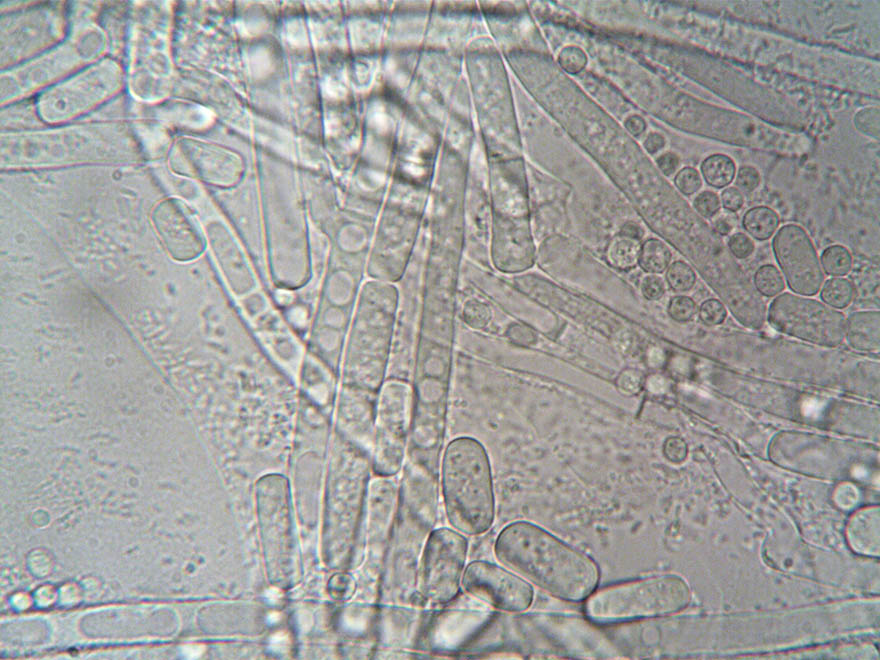
Trichoderma is a beneficial fungus that protects plant roots from soil-borne diseases. It attacks pathogens like Fusarium, Botrytis, and Sclerotinia by parasitizing them and breaking down their cell walls. Commercial Trichoderma products cost $15 to $40 per bottle and run out fast. But Trichoderma is a living organism. Buy a starter culture once, give it something to eat, and it multiplies on its own. Two methods here. The fruit peel method uses citrus or apple peels as a growing substrate. The sawdust method produces a larger batch for composting and soil amendment. Both start with store-bought Trichoderma granules and end with a home-grown supply that costs almost nothing to maintain.
TL;DR: Method 1 (fruit peels): place citrus or apple peels in a sealed container, add Trichoderma starter granules, incubate 14 days at room temperature until white mycelium covers the peels. Apply about 1.75 ounces (50 g) per 2.5 gallons (10 L) of soil. Method 2 (sawdust): mix half a bucket of moist sawdust with ash, superphosphate, urea, and Trichoderma starter. Incubate at room temperature. Use as soil amendment. Drench every 7 to 14 days.
What you need first: the starter
You need a commercial Trichoderma product to begin. You're not creating Trichoderma from scratch. You're multiplying what's in the packet.
What to buy: any product containing live Trichoderma spores. Common options in the US include Trichoderma harzianum and Trichoderma viride strains. Look for granular or powder formulations sold as biological fungicides or soil inoculants. Garden centers, online garden suppliers, and hydroponic stores carry them. Expect to pay $10 to $20 for your first packet. That single purchase is the only one you'll need.
Brands to look for: RootShield, Actinovate, Great White, Real Growers Recharge, or any product listing Trichoderma as an active ingredient. Generic Trichoderma harzianum powder from hydroponic suppliers also works and is often the cheapest option.
Method 1: Fruit peel cultivation (simple, small batch)
The easiest way to grow Trichoderma at home. Fruit peels provide the sugar and cellulose that the fungus feeds on.
You need:
- A clean container with a lid (plastic food container, glass jar, or any sealable vessel)
- Citrus peels (orange, lemon, grapefruit) or apple peels. Enough to loosely fill the container.
- Trichoderma starter granules or powder (a pinch, about 1/4 teaspoon)
Grow it:
- Collect fresh citrus or apple peels. Tear or cut them into pieces roughly 1 to 2 inches (3 to 5 cm) across. Slightly damp is fine. Don't rinse them.
- Place the peels loosely in the container. Fill it about two-thirds full. Don't pack them tight. The fungus needs air circulation between the pieces.
- Sprinkle a small amount of Trichoderma starter over the peels. A pinch is enough. The fungus will multiply from there.
- Close the lid loosely. Leave a small gap or poke a few tiny holes. Trichoderma needs some air exchange but too much airflow dries out the substrate.
- Place the container in a warm spot out of direct sunlight. Room temperature (65°F to 80°F / 18°C to 27°C) is ideal. A kitchen counter, closet shelf, or garage works.
- Wait 10 to 14 days. Don't open the container during this time.
How to tell it's working: after 10 to 14 days, you should see white to greenish-white fuzzy mycelium growing across the surface of the peels. Healthy Trichoderma mycelium looks like white cotton fluff that may develop green or emerald patches as it matures and sporulates. That green color is a good sign. It means the fungus is producing spores.
If you see black, orange, or bright blue-green mold instead, the batch is contaminated. Discard it and start over with clean peels and a fresh container.
Method 2: Sawdust compost (larger batch, soil amendment)
A bigger batch that doubles as a nutrient-rich compost. The Trichoderma digests the cellulose in sawdust and converts it into plant-available organic matter.
You need:
- Half a bucket of moist sawdust (any untreated wood). Moist, not soaking wet. Squeeze a handful. If a few drops of water come out, the moisture is right.
- 1 handful of wood ash (about 1/4 cup)
- 1 tablespoon (15 ml) superphosphate
- 1 teaspoon (5 ml) urea
- 1 teaspoon (5 ml) Trichoderma starter granules or powder
Mix it:
- Pour the moist sawdust into a bucket or large container.
- Add the wood ash, superphosphate, and urea. Mix thoroughly.
- Sprinkle the Trichoderma starter over the surface.
- Mix again so the starter is distributed throughout.
- Cover loosely with a lid, cloth, or plastic wrap with a few holes poked in it.
- Store at room temperature (65°F to 80°F / 18°C to 27°C) in a shaded spot. A garage or shed works well.
- Check weekly. The sawdust should stay moist but not wet. Sprinkle water if it dries out.
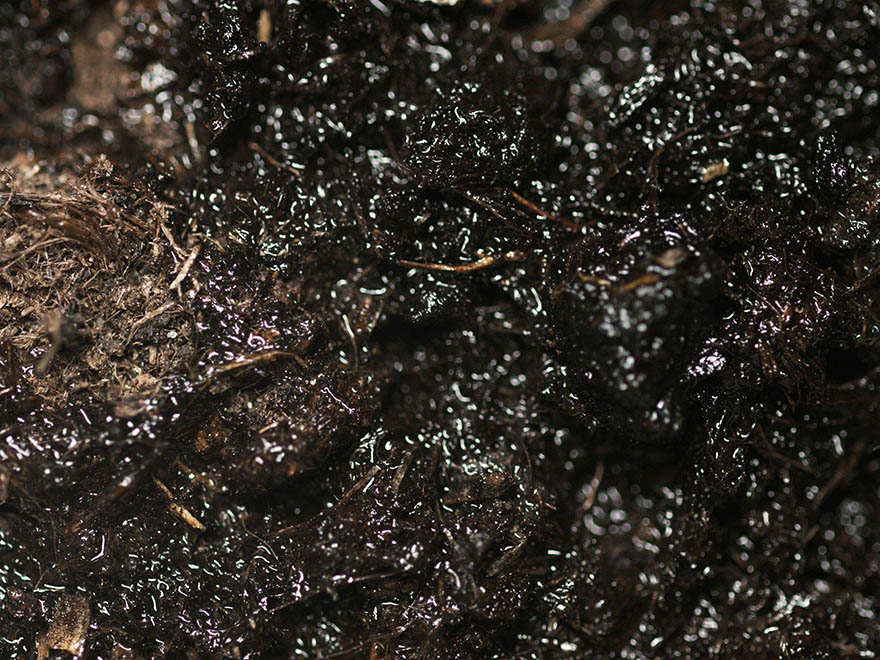
Timeline: the Trichoderma colonizes the sawdust over 3 to 4 weeks. You'll see white mycelium threading through the material. The sawdust will darken and begin to break down as the fungus digests the cellulose.
The finished product is a Trichoderma-rich compost you can mix directly into garden soil, potting mix, or planting holes.
How to apply
Both methods produce a Trichoderma-colonized substrate. Here's how to use it.
Fruit peel method (Method 1):
Use about 1.75 ounces (50 g) of the colonized peel material per 2.5 gallons (10 L) of potting soil or garden bed soil. Break up the peels and mix them into the top few inches of soil. The Trichoderma spores will spread through the root zone.
You can also make a liquid drench. Crumble 1.75 ounces (50 g) of colonized material into 2.5 gallons (10 L) of water. Stir and let sit for 1 hour. Pour the liquid around plant bases as a soil drench.
Sawdust method (Method 2):
Mix the finished Trichoderma compost into soil at planting time. Use a handful per planting hole for transplants. Or spread a thin layer across the bed surface and scratch it into the top 2 inches of soil.
Frequency: drench or apply every 7 to 14 days during the growing season for ongoing disease suppression. Trichoderma populations build over time. Consistent applications are more effective than a single heavy dose.
Why Trichoderma matters for your soil
Trichoderma is a mycoparasite. It attacks other fungi. When it encounters pathogens like Fusarium, Botrytis (gray mold), or Sclerotinia (white mold), it wraps around them. It penetrates their cell walls with enzymes and feeds on the contents. It's biological warfare at the microscopic level.
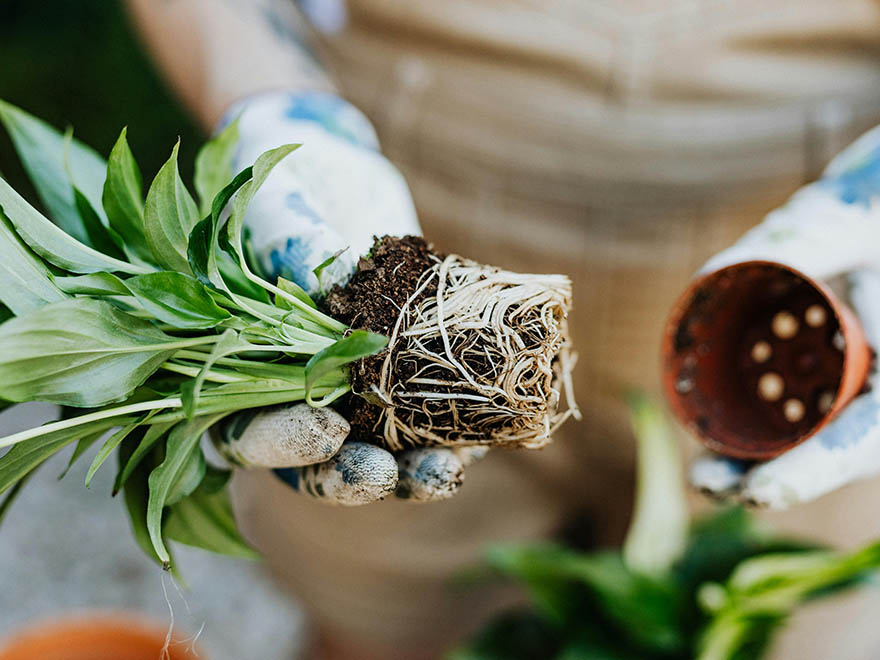
Beyond killing pathogens, Trichoderma improves root health directly. It colonizes the root surface and forms a protective barrier. This colonization stimulates root growth, improves nutrient uptake (especially phosphorus), and triggers the plant's own immune response. Plants with active Trichoderma in their root zone are measurably more resistant to disease.
It also breaks down cellulose. Dead plant material, straw, sawdust, and mulch decompose faster when Trichoderma is active. This accelerates nutrient cycling and builds healthier soil structure over time.
What NOT to do
Don't mix Trichoderma with copper fungicides. Copper kills Trichoderma on contact. If you use copper-based sprays (Bordeaux mix, copper sulfate), apply them at least 7 days apart from any Trichoderma application. This is the most important compatibility rule.
Don't use treated or painted wood sawdust. Pressure-treated lumber, painted wood, and plywood contain chemicals that will kill the fungus and contaminate your soil. Use only untreated wood sawdust.
Don't let the substrate dry out during incubation. Trichoderma needs moisture to grow. If the peels or sawdust dry out completely, the culture dies. Check weekly and sprinkle water if needed.
Don't incubate in direct sunlight. UV light kills fungal spores. Keep the container in a dark or shaded spot at room temperature.
Don't panic at green color. Green patches on the mycelium are Trichoderma spores. That's what you want. Only discard the batch if you see black, orange, or bright blue-green contaminating molds that look distinctly different from the white-to-green Trichoderma growth.
Don't apply to bone-dry soil. Trichoderma needs soil moisture to colonize and grow. Water the bed before or immediately after applying.
How to tell it's working in your garden
You won't see Trichoderma with the naked eye once it's in the soil. But you'll see the results.
Within 2 to 3 weeks of regular application, plants in treated soil tend to show stronger root systems, darker green foliage, and better overall vigor compared to untreated areas.
Disease reduction is the clearest indicator. If you've had recurring problems with root rot, damping off, gray mold, or Fusarium wilt, those problems should decrease noticeably after 3 to 4 applications over a 4 to 6 week period.
Faster decomposition of mulch and organic matter on the soil surface is another sign. Trichoderma breaks down cellulose aggressively. If your straw mulch or leaf litter is disappearing faster than usual, the fungus is active.
Where to buy Trichoderma starter in the US
Most garden centers don't carry standalone Trichoderma products on the shelf. Here's where to find them.
Online: Amazon, Arbico Organics, Greenhouse Megastore, and hydroponic supply stores all carry Trichoderma harzianum powder or granules. Search "Trichoderma harzianum" or "Trichoderma soil inoculant." Prices range from $10 to $20 for a packet that will start dozens of batches.
Local: hydroponic grow shops almost always stock Trichoderma products (Great White, Real Growers Recharge, RootShield). Garden centers may carry them in the biological controls section.
What to look for on the label: the active ingredient should list a Trichoderma species (harzianum, viride, or koningii are most common). Avoid products where Trichoderma is buried in a long list of ingredients at low concentrations. You want it as the primary active.
FAQ
Can I really grow Trichoderma at home from store-bought granules?
Yes. Trichoderma is a living fungus. Give it a food source (fruit peels, sawdust, or any cellulose-rich material), moisture, and room temperature, and it multiplies on its own. One packet of starter granules can produce unlimited batches if you save a small amount of colonized material to inoculate the next batch.
How do I know the Trichoderma culture is healthy?
Healthy Trichoderma mycelium appears as white cotton-like fuzz that may develop green or emerald patches as spores mature. The green color is normal and desirable. Discard the batch only if you see black, bright orange, or distinctly blue-green molds that look different from the white-to-green Trichoderma growth.
Can I use Trichoderma with other fertilizers and sprays?
Yes, with one critical exception: do not mix Trichoderma with copper-based fungicides. Copper kills Trichoderma on contact. Space copper applications at least 7 days from Trichoderma. It's compatible with most organic fertilizers, compost teas, and biological products.
How often should I apply Trichoderma to my garden?
Every 7 to 14 days during the growing season for active disease suppression. For maintenance, once every 2 to 3 weeks is enough. Trichoderma populations build over time in healthy soil with organic matter.
Which diseases does Trichoderma protect against?
Trichoderma suppresses Fusarium wilt, Botrytis (gray mold), Sclerotinia (white mold), Verticillium wilt, root rot, and damping off. It works by parasitizing pathogenic fungi and competing with them for space and resources in the root zone.
How much money does growing Trichoderma at home save?
A commercial Trichoderma product costs $15 to $40 per bottle and lasts a few weeks. A single $10 to $20 packet of starter granules, propagated at home, produces an unlimited supply for the entire season and beyond. The savings add up to $40 or more per year for a typical garden.
Is there a gardening app that schedules biological treatments?

Yes. The easyDacha garden planner app schedules feeding and treatment tasks by growth stage for every plant in your garden. It reminds you when to apply biological treatments like Trichoderma. Download the App at easydacha.com/download.