
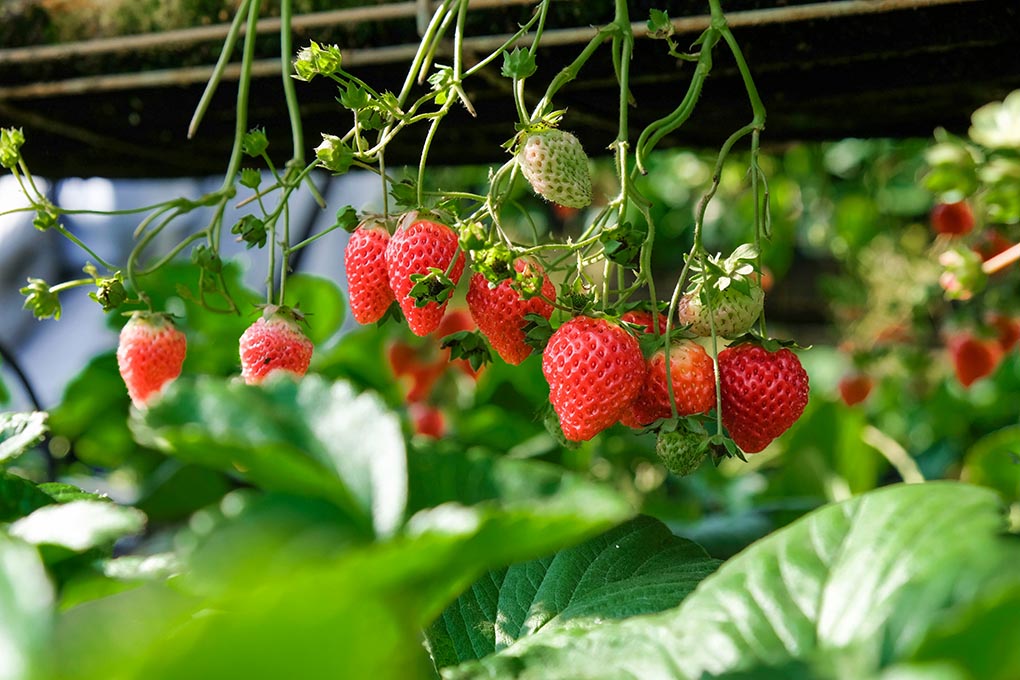
You planted them last spring. Watered them. Waited. You got a handful of small, tart berries — or nothing at all.
It's not the variety. It's not the soil. It's the planting. Strawberries are more sensitive at the moment they go into the ground than at any other point in their life. Get it right and they reward you for years. Get it wrong and you spend the season wondering what happened.
TL;DR: Crown depth, soil pH, timing, and crop rotation matter more than watering and feeding. Most strawberry failures happen before the first flower opens. Seven rules for planting, five common mistakes, and a bonus aspirin trick that boosts disease resistance.
It's not the variety. It's not the soil. It's the planting. Strawberries are more sensitive at the moment they go into the ground than at any other point in their life. Get it right and they reward you for years. Get it wrong and you spend the season wondering what happened.
TL;DR: Crown depth, soil pH, timing, and crop rotation matter more than watering and feeding. Most strawberry failures happen before the first flower opens. Seven rules for planting, five common mistakes, and a bonus aspirin trick that boosts disease resistance.
To plant strawberries successfully:
(1) plant 4–6 weeks before last frost or in late August;
(2) set the crown exactly at soil level (not above, not below);
(3) trim bare roots to 5–6 cm and check the cut shows white inside;
(4) keep soil pH between 5.5 and 6.5;
(5) avoid any bed where roses, raspberries, or blackberries grew in the last 3 years;
(6) pinch every flower for the first month after planting.
(1) plant 4–6 weeks before last frost or in late August;
(2) set the crown exactly at soil level (not above, not below);
(3) trim bare roots to 5–6 cm and check the cut shows white inside;
(4) keep soil pH between 5.5 and 6.5;
(5) avoid any bed where roses, raspberries, or blackberries grew in the last 3 years;
(6) pinch every flower for the first month after planting.
The problem
You planted them last spring. Watered them. Waited. You got a handful of small, tart berries. Or nothing at all. Now you're wondering if you picked the wrong variety, the wrong soil, or just have bad luck with strawberries.
Most failures happen before the first flower opens. Wrong crown depth, wrong location, wrong soil pH, or the wrong planting window. The plant spends the whole season trying to recover instead of producing. Strawberries are more sensitive at the moment they go into the ground than at any other point in their life. Get it right and they reward you for years. Get it wrong and you spend the season wondering what happened.
Here are 7 rules that actually make a difference. Plus 5 mistakes most gardeners don't know they're making.
Part 1: 7 Rules for Planting Strawberries Right
Rule 1: Timing is the foundation
Strawberries have two planting windows. Miss both and you lose a full year.
Spring planting works well for most US gardeners. Plant 4 to 6 weeks before your last frost date, as soon as the soil can be worked. The plants establish before summer heat hits.
Late summer planting (August) is actually preferred by experienced growers in warmer climates. Plants get established in cooler soil, develop strong roots before winter, and produce heavily the following season.
What doesn't work: planting in the heat of July or after the first fall frost. High soil temperatures stress the roots before they're established. Frost on a freshly transplanted crown is almost always fatal.
If you're not sure of your local frost dates, look them up before you buy a single plant. Everything else is calculated from that number.
Rule 2: Crown placement. The single most important detail.
This is where most plants die. Not from pests. Not from disease. From wrong depth at planting.
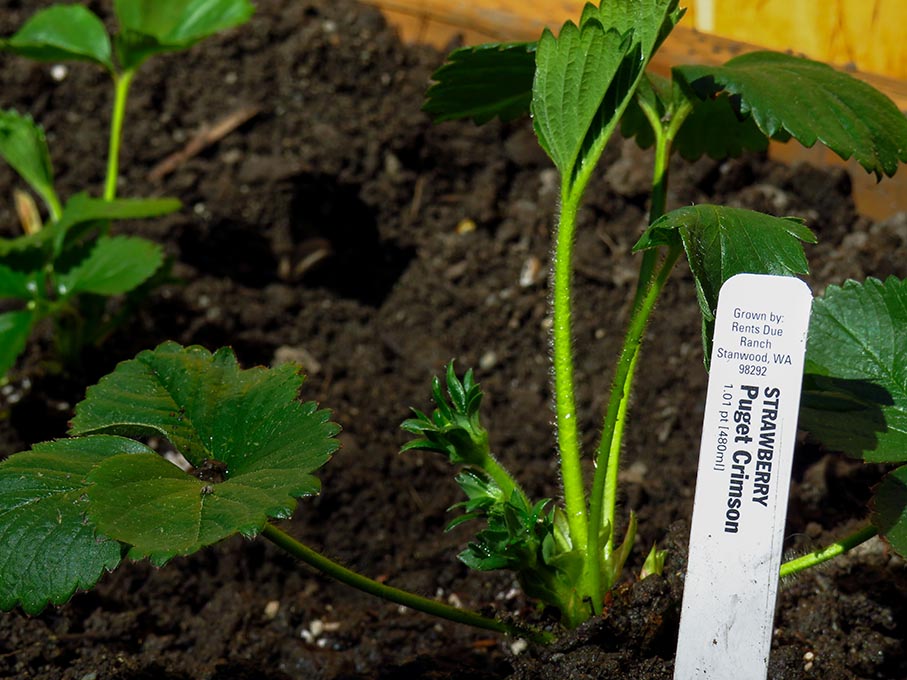
The crown is the thick stem where the leaves meet the roots. It must sit exactly at soil level. Not above it. Not below it.
Too shallow: roots dry out, crown dehydrates, plant dead within days. Too deep: crown rots, plant smothers, dead within two weeks.
At soil level, the crown stays moist, the roots stay buried, and the leaves can reach the light. There is no tolerance here. Take the extra 30 seconds to check.
Rule 3: Trim the roots before planting. And check the cut.
If you're planting bare-root seedlings, the roots are almost always too long. Trim them to 5–6 cm (about 2 inches).
More important than the length: look at the cut. A healthy root shows white inside: firm, bright, alive. That's what you want. If the cut is brown or woody, you're looking at dead tissue. That root will not take up water. The plant will wilt even with adequate moisture.
If the cut is brown, trim further up until you reach white. If there's no white anywhere, don't plant it. That seedling is already gone.
Rule 4: Soil pH must be acidic. And ash is your enemy.
Strawberries need slightly acidic soil: pH 5.5 to 6.5. Not neutral. Not alkaline. Acidic.
Soil pH changes what strawberries actually taste like. The aromatic compounds that give berries their flavor only form properly in acidic conditions. Push the pH above 6.8 and you can grow a perfectly healthy plant with watery, bland fruit. No matter how well you care for it.
Wood ash is alkaline. Many gardeners add it to "enrich" the soil, not realizing what it does to pH. If you use wood ash near strawberries, keep it to a strict maximum of 1 cup per square meter. More than that and you're actively ruining your harvest.
Clay soil is a separate problem. Heavy, compacted soil holds moisture around the crown and roots, which leads to rot. Work 10–20 liters of coarse river sand per square meter into the planting bed before transplanting. You want soil that drains well but still holds some moisture.
Rule 5: Never plant where roses, raspberries, or blackberries grew
Strawberries belong to the Rosaceae family. So do roses, raspberries, and blackberries. They all share the same soil-borne pathogens. Verticillium wilt is the most destructive.
Verticillium can survive in soil for years. You can't see it, test for it without a lab, or fix it once it's there. The only protection is rotation.
Don't plant strawberries where any Rosaceae family member grew in the last 3 years. Full stop.
For best results, go into a bed that previously grew cabbage, cucumbers, or legumes. These crops get heavy organic fertilization the year before, leaving the soil rich and the pathogen load low. It's the easiest head start you can give yourself.
Rule 6: Sacrifice the first flowers. It's not optional.
This one feels wrong. You planted the seedlings. The first white flowers appear. You're tempted to let them be.
Don't.
A newly planted strawberry can either build a root system or produce fruit. Not both at once. Let it fruit in the first season and you get small, underwhelming berries, plus a plant that stays weak for the rest of the year.
Pinch every flower for the first month after planting. That forces the plant to put all its energy into root development. By summer's end, you'll have a strong, established crown that produces heavily the following year.
For remontant (everbearing) varieties: pinch for the first 4 weeks only, then let the plant flower freely. For traditional June-bearing varieties: pinch flowers for the entire first season. Yes, all of them.
Rule 7: Quarantine new plants before they touch your soil
Greenhouse-grown seedlings carry hidden problems. Whiteflies, aphids, thrips. They hitchhike in on plants that look completely healthy. Once they're in your garden, they spread fast.
Before any new plant goes into the ground, give it a 15-minute root soak in a solution of systemic insecticide and fungicide. Submerge the bare roots completely.
Is it safe? Yes. Systemic treatments at this stage decompose fully within 30 days, long before your berries are anywhere near harvest. It's a small thing that prevents a much larger problem.
Part 2: 5 Mistakes That Kill Your Strawberry Harvest
Mistake 1: Burying the crown
It's the #1 reason transplants fail. When in doubt, go shallower rather than deeper. A crown that's slightly exposed will adapt. A buried crown will rot. Every time.
Mistake 2: Using too much wood ash
Gardeners add ash to boost potassium. The result: soil pH rises, aromatic compounds drop, berries taste like water. Keep ash to 1 cup per square meter maximum, or skip it entirely and use a proper potassium supplement.
Mistake 3: Skipping crop rotation
"I've always grown strawberries in this spot and they've always been fine."
Until they're not. Verticillium wilt builds up silently over years. By the time you notice the problem, the soil is already compromised. A 3-year rotation costs nothing and prevents a loss you can't reverse.
Mistake 4: Letting first-year plants fruit
The plant has flowers, so why not let them produce? Because a plant that fruits in year one arrives at year two exhausted. The roots are underdeveloped, the crown is weak, and the yield in subsequent seasons is permanently lower than it could have been. One season of patience pays off for years.
Mistake 5: Not checking for nematodes
Strawberry nematodes (Ditylenchus dipsaci) are microscopic and invisible until serious damage is done. If your plants show stunted, distorted new growth with thickened, twisted leaves, nematodes are a likely cause.
Apply a nematicide at the manufacturer's recommended dilution: about 100 ml of solution per plant. The better move is prevention: buy certified disease-free plants and quarantine every new arrival before it touches your soil.
Bonus: The Aspirin Trick
This one sounds like a gardening myth. It isn't.
Aspirin (acetylsalicylic acid) breaks down into salicylic acid in soil: a plant hormone that activates the strawberry's immune system. Bury one aspirin tablet near the roots of each plant at a depth of 5–7 cm in early spring, just as the first blooms appear. For plants 4 years or older, use two tablets.
The plants handle disease and late-spring temperature swings better. It costs almost nothing and the science backs it up. (Source: Raskin, I. "Role of Salicylic Acid in Plants," Annual Review of Plant Physiology, 1992.)
Bonus: The Transplant Drench
Strawberry roots hit their most vulnerable moment right after transplanting. The plant is stressed, the root system is trimmed and disturbed, and the next 48 hours determine whether it recovers quickly or spends two weeks in shock.
Two things speed up establishment significantly.
Beneficial bacteria. Mycorrhizal fungi and beneficial bacteria form a symbiotic relationship with the roots, effectively extending the root system underground. They also suppress some of the soil pathogens that attack stressed transplants. Dust the roots before planting, or water them in immediately after.
Liquid humic and fulvic acid with organic kelp. Humic acid improves soil structure and directly stimulates root development. Fulvic acid is a smaller molecule that penetrates plant tissue and makes minerals more bioavailable, so the roots start taking up nutrients faster. Organic kelp provides natural plant hormones (cytokinins and auxins) that promote cell division and root growth. Together, they give a stressed transplant the best possible conditions to establish quickly.
Apply both as a root drench right after planting, following the dilution instructions on the label. It takes five minutes and cuts transplant shock noticeably.
The Bottom Line
Most strawberry failures happen before the first flower opens. Wrong depth, wrong location, wrong soil pH, or wrong timing at planting. The plant spends the whole season trying to recover instead of producing.
Get the planting right and strawberries basically take care of themselves. They produce for 4 to 5 years. Most food crops don't give you that.
Your strawberry care plan, built for your garden
These rules are the starting point. But "4–6 weeks before frost" is a different date in Minnesota than in Georgia, and your soil pH might need work before you plant a single runner. easyDacha takes your zip code, your soil type, and the variety you're growing. It turns these rules into a dated, notification-based schedule you just follow.
Frequently Asked Questions
How deep should I plant strawberry crowns? The crown (where the leaves meet the roots) must sit exactly at soil level. Burying it causes rot; planting it too high dries it out. Both kill the plant within 2 weeks.
When is the best time to plant strawberries? Two windows work: spring (4–6 weeks before your last frost date) or late summer (August). Avoid July heat and fall frost. Your last frost date determines the exact timing for your zone.
Why do my strawberry plants flower but produce no fruit? If you planted them this year, that's the correct result. You should be pinching those flowers. First-year fruiting weakens the root system. Pinch all flowers for the first month (everbearing) or the entire first season (June-bearing).
What soil pH do strawberries need? pH 5.5 to 6.5. Anything above 6.8 reduces aromatic compound production. Berries become watery and bland. Wood ash raises pH; avoid or limit to 1 cup per square meter.
Can I plant strawberries where I had roses last year? No. Roses and strawberries share the Rosaceae family and the same soil pathogens, including Verticillium wilt. Wait at least 3 years, or plant in a new bed that previously grew cabbage, cucumbers, or legumes.
How long do strawberry plants produce? With proper care, 4–5 years per plant. Year two is typically the peak. After year 4, replace crowns with runners to maintain productivity.