
Colorado, November 2025 to October 2026
What gardeners struggled with this year
When each problem hurts, what gardeners tell each other, and where that advice meets Colorado conditions.
Based on a year of online gardener conversations. Figures are relative measures, not counts.
In short
What the year's gardening conversations add up to, November 2025 to October 2026.
When each problem hurts
Read each row from left to right: it shows how one problem's conversations were spread over the year, so every row adds up to 100%. The top row does the same for all garden conversations. About 3 in ten garden conversations name one of these problems; the rest are plans, plant choices and show-and-tell. Over the whole year, lawns drew by far the most talk, followed by everyday watering, late frost and planting dates, and watering rules.
- Peak month for that row
- Lighter to darker: smaller to bigger share of that row's year
- HighHow much talk, compared with the most discussed topic, lawns
- Few conversationsFewer than 20 conversations: read the months loosely
| Problem | Nov | Dec | Jan | Feb | Mar | Apr | May | Jun | Jul | Aug | Sep | Oct | How much talk |
|---|---|---|---|---|---|---|---|---|---|---|---|---|---|
| All garden conversationsHow the year's garden conversations spread over the months. | 2% | 1% | 2% | 3% | 9% | 10% | 16% | 15% | 14% | 12% | 8% | 6% | |
| Watering rules and restrictionsConfusion about watering rules in a dry year. Worry about losing the season. | 2% | 4% | 28% | 17% | 11% | 6% | 11% | 11% | 9% | 2% | Medium | ||
| Clay, raised-bed soil, compost qualityHeavy clay and poor drainage. Doubts about what is in bagged compost. | 6% | 3% | 19% | 14% | 19% | 19% | 8% | 8% | 3% | Lower | |||
| LawnsBrowning or dead lawns, dog-friendly grass, what to replace a lawn with. | 2% | 1% | 1% | 4% | 11% | 10% | 19% | 11% | 10% | 17% | 9% | 5% | Very high |
| Late frost and planting datesA warm spell, then a freeze after planting. Unsure when it is safe to plant. | 4% | 1% | 3% | 12% | 18% | 24% | 3% | 15% | 9% | 6% | 6% | Medium | |
| Watering: how much and how oftenUnsure how much or how often to water. Raised beds that drain straight through. | 3% | 5% | 5% | 14% | 14% | 13% | 17% | 13% | 3% | 8% | 6% | Medium | |
| Weeds and bindweedThistle, bindweed and weeds that return in beds that were just cleared. | 10% | 18% | 15% | 15% | 23% | 8% | 5% | 5% | Lower | ||||
| Heat and sun scaldSeedlings yellowing and crisping. Containers drying out within hours. | 5% | 5% | 8% | 14% | 32% | 22% | 5% | 8% | Lower | ||||
| Japanese beetlesBeetles on roses and fruit in midsummer, and what actually works. | 4% | 8% | 4% | 23% | 35% | 23% | 4% | Lower | |||||
| Tomato fruit and disease problemsFlowers but no fruit, cracked skins, plants that look virus-hit. | 4% | 4% | 4% | 8% | 8% | 24% | 24% | 12% | 12% | Lower | |||
| Rabbits, squirrels, other wildlifeRabbits, squirrels and raccoons digging up or eating the crop. | 5% | 10% | 10% | 14% | 5% | 24% | 5% | 10% | 19% | Lower | |||
| HailTorn leaves and flattened plants after a storm. Whether to replant. | 6% | 47% | 12% | 24% | 12% | Few conversations | |||||||
| AphidsAphids on greens, roses and broccoli. | 17% | 50% | 33% | Few conversations | |||||||||
| Pill bugsPill bugs eating seedlings and low fruit. | 57% | 14% | 14% | 14% | Few conversations |
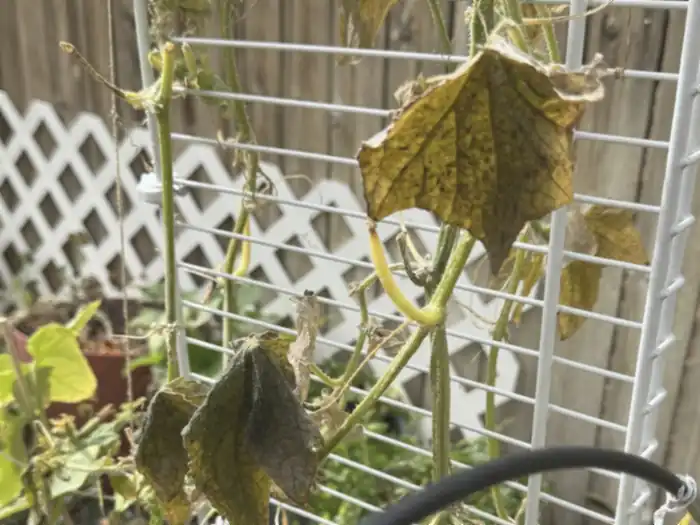
Products gardeners talk about
What comes up when gardeners advise each other, and how it is received.
| Product or tool | How much talk | How gardeners see it |
|---|---|---|
| Mulch and wood chips | Very high | Recommended |
| Compost | High | Recommended |
| Drip irrigation | High | Recommended |
| Netting, cages, hardware cloth | High | Recommended |
| Bagged soil and topsoil | Medium | Opinions split |
| Landscape fabric and weed barrier | Lower | Advised against |
| Shade cloth | Lower | Recommended |
| Neem oil | Lower | Opinions split |
| Row covers and frost cloth | Lower | Recommended |
| Soapy water and insecticidal soap | Lower | Recommended |
| Milky spore | Lower | Mostly recommended |
Where gardeners' attention goes
The share of all conversations whose title is about each topic. About 28% of titles name no single topic (for example "Help!" or "What happened here?"), so the shares add up to less than 100%.
| Topic | Share of gardening conversations | How lively |
|---|---|---|
| Vegetables and herbs | 11% | Quieter |
| Lawn and lawn alternatives | 10% | About average |
| Flowers and perennials | 9% | Quieter |
| Trees and shrubs | 8% | Quieter |
| Pests, weeds and wildlife | 6% | About average |
| Watering and irrigation | 5% | Livelier than average |
| Soil, compost and mulch | 4% | Quieter |
| Native plants and xeriscape | 4% | About average |
| Containers, pots and tools | 3% | Livelier than average |
| Fruit trees and berries | 3% | Quieter |
| Where to buy plants, soil, mulch | 3% | Livelier than average |
| Birds, bees and pollinators | 2% | About average |
| Frost, cold and planting dates | 2% | Livelier than average |
| Houseplants | 1% | Livelier than average |
Which vegetables people ask about
The ten crops named most often in vegetable questions. A question can name more than one crop.
| Crop | Share of vegetable questions |
|---|---|
| Tomatoes | 39% |
| Peppers | 17% |
| Squash and zucchini | 14% |
| Lettuce and salad greens | 12% |
| Garlic and onions | 9% |
| Cucumbers | 8% |
| Potatoes | 6% |
| Beans | 5% |
| Peas | 5% |
| Carrots, beets, radishes | 5% |
New and experienced gardeners
Only about 4% of conversations say how experienced the gardener is. Among those that do, new gardeners far outnumber experienced ones. The group is small, so read these as proportions, not precise figures.
| How gardeners describe themselves | Share of those who say |
|---|---|
| New to gardening | 79% |
| New to Colorado, gardened elsewhere | 14% |
| Experienced | 7% |
| What new gardeners ask about | Share of their conversations |
|---|---|
| Soil, beds and compost | 32% |
| Watering | 21% |
| Weeds | 19% |
| Lawn | 20% |
What gardeners shop for and plan, month by month
Not problems this time: purchases and projects. Each chart shows the share of that month's conversations that mention the topic. The tallest bar is its peak. November to February have far fewer conversations, so their bars swing more.
How gardeners talk
Every conversation is counted once, so the three groups (questions, sharing, and news, events and swaps) add up to 100%.
- 45%Asking a question
- 49%Sharing photos, wins and observations
- 6%News, events and swaps
What the questions are about. All questions together (45% of conversations) make 100%.
Ideas for your own discussion
Questions this report may help your team ask. They are starting points, not recommendations.
Knowing which months bring frost, heat, weeds or pests, and that new gardeners ask most about soil, watering and weeds, could the same calendar shape what you teach and when?
Draws on: When each problem hurts; New and experienced gardenersTomatoes or peppers come up in almost half of all vegetable questions. Would a season-long tomato and pepper series, or matching seed and start offers, meet people where most of their questions are?
Draws on: Which vegetables people ask aboutGardeners plant around Mother's Day; CSU's tomato guide points to late May, once soil is above 55 F. Is there a moment in May to explain the difference, before the frost questions peak?
Draws on: Tips gardeners share; When each problem hurtsGypsum for clay, store-bought ladybugs, milky spore and 40-foot bindweed roots are all repeated as fact. Would a one-page list of local myths and what CSU says help at a counter, a class or in a newsletter?
Draws on: Tips gardeners share, compared with CSU ExtensionGardeners mostly learn from each other and rarely name CSU Extension. When CSU material was shared directly, such as its tree list or a question-and-answer session, it usually drew more discussion than a typical conversation. How could reliable local guidance join those conversations?
Draws on: Tips gardeners shareAbout a quarter of loss conversations are about plants put in recently that never took hold. easyDacha sends gardeners step-by-step care tips for each new planting through its first year, timed to Colorado weather. Would giving your customers that plan, through a partnership with easyDacha, help more of what you sell survive?
Draws on: Plants lost or dyingLawns are the most discussed topic and the largest share of plant losses, and talk of replacing them peaks in March and again in October. Could rebates, workshops and plant offers line up with those two windows?
Draws on: When each problem hurts; What gardeners shop for and planNative plants come up in about one conversation in twelve, in every month of the year, winter included. Is there a reason to promote them only in spring?
Draws on: What gardeners shop for and planSeed starting peaks in March, bulbs and garlic in January, mulch and compost in October and November. Could that pattern, and the products gardeners already recommend, guide the front table and the next newsletter?
Draws on: What gardeners shop for and plan; Products gardeners talk aboutGardeners recommend compost but question what is in commercial compost and topsoil: herbicide carryover, PFAS, clay fill. What would help them trust what they buy?
Draws on: Tips gardeners share; Products gardeners talk aboutFlowers, trees, lawn alternatives and native plants together take more conversation than food gardening. What do you offer these gardeners?
Draws on: Where gardeners' attention goesNovember to February bring only about one conversation in ten, but in those months gardeners talk more than usual about bulbs and garlic, trees and shrubs, houseplants and bringing plants indoors, and about groups and classes. The most discussed winter advice, watering trees and lawns through a dry winter, matches CSU. Could winter be the time for planning workshops and tree clinics, ahead of the March rush?
Draws on: When each problem hurts; What gardeners shop for and planGardeners are already planning beds and talking about seed starting in January and February, weeks before the first problems show up in March. Would a winter offer or class on seed starting, soil and bed prep reach them while they are still deciding?
Draws on: What gardeners shop for and plan; New and experienced gardeners2026 was dry. Everyday watering questions and the rules on when and how much to water were among the most discussed problems. If dry seasons become more common, how would those rows change for the people you serve?
Draws on: When each problem hurts; Plants lost or dying