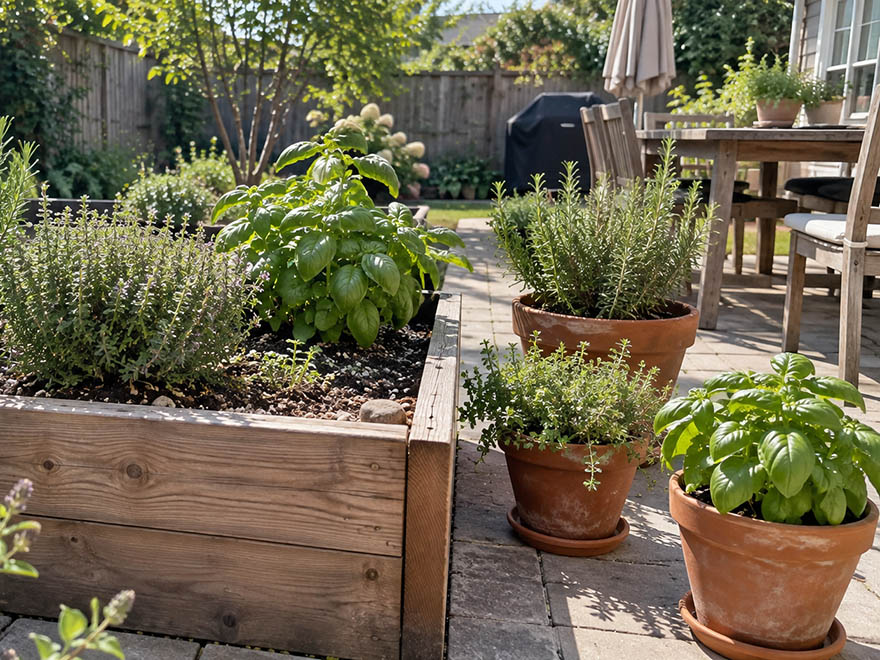
You planted herbs in your richest, blackest soil and they grew huge but tasted like nothing. That is the mistake almost everyone makes. Herbs are not vegetables, and they do not want a heavy feed. The best soil for an herb garden is lean and fast-draining, and it makes your basil and thyme taste stronger, not weaker.
TL;DR: The best soil for an herb garden is loose, well-drained, and lean, with a pH around 6.0 to 7.0. Rich soil grows lush plants with weak flavor, so hold back on the compost and skip heavy fertilizer.
The best soil for an herb garden, in one recipe
Aim for drainage first and richness last. Most herbs come from dry, rocky places, so they thrive in soil that never stays soggy.
For a raised bed or in-ground herb patch:
- Loose garden soil as the base
- A light amount of compost for structure, not a heavy dose
- Coarse sand or fine gravel mixed in if your soil holds water
For herbs in pots:
- 1 part quality potting mix
- 1 part coarse sand or perlite for drainage
- A small handful of compost per pot, no more
Mix it until the blend feels light and crumbly, and drains fast when you water. That fast drainage is the whole point. Soggy roots are the top killer of potted herbs.
Why lean soil grows better-tasting herbs
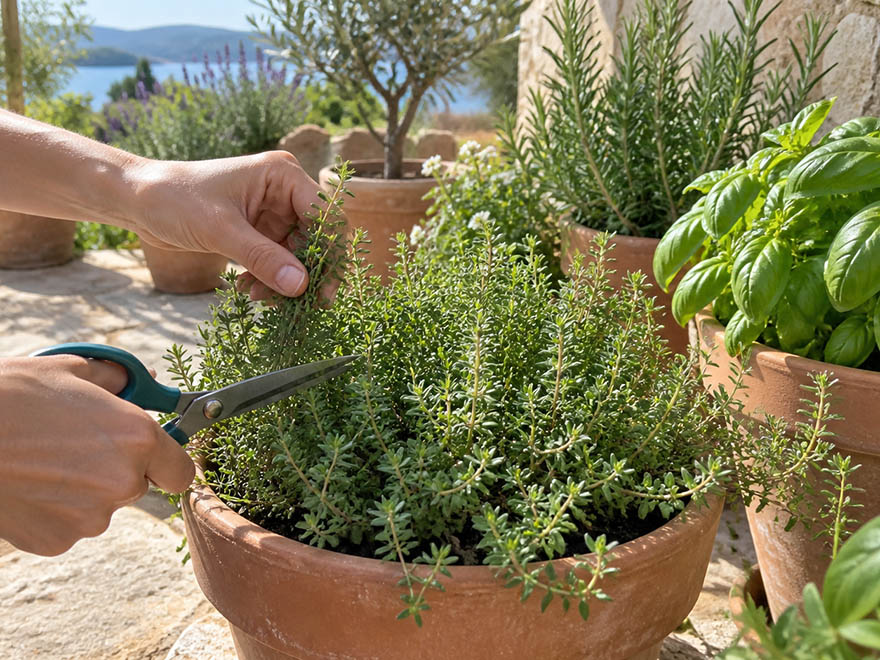
Lean soil is the secret to flavor. Rich, high-nitrogen soil pushes fast, leafy growth, but those leaves hold fewer of the oils that give herbs their scent and taste.
Hungry plants concentrate their flavor instead. A rosemary or thyme grown in poor, gravelly soil tastes far stronger than one grown in a rich bed. This is why the best soil for an herb garden is deliberately lean.
So resist the urge to feed heavily. A little compost at planting is plenty for most herbs. Skip the regular fertilizer that vegetables love.
The right soil pH for herbs
Most herbs like a soil pH between 6.0 and 7.0, which is slightly acidic to neutral. Mediterranean herbs such as rosemary, thyme, oregano, and lavender prefer the upper end, closer to neutral.
You do not need to guess. A cheap soil test kit from a garden center tells you where you stand. If you are unsure why pH matters at all, our guide to soil acidity and how to change it breaks it down in plain language.
Most garden soil already sits in the right range for herbs. Only adjust if a test shows you are far off.
How to prepare soil for an herb bed
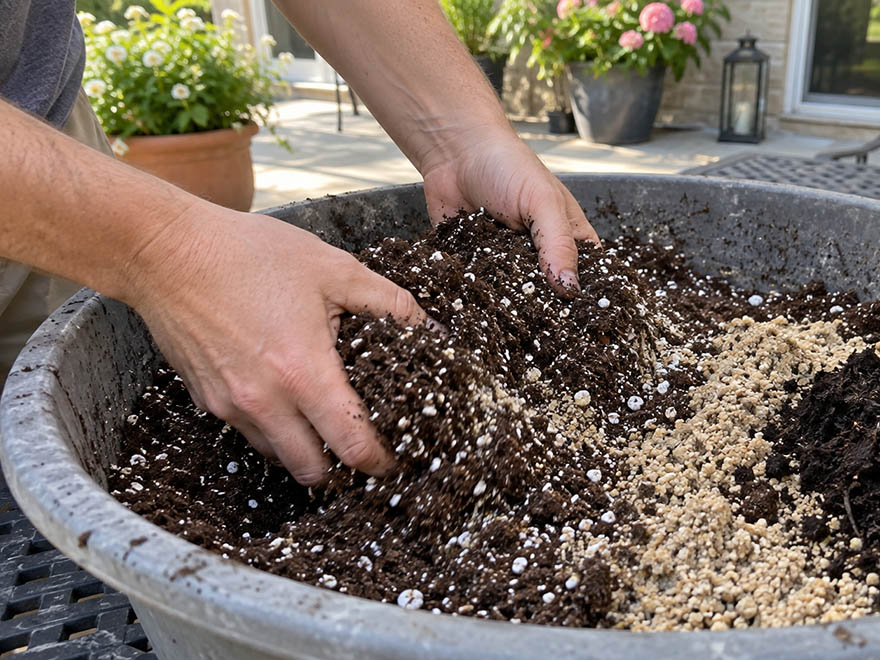
Start by loosening the top 8 to 12 inches so roots run free and water drains down. Compacted soil is the enemy of herbs, since it traps water around the roots.
Work in a light amount of compost for structure, then check drainage. Pour water on the spot and watch. If it pools for more than a few minutes, mix in coarse sand or plant in raised beds instead.
This lean approach differs from how to prepare soil for a vegetable garden, where richer soil and more compost help fruiting crops. Herbs want the opposite. Give vegetables the black gold and give herbs the gravelly leftovers.
Best soil for which herbs
- Mediterranean herbs (rosemary, thyme, oregano, lavender, sage). The leanest, best-drained, most gravelly soil you have. They hate wet feet. Our guide to growing lavender, thyme, and oregano in one pot groups these dry lovers well.
- Tender leafy herbs (basil, parsley, cilantro). A touch more moisture and richness than the Mediterranean group, but still well-drained. See our basil starting guide and parsley growing guide for their small extra needs.
- Mint. The exception. It tolerates richer, moister soil, but keep it in its own pot so it cannot spread.
Pairing herbs by their soil and water needs makes a healthier bed. Our herb companion planting guide shows which herbs belong together.
Get the soil right, then let easyDacha handle the timing
Good soil is half the battle. The other half is knowing when to plant, feed, and harvest each herb so it stays productive. That is where a garden planner app saves you.
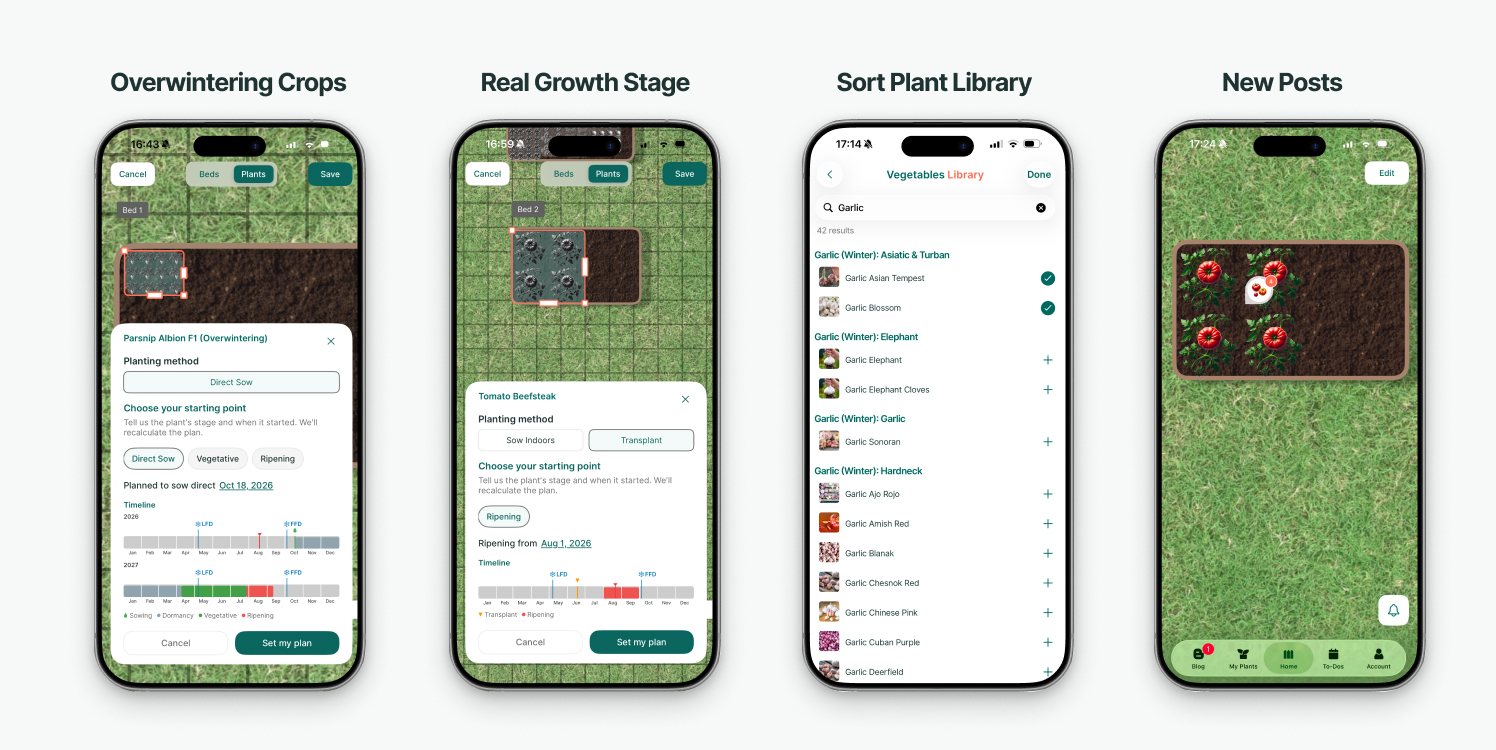
easyDacha builds a care plan for each herb from your ZIP code. It sets your planting dates, a light feeding schedule matched to each plant's stage, and a two-week task list tied to your beds or pots. Add a custom herb if yours is not in the library and it still gets a full plan.
Try easyDacha, the vegetable garden app that plans your herbs and vegetables together. Cancel anytime.
FAQ
What is the best soil for an herb garden?
The best soil for an herb garden is loose, well-drained, and lean, with a pH around 6.0 to 7.0. Avoid rich, heavy soil, since it grows lush plants with weak flavor. A little compost for structure is plenty for most herbs.
What is the best soil mix for herbs in pots?
The best soil mix for herbs in pots is 1 part potting mix, 1 part coarse sand or perlite, and a small handful of compost. This drains fast and stays lean, which prevents root rot and concentrates the herb's flavor.
Do herbs need rich soil or poor soil?
Herbs do best in lean, poor soil rather than rich soil. Rich, high-nitrogen soil pushes fast leafy growth with fewer aromatic oils, so the leaves taste weaker. Hungry plants grown in poor soil have a stronger scent and flavor.
What soil pH do herbs prefer?
Most herbs prefer a soil pH between 6.0 and 7.0, which is slightly acidic to neutral. Mediterranean herbs like rosemary and thyme lean toward the neutral end. A cheap soil test kit tells you if you need to adjust.
Is there an app that helps plan an herb garden?
Yes. easyDacha is a garden planner app that builds a care plan for each herb. It gives planting dates, a light feeding schedule, and a two-week task list from your ZIP code, so your herbs stay productive all season.