
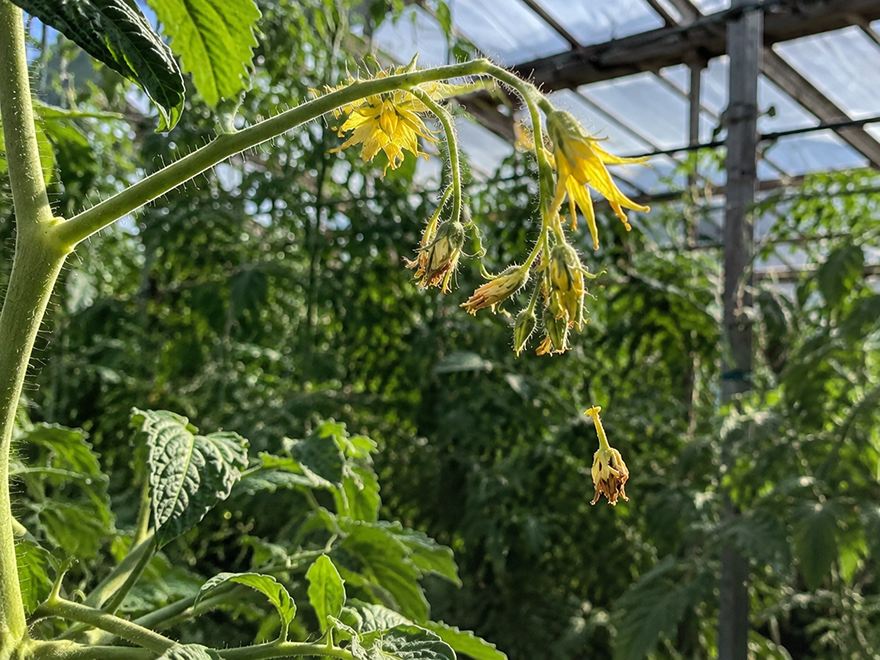
You did everything right. Started seeds indoors, hardened them off, transplanted on time. The plants look healthy. Then the flowers start dropping. One cluster, two clusters, a handful of yellow blossoms on the ground every morning.
That's blossom drop. If your tomato is not setting fruit, this is almost always why. The good news: every cause on this list has a fix. The most common one? Your plants can't move boron to where it matters.
TL;DR: Tomato flowers fall off because of temperature stress, boron deficiency, nitrogen excess, humidity issues, unstable watering, or gray mold. A DIY boron foliar spray (the Three Acids recipe below) fixes the most common cause.
The six reasons tomato flowers fall off
Tomato blossom drop has six triggers. Most gardens deal with at least two at once.
- Boron deficiency (the fixable one most people miss)
- Temperature stress (too hot or too cold)
- Humidity problems (too dry or too humid)
- Too much nitrogen (all leaves, no fruit)
- Unstable watering (dry-wet cycles stress the plant)
- Gray mold (Botrytis) (attacks flower clusters in humid greenhouses)
The first one has a clear fix. That's where we start.
The Three Acids boron recipe
Boron is the micronutrient that controls pollination. Without enough boron, pollen can't germinate, flowers can't set fruit, and the plant drops them.
Here's the tricky part: boron only moves upward through the plant. Once it reaches the lower leaves, it stays there. The plant cannot redirect boron from old leaves to new flowers. That's why applying boron for tomatoes through the soil doesn't work. You have to spray it directly onto the blossoms.
This recipe converts boric acid into a chelated (plant-available) form using three acids, vinegar, and glycerin.
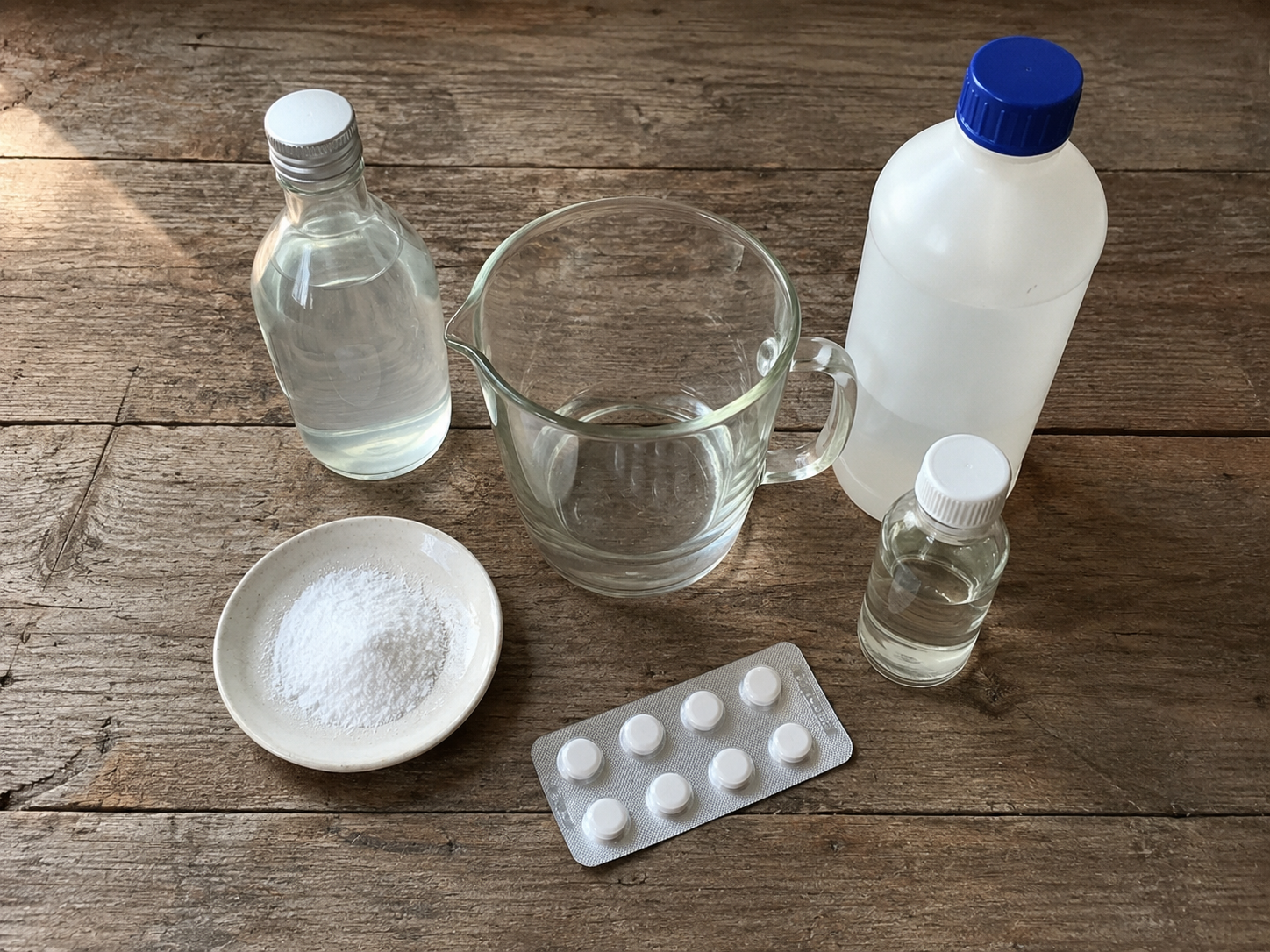
Concentrate (makes enough for the whole season):
For one batch of concentrate:
- 2 tablespoons (30 g) boric acid (pharmacy or hardware store, look for 99% powder)
- 2 g succinic acid (pharmacy supplement section, or 20 tablets of 100 mg each, crushed)
- 1 2/3 cups (400 ml) white vinegar, 5% (grocery store)
- 1/3 cup (100 ml) glycerin (pharmacy)
- 3/4 cup (200 ml) household ammonia, 10% (grocery store, cleaning aisle)
Mix it: Add boric acid and succinic acid to the vinegar. Stir until dissolved. Add glycerin. Add ammonia last. Expect fizzing and warmth. That reaction creates ammonium acetate and ammonium succinate, which chelate the boron into a form leaves can absorb.
Shelf life: Concentrate keeps indefinitely in a sealed glass jar. Label it.
Working solution for 1 gallon (3.8 L) of water:
- 2 1/2 teaspoons of the concentrate per 1 gallon of water
How to apply
Spray the upper half of the plant and the flower clusters directly. Skip the lower leaves. Boron moves only upward, so lower leaves don't need it. The flowers and growing tips do.
Spray early morning or late evening. Wet leaves in direct sun burn.
Repeat every 10 to 12 days while the plant is actively flowering. Each new flower cluster needs its own application because boron doesn't travel from already-sprayed leaves to new growth.
Expect results within one to two weeks. Flower retention improves noticeably after the second application.
Why this recipe works
Boric acid provides the boron itself. Tomatoes need 0.5 to 1 g of boric acid per 2.5 gallons (10 L) of water for foliar feeding. The concentrate delivers this at the right dilution.
Succinic acid is a stress-recovery stimulant. It helps cells absorb the boron and kicks the plant's own repair systems into gear.
White vinegar dissolves the boric acid and drops the pH low enough for chelation. That acidity is what makes boron available to leaf tissue.
Glycerin is the sticker. It keeps the spray on the leaves and slows evaporation, so boron has time to absorb before it dries.
Ammonia gives a small nitrogen bump to the growing tips and reacts with the acids to form the chelated compounds. That reaction is what turns raw boric acid into something the plant can actually use.
Stop guessing when to feed your tomatoes
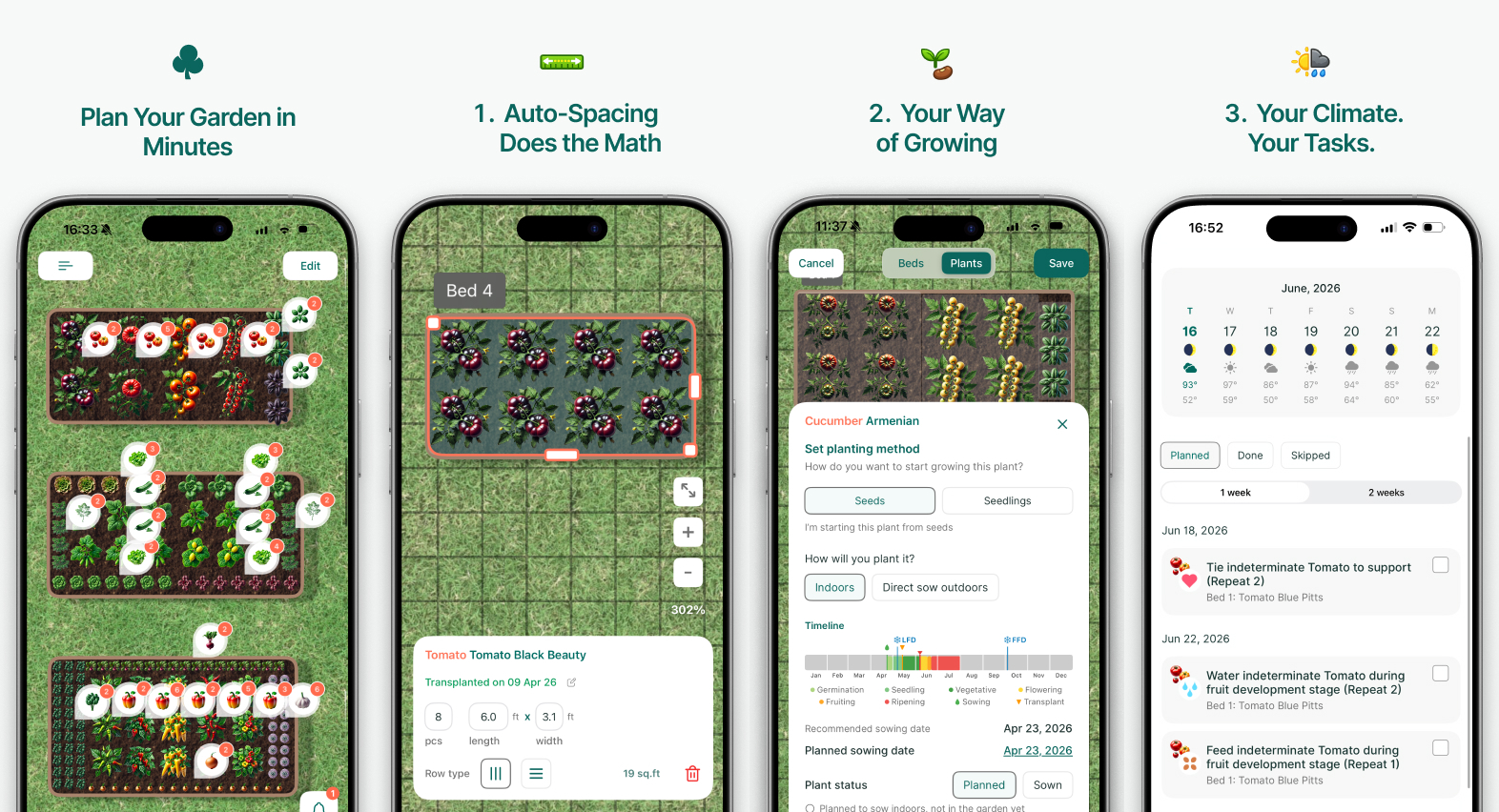
The hardest part isn't mixing the spray. It's knowing when to apply it, when to switch from nitrogen to potassium, and when to add calcium. easyDacha is a vegetable garden planner app that schedules feeding tasks by growth stage for your exact ZIP code. Seedling, vegetative, flowering, fruiting: each stage gets the right treatment at the right time.
Try easyDacha app. Plan your garden in 60 seconds, cancel anytime.
The other five causes (and what to do about each)
Temperature stress
Tomato pollen dies in heat above 90 F (32 C). Below 59 F (15 C) at night, pollen won't germinate at all. The sweet spot is 65 to 75 F (18 to 24 C). Growers in USDA zone 9 and zone 10 (Gulf Coast, Deep South, Southwest deserts) lose flowers to daytime heat every summer. In zone 3, zone 4, and zone 5 (Northern US, Mountain West), late-spring cold snaps kill pollen overnight.
Fix: In zone 9 and zone 10, shade cloth during peak afternoon hours keeps canopy temperature manageable. In zone 3, zone 4, and zone 5, row covers on cold nights hold enough warmth to keep pollen viable. Greenhouse growers in any zone: ventilate during hot afternoons.
Humidity problems
Dry air below 40% humidity dries out pollen before it reaches the stigma. Humid air above 70% makes pollen clump and stick inside the anther. Zone 8, zone 9, and zone 10 along the Gulf Coast and Southeast get sticky-pollen humidity all summer. That's Florida, Louisiana, coastal Georgia, and the Carolinas. Zone 5, zone 6, and zone 7 in the arid West have the opposite problem: air so dry that pollen desiccates before it lands.
Fix: In zone 5, zone 6, and zone 7 (arid West), morning watering raises humidity around plants. In zone 8, zone 9, and zone 10 (Southeast), open greenhouse vents at midday to push humidity below 70%. A gentle shake of the flower clusters around noon helps release sticky pollen in any zone.
Too much nitrogen
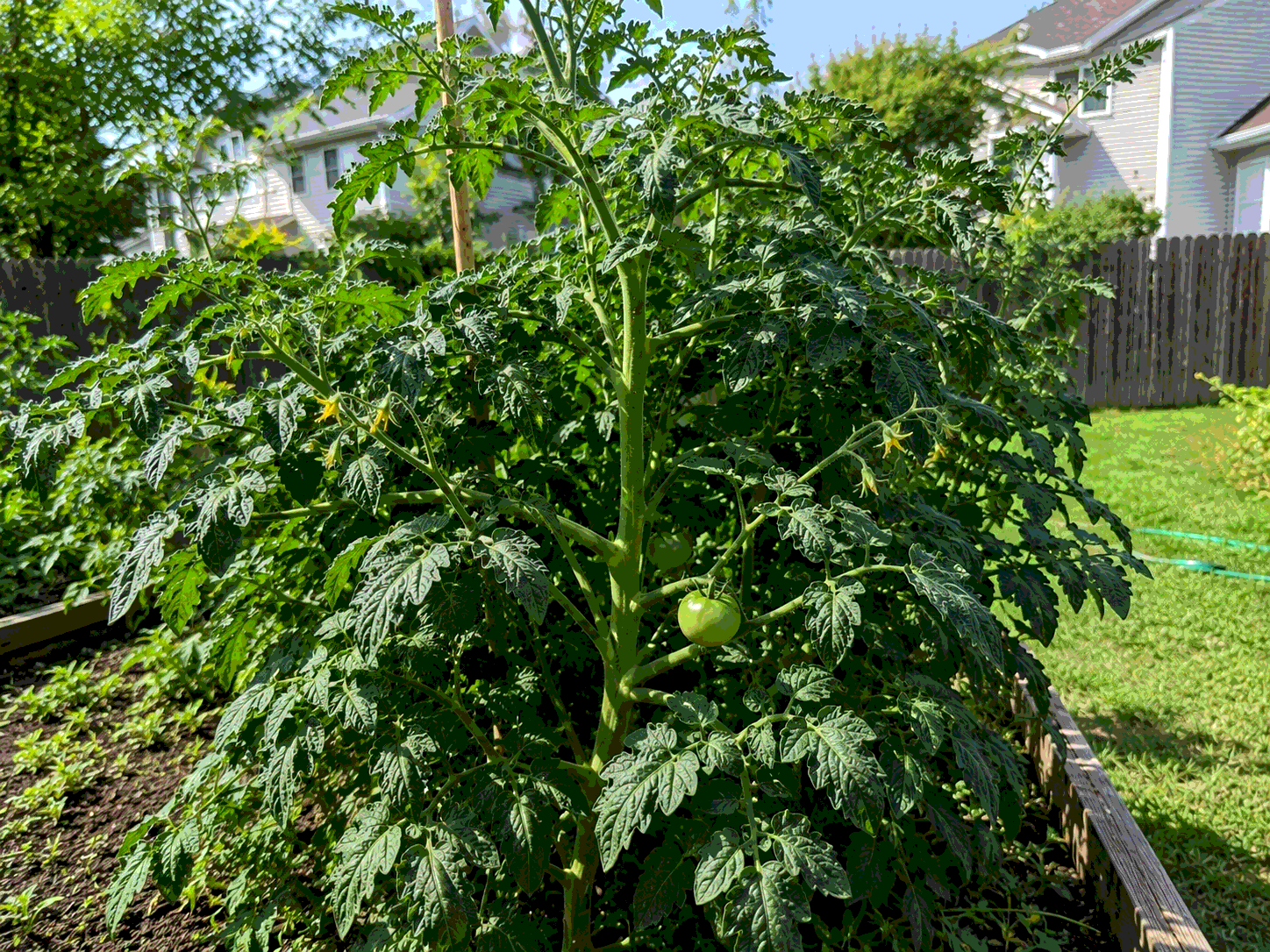
If your tomato is 4 feet (1.2 m) tall with thick stems and dark leaves but zero fruit, you have a nitrogen problem. The plant is spending all its energy on leaves.
Fix: Stop nitrogen-heavy fertilizers. Switch to a potassium-phosphorus feed during flowering. Potassium sulfate (0-0-50) or monopotassium phosphate (0-52-34) applied weekly at 1 fluid ounce (30 ml) per 2.5 gallons (10 L) pushes the plant toward fruiting. Alternate this weekly with calcium (calcium nitrate foliar, same dose) to prevent blossom end rot.
Unstable watering
Swinging between dry soil and soaking stresses the root system. The plant responds by dropping flowers to conserve energy.
Fix: Mulch with straw, grass clippings, or wood chips. A 3 to 4 inch (8 to 10 cm) layer stabilizes soil moisture and soil temperature. Water deeply two to three times per week rather than lightly every day.
Gray mold (Botrytis)
Botrytis cinerea attacks flower clusters in humid greenhouses. Common in zone 8, zone 9, and zone 10 across the Southeast, especially during summer rain stretches in Florida, coastal Georgia, and the Gulf states. You'll see fuzzy gray patches on stems near the blossoms, and whole clusters wilt and drop.
Fix: Improve airflow. Prune lower leaves to let air circulate. Spray Bacillus subtilis biological fungicide (look for "biological fungicide" at garden centers) every 7 to 10 days during humid stretches. Remove infected clusters immediately and bag them for the trash. Don't compost them.
What NOT to do
Don't spray boron in full sun. Wet leaves plus direct sunlight equals leaf burn. Morning or evening only.
Don't apply boron to the soil to fix tomato flower drop. Root-applied boron lands in the lower leaves and stays there. The flowers never see it. Foliar spray is the only effective route.
Don't over-fertilize with nitrogen during flowering. If your plant is lush and green with no fruit, more fertilizer makes it worse. Cut nitrogen and switch to potassium.
Don't ignore airflow in a greenhouse. Closed-up greenhouses breed both humidity problems and Botrytis. Ventilate even on cool days.
Which plants benefit
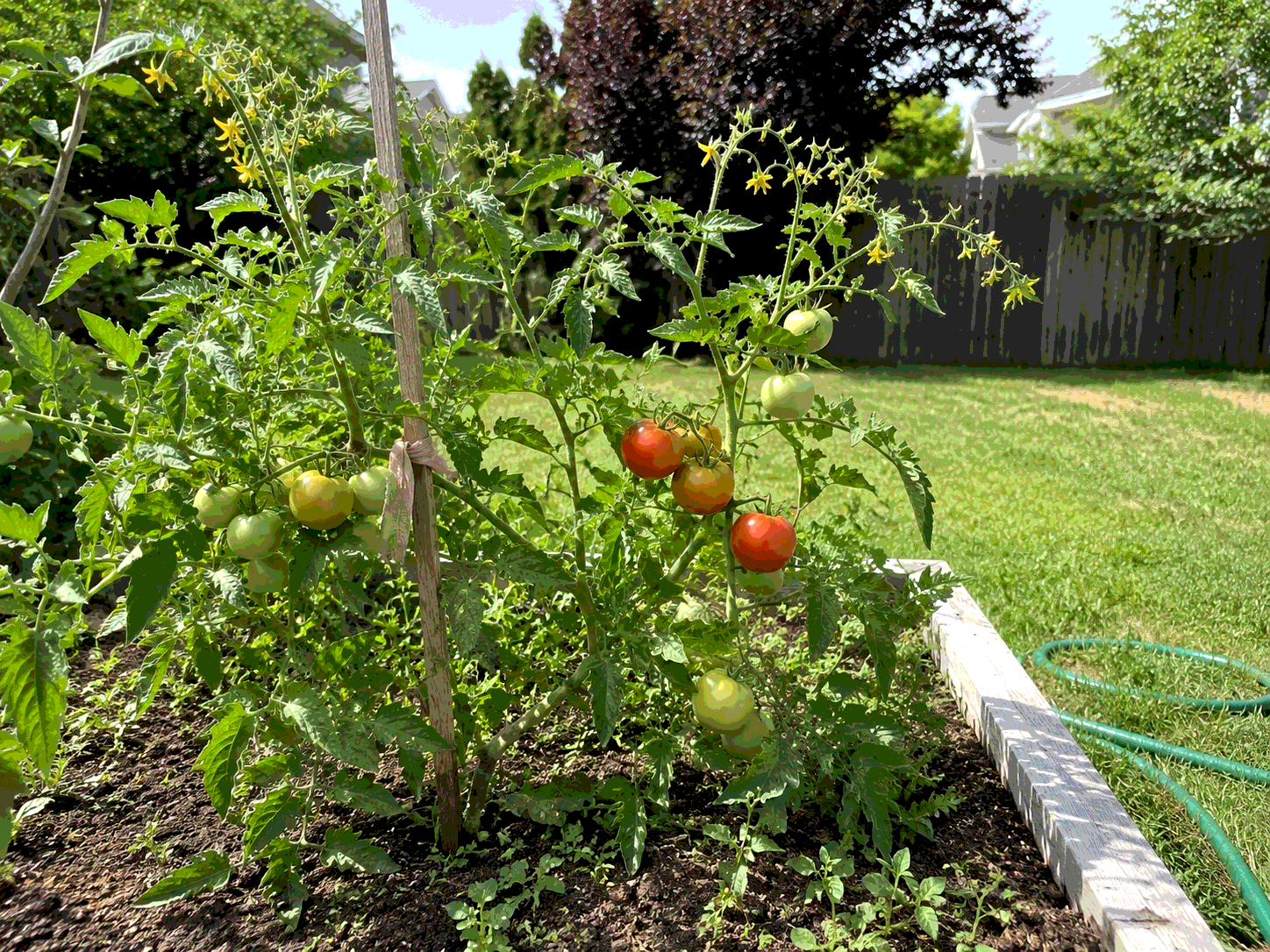
Nightshade family (Solanaceae): Tomatoes, peppers, and eggplant all drop flowers when boron is low. The Three Acids recipe works across the family. Peppers use the same dosage as tomatoes.
Cucumbers and squash (Cucurbitaceae): Even parthenocarpic (self-fruiting) cucumbers need boron for cell division in developing fruit. Use a slightly lower concentration: 2 teaspoons per gallon instead of 2 1/2.
Cabbage family (Brassicaceae): Cabbage, broccoli, and cauliflower benefit from boron in early growth. Use a slightly higher concentration (3 teaspoons per gallon) during the first third of the growing season.
Beets (root vegetables): Boron supports root formation. Standard dose (2 1/2 teaspoons per gallon) during root development.
When flower drop keeps coming back
If you've sprayed boron twice and your tomato flowers keep dropping, the cause probably isn't boron. Check temperature first. A cheap min/max thermometer inside the greenhouse tells you if nighttime temps drop below 59 F (15 C) or daytime temps spike above 90 F (32 C).
Next, check your nitrogen. Dark green, curling leaves with thick stems mean the plant is overfed. Stop all nitrogen, apply potassium for two weeks, and see if new flowers hold.
If you're in zone 8, zone 9, or zone 10 along the Southeast or Gulf Coast and see gray fuzz anywhere near the flower clusters, that's Botrytis. Address airflow and consider Bacillus subtilis sprays.
FAQ
Why do tomato flowers fall off but the plant looks healthy?
The plant can look healthy and still drop flowers. Boron deficiency doesn't cause visible leaf symptoms until it's severe. The first sign is flower drop. A foliar boron spray (like the Three Acids recipe) corrects this before leaf symptoms appear.
Can too much water cause tomato flower drop?
Yes. Overwatering drowns roots and triggers stress. The plant sheds flowers to redirect energy toward survival. Water deeply but less often, and mulch to even out soil moisture between waterings.
What temperature causes tomato blossom drop?
Pollen stops working above 90 F (32 C) and below 59 F (15 C) at night. The ideal range for fruit set is 65 to 75 F (18 to 24 C). Shade cloth helps in heat waves. Row covers help on cold nights.
Does shaking tomato plants help with pollination?
It can. Tomato flowers are self-pollinating, but pollen sometimes sticks inside the anther, especially in high humidity. Gently tapping or shaking the flower cluster around midday can release pollen onto the stigma.
Is boric acid safe for vegetable gardens?
Yes, in the concentrations used for foliar feeding. The working solution contains roughly 0.5 g boric acid per 2.5 gallons (10 L) of water. That's a trace amount. Boron is a naturally occurring micronutrient that all plants need. Avoid over-applying. Follow the 10 to 12 day schedule.
Is there an app that helps schedule boron sprays and feeding for tomatoes?
easyDacha is a garden planner app that builds a personalized care plan for your tomatoes based on their growth stage and your ZIP code. The 7-day task calendar includes feeding reminders timed to flowering, fruiting, and other stages. Try easyDacha app.
Should I remove flowers that are about to drop?
No. Let them fall on their own. Pulling flowers stresses the plant and can damage the cluster, which prevents future flowers on that same stem. Fix the cause (boron, temperature, watering) and the next round of flowers will hold.