
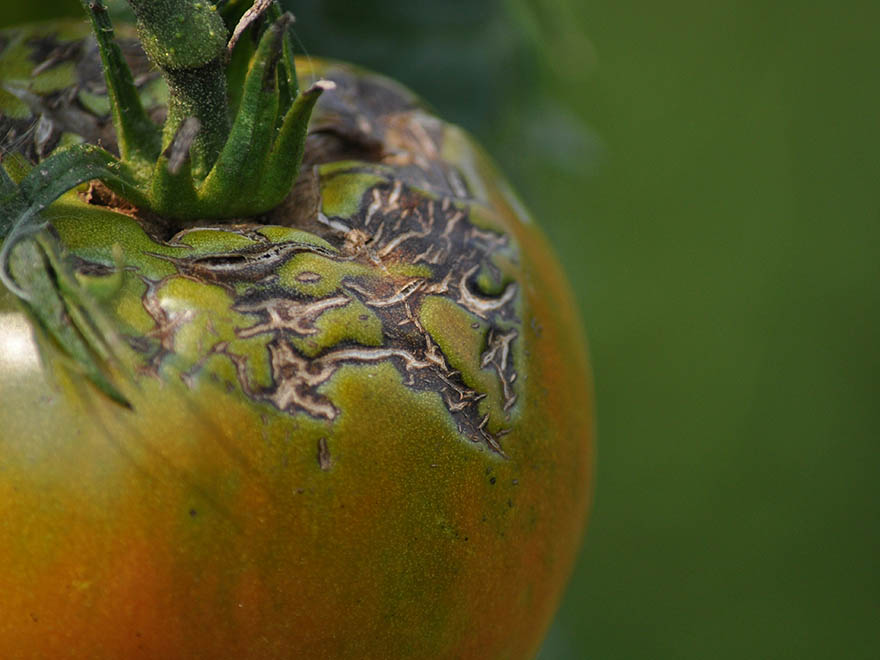
The plant flowered fine. Plenty of blooms. But half the flowers dropped without setting fruit. The tomatoes that did form are misshapen — cracked, corky patches at the stem end. The strawberries are small and lumpy. The broccoli has a hollow core. These are not pollination problems. This is boron deficiency — and it hits at the worst possible moment, right when the plant is trying to turn flowers into food.
TL;DR: Dissolve 1 teaspoon (5 grams) of boric acid powder and 1 tablespoon of household ammonia (10%) in 2.5 gallons (10 liters) of water. Pour 2 cups (0.5 liters) at the base of each plant. Soil drench only — this formula burns leaves if sprayed. Apply once when flowering begins, repeat once 3 weeks later. Maximum 2 applications per season. Works on tomatoes, peppers, strawberries, beets, cabbage, and broccoli.
The recipe
You need
- Boric acid powder: 1 teaspoon (5 grams) per 2.5 gallons (10 liters). Sold at pharmacies as "boric acid powder" and at hardware stores in the pest control section. A 1 oz packet costs $3 to $5 and lasts the season. One heaped teaspoon equals approximately 5 grams.
- Household ammonia (10% ammonium hydroxide): 1 tablespoon per 2.5 gallons (10 liters). Sold in the cleaning aisle at grocery stores. A bottle costs $2 to $3. Check the label — you want plain ammonia, not ammonia with added surfactants or scents.
- Water: 2.5 gallons (10 liters)
- A watering can or bucket
- A measuring spoon
Do it
- Pour 2.5 gallons (10 liters) of water into a watering can or bucket.
- Add 1 teaspoon (5 grams) of boric acid powder. Stir until fully dissolved. Boric acid dissolves slowly in cold water — use warm water if you want it to dissolve faster, then let the solution cool before applying.
- Add 1 tablespoon of household ammonia. Stir gently. The ammonia adds nitrogen, which helps the plant absorb the boron.
- Use immediately. Apply the same day you mix it.
How to use it
Soil drench (the ONLY method for this recipe):
Pour 2 cups (0.5 liters) of the solution at the base of each plant, onto the root zone. For larger plants in full production (mature tomatoes, loaded pepper bushes), use up to 1 quart (1 liter) per plant. Water lightly first if the soil is dry.
This formula is strictly a soil drench. The concentration of boric acid at 5 grams per 10 liters causes severe leaf burn if sprayed directly on foliage. At this concentration, foliar application is highly phytotoxic.
Schedule:
Two applications per season, maximum. Apply the first drench when flowering begins — that is the moment boron demand spikes because the plant is building pollen tubes and developing ovaries. Apply the second drench 3 weeks later, during active fruit set. Do not apply a third time. Boron accumulates in soil, and the margin between enough and too much is narrow.
Timing: Morning or evening. Avoid midday heat — the water evaporates before the solution reaches the root zone.
Pairing with other treatments: Do NOT apply on the same day as calcium or magnesium treatments. Boron combined with calcium or magnesium in the root zone causes immediate mineral lockout — both nutrients become unavailable. Space boron drenches at least 4 to 5 days from calcium nitrate, calcium acetate, or Epsom salt applications.
Which plants benefit most
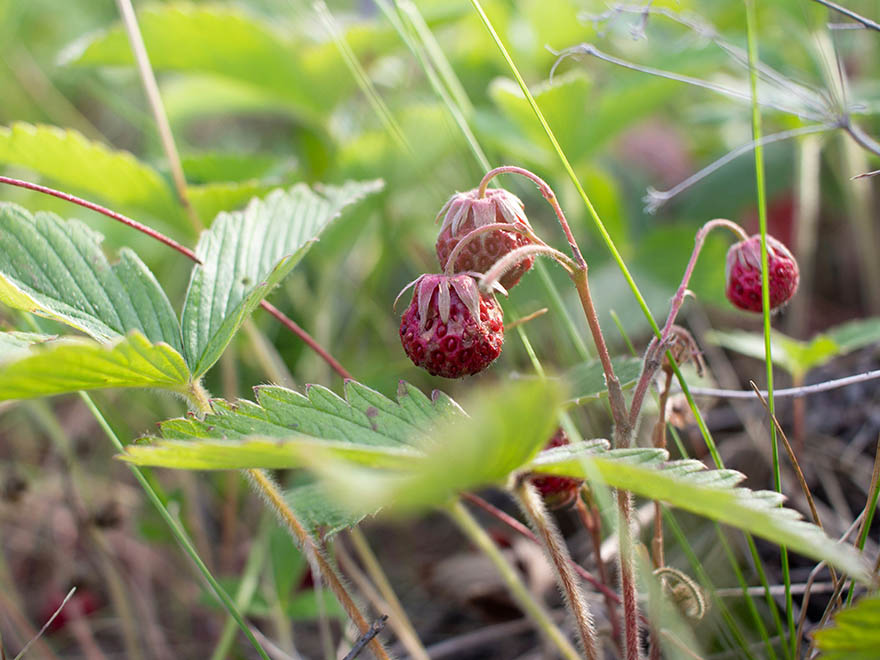
Best for: Tomatoes, peppers, eggplant, and strawberries — any crop where poor fruit set is the problem. Boron drives pollen tube growth. Without it, pollen cannot reach the ovule and the flower drops or produces deformed fruit. On tomatoes the signs are cracked, corky patches near the stem end. On strawberries — small, crinkled berries. On peppers — flowers drop even in mild weather with good watering. Drench at first flower.
Best for: Beets, celery, cabbage, and broccoli. Each shows boron deficiency differently: beet "hollow heart" (internal black spots), celery "cracked stem," broccoli hollow stems, cabbage "empty core" (loose, spongy center). A drench when root expansion or head formation begins prevents all four.
Good results: Potatoes during flowering (reduces internal browning) and fruit trees at pink bud stage. Fruit trees need a higher dose — see FAQ below.
Not suited for: Legumes (beans, peas) — even moderate boron causes leaf burn and reduced nitrogen fixation. Seedlings — wait until at least 4 to 6 true leaves. Plants in acidic sandy soil where boron is already adequate — a soil test is the safest check.
Why it works
Boron is the gatekeeper of plant reproduction. Without it, nothing from flower to fruit works properly.
Here is the chain. When a pollen grain lands on the stigma of a flower, it must grow a tube — the pollen tube — that extends down through the style to reach the ovule. That tube is made of pectin and callose, and boron is required for the synthesis of both. Without boron, the pollen tube either does not form or ruptures partway down. The pollen never reaches the ovule, and the flower drops without setting fruit.
Boron also controls sugar translocation. Sugars produced by photosynthesis in the leaves need to move to the fruit through the phloem. Boron facilitates this transport by forming complexes with sugar molecules that cross cell membranes more easily. When boron is low, sugars pile up in the leaves and the fruit stays small, bland, and poorly developed.
The problem with boron is that plants cannot store it. Unlike nitrogen or potassium, boron has no "depot" inside the plant. It cannot be moved from older leaves to new growth. Once boron is fixed in a leaf, it stays there. That means the plant needs a continuous supply — especially to the newest growth, where the flowers and developing fruit are. A single early-season application is not enough. The second application 3 weeks later catches the next wave of flowers.
Why ammonia? Nitrogen enhances boron absorption. Boron uptake is synergistically enhanced by the presence of nitrogen. The ammonia provides that nitrogen in a form (ammonium) that roots absorb directly. It also slightly acidifies the root zone, which keeps boron in a soluble, plant-available form.
The incompatibility with calcium and magnesium is a real chemical reaction, not just competition. Boron in the presence of calcium forms insoluble calcium borate — a mineral that roots cannot absorb. Applying both on the same day causes immediate mineral lockout. Always space these treatments at least 4 to 5 days apart.
What NOT to do
NEVER spray this on leaves. This is the single most important rule. At 5 grams of boric acid per 10 liters, foliar application causes severe phytotoxic burn — brown, scorched patches that kill leaf tissue. This formula is soil drench only — spraying it burns leaves on contact. If you want foliar boron, you need a different formulation at a much lower concentration (see FAQ below).
Do not exceed 1 teaspoon (5 grams) per 2.5 gallons (10 liters). Boron has the narrowest safe range of any plant nutrient. Too little and fruit set fails. Too much and you poison the plant — leaf tips brown, roots stop growing, and the damage persists because boron accumulates in soil. Stick to the dose.
Do not apply more than twice per season. Boron does not break down or wash out of soil quickly. Two applications per season is the safe maximum for vegetable gardens. More than that risks long-term accumulation.
Do not combine with calcium or magnesium treatments on the same day. Boron plus calcium or magnesium causes immediate mineral lockout. Space applications at least 4 to 5 days apart. This means do not apply on the same day as calcium nitrate, calcium acetate, Epsom salt, or dolomite lime.
Do not apply to seedlings. Wait until plants have at least 4 to 6 true leaves and established root systems. Seedling roots are too sensitive for the boron concentration in this drench.
Do not apply to legumes. Beans and peas are boron-sensitive and can suffer toxicity at levels that are normal for other crops.
Do not use scented or surfactant-added ammonia. Some cleaning ammonia products contain added soap, fragrance, or colorants. These can damage plant roots. Use plain ammonia — the label should list only ammonium hydroxide and water.
FAQ
How do I know if my plants have boron deficiency?
The signs depend on the crop. On tomatoes: poor fruit set despite pollination, cracked or corky tissue near the stem end, internal browning. On strawberries: small, crinkled, deformed berries. On broccoli: hollow stems. On cabbage: loose, spongy core ("empty core"). On beets: internal black spots ("hollow heart"). On all crops: flower drop, stunted new growth (boron is immobile — symptoms always appear on the newest tissue first). The plant disease identification guide helps confirm the diagnosis.
Can I spray boron on leaves at a lower dose?
Yes, but not with this recipe. There is a safer foliar formula: dissolve 5 grams of boric acid in warm water, add 100 ml of glycerin (which converts the boric acid into an organoboron compound that absorbs better and does not burn), add 1 tablespoon of vinegar, then 2 to 3 tablespoons of ammonia. Dilute the whole thing into 2.5 gallons (10 liters). This creates an ammonium salt of the organoboron complex that is safe for foliar use. Spray on the newest growth and flowering clusters. The glycerin is the key ingredient that makes foliar application safe — without it, boric acid at any useful concentration burns leaves.
Where do I buy boric acid?
Pharmacies sell it as "boric acid powder" in the first aid section. Hardware stores sell it in the pest control section (it is used as an ant and roach killer — check that the ingredient is pure boric acid with no additives). A 1 oz packet costs $3 to $5. Online is also an option in bulk. Avoid products with added dyes, fragrances, or pesticide carriers.
What is the difference between boric acid and borax?
Boric acid (H₃BO₃) and borax (sodium tetraborate, Na₂B₄O₇) both contain boron, but they are different compounds. Boric acid is the form used in this recipe — it dissolves in water and delivers boron directly. Borax is more alkaline and provides boron more slowly. You can substitute borax at roughly 1.5 teaspoons per 2.5 gallons to deliver a similar amount of boron, but boric acid is more precise and predictable for garden use.
Can I use this on fruit trees?
Yes, but the dose is different. Fruit trees need 15 to 20 grams of boric acid per 10 liters for a full-tree soil drench. Apply 1 to 2 buckets per mature tree at pink bud stage (just before bloom). For a slow-release soil boron reservoir that lasts 2 to 3 years, there is a different recipe: 20 grams boric acid + 1 cup dolomite flour + 1 liter vinegar per 10 liters of water. That high-dose formula is for perennial fruit trees only — never use 20 grams on vegetables.
Is there a gardening app that reminds me when to apply boron drench?
Yes. The easyDacha garden planner app tracks growth stages and sends task reminders for feeding at the right time. Download at easydacha.com/download.
One teaspoon at the right moment

Boric acid from the pharmacy, ammonia from the cleaning aisle. One teaspoon and one tablespoon in a bucket of water. Pour it at the base when the first flowers open, once more three weeks later. That is the boron your plant needs to turn flowers into fruit.
The easyDacha gardening app tracks nutrient schedules by growth stage so you feed at the right time, not when it is too late.
Try easyDacha app →. The garden planner app that builds your full care schedule. Cancel anytime.
Related reading on easydacha.com
- How to Use Calcium Nitrate to Stop Flower Drop and Protect Fruit (Ovary Protection) — calcium for cell walls, boron for pollen tubes. Both fix flower drop, but from different angles. Space them 4-5 days apart.
- How to Make DIY Chelated Iron from Iron Sulfate and Citric Acid (Iron Chlorosis Fix) — iron works alongside boron during fruiting. Iron converts nitrates to protein while boron moves sugars to the fruit.
- Simple Fertilizer Plan for Flowering Vegetables — the full feeding schedule. Boron drench fits the flowering-to-fruiting phase.
- How to Identify Plant Diseases: Early Signs and What to Do — poor fruit set and deformed fruit mimic other problems. Confirm boron deficiency before treating.
- How to Use Potassium Nitrate Foliar Spray to Double Potassium Uptake (Leaf-to-Root K Synergy) — potassium drives sugar accumulation in fruit, boron drives sugar transport. Together they determine fruit sweetness.
- How to Use Citric Acid to Unlock Calcium and Magnesium in Soil (Mineral Mobilizer) — unlocks soil-bound minerals. But do NOT apply citric acid on the same day as boron — the freed calcium can lock out boron.