
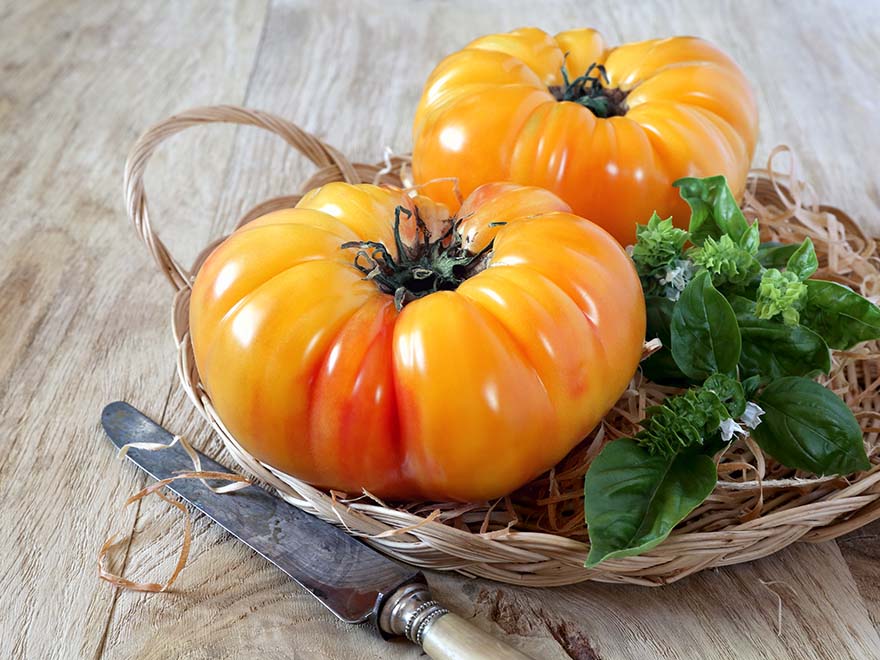
Timing and Techniques for a Successful Move to the Garden
After weeks of watching your tomato seedlings grow indoors, it’s finally time for the big move outside. But transplanting tomatoes isn’t just about digging a hole and dropping them in. With the right timing and a few simple steps, your tomatoes will settle in easily and reward you with a long, productive season.
Not sure when your tomato transplant time actually is?
The easyDacha garden planner app tracks your frost dates, soil temperature, and zone-based timing to help you plan every step with confidence. If you're looking for a reliable garden planner app, easyDacha adapts to your space and climate so you always transplant at the right moment.
Download easyDacha and make tomato timing simple.
Timing Is Everything
Tomatoes love warm weather. Move them outdoors too early and they may stall, wilt, or even die from a late cold snap. Here’s how to know when to transplant tomatoes safely.
1. Wait Until After the Last Frost
Tomatoes cannot tolerate frost — even a light one. For safe transplanting:
- Night temperatures should stay above 50°F (10°C)
- Soil temperature should be at least 60°F (16°C)
- Usually this is 2–3 weeks after your last frost date
Seedlings are usually ready to transplant when they are 6–10 inches tall and have several sets of true leaves.
If you're unsure about your frost timing, a garden planner app can track it automatically so you don’t have to rely on guesswork.
2. Watch the Weather
Even if the frost date has passed, weather can still surprise you:
- Avoid cold fronts
- Avoid windy or stormy days
- Choose a mild, calm day if possible
A cloudy morning or late afternoon is perfect for minimizing stress.
Preparing Your Tomato Seedlings for Outdoors
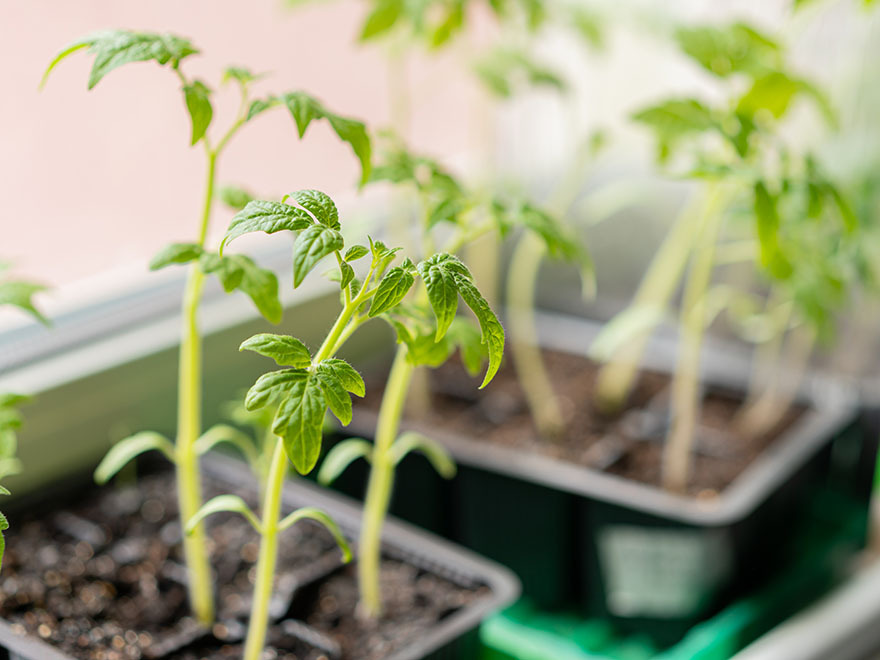
Before you move seedlings outside full-time, they need to adjust gradually.
Step 1: Hardening Off
Hardening off prevents transplant shock and helps seedlings adapt to sun, wind, and temperature changes.
For 7–10 days:
- Place seedlings outside in dappled shade for a few hours
- Increase outdoor time and sun exposure daily
- Bring inside if temperatures drop below 50°F
This slow transition makes a dramatic difference in how well tomatoes grow after planting.
Step 2: Preparing the Planting Site
Choose a spot with 6–8 hours of direct sunlight.
Prepare the soil by:
- Loosening it 12–18 inches deep
- Mixing in compost
- Improving drainage if needed
Spacing:
- Indeterminate (vining): 24–36 inches apart
- Determinate (bushy): 18–24 inches apart
Transplanting Step by Step
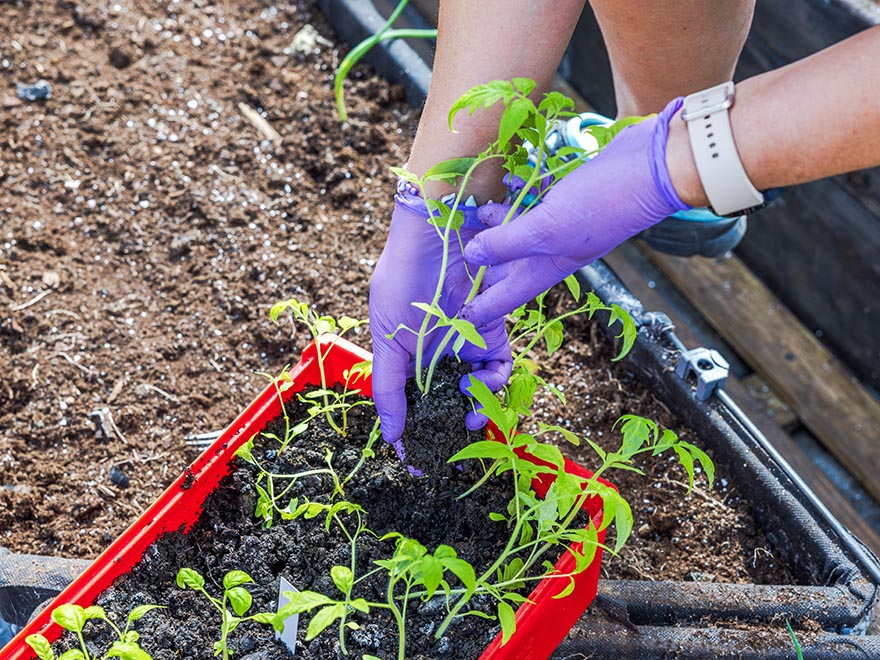
Here’s how to transplant tomato seedlings correctly:
- Water seedlings well an hour before transplanting
- Dig a deep hole — tomatoes benefit from being planted deeper
- Remove lower leaves from the stem
- Place the plant deep in the hole, burying the stem up to the first true leaves
- Fill with soil, press gently, and water deeply
- Install stakes or cages right away to avoid disturbing roots later
Tomatoes develop roots along buried stems, creating stronger, more resilient plants.
Aftercare: The First Few Weeks
- Water deeply 2–3 times a week
- Add mulch to keep soil moisture steady
- Expect mild wilting — it’s normal after transplanting
- Avoid heavy feeding until plants settle in
Want reminders for watering, hardening off, and warm-weather timing?
The easyDacha garden planner app sends personalized tasks for your tomatoes based on your zone, weather, and planting date — so you never miss a key moment.
Download easyDacha to stay on top of your garden all season.