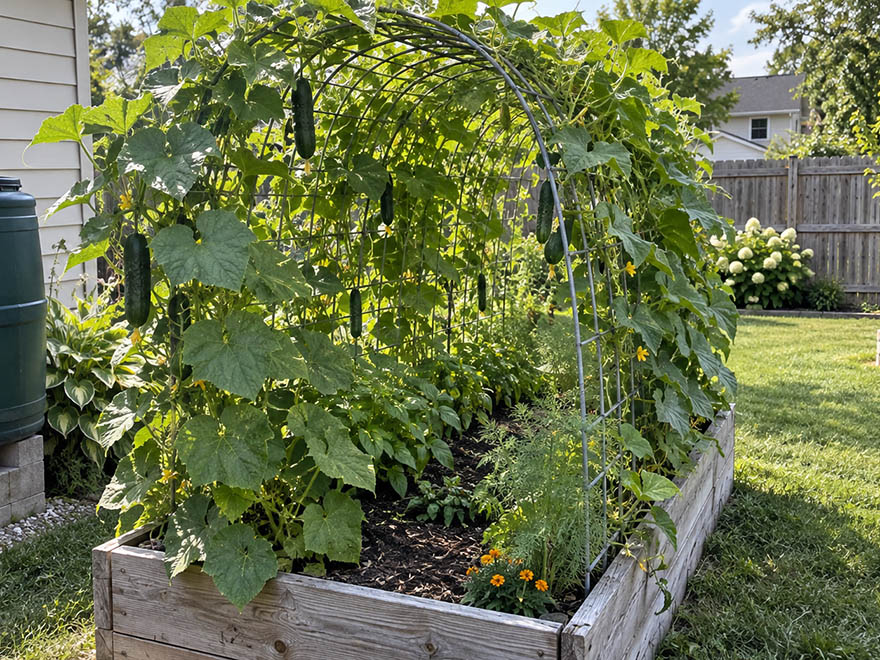
Garden structures cost a fortune at the store, and you know most of them are just wood, wire, and a barrel. You want to grow up instead of out, catch free rainwater, and keep the deer from mowing down your beans. These cheap DIY garden trellis ideas do all three, using scrap and low-cost parts you can find at any hardware store.
TL;DR: The best cheap DIY garden trellis ideas use scrap wood, cattle panel, string, or an old box spring to support climbing crops. Pair them with a simple rain barrel and an 8 foot deer fence to solve the three most common garden problems for almost nothing.
Cheap DIY garden trellis ideas that actually hold
A good trellis just needs to be tall, sturdy, and anchored. Start with what you have.
- String trellis. Run garden twine from a top rail down to stakes at each plant. Cheapest option there is, and perfect for beans, peas, and cucumbers.
- Cattle panel arch. Bend a 16 foot livestock panel into an arch between two beds. It costs one panel and lasts years. Great for squash, melons, and cucumbers.
- Box spring trellis. Strip the fabric off an old box spring and lean the wire frame against a fence. A classic free trellis for peas and beans.
- Branch teepee. Lash three or four straight branches into a teepee with twine. Free, rustic, and strong enough for pole beans.
- Pallet lean-to. Stand a clean pallet upright and anchor it. The slats hold cucumbers and small squash.
Match the trellis to the crop weight. Heavy melons and winter squash need a cattle panel or a sturdy frame. Beans and peas are happy on string. Our guide to starting cucumbers indoors covers a crop that climbs almost any support you build.
How to set up a rain barrel for the garden
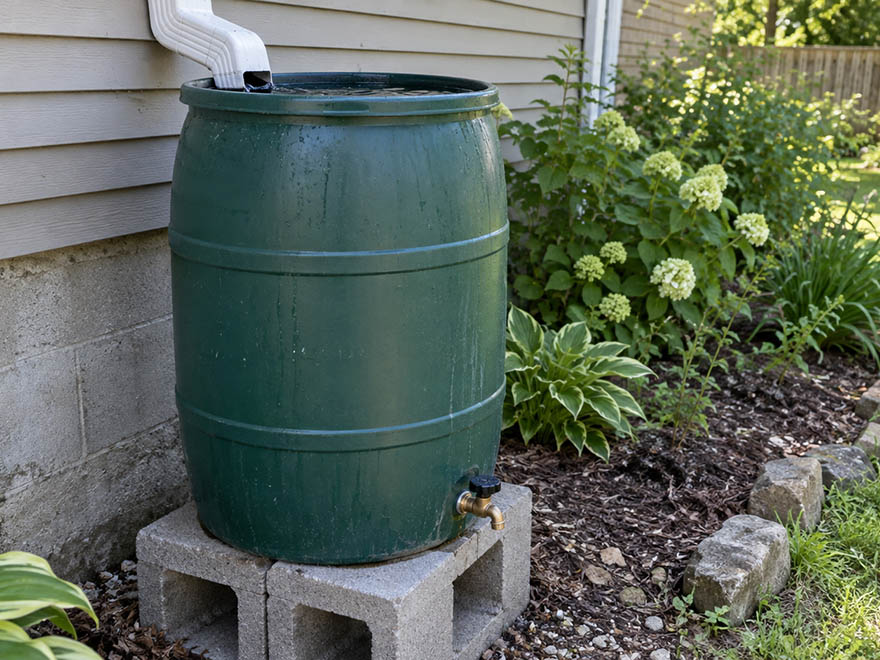
A rain barrel catches roof runoff so you water for free. Setting one up takes an afternoon and a food-safe barrel.
- Place the barrel on a raised, level stand under a downspout. Height gives you gravity pressure at the spigot.
- Cut the downspout to feed into the barrel top, and add a mesh screen to keep out leaves and mosquitoes.
- Add a spigot near the base and an overflow outlet near the top, routed away from your foundation.
- Cover it with a tight lid so children, pets, and mosquitoes stay out.
One safety rule matters most. Do not pour rain barrel water directly on the edible parts of your plants. Roof runoff can carry bacteria and traces of roofing material, so water at the base of the soil, not on leaves, fruit, or roots you eat raw. Save the barrel for watering the ground around your crops, ornamental plants, and the lawn. This keeps a free water source safe for a food garden.
DIY deer fence for the garden
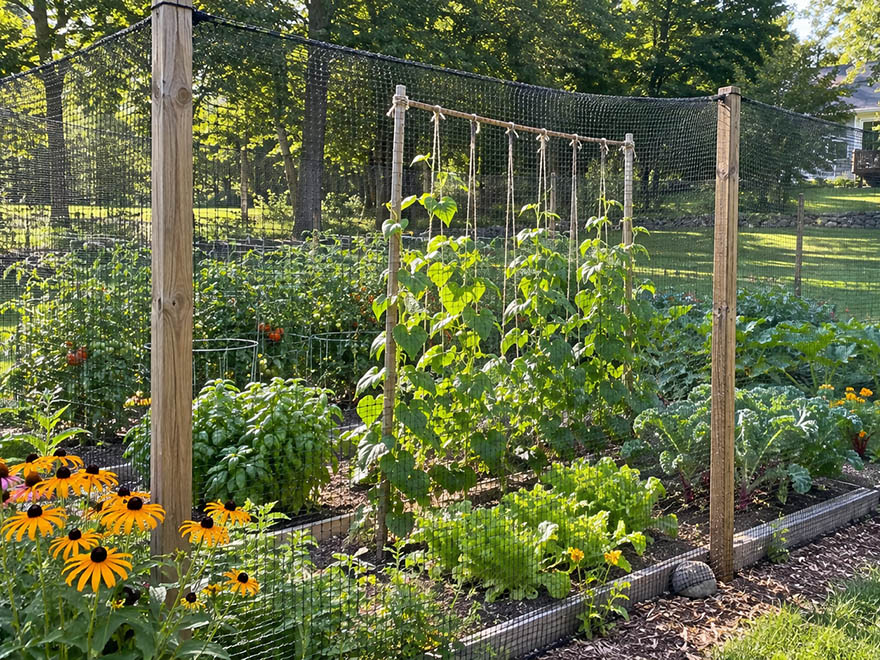
Deer will clear a bed overnight, and the fix is height. A DIY deer fence for the garden needs to be at least 8 feet tall, because deer jump low barriers with ease.
You have two cheap ways to reach that height.
- One tall fence. Woven wire or plastic deer netting more than 8 feet high, stapled to wood or metal posts.
- Two short fences. A pair of shorter fences a few feet apart. Deer will not jump a wide double barrier even when each fence is low, which saves on tall posts.
For a small bed, a simple netting cage on stakes works. If deer pressure is light, a scent deterrent may be enough on its own. Our hot pepper spray recipe doubles as a deer repellent on foliage, though a fence is the only sure fix for heavy pressure.
Which crops need these structures
- Trellis crops. Pole beans, peas, cucumbers, melons, and winter squash climb and save ground space. A vertical cucumber crop is easy to pick, and our guide to using up a cucumber glut helps at harvest.
- Rain barrel targets. Any bed watered at the soil line, plus containers, ornamentals, and lawn.
- Deer favorites to protect. Beans, peas, lettuce, hostas, and young fruit trees top the deer menu.
Building up instead of out is the same logic behind converting turf to beds. Our guide to turning your lawn into a vegetable garden pairs well with a vertical growing plan for a small yard.
Why building your own is worth it
Homemade structures cost a fraction of store versions and fit your exact space. A cattle panel arch runs a few dollars a year over its life, while a store arbor costs many times more.
They also last. Wire, wood, and a food-safe barrel hold up for years with almost no upkeep. The only real skill is anchoring things well, since wind and heavy crops test every joint.
Before you build, know your tools. Our guide to the garden tools you really need keeps the shopping list short and honest.
Plan structures around your crops, not the other way around
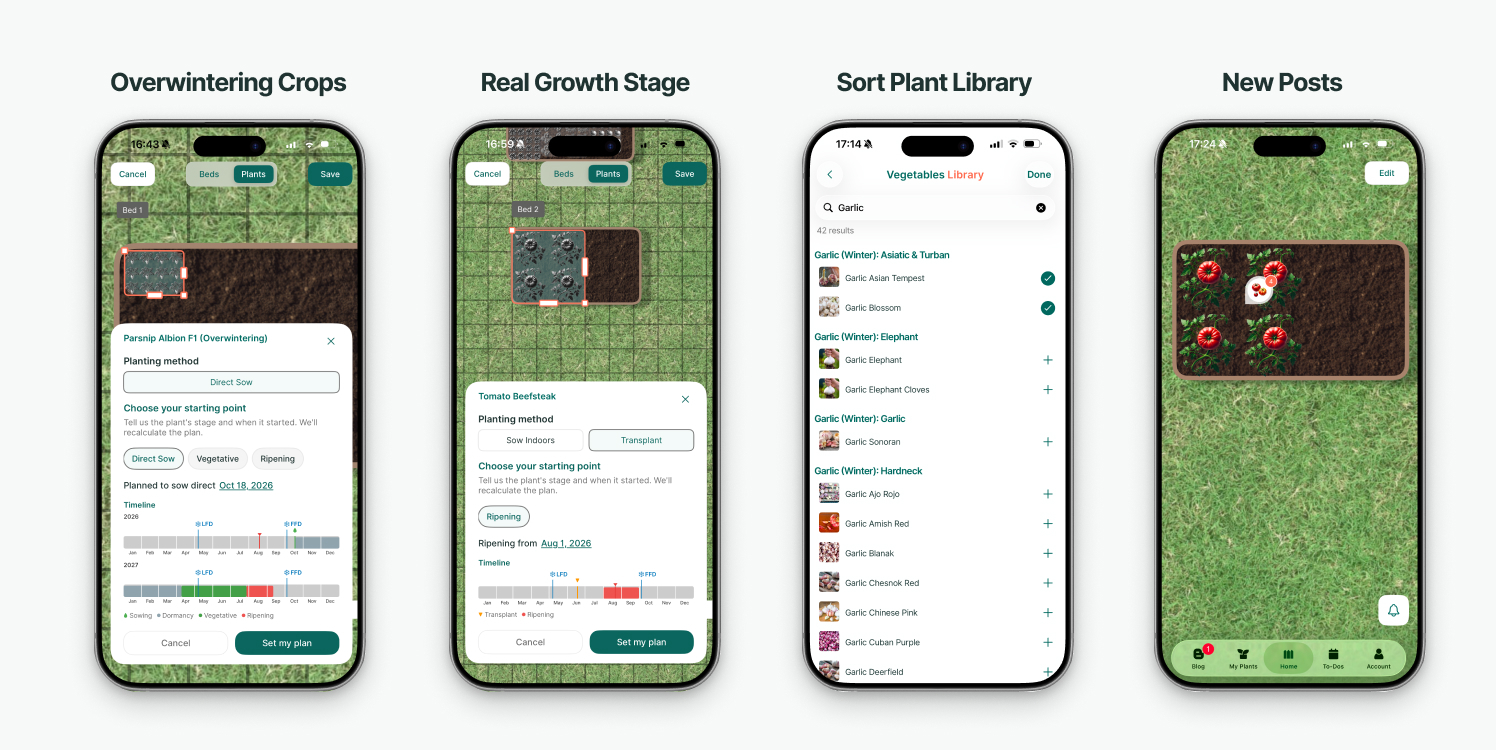
The trick with garden structures is timing. A trellis is useless if the beans go in two weeks late, and a rain barrel helps most when you know your dry stretch is coming. A garden planner app keeps the build and the planting in sync.
easyDacha maps your beds and builds a care plan from your ZIP code. It sets planting and support tasks on a two-week list tied to your actual layout, so the trellis goes up before the vines need it. Draw in-ground beds, raised beds, and a greenhouse on the garden map and spacing is handled for you.
Try easyDacha, the vegetable garden app that plans the whole season around your beds. Cancel anytime.
FAQ
What is the cheapest DIY garden trellis?
A string trellis is the cheapest DIY garden trellis. Run garden twine from an overhead rail down to a stake at each plant, and beans or peas climb it all season. An old box spring frame is another free option that needs no building at all.
How do you set up a rain barrel for the garden?
Place a food-safe barrel on a raised stand under a downspout, screen the inlet, add a spigot near the base and an overflow near the top, then cover it with a tight lid. Water at the soil base and keep rain barrel water off the edible parts of plants.
How tall does a deer fence need to be?
A deer fence needs to be at least 8 feet tall, because deer jump lower barriers easily. If you cannot build that high, two shorter fences a few feet apart work, since deer will not jump a wide double barrier.
Can I use rain barrel water on vegetables?
Yes, but only at the base of the plant. Roof runoff can carry bacteria and roofing residue, so keep it off leaves, fruit, and roots you eat raw. Use it to water the soil around crops, and use tap water for anything that touches the harvest.
Is there an app that helps plan garden structures and planting together?
Yes. easyDacha is a garden planner app that maps your beds and schedules tasks. It builds a two-week task list from your ZIP code so supports go up on time, keeping your DIY trellis and your planting dates in sync.