
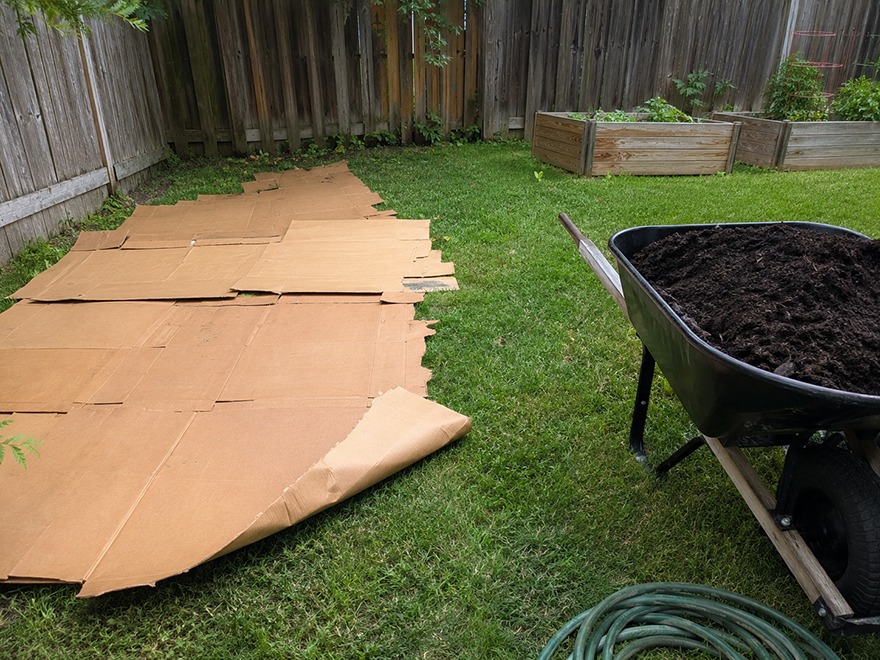
You are done with mowing a patch of grass that gives you nothing back. Maybe you already tore some of it up and now you are staring at bare ground. The good news is you do not have to rent a sod cutter or break your back with a shovel. You can smother the grass in place and grow food on top of it. Here is how to turn your lawn into a vegetable garden, step by step.
TL;DR: To turn your lawn into a vegetable garden, smother the grass with cardboard, then layer 4 to 6 inches of compost and 3 to 4 inches of mulch on top. Plant into the compost right away, or let it break down over one season for a no-dig bed.
How to turn your lawn into a vegetable garden (no-dig method)
Sheet mulching smothers the grass by burying it under cardboard and organic matter. The grass dies without light, and the layers rot into soil. It is the method most extension programs recommend for going from lawn to vegetable garden.
What you need for a 4 foot by 8 foot bed:
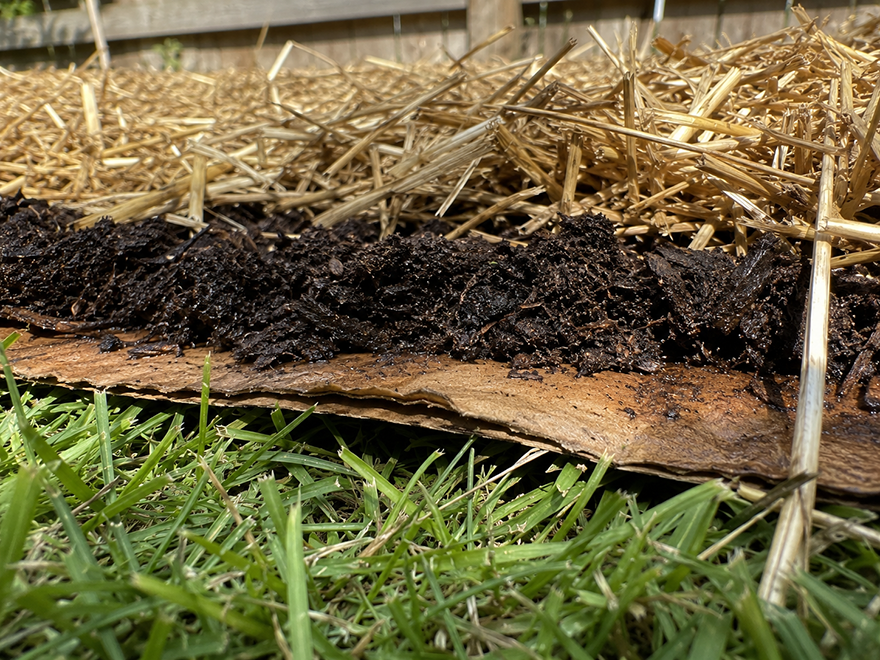
- Plain cardboard or newspaper, enough to cover the area (6 to 10 sheets of newspaper thick, or a single layer of cardboard, overlapping every seam by 6 inches)
- Compost, about 4 to 6 inches deep (roughly 1 cubic yard for a 4 by 8 bed)
- Mulch, about 3 to 4 inches deep (wood chips, straw, or shredded leaves)
- A hose or watering can
Build it:
- Mow the grass low and leave the clippings in place.
- Water the ground so it is damp.
- Lay cardboard flat over the whole area. Remove any tape or stickers first. Overlap seams so no grass peeks through.
- Soak the cardboard until it is wet all the way through.
- Spread 4 to 6 inches of compost over the cardboard.
- Top with 3 to 4 inches of mulch.
Timeline: The cardboard and grass break down over the next 6 to 10 months. Build a bed in fall and it is ready by spring.
How to plant it (fast path and patient path)
You have two ways to plant a lawn you just converted. Pick the one that matches your season.
Fast path, plant now. Pile the compost 6 inches deep or more on top of the wet cardboard. Plant your seedlings and seeds directly into that compost layer. Their roots grow down as the cardboard softens. This works for shallow-rooted crops like lettuce, spinach, kale, and bush beans in mid to late summer. Our guide on what to plant in July for a fall harvest lists the crops that still fit by zone.
Patient path, plant next season. Build the bed now and let it rest. When you are ready to plant, push the mulch aside, cut an X through the softened cardboard, fold back the flaps, and set your plant into the soil below.
Timing depends on your USDA zone. In USDA zone 5 and zone 6, a bed built in July can still grow fall greens and radishes. In zone 7 and zone 8, you have room for a full fall crop of brassicas and root vegetables. In zone 9 and zone 10 across the Gulf Coast and Southwest, summer is a rest period, so build now and plant in early fall. New to growing food, our vegetable gardening guide for a first season covers the basics after the bed is ready.
Knowing your exact planting dates is the hard part, and every zone runs a different calendar. easyDacha builds a week-by-week planting schedule from your ZIP code and tells you what you can still sow this season. The garden planner app keeps your sowing, feeding, and harvest tasks on one 7-day list.
Set up your plan here
Set up your plan here
For picking the right spot before you build, our guide on garden sun mapping shows how to find the sunniest strip of your yard.
The fast way (sod removal)
If you want bare soil today and cannot wait months, remove the sod by hand. This takes more effort but lets you plant the same day.
Water the lawn one day before you start. Slice under the sod with a flat spade and cut it into 1 foot squares. Slide the spade under each square, lever it up, and lift it out with the roots attached. Shake off the loose soil and compost the sod pile upside down.
Once the grass is gone, add 2 to 3 inches of compost and fork it into the top few inches of soil. Now you can plant. For the mix that goes on top, see our guide to the best soil for raised beds.
Why sheet mulching works
Grass dies when it loses light. Wet cardboard blocks every bit of sun and holds moisture against the roots until they rot.
The compost on top feeds the soil life that turns the dead grass into humus. Worms pull the organic matter down and mix it in for you, which is why you skip the digging.
By the time the cardboard softens, you have a deep layer of loose, rich soil sitting where a lawn used to be. No tilling, no exposed weed seeds.
What NOT to do
- Do not skip wetting the cardboard. Dry cardboard sheds water and blows around. Soak every layer.
- Do not use glossy or coated cardboard. Plain brown boxes only. Remove tape, labels, and staples.
- Do not plant deep-rooted crops in the fast path. Carrots and parsnips need the cardboard gone first. Start them next season.
- Do not build over invasive perennial weeds without checking. Bindweed and Bermuda grass can push through. Dig those out first.
Best for which crops
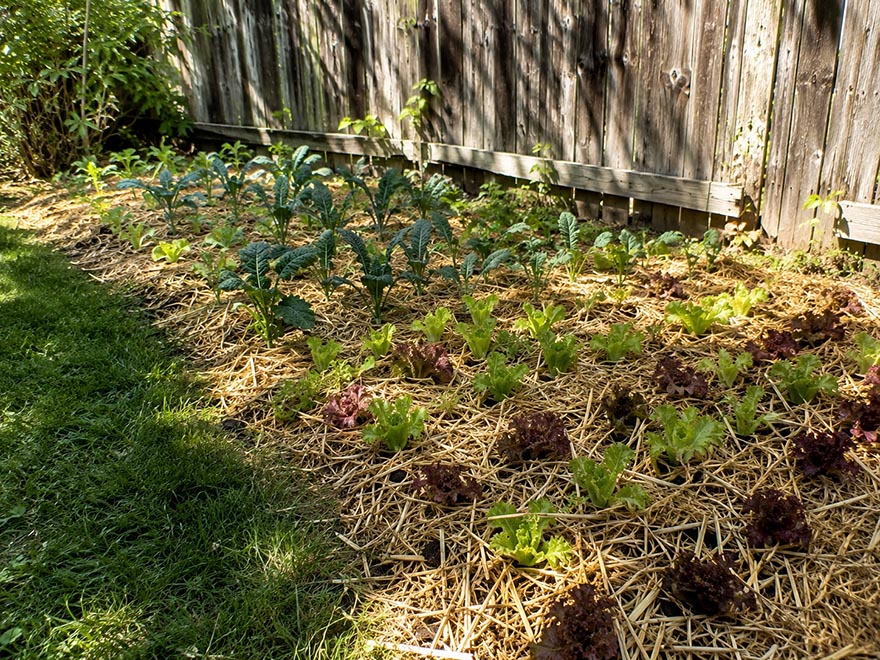
- Plant right away in a fresh bed with leafy greens, lettuce, spinach, kale, chard, and bush beans. Shallow roots settle into the compost fast.
- Great for the next season are tomatoes, peppers, squash, cucumbers, and root crops once the cardboard has broken down.
- Wait or dig first for carrots, parsnips, and other long taproots. They need clear, loose soil to the full depth.
A new bed is a clean slate for smart layout too. Our companion planting guide shows which crops to pair so your first planting pulls double duty.
When grass keeps coming back
Grass creeping in at the edges is the most common problem with a converted lawn. Check three things. First, your cardboard did not overlap enough at the seams, so extend the sheets 6 inches past the seam. Second, runner grasses like Bermuda spread underground, so dig a shallow trench around the bed. Third, thin mulch lets weed seeds sprout, so keep the mulch layer at 3 inches. For long-term planning, our succession planting guide helps you keep the bed full so weeds never get a foothold.
FAQ
How long does it take to turn a lawn into a vegetable garden?
Sheet mulching takes 6 to 10 months for the cardboard and grass to fully break down into soil. You can plant shallow crops into the compost layer right away, or wait one season for a finished no-dig bed. Sod removal is faster and lets you plant the same day.
Can I really grow vegetables over grass without digging?
Yes. Wet cardboard smothers the grass, and a deep compost layer on top gives roots somewhere to grow. This is the standard no-dig method extension programs recommend for turning a lawn into a vegetable garden. The grass rots in place and feeds the soil.
What do I put down first, cardboard or newspaper?
Either works. Use a single layer of plain cardboard, or 6 to 10 overlapping sheets of newspaper. Both block light and rot away. Cardboard lasts a little longer and covers large areas faster, so it suits a full lawn conversion.
Is it too late to plant after I clear my lawn in summer?
No. In most US zones you can still grow fast fall crops after a summer conversion. Lettuce, spinach, kale, radishes, and bush beans all mature before frost. Check your first frost date and count backward to see what fits.
Is there an app that tells me what to plant after converting my lawn?
Yes. easyDacha is a gardening app that builds a planting calendar from your ZIP code and shows exactly what you can still grow this season. The garden planner app puts your sowing, feeding, and harvest tasks on a 7-day list.