
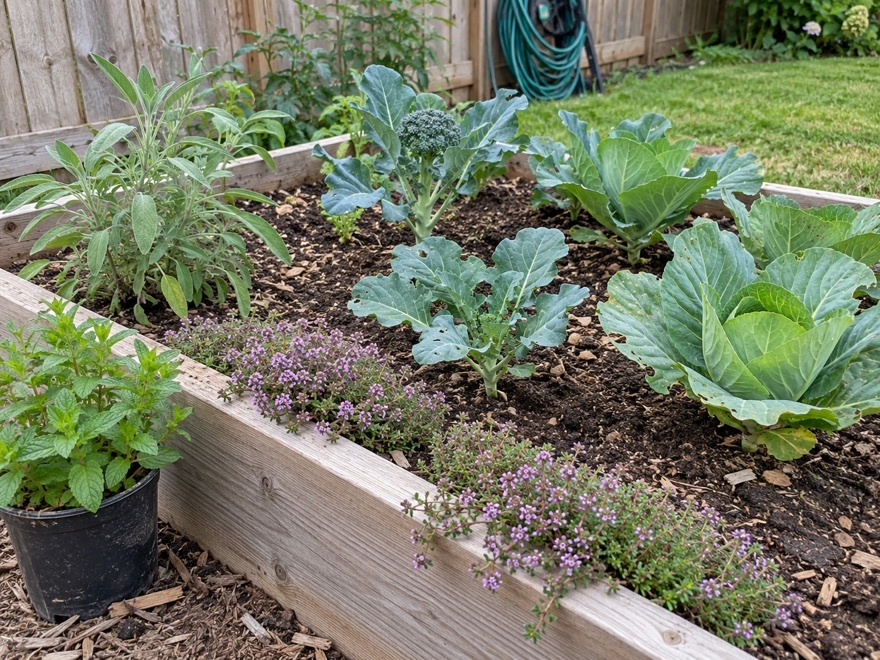
White cabbage moths circle your broccoli every morning. Flea beetles pepper the kale with tiny holes. These pests do not stumble onto your crops by accident. They follow scent. Companion herbs make the best pest repellent in a vegetable garden when you need a quiet, spray-free layer of defense. Their strong oils blur the smell pests use to find their host plants.
TL;DR: Plant aromatic companion herbs as a pest repellent in your vegetable garden: sage, thyme, rosemary, potted mint, and dill around brassicas, and rosemary, sage, and chives near carrots. Never plant fennel near vegetables.
The recipe
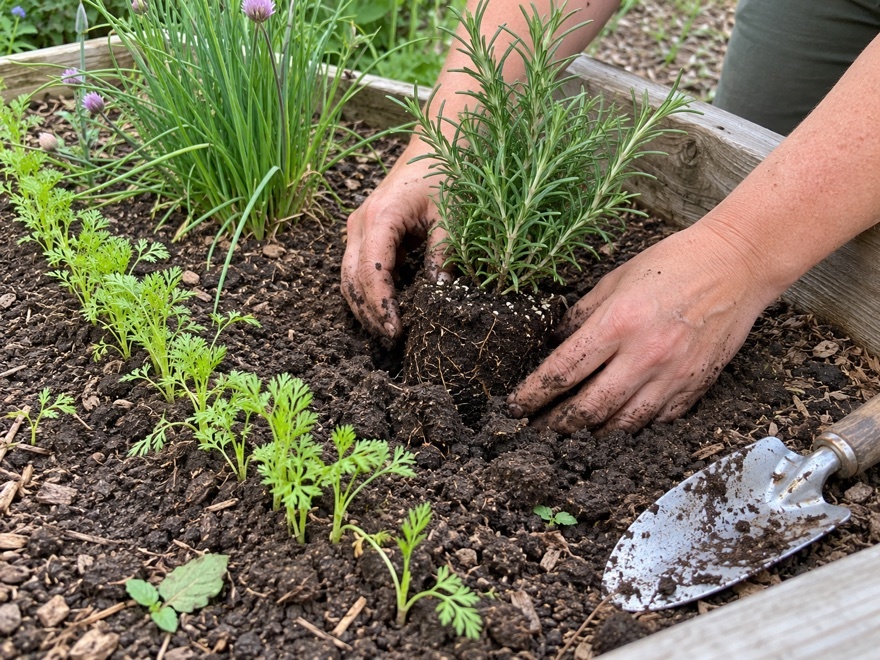
This is a planting method. There is no mixing and no dose. You place the right herbs in the right spots at transplant time.
Around brassicas (cabbage, broccoli, kale, cauliflower):
- Sage: strong scent, compact shrub. Plant at bed corners.
- Thyme: low and spreading. Tuck it along the bed edge.
- Rosemary: woody and fragrant. Plant at the bed ends or in a pot nearby.
- Mint, in containers only: very strong scent. Sink a pot into the soil or set it beside the bed so roots cannot spread.
- Dill: feathery and tall. It also attracts beneficial insects when it flowers.
Around carrots:
- Rosemary, sage, and chives: plant them along the row edges.
Plant it: Set herbs in or around the crop bed at the same time you transplant your vegetables.
How long it lasts: Sage, thyme, rosemary, chives, and mint are perennial in many climates, so one planting serves several seasons. Dill is annual and needs resowing.
How to apply
Interplant herbs close to the crop. Place them at bed corners, along the edges, or in the gaps between transplants. The scent needs to mix with your crop's scent, so herbs 20 feet away do little.
Plant at transplant time. Pests start searching as soon as young brassicas go in. Herbs already in place give protection from day one. Established perennial herbs from last year work even better.
Brush or trim the herbs now and then. Bruised leaves release more oil. Harvesting sprigs for the kitchen does this naturally.
Expect a reduction, not zero pests. Companion herbs lower pressure. For heavy pest years, combine them with row covers, netting, or other barriers.
Why companion herbs repel pests in the vegetable garden
Aphids, cabbage root fly, flea beetles, and cabbage moths locate brassicas by smell. The plants release sulfur-rich compounds that act like a beacon. Carrots attract carrot fly the same way.
Aromatic herbs release volatile oils of their own. When those oils mix with the crop's scent, host-seeking insects have a harder time locking on. They waste time, land less often, and lay fewer eggs.
Extension horticulture services list aromatic herb companions as a support method for brassica pests. It works best as one layer in a system. A healthy bed with good soil, rotation, and early barriers gets the most out of it.
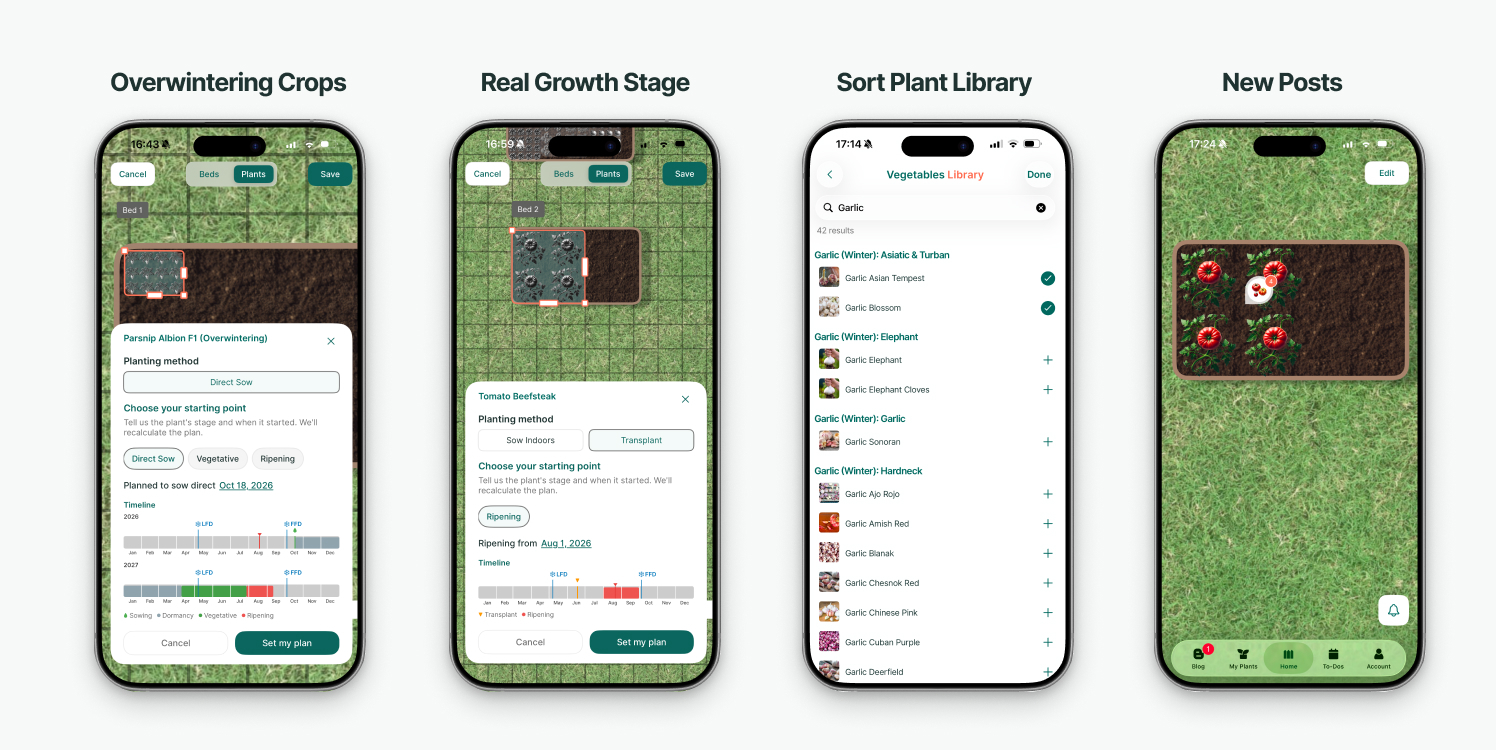
The tricky part is putting the right herb next to the right crop before planting day. In easyDacha, draw your beds on the garden map and add herbs and vegetables from the library. Sage, thyme, and chives each get their own care plan with planting dates set from your ZIP code. Any herb not in the library can be added as a custom plant with its own tasks. Your two-week task list then shows when to plant the herbs and the brassicas together. Try easyDacha →
Is this safe for pollinators and soil?
Yes. Companion herbs are plants, not chemicals. Nothing is sprayed, and the soil stays untouched.
Flowering thyme, sage, rosemary, and dill feed bees and beneficial insects. That makes your bed more attractive to pollinators, not less.
Follow these rules:
- Keep mint in containers. In open ground it spreads through the whole bed.
- Give herbs lean, well-drained soil. Our herb soil guide explains why rich soil weakens their scent.
- Harvest herbs regularly so they stay compact.
- Keep fennel in its own separate spot.
What NOT to do
Do not plant fennel near vegetables. Fennel is allelopathic to most crops. It releases compounds that slow the growth of brassicas and nightshades.
Do not plant mint in open ground. It takes over beds within one season.
Do not treat herbs as your only defense. They lower pest pressure but will not stop a heavy outbreak alone.
Do not plant herbs far from the crop. Scent masking works only at close range.
Best for which plants
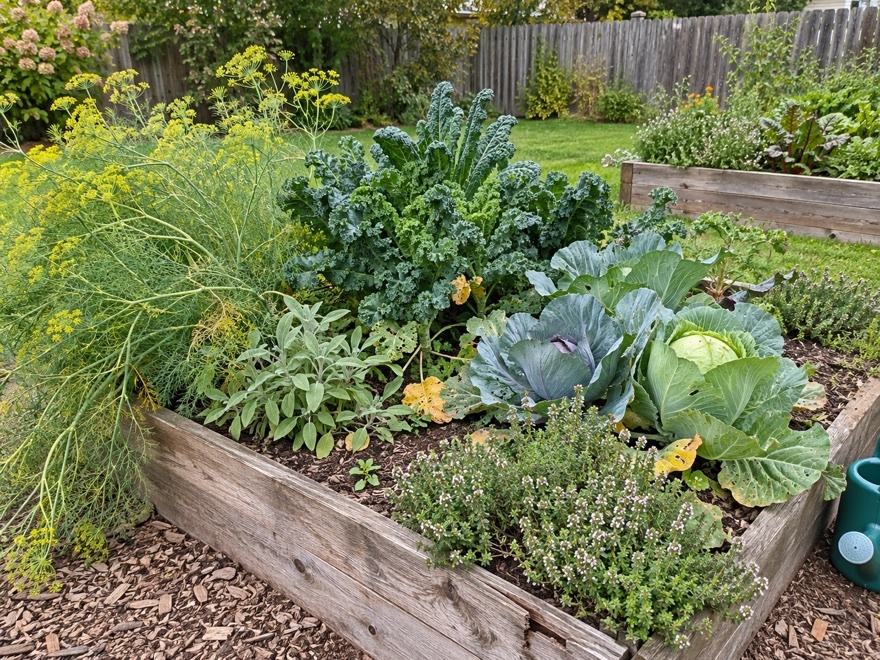
- Brassicas (cabbage, broccoli, kale, cauliflower, Brussels sprouts): sage, thyme, rosemary, potted mint, and dill. These crops gain the most because their pests hunt by scent.
- Carrots: rosemary, sage, and chives along the rows to confuse carrot fly.
- Nightshades (tomatoes, peppers, eggplant): skip fennel completely. For tomato-specific pairings, see our tomato companion plants guide.
- Balcony and container gardens: a pot of mint or thyme next to a pot of kale works on a small scale too.
Herb combinations have their own rules. Our guide to companion plants for herbs and lavender covers which herbs grow well together. You can even grow lavender, thyme, and oregano in one pot and move it where pests show up.
When pests keep coming back
If moths and aphids still find your crops, check three things. Are the herbs close enough, right at the bed edge? Were they planted at transplant time, not in midsummer? Is there enough herb mass, or just one small plant per bed? Scale up and add a physical barrier if pressure stays high. Our common garden pests guide helps you confirm which pest you are fighting.
Build a Bed That Defends Itself
Companion herbs work only when they go in beside the right crops at the right moment. easyDacha, the garden planner app built around your real beds, gives every herb and vegetable its own care plan and dates. Open the app and your next two weeks of tasks are ready.
FAQ
Which companion herbs work as a pest repellent in a vegetable garden?
Sage, thyme, rosemary, mint in containers, and dill are the top choices around brassicas. Rosemary, sage, and chives suit carrots. These companion herbs repel pests in the vegetable garden by masking crop scent.
Are there herbs that repel cabbage worms?
Sage, thyme, rosemary, and dill planted around brassicas make it harder for cabbage moths to find the plants and lay eggs. Fewer eggs mean fewer cabbage worms. Combine with row covers for heavy pest years.
What herbs should I plant with carrots?
Rosemary, sage, and chives. Their scent helps mask the carrot smell that carrot fly follows. Plant them along the row edges.
Why should fennel stay away from vegetables?
Fennel is allelopathic. It releases compounds that suppress the growth of most vegetables, especially brassicas and nightshades. Grow it in its own bed or pot.
Can I plant mint directly in my vegetable bed?
Only in a container. Mint spreads by underground runners and will take over the bed. Our mint growing guide shows how to keep it contained.
Is there an app that helps plan companion herbs around my vegetables?
easyDacha is a gardening app where you draw beds on a map and place herbs and vegetables together. Each plant gets planting dates for your ZIP code and appears on your two-week task list.