
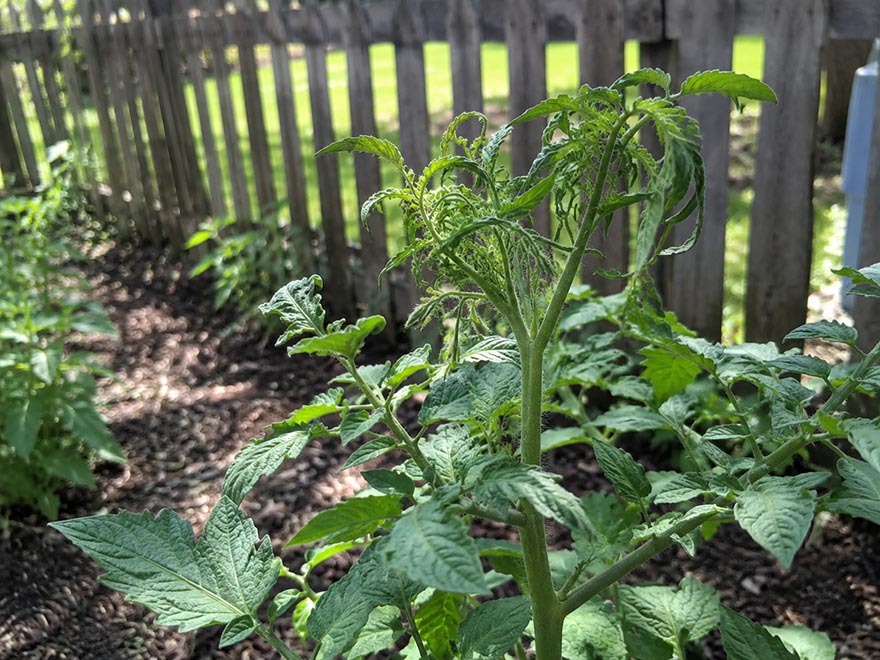
Your tomato leaves curled, cupped, and twisted almost overnight. The new growth looks narrow and strappy, like it is fighting itself. Then you remember a neighbor sprayed their lawn a week or two ago. That timing is the tell. This is herbicide drift damage in the vegetable garden, and here is how to confirm it and what to do next.
TL;DR: Herbicide drift damage in the vegetable garden shows as cupped, twisted, and stunted new growth on tomatoes, peppers, and beans, often 1 to 2 weeks after a nearby lawn spray. If plants were only exposed to drift, they usually recover with steady water and time.
What to do right now
First, confirm it is drift and not a disease or deficiency. Then support the plant while it recovers. Do not pull it up yet, because most drift-hit plants pull through.
Step 1, check the pattern. Herbicide drift hits the newest growth hardest. Look for leaves that cup, twist, or grow narrow and fern-like. Drift usually affects several plant types at once, not just one.
Step 2, rule out the lookalikes. Nutrient shortages yellow the oldest leaves evenly. Mosaic viruses mottle leaves in patches. Spider mites and squash bugs leave flecks, and you can find the pests if you look. Drift twists and cups the youngest leaves with no pest present.
Step 3, check the timing. Growth-regulator weed killers like 2,4-D and dicamba drift on wind or on hot, still air, and symptoms show up 1 to 2 weeks later. If a neighbor sprayed in that window, that is your answer.
Step 4, support the plant. Water steadily and give a light feeding. Regular water and nutrition help plants outgrow the damage. Remove the most deformed leaves so the plant puts energy into clean new growth.
Step 5, document and talk. Photograph the damage with dates. If it came from a neighbor or a lawn service, a calm conversation now can prevent a repeat.
Tracking recovery over the next few weeks matters, since new growth tells you if the plant is bouncing back. easyDacha keeps your watering and feeding tasks on a 7-day list so a stressed plant does not miss a beat. The garden planner app times those care tasks to your plants and your zone.
Set it up here
Set it up here
How to tell drift from heat, disease, and pests
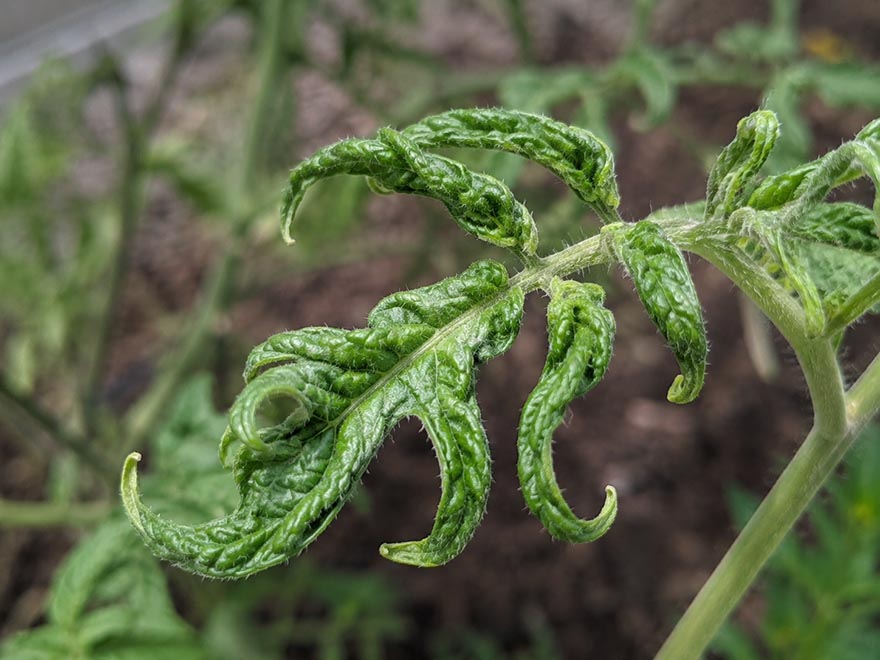
Herbicide drift twists and cups the newest leaves, while other problems each leave a different signature. This is the fastest way to sort them out.
Heat stress curls leaves upward or inward but does not twist or distort the new growth into strappy shapes. Our guide on tomato leaves curling and yellowing in heat walks through that pattern.
Fungal disease makes spots and lesions, not distortion. If you see brown or ringed spots, check our guide on brown spots on tomato leaves instead.
Spider mites and squash bugs leave tiny yellow flecks, and the pests are findable under the leaves, as our spider mite guide shows. Drift leaves no pest behind, just distorted growth.
How herbicide drift damages your vegetable garden plants
Some vegetables are far more sensitive to growth-regulator herbicides than others. Knowing which helps you read your own garden.
Most sensitive are peppers, tomatoes, eggplant, and beans. These show the clearest cupping and twisting from even small amounts of drift.
Moderately sensitive are melons, cucumbers, summer squash, and sweet potatoes. They show milder distortion and often shrug it off.
Least sensitive are basil, pumpkin, lettuce, and the cole crops like kale, broccoli, and cabbage. These may show little or nothing. For catching any leaf problem early, our guide on how to identify plant diseases helps you tell trouble apart fast.
Is the produce safe to eat?
Be cautious here. Lawn and broadleaf weed killers are not labeled for use on food crops. No safety limits are set for eating produce exposed to them.
For plants that only caught light drift and kept growing, the leaf damage is mostly cosmetic. Still, the careful call is to discard any fruit that was directly hit or that formed during a heavy exposure. When the injury is severe or you are unsure, do not eat the produce.
If you need a firm answer for your situation, contact your local extension office or state department of agriculture. They can weigh the herbicide, the dose, and the crop, and give guidance for your exact case.
This is a sensitive topic because it touches what you feed your family. When in doubt, leave it out.
What NOT to do
- Do not rip out the plant right away. Most drift-hit plants recover if they only caught drift and were not sprayed directly.
- Do not add extra fertilizer to force growth. A light, normal feeding helps. A heavy dose stresses a recovering plant more.
- Do not eat fruit from severely damaged plants. These herbicides are not cleared for food crops, so err on the side of caution.
- Do not assume it is a disease and spray a fungicide. Drift is not an infection, and a fungicide does nothing for it.
Best guess by symptom
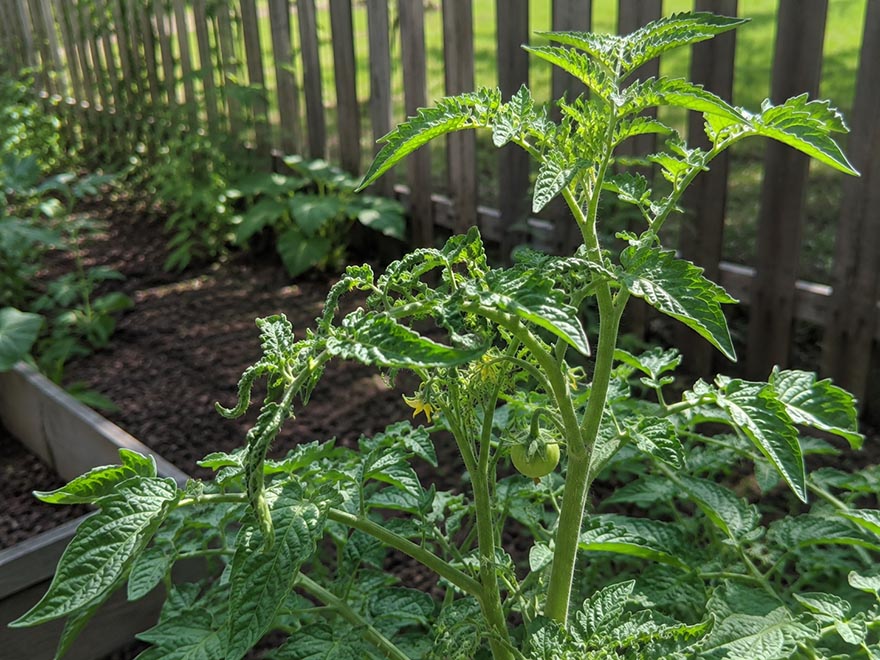
- New leaves cupped, twisted, or strappy, no pests points to growth-regulator drift like 2,4-D or dicamba.
- Yellowing between veins on new leaves, plant near a fence line points to glyphosate drift.
- Even yellowing of old leaves across many plants points to a nutrient issue, not drift.
- Mottled patches or flecks with pests present points to a virus or mites, not drift.
When new growth stays deformed
Give a lightly drifted plant 2 to 3 weeks and watch the newest leaves. Three signs tell you it is recovering. First, each new leaf looks a little more normal than the last. Second, the plant sets flowers again, even if slowly. Third, no new distortion appears, meaning the exposure is over. If new growth keeps coming in deformed weeks later, the dose was heavy, and the plant may not fully bounce back. A struggling first-year garden can feel like a failure. Our guide on why a vegetable garden fails in summer heat helps you tell recoverable setbacks from lost causes.
FAQ
What does herbicide drift damage look like on vegetables?
It shows as cupped, twisted, or narrow strappy new leaves, plus stunted growth, usually on tomatoes, peppers, eggplant, and beans. The damage hits the newest growth hardest and appears 1 to 2 weeks after a nearby lawn or field spray. No pest is present.
Will my plants recover from herbicide drift?
Often yes. If plants only caught drift and were not sprayed directly, they usually outgrow the damage over several weeks. Support them with steady watering and a light feeding. They may set fruit later than normal because growth slows while they recover.
My neighbor sprayed weed killer and now my garden looks damaged. What do I do?
Confirm the pattern of cupped, twisted new growth, then support the plant with water and light feeding. Remove the worst leaves and photograph the damage with dates. A calm talk with your neighbor about spraying on windy or hot days helps prevent it happening again.
Is produce safe to eat after herbicide drift?
Be cautious. Lawn weed killers are not labeled for food crops, so no eating limits are set for them. Discard fruit that was directly hit or formed during heavy exposure, and do not eat produce from severely damaged plants. Contact your local extension office for guidance on your case.
Is there an app that helps me track a plant recovering from stress?
Yes. easyDacha is a gardening app that keeps your watering and feeding tasks on a 7-day list, so a stressed plant does not miss care. The garden planner app times those tasks to your plants and your zone.