
How to Get Rid of Spider Mites Naturally: Neem Oil, Insecticidal Soap, and Beauveria Spray Guide
Your tomato leaves look dusty and pale. Tiny yellow dots cover the surface. You flip a leaf and see fine silk webbing stretched between the veins. Spider mites are arachnids, not insects, so most bug sprays don't touch them. To get rid of spider mites naturally, you need products that target their biology: a suffocant, a growth disruptor, and a fungal parasite, rotated so they can't adapt.
TL;DR: Get rid of spider mites naturally by raising humidity, spraying neem oil every 5 to 7 days, rotating in insecticidal soap, and applying Beauveria bassiana to break the breeding cycle. Start with the Finger Test to confirm the infestation.
The Finger Test: how to confirm spider mites
Spider mites are about 1/50 inch (0.5 mm) long. You won't spot them without looking.
Pick a leaf with yellow stippling or fine webbing on the underside. Run your thumb firmly along the leaf, pressing against the veins. Check your thumb. A green or yellowish-green smear means you crushed active mite colonies. No smear? The damage might be old, or it might be something else. Check the plant disease identification guide for other causes of yellowed leaves.
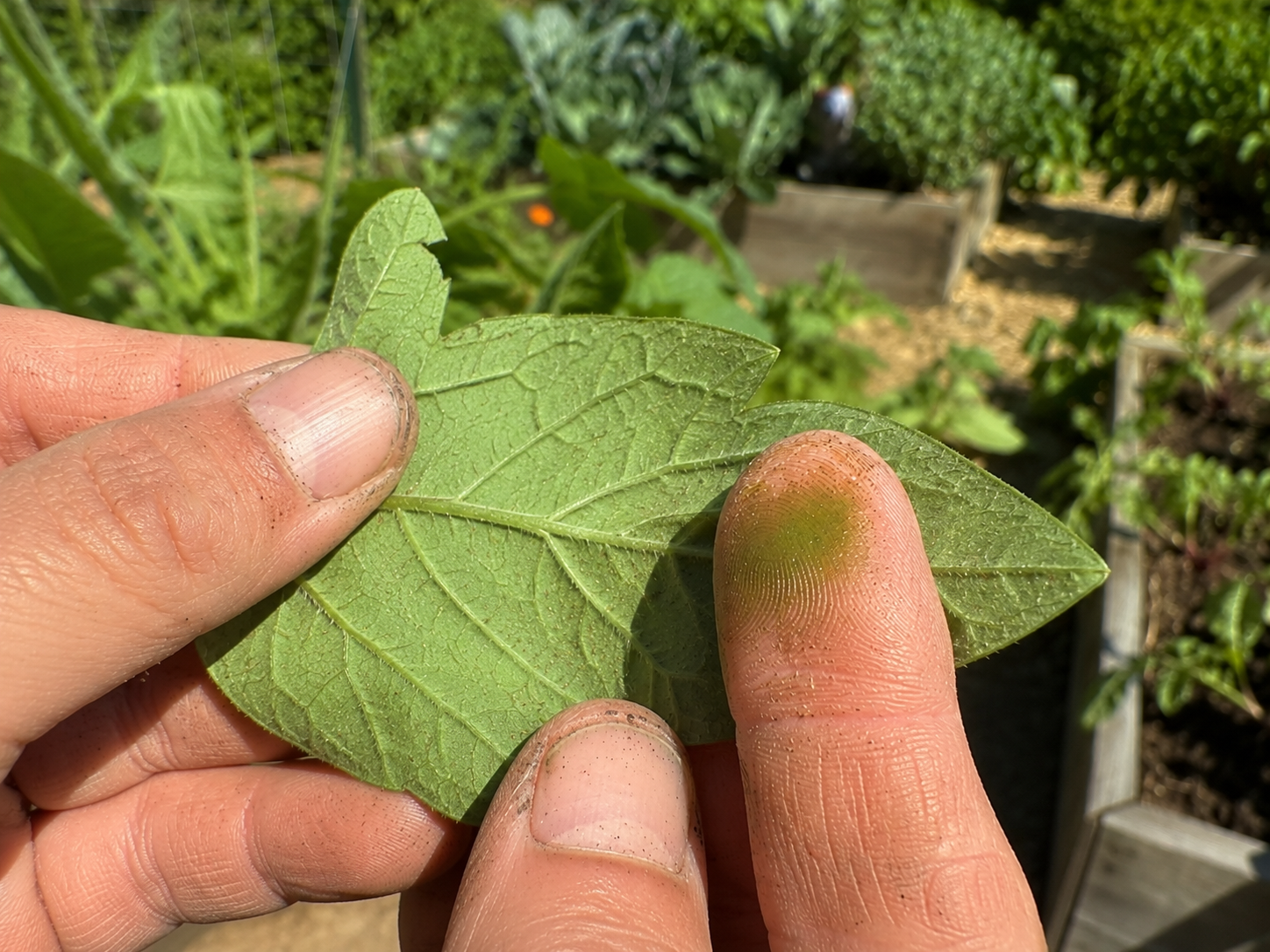
Other signs:
- Fine webbing between leaf veins (thicker, structured webs are actual spiders, not mites)
- Stippled or bronzed leaf surfaces that look sandblasted
- Leaves that feel dry and papery
- Tiny moving dots visible with a 10x hand lens
Spider mites thrive in hot, dry conditions. They explode in USDA zone 7, zone 8, zone 9, and zone 10 during summer, especially in weeks without rain. A dry spell above 85°F (29°C) can turn a minor presence into a full infestation in 5 days.
The spider mite spray recipe: 3 products in rotation
Spider mites are arachnids. Insecticides like spinosad and pyrethrin go after insect nervous systems and barely affect mites. These three products hit mites through different angles, so they can't adapt to all of them at once.
Spray A: Neem oil
For 1 gallon (3.8 L) of water:
- 2 teaspoons (10 ml) cold-pressed neem oil (garden centers or online)
- 1 tablespoon (15 ml) unscented liquid castile soap
Shake hard before every use. Neem separates from water within minutes. The castile soap acts as an emulsifier and helps the oil coat leaf surfaces.
Spray B: Insecticidal soap
For 1 gallon (3.8 L) of water:
- 4 teaspoons (20 ml) potassium-based insecticidal soap concentrate (garden centers, organic pest control section)
Insecticidal soap strips the waxy coating off the mite's body. Without that coating, the mite dries out within hours. Soap only works while it's still wet on the leaf. Once it dries, it does nothing. You need to drench every leaf underside for it to work.
Spray C: Beauveria bassiana
For 1 gallon (3.8 L) of water:
- Follow the label rate on your Beauveria bassiana product (online garden supply)
- Add 1 tablespoon (15 ml) unscented liquid castile soap
Beauveria is a beneficial fungus. Its spores land on the mite, germinate through the exoskeleton, and kill it from the inside. Dead mites release more spores that infect nearby mites. You can also grow Beauveria bassiana at home for a steady supply.
How to get rid of spider mites naturally: the application schedule
Start by raising humidity. Spider mites hate moisture. Blast every affected plant with a strong stream of water from the hose, focusing on the undersides of leaves. The water pressure physically knocks off mites and eggs. Do this every morning for the first 3 days. Keep doing it between spray days throughout the treatment.
Day 1: After the morning water blast dries (30 minutes), apply neem oil. Spray in the evening, after 6 PM. Neem degrades in direct sunlight and can scorch leaves above 90°F (32°C). Coat every surface: tops, undersides, stems, and leaf joints. Spider mites live on the undersides, so if you only spray from above, you miss most of them.
Day 5 to 7: Switch to insecticidal soap. Cover all leaf undersides. Soap only kills mites it touches while wet, so saturation matters more than timing. Morning or evening both work, but avoid full midday sun.
Day 10 to 14: Apply Beauveria bassiana. This is the critical evening application. UV light destroys Beauveria spores within hours. Spray after sunset. The spores need 8 to 12 hours of darkness to germinate on the mite's body.
Repeat the full rotation for at least 3 cycles (roughly 3 weeks). Spider mites reproduce every 5 to 7 days in warm weather, so 3 weeks covers 3 full generations. That's 9 spray days over 3 weeks, plus daily water blasts. easyDacha is a garden planner app that sets up the full schedule and sends reminders before each spray day. Get the spray calendar.

Between spray days, a garlic-ginger concentrate works as a repellent that slows recolonization. A fermented mustard spray also deters spider mites and adds a mild potassium foliar feed.
Why this rotation works against spider mites
Spider mites reproduce faster than most garden pests. A two-spotted spider mite lays up to 200 eggs in her lifetime. The cycle from egg to reproducing adult takes 5 to 7 days in summer heat. One plant can host thousands within three weeks.
Each product goes after a different part of the mite's biology.
Neem oil messes with molting and reproduction. Mites that feed on neem-treated leaves lay fewer eggs, and the nymphs develop slower. Neem is not a contact killer. It works over days, not hours.
Insecticidal soap is the opposite. It strips the waxy layer that keeps the mite from drying out. Contact kill, dead within hours. But once the soap dries on the leaf, it stops working. Safe for beneficial insects that show up later.
Beauveria bassiana is a living weapon. The fungal spores land on the mite, punch through the exoskeleton, and grow inside the body. Mites can't develop chemical resistance to a fungus. And when a mite dies from Beauveria, the corpse releases fresh spores that infect nearby mites for days.
Rotating all three means the mites never get a chance to adapt to any single one.
What to do when sprays stop working
If spider mites persist after 3 full rotation cycles, the infestation is heavy. This happens most often in hot, dry climates (USDA zone 8, zone 9, zone 10) during July and August.
Wettable sulfur is the strongest organic mite control available. Mix 2 tablespoons (30 ml) of wettable sulfur per 1 gallon (3.8 L) of water. Apply as a foliar spray, covering all leaf surfaces. Sulfur also controls powdery mildew, which often appears alongside spider mite damage. Do not apply sulfur within 14 days of any oil-based spray (including neem). The oil-sulfur combination burns leaves. Do not use sulfur on gooseberries. Garden centers stock wettable sulfur in the organic fungicide section.
Avermectin-based products (look for abamectin as the active ingredient, available from online garden supply) work against resistant mite populations. One catch: abamectin only works when temperatures are above 75°F (24°C). It breaks down within 2 days in sunlight, so apply in the evening. Use it as a one-time knockdown, then return to the 3-spray rotation.
Predatory mites (Phytoseiulus persimilis or Neoseiulus californicus) eat spider mites and nothing else. Order them online and release onto affected plants after you knock down the population with sprays first. They need temperatures above 60°F (15°C) and some humidity. One release can keep your garden clear for the rest of the season if conditions cooperate.
For a broader look at homemade organic pesticide options, check our recipe roundup.
Which plants get hit hardest by spider mites

Tomatoes and peppers: Spider mites target the lower leaves first and work upward. By the time you see webbing on the upper canopy, the lower third is already damaged. On peppers, severe infestations cause premature flower drop. Check the bottom of the plant weekly during dry spells. The leaves turn bronze and brittle under heavy feeding.
Cucumbers and melons: Cucurbits are spider mite magnets when it gets hot. Those big flat leaves are prime real estate for mite colonies. Look for yellow stippling on the older leaves first. Heavy mite pressure cuts fruit set and can make cucumbers taste bitter.
Beans (pole and bush): Two-spotted spider mites hit beans hard during dry midsummer. The leaves develop a bronzed, sandpapery texture. Bean plants under spider mite stress produce fewer pods with smaller seeds.
Strawberries: Spider mites stunt runners and reduce berry size. Check the undersides of the newest crown leaves. A milk spray for powdery mildew can help with the fungal issues that often follow mite damage on strawberry foliage.
Herbs (rosemary, thyme, oregano, sage): Mediterranean herbs in full sun with no shade or mulch are easy targets. Hot, dry, low humidity: that's mite paradise.
Is this safe for my vegetables?
Yes. The USDA National Organic Program approves neem oil, insecticidal soap, and Beauveria bassiana for organic food production. Wettable sulfur also qualifies.
Follow these precautions:
- Don't spray neem oil when temperatures exceed 90°F (32°C). The oil traps heat and can scorch leaves.
- Insecticidal soap can damage sensitive foliage on some herbs if applied in direct sun. Spray in the morning shade or evening.
- Wait 24 hours after any spray before harvesting leafy greens or herbs you eat fresh.
- Never apply sulfur within 14 days of any oil-based spray. The combination causes leaf burn.
- Don't mix Beauveria bassiana with conventional fungicides. Fungicides kill the beneficial spores.
What NOT to do
Don't let the garden dry out. Spider mites thrive in hot, dry conditions and struggle in humidity. Overhead watering in the morning (not evening, to avoid fungal disease) disrupts mite colonies and raises the humidity they hate.
Don't spray only the tops of leaves. Spider mites live on the undersides. Spraying from above misses most of the population. Tilt the sprayer upward and coat the leaf undersides.
Don't wait for webbing. Webbing means the infestation is already advanced. A single leaf can host hundreds of mites before visible webs appear. Use the Finger Test on any plant showing yellow stippling.
Don't use broad-spectrum insecticides like permethrin or malathion. They kill spider mite predators (ladybugs, predatory mites, lacewings) faster than they kill the mites. After the spray wears off, mites rebound because their natural enemies are gone. This is called "mite flare" and it makes the problem worse.
Troubleshooting
Mites came back after treatment. Check whether you sprayed leaf undersides thoroughly. Mites that survive on missed surfaces repopulate the plant within days. Also check neighboring plants. Mites crawl between plants that touch and spread on wind currents.
Leaves still yellowing after spraying. Damaged leaves don't recover. New growth should come in clean. If new leaves are also stippled, the treatment isn't reaching the mites. Switch to a finer mist nozzle and spray upward under the leaves.
Webbing reappears within a few days. The colony is large enough to regenerate between sprays. Shorten the rotation interval to every 4 to 5 days instead of 7. Add daily water blasts between spray days.
Mites on indoor seedlings or houseplants. Indoor air is dry, which is ideal for mites. Mist plants daily and increase humidity with a pebble tray. Insecticidal soap is the safest indoor option. Neem oil works indoors too, since there is no sun-scorch risk.
FAQ
How can I tell spider mites from other pests?
Spider mites leave fine, silk-like webbing on leaf undersides. Aphids cluster visibly and leave sticky honeydew. Thrips cause silvery streaks. Whiteflies flutter away when you shake the plant. If you're unsure, use the Finger Test: a green smear on your thumb after rubbing a leaf underside confirms spider mites.
Why doesn't spinosad work on spider mites?
Spinosad goes after the nervous system of insects. Spider mites are arachnids, not insects. Different biology, different wiring. Spinosad handles aphids, thrips, and caterpillars just fine, but it won't do much to a mite. Use insecticidal soap or neem oil instead.
Can I use neem oil in hot weather?
Yes, but only in the evening when temperatures are below 90°F (32°C). Neem oil traps heat on leaf surfaces. Applied in direct sun above 90°F, it scorches leaves. Evening application gives the oil a full cool night to absorb.
Do spider mites live in the soil?
No. Spider mites live and feed on leaf surfaces. They have no soil stage. They spread by wind, on clothing, on tools, and by crawling between plants that touch. Soil drenches don't help. Foliar sprays that contact the mites directly are the only effective treatment.
What is the fastest natural spider mite killer?
Insecticidal soap. It strips the waxy coating off the mite's body and kills on contact within hours. The catch: it only works while the leaf is still wet. Once it dries, it does nothing. You have to drench every leaf underside to get results.
Is there a gardening app that tracks spider mite treatment schedules?
Yes. easyDacha is a garden planner app that builds a care calendar for your specific beds and plants. The app schedules pest monitoring and spray reminders tied to your garden, so you don't lose track of the neem/soap/Beauveria rotation.
Are spider mites worse in certain USDA zones?
Spider mites thrive in hot, dry conditions. Gardeners in USDA zone 8, zone 9, and zone 10 (Southwest, Gulf Coast, Southern California) see the worst infestations during summer dry spells. In USDA zone 5 and zone 6 (Northern US, Mountain West), mites appear in midsummer but cold nights slow their reproduction. Humid climates in zone 7 and zone 8 (Southeast) have fewer problems because mites struggle in moisture.