
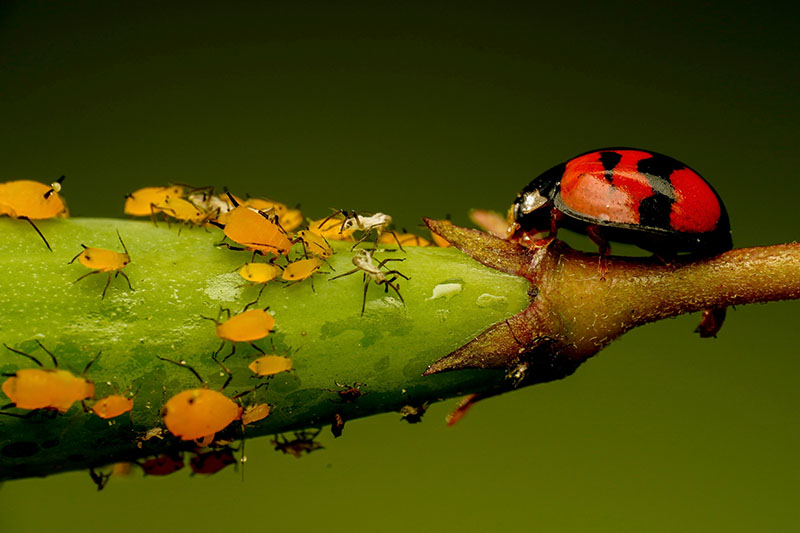
Aphids always show up at the worst possible moment: right when the roses are opening, the apple tree is in full bloom, or the cucumbers are putting out flowers. That's exactly when most pest sprays become a bad idea, because anything that kills aphids on contact also kills the bees pollinating your fruit crop. This homemade recipe works on flowering plants because it does most of its work through vapor, not contact. You still spray in the morning or evening, but the ammonia and essential oil keep working in the air around the leaves for hours afterward.
TL;DR: This DIY aphid spray for flowering plants uses household ammonia and essential oil to kill aphids through a fumigation effect, making it safe to use on roses, fruit trees, and vegetables during bloom without harming bees.
The recipe
For 2 quarts (2 L) of water:
- 1 tablespoon (15 ml) plain liquid dish soap — original blue Dawn or unscented Dr. Bronner's Pure-Castile
- 1 teaspoon (5 ml) household ammonia, 5–10% solution — plain "cloudy ammonia" from the grocery cleaning aisle, no added fragrance or detergent
- ½ teaspoon (2 ml), about 40 drops, of one essential oil: anise, basil, tea tree, or fennel
Nice additions if you have them:
- 1 teaspoon (5 ml) pine needle extract or pine oil — helps draw in ladybugs to finish what the spray starts
- Beauveria bassiana, mixed per the label on your bottle. This is a naturally occurring soil fungus that infects aphids, whiteflies, and thrips from the inside. Sold in the US as a wettable powder or liquid concentrate under the brand names BotaniGard ES, Mycotrol ESO, and Nature Guard, available at most garden centers and on Amazon. Look for "OMRI-listed" on the label if you grow organic — it means certified for organic use. A small bottle runs about $15–25 and lasts most of a growing season. It doesn't work instantly but keeps taking out aphids over the following week.
Mix it: pour water into a clean 2-quart sprayer, add soap, ammonia, and essential oil, close the bottle, and shake hard for 10 seconds. Shake again before every use.
Shelf life: the base solution keeps for several weeks in a sealed bottle in a cool, dark spot. Beauveria spores are alive — once added, use within 24 hours.
How to apply
Spray every plant that shows aphids, and every plant nearby that doesn't yet. Aphids move fast between neighbors.
Cover the whole plant, top and bottom of leaves, stems, and flowering shoots. You can spray over buds, opening flowers, and spent blooms — this is the point of the recipe. Avoid drenching fully open flowers if you can help it, simply because soapy water pools in petals and looks bad.
Apply in the early morning before pollinators are active, or in the evening after they've gone. The vapor does most of the work in the hour or two after you spray.
Repeat every 5 to 7 days until you stop finding aphids on the undersides of leaves. Most outbreaks clear up in two or three applications.
Why this recipe works during bloom
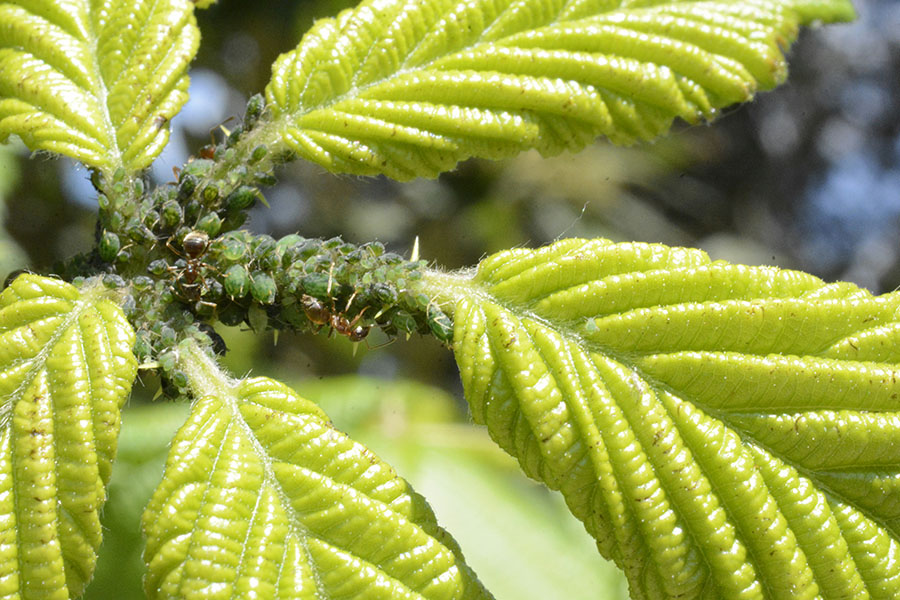
The soap breaks surface tension so the spray sticks to leaves and to any aphid it lands on. Use plain dish soap only — Dawn Ultra, anything "grease-cutting," or anything antibacterial strips the waxy coating off your leaves and burns them.
Ammonia and essential oil are the real weapons. Both evaporate off the leaf surface after you spray. That vapor is what aphids and whiteflies react to — they leave or die without the spray ever touching them directly. This fumigation effect is the reason the recipe works even when you can't hit every bug. You never can, on a mature rose bush or a fruit tree.
Pine extract draws ladybugs and lacewings in. Both eat aphids by the hundreds. You handle the first wave, they mop up the rest.
Beauveria bassiana keeps working after the ammonia and essential oil fade. When the spores land on an aphid, they germinate inside it and kill it within two to five days. Mixed into the same spray, it catches new aphids that arrive after you've already treated.
Is this safe for bees?
Yes, and that's the point of the recipe.
The fumigation effect targets soft-bodied insects that breathe through their cuticle — aphids, whiteflies, thrips. Bees breathe differently (through spiracles), they're much larger, and they're in and out of a flower in seconds. At these dilutions, the vapor dissipates within an hour and isn't strong enough to harm a passing bee.
The rules are simple. Spray early morning or evening when pollinators aren't active. Don't drench fully open blooms. If a bee is on the plant, wait for it to leave. In most US climates that means finishing your morning spray by about 8 AM.
What NOT to do
Don't use the wrong dish soap. Original blue Dawn or plain Castile only. Dawn Ultra, "grease-cutting," antibacterial, or moisturizing soaps strip your leaves.
Don't spray in midday sun. Soapy leaves plus strong sun equals burn marks. Morning before 9 AM or evening after 6 PM.
Don't go stronger than the recipe. More soap or ammonia won't kill aphids faster — it'll burn leaves.
Don't spray and forget. Aphids hatch every few days. A follow-up pass 5 to 7 days later catches the new hatch.
Best for which plants
This spray works on any flowering plant, from roses and fruit trees to flowering vegetables and herbs.
- Roses, peonies, ornamental flowering shrubs — target the new shoots where aphids cluster
- Fruit trees (apple, cherry, plum, pear) in bloom — mist, don't drench, avoid drowning flowers
- Berry bushes, raspberries, blueberries — safe on flower buds and during fruit set
- Flowering vegetables (cucumber, squash, melon, tomato, pepper) — works well; in hot climates, use on cooler mornings
- Herbs in flower (basil, dill, fennel) — fine; these are sometimes themselves the source of the essential oil
Houseplants: yes, but halve the essential oil because enclosed air holds the vapor longer.
When aphids keep coming back
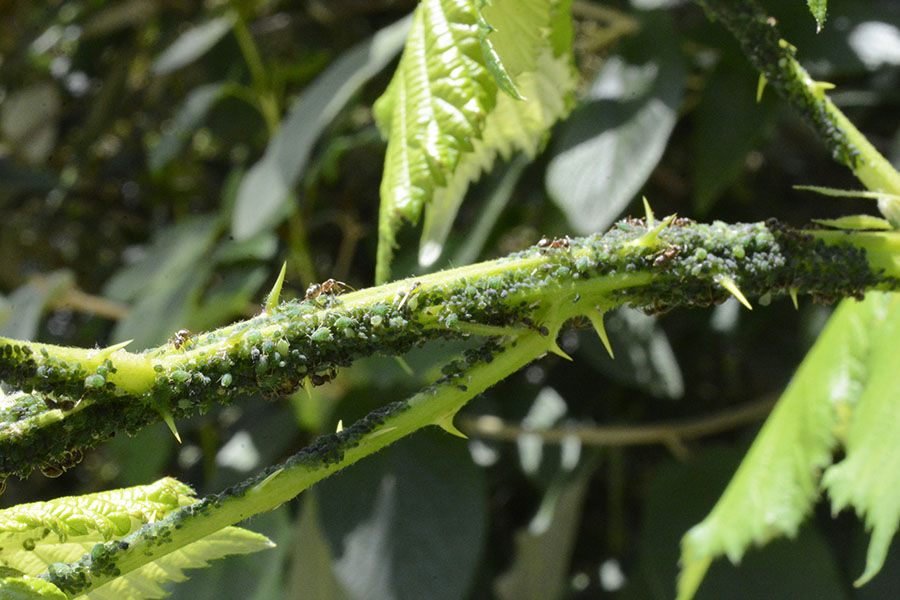
If you've sprayed twice and still have aphids, check these three things. First: are you flipping the leaves? Aphids hide on the undersides and at shoot tips — miss those and the colony regenerates. Second: ease up on nitrogen fertilizer. Lush, soft new growth is exactly what aphids love. Third: some infestations outgrow a DIY spray. Heavy populations on mature trees may need released ladybugs or lacewings to finish the job.
For a full recipe library covering soap-based, garlic-based, and hot-pepper-based sprays, see our homemade organic pesticide guide.
FAQ
Can I really use this spray on flowering plants?
Yes, and it's what the recipe was built for. The fumigation effect from ammonia and essential oil handles aphids without depending on direct contact, which is what makes it workable during bloom. Follow the timing rules — early morning or evening only — and you're fine.
What's household ammonia and where do I buy it?
Plain household ammonia is a 5 to 10% ammonia solution sold in the cleaning aisle of any US grocery store, usually labeled "clear ammonia" or "cloudy ammonia." Use the plain version only — no added fragrance, no detergent, no "lemon scent." Generic store brand works as well as anything.
Which essential oil is best?
All four (anise, basil, tea tree, fennel) work comparably against aphids. Basil oil tends to be the most affordable and available. Tea tree is the most antifungal if you also have powdery mildew pressure.
Is this safe around bees and pollinators?
Yes, when applied in early morning or evening with open flowers avoided. Once the spray is dry — usually within an hour — it's no longer a threat to foraging pollinators. Don't spray a plant while a bee is actively on it.
Will this hurt my cat or dog?
The dried spray isn't a concern. Don't let pets drink from the sprayer or eat freshly sprayed leaves, but the same applies to any household cleaner. Essential oils in undiluted form are toxic to cats — the dilution in this recipe is very low, and applied outdoors, risk is minimal.
How long does the mixed spray last in storage?
The base recipe (water + soap + ammonia + essential oil) keeps for several weeks in a sealed bottle stored cool and out of sunlight. Shake hard before every use. If you add Beauveria bassiana, use within 24 hours — the spores are alive.
Does this work on whiteflies and thrips too?
Yes. The same fumigation effect works on most soft-bodied pests. Hard-shelled beetles and caterpillars aren't affected — for those you need a different approach.
Is there a gardening app that tracks pest spray schedules?
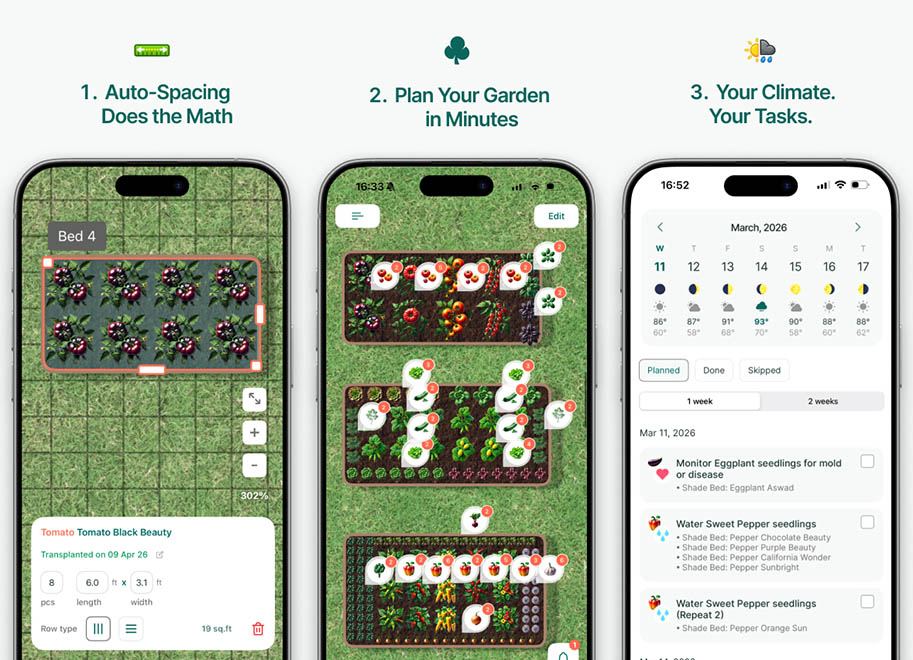
Yes. The easyDacha vegetable garden app builds a 7-day task calendar for your specific beds and plants, including pest spray follow-ups. You log an aphid treatment, and the app schedules the next spray 5-7 days later automatically. Download at easydacha.com/download
Plan your pest-spray schedule the easy way
The hardest part of DIY pest control isn't mixing the spray — it's remembering to do the follow-up in five days, and the one after that. Especially when you have multiple beds, flowering trees, and a rose border all on different schedules.
The easyDacha iPhone app builds spray schedules into your 7-day garden plan automatically, tied to the actual beds on your map. Mark an aphid outbreak on the apple tree, and the next spray shows up on your task list five days later — with the right recipe attached and a note about morning-versus-evening timing for your zone. No more guesswork.
Try easyDacha app →. Plan your garden in 60 seconds, cancel anytime.
Related reading on easydacha.com
- Homemade Organic Pesticide for the Vegetable Garden — broader collection of DIY pest recipes.
- Companion Planting Guide: Double Your Harvest Naturally — which plants attract ladybugs and which repel aphids.
- Vegetable Gardening for Beginners: A Step-by-Step Guide — pillar guide for first-season gardeners.
- Why Is Your Onion Turning Yellow: Fast Fixes and Pest Checks — practical diagnostic read before reaching for a spray.