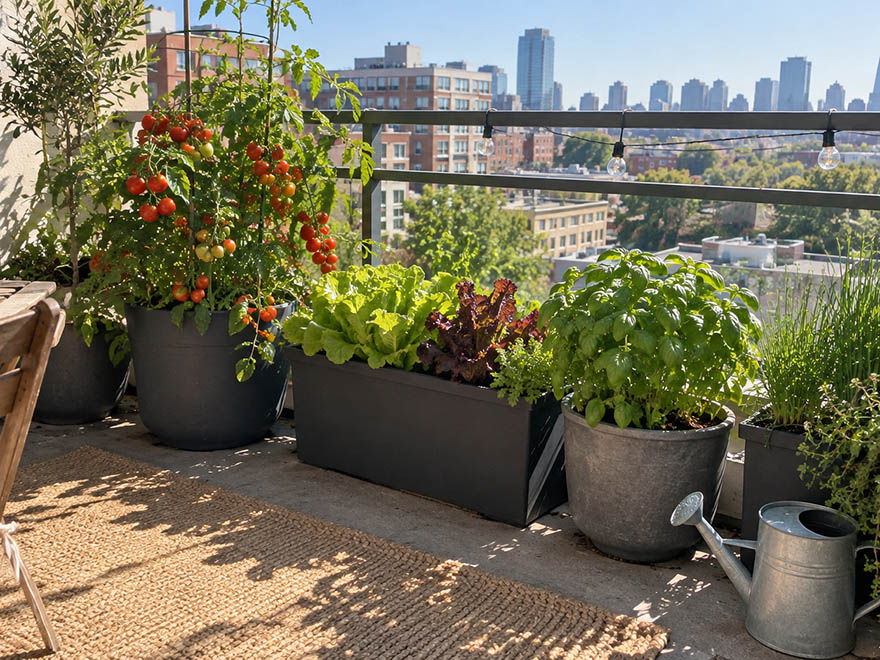
You have a balcony, a little sun, and a wish to grow your own food. You do not have a yard, and every guide seems to assume you do. A balcony vegetable garden for beginners is its own thing, with its own rules for pots, sun, and crops. Get those three right and you will be picking salads within weeks.
TL;DR: A balcony vegetable garden for beginners works best with a few large containers, a spot that gets 6 or more hours of sun, and fast crops like lettuce, herbs, bush beans, and cherry tomatoes.
How to start a balcony garden in three steps
Start with sun, then pots, then plants. Skip ahead and you will waste money on crops that cannot thrive.
- Track your sun. Watch your balcony for one day. Note the hours of direct sun on the railing and the floor. Most vegetables need 6 to 8 hours, while greens manage on 3 to 5.
- Choose containers. Bigger is easier on a balcony, because small pots dry out in an afternoon. Use 2 to 5 gallon pots with drainage holes for most crops.
- Pick easy crops. Match the plants to your sun. Full sun gets tomatoes and peppers, part shade gets greens and herbs.
That order is the whole method. Our guide to garden sun mapping shows how to measure your light before you buy a single seed.
The best crops for a balcony vegetable garden for beginners
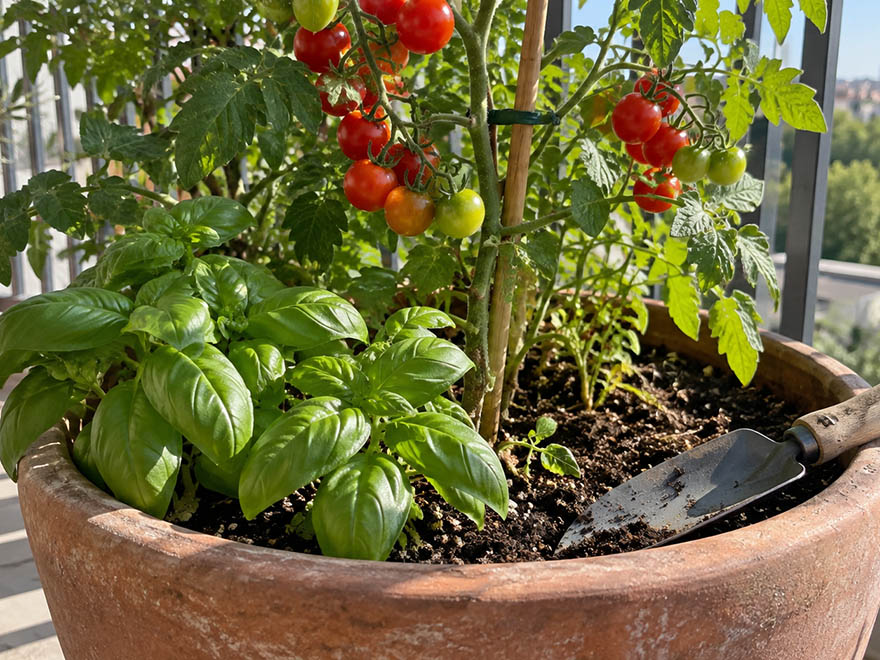
Grow what gives you a fast, visible win. Speed keeps beginners going, and a balcony is perfect for quick crops.
- Leaf lettuce and salad greens. Ready in about 30 days, and happy in part shade.
- Radishes. Pullable in 3 to 4 weeks. Great in a shallow window box.
- Bush beans. Heavy croppers in a 5 gallon pot, no trellis needed.
- Cherry tomatoes. One plant in a 5 gallon container feeds a snacker all summer.
- Herbs. Basil, parsley, mint, and chives thrive in small pots. Our foolproof guide to growing mint keeps this spreader in its own container.
- Peppers. Compact and productive in a 5 gallon pot with full sun.
If your balcony is shady, do not give up. Our guide to vegetables for partial shade lists crops that produce on limited light.
Container gardening companion plants: what shares a pot
You can grow more than one plant per container if you pair them well. These container gardening companion plants share water and light without crowding each other out.
Good pairings for a beginner balcony:
- Lettuce and taller herbs. Low greens fill the space under basil or parsley.
- Cherry tomato and basil. A classic combo in one large pot, both love full sun.
- Bush beans and a light herb. Beans feed the soil while a small herb tucks in beside them.
Keep the rules simple. Pair plants with the same sun and water needs. Do not crowd a small pot, since roots compete underground even when the tops look fine. When in doubt, one plant per pot is always safe.
Watering and feeding on a balcony
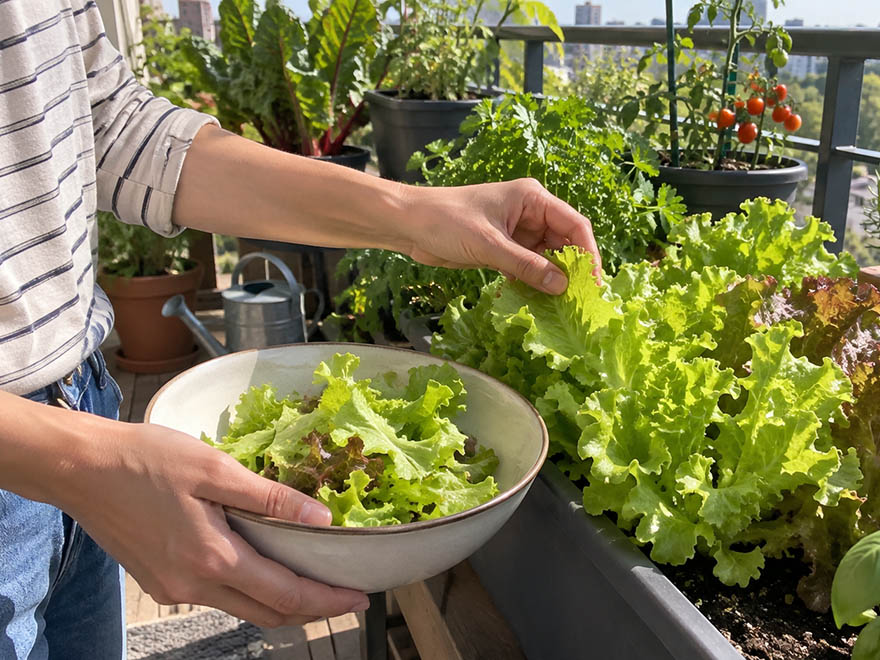
Balcony pots dry out faster than ground beds, so water is your main daily job. Check the top inch of soil every morning in warm weather. If it is dry, water until it runs from the drainage holes.
Feed lightly and often. Potting mix runs low on nutrients within a few weeks, and frequent watering flushes them out faster. A diluted liquid feed every one to two weeks keeps plants producing.
Wind is the hidden balcony problem. High balconies dry plants out and can topple tall pots. Group containers together to shelter them, and keep the tallest crops against a wall.
Best for which spaces
- Sunny balcony (6+ hours). Cherry tomatoes, peppers, bush beans, plus herbs.
- Part-shade balcony (3 to 5 hours). Lettuce, spinach, arugula, chard, parsley, mint.
- Tiny railing or windowsill. Herbs, green onions, a single lettuce pot.
- Windy high-rise. Low, heavy pots grouped together, greens and compact herbs.
Not sure your space is enough? Our guide to what your gardening space needs helps you plan before you plant. Brand new to all of it? Start with our first vegetable garden walkthrough.
Plan your balcony season in the right order
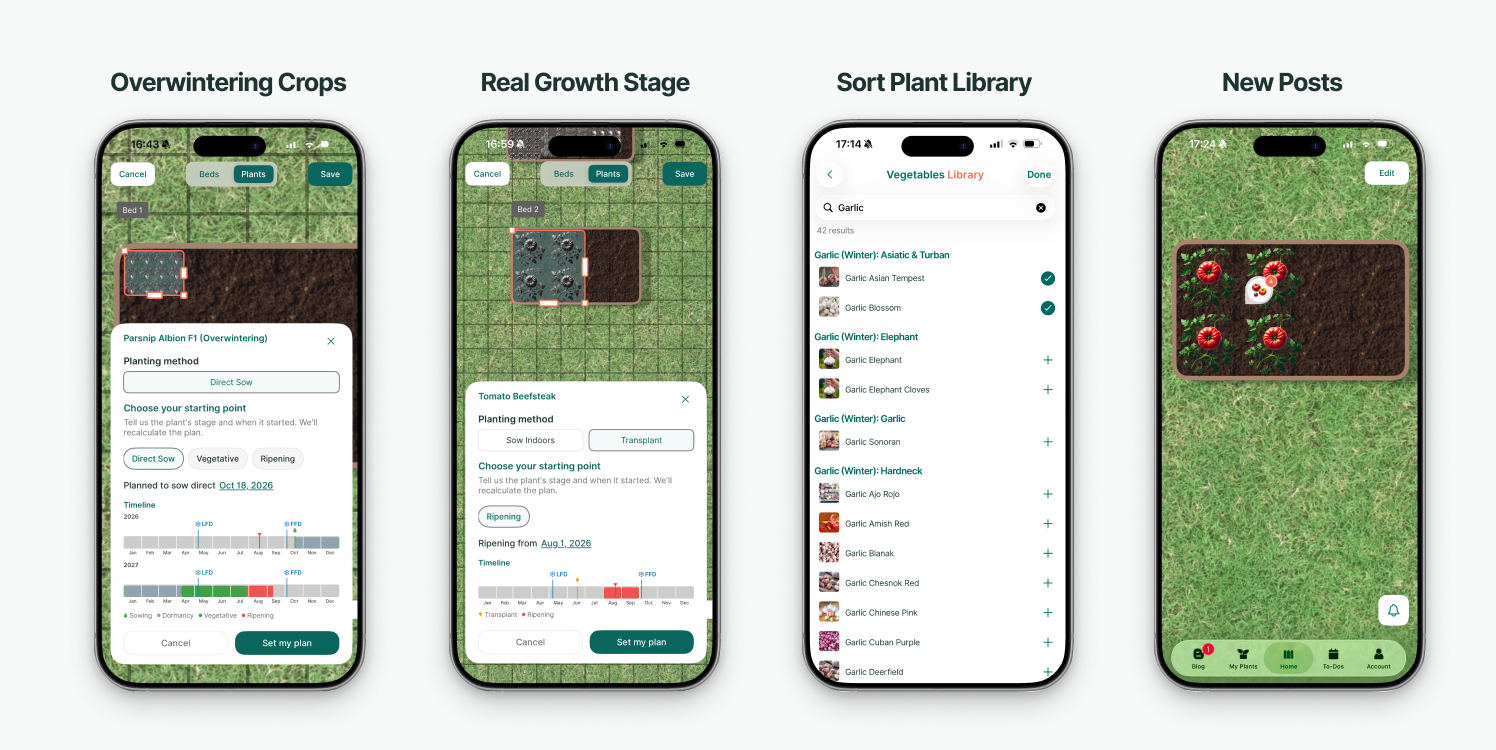
The hardest part of a balcony vegetable garden for beginners is timing. Sow too early or too late for your area and even the easiest crop struggles. A garden planner app takes that off your plate.
easyDacha builds a plan from your ZIP code. It gives you exact sowing and transplant dates, a two-week task list tied to your actual pots, and a seed inventory so you buy only what you need. Draw your containers on the garden map, including pots and a greenhouse if you have one, and spacing is calculated for you.
Try easyDacha, the vegetable garden app made for small spaces. Cancel anytime.
FAQ
How do I start a balcony vegetable garden as a beginner?
Start by tracking how many hours of sun your balcony gets, then choose 2 to 5 gallon pots with drainage, and plant fast, easy crops like lettuce, radishes, and herbs. Match the crop to your sun and water daily in warm weather.
What vegetables grow best on a balcony?
Lettuce, radishes, bush beans, cherry tomatoes, peppers, and most herbs grow best on a balcony. Greens and herbs tolerate part shade, while tomatoes and peppers need 6 or more hours of direct sun.
What plants can grow together in the same container?
Plants with the same sun and water needs can share a container. A cherry tomato with basil, or lettuce under taller herbs, are reliable container gardening companion plants. Avoid crowding, since roots compete even when the tops look fine.
Can I grow vegetables on a balcony with limited sun?
Yes. A balcony garden with limited sun still grows leafy greens and herbs, which produce on 3 to 5 hours a day. Save the sunniest spot for one fruiting crop, and grow shade-tolerant greens everywhere else.
Is there an app for planning a balcony vegetable garden?
Yes. easyDacha is a garden planner app that works for containers and small spaces. It builds a plan for your exact location, tells you what to plant and when, and gives you a two-week task list tied to your pots.