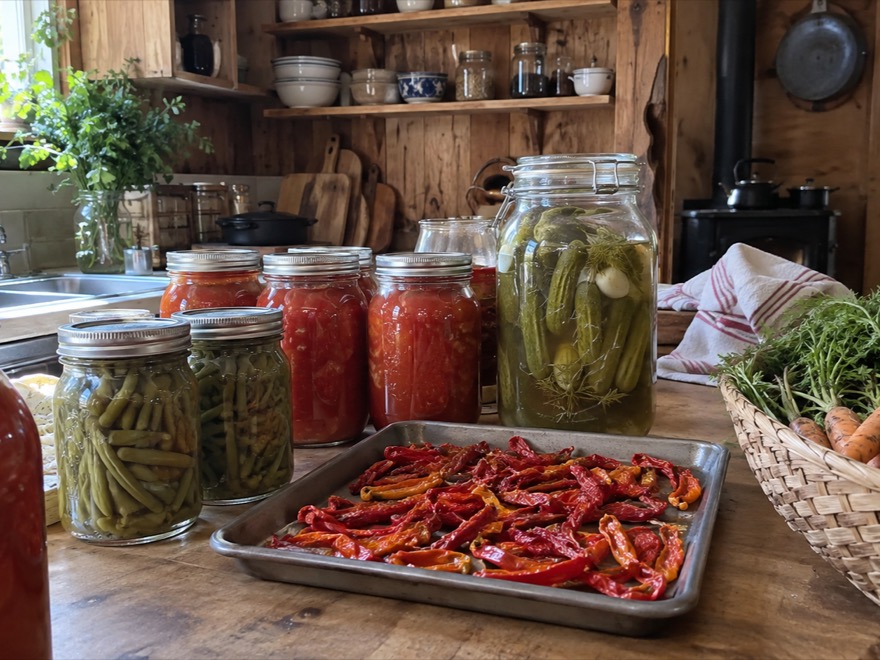
Your freezer is packed, the harvest keeps coming, and you cannot bear to compost good vegetables. Freezing is easy, but it runs out of room fast and leaves you helpless in a power outage. The best ways to preserve vegetables besides freezing give you shelf-stable food that lasts months without electricity. Four methods cover almost everything, and each fits a different vegetable and a different amount of effort.
TL;DR: The best ways to preserve vegetables besides freezing are canning, dehydrating, fermenting, and root cellaring, and the right one depends on the vegetable, with low-acid vegetables requiring a pressure canner for safety.
The best ways to preserve vegetables besides freezing at a glance
Each method suits different crops and different kitchens. Here is the quick map before the details.
- Canning turns produce into shelf-stable jars that last a year or more.
- Dehydrating removes water for lightweight, long-lasting dried food.
- Fermenting uses salt and time to make tangy, probiotic-rich vegetables.
- Root cellaring stores whole vegetables cool and humid with no processing at all.
Match the crop to the method and you can save nearly any harvest. Start with the one that fits your time and your vegetables.
How each method works
1. Canning (the big warning matters)
Canning seals cooked produce in jars for shelf-stable storage, but the method depends on acidity, and this is a safety issue. High-acid foods like tomatoes and pickles are processed in a boiling water bath. Low-acid vegetables, which includes most vegetables, beans, corn, carrots, and green beans, must be processed in a pressure canner at 240°F (116°C).
Never water-bath plain low-acid vegetables. Only a pressure canner reaches the temperature that destroys botulism spores in low-acid food. Always follow a tested recipe from a trusted source and never improvise processing times. This is the one preservation method where a shortcut can make someone seriously ill.
2. Dehydrating
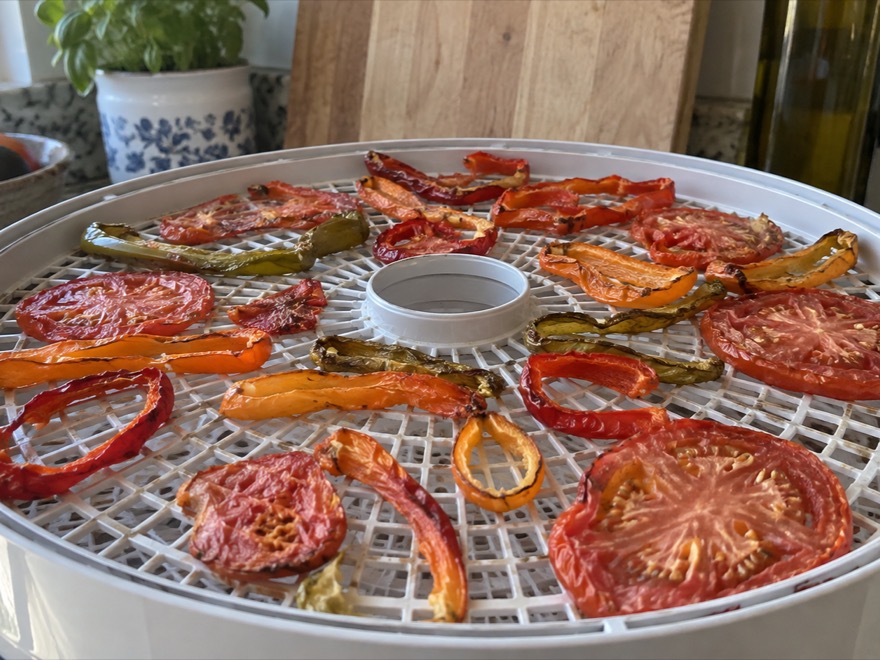
Dehydrating removes moisture so bacteria and mold cannot grow, and dried vegetables can last up to a year. Use a dehydrator or a low oven, and slice vegetables thin and even so they dry at the same rate. Dry until brittle or leathery, depending on the crop.
Store dried vegetables in airtight jars away from light. They take up almost no space, which makes drying ideal for small kitchens. Rehydrate them in soups and stews, or grind dried peppers and tomatoes into powders. This is one of the easiest ways to preserve harvest without a freezer.
3. Fermenting
Fermenting uses salt brine and time to preserve vegetables while adding tang and probiotics. Submerge chopped or shredded vegetables in a salt brine, keep them under the liquid, and let beneficial bacteria do the work. Cabbage becomes sauerkraut or kimchi, and cucumbers become sour pickles.
Fermented vegetables keep for several months in a cool spot or the refrigerator. The salt and acidity protect the food, so no special equipment is needed. Keep everything below the brine, since exposed vegetables can mold.
4. Root cellaring
Root cellaring stores whole, unwashed vegetables in cool, humid conditions with no processing at all. It keeps crops fresh for 3 to 6 months. A basement corner, an insulated garage, or a buried bin can all work as a root cellar.
Store carrots and beets packed in damp sand at 32°F to 40°F (0°C to 4°C). Keep potatoes, onions, and winter squash in a cool, dark, dry spot instead. Root cellaring is the least work of any method, since you simply store what you grew.
Canning versus freezing: which is better
Canning versus freezing comes down to space, power, and effort. Freezing is fastest and keeps texture best, but it demands freezer space and fails in a power outage. Canning takes more work and equipment, yet the jars sit on a shelf for a year with no electricity.
For a first-time preserver, freezing is the gentle start. Once your freezer fills, canning, drying, fermenting, and root cellaring extend your storage without adding a single watt. Most experienced gardeners use all of them, matching each crop to its best method. This layered approach is how homestead-scale growers manage a big harvest.
What NOT to do
Do not water-bath can low-acid vegetables. Plain vegetables need a pressure canner to be safe. Boiling water is not hot enough to kill botulism spores.
Do not improvise canning times or recipes. Use a tested recipe from a trusted source. Guessing with canning risks serious illness.
Do not ferment above the brine. Vegetables that poke above the liquid mold. Weigh them down so everything stays submerged.
Do not root cellar bruised or damaged produce. One rotting vegetable spoils the whole bin. Store only clean, sound, unwashed crops.
Best for which vegetables
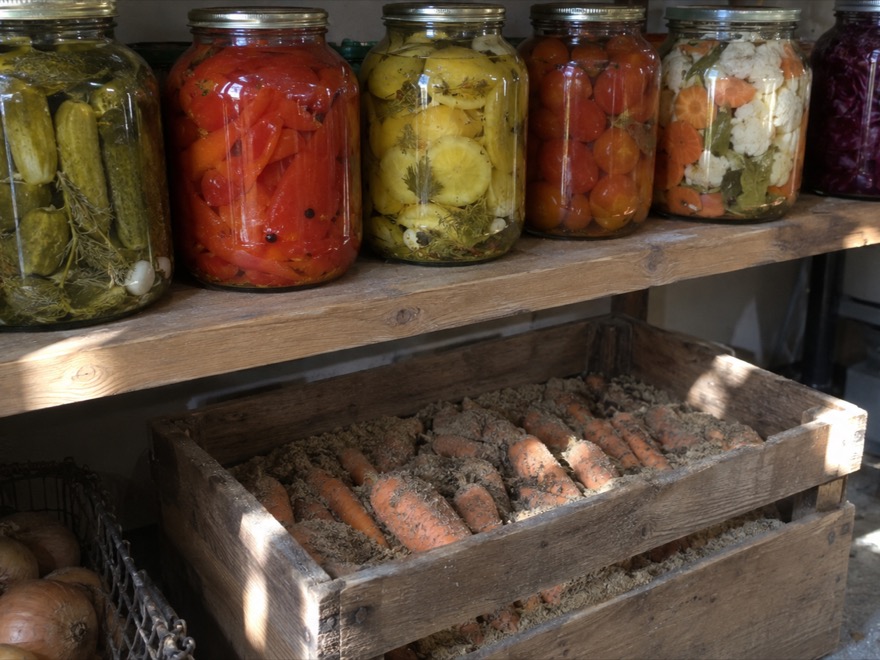
Match the crop to the method for the best results:
- Tomatoes and pickles: water-bath canning, since they are high-acid. Cucumbers also shine as ferments. See our too many cucumbers guide.
- Beans, corn, carrots, and other low-acid crops: pressure canning only, or dehydrating.
- Cabbage, kale, and other sturdy greens: fermenting into kraut and kimchi. See our kale growing guide.
- Root crops and winter squash: root cellaring, the simplest option. Grow more roots with our how to grow carrots indoors guide.
When your harvest keeps outpacing storage
If you always end up with more than you can preserve, plan the harvest better next season. Stagger your plantings so crops mature in waves instead of all at once. Grow storage-friendly varieties of squash, onions, and roots that hold for months on a shelf. And match your feeding to the crop, since our simple fertilizer plan for flowering vegetables keeps production steady rather than boom and bust.
Spacing out the harvest is where planning pays off. easyDacha builds a two-week task list from your beds and your ZIP code. The garden planner app times your plantings and flags harvest windows before the flood hits. Try easyDacha. New to growing your own? Start with our vegetable gardening for beginners guide, or grow more greens with growing spinach indoors.
FAQ
What are the best ways to preserve vegetables besides freezing?
The best ways to preserve vegetables besides freezing are canning, dehydrating, fermenting, and root cellaring. Canning makes shelf-stable jars, drying removes water for lightweight storage, fermenting uses salt and time, and root cellaring stores whole crops cool and humid. The right one depends on the vegetable.
How can I preserve my harvest without a freezer?
Dry it, ferment it, can it, or root cellar it. Dehydrating and root cellaring need no electricity at all, and fermenting only needs salt. Canning stores jars on a shelf for a year. These methods let you preserve harvest without a freezer or even without power.
Is canning or freezing better for vegetables?
Freezing is faster and keeps texture best, but it needs freezer space and fails in a power outage. Canning takes more effort and equipment, yet jars store on a shelf for a year with no electricity. Most gardeners use both, freezing first and canning once the freezer fills.
Do I need a pressure canner for vegetables?
Yes, for most vegetables. Low-acid vegetables like beans, corn, and carrots must be pressure canned at 240F to destroy botulism spores. Only high-acid foods like tomatoes and pickles are safe in a boiling water bath. Never water-bath plain low-acid vegetables.
Is there an app that helps me plan a harvest I can preserve?
Yes. easyDacha is a garden planner app that builds a two-week task list from your ZIP code and beds. The gardening app times your plantings and flags harvest windows. You can stagger crops and preserve them in manageable batches instead of all at once.
How long do preserved vegetables last?
It depends on the method. Properly canned vegetables last a year or more. Dehydrated vegetables keep up to a year. Fermented vegetables last several months, and root-cellared crops 3 to 6 months. Always store canned and dried food in a cool, dark, dry place and label everything with the date.