
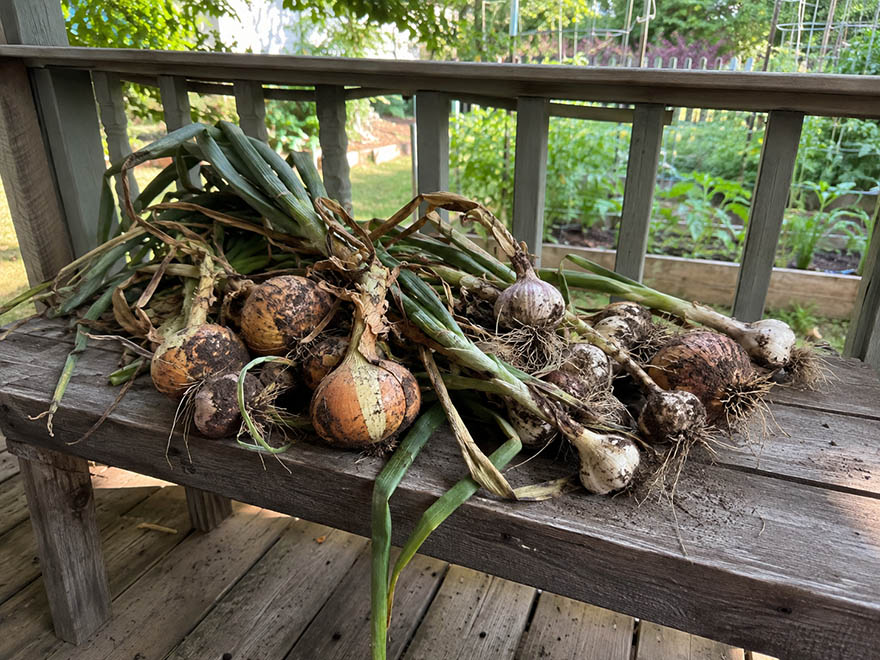
You pulled a beautiful pile of onions and garlic, and now they are sitting on the porch while you wonder what to do next. Skip curing and they turn soft or sprout within weeks. Cure them properly and the same bulbs keep for months. Curing is just controlled drying that seals the necks and skins, and it takes almost no work.
TL;DR: To cure onions and garlic for storage, dry them in a warm, shaded, airy spot for 2 to 3 weeks until the necks are tight and the skins are papery, then trim and store cool and dry at 32 to 40°F (0 to 4°C).
The curing protocol
Step 1. Harvest at the right moment. Pull onions when about half the tops have flopped over and the necks feel soft. Pull garlic when the lower 4 to 6 leaves have browned but 5 or 6 upper leaves are still green. Loosen the soil with a fork first so you do not tear the bulbs.
Step 2. Knock off the dirt, leave everything else on. Brush away loose soil with your hand. Do not wash the bulbs. Do not cut the tops or roots yet. The leaves feed the wrappers as they dry.
Step 3. Lay them out to cure. Spread the bulbs in a single layer, or hang them in loose bunches. Pick a warm, dry, shaded spot with good airflow, like a covered porch, a garage, or a shed. Keep them out of direct sun, which scalds the bulbs.
Step 4. Give it 2 to 3 weeks. Curing is done when the necks are fully dry and tight, the outer skins are papery, and the roots are stiff and dry. That usually takes 2 to 3 weeks.
Step 5. Trim and clean up. Cut the tops to about 1 inch (2.5 cm) above the bulb and the roots to about half an inch (1 cm). Softneck garlic and onions can be braided instead. Rub off the loose outer skin, but leave the tight wrappers on.
How to store them so they last
Store cured onions and garlic somewhere cool, dark, and dry. The target is 32 to 40°F (0 to 4°C) with 60 to 70% humidity and steady airflow. A mesh bag, an open basket, or a braid hung in a cool room all work well. A root cellar, an unheated basement, or a cool closet is ideal.
Here is the part most people miss. Garlic sprouts fastest between 40 and 56°F (4 to 13°C), so avoid that middle range. Keep garlic either cold, at 32 to 40°F (0 to 4°C), or at cool room temperature around 56 to 65°F (13 to 18°C). Onions are simplest kept cold and dry.
Tracking when each crop was pulled, cured, and moved to storage is easy to lose over a busy fall. easyDacha builds harvest and storage tasks into your two-week task list. The gardening app reminds you when curing is done and when to check bulbs for sprouting. It reads your ZIP code to time the harvest window too. Plan your harvest in easyDacha.
Why curing works
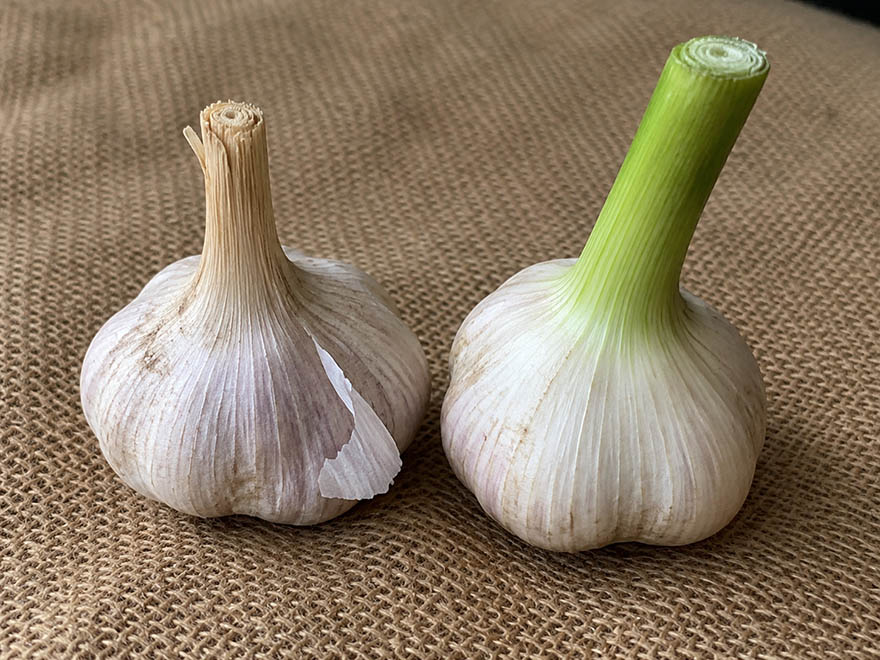
Curing dries down the neck and the outer wrappers into a sealed, papery barrier. That seal is what keeps moisture out and rot fungi from getting a foothold. A soft, green neck is an open door for spoilage. A dry, tight neck is a closed one.
The papery skins do the same job for the sides of the bulb. They lock in the flesh and block the fungal spores that cause storage rots. This is why curing garlic for storage matters as much as growing it well. The skins you build now decide how long the bulb keeps. With your beds now free, it is a good moment to plan the next round using succession planting.
Can I eat them during curing?
Yes. Uncured onions and garlic are perfectly good to eat right away. Curing is only about storage life, not safety. Use your thick-necked, bruised, or split bulbs first in the kitchen, since those will not keep well anyway.
Save your firm, clean, tight-necked bulbs for storage. If a bulb bolted and sent up a hard flower stalk, eat it soon. Bolted bulbs have a woody core and store poorly. Small or split cloves are perfect for a homemade garlic spray for pests instead of the compost pile.
What NOT to do
Do not wash the bulbs before curing. Water invites rot and undoes the drying. Brush off dirt dry, and wash only right before you cook.
Do not cure in direct sun. Sun scalds onion and garlic bulbs, which then spoil in storage. Shade with airflow is the rule.
Do not store garlic between 40 and 56°F (4 to 13°C). That range triggers sprouting fast. Keep it colder or at cool room temperature.
Do not store onions next to potatoes. Potatoes give off moisture and gas that make onions sprout and soften. Keep them in separate spots.
Best for which crops
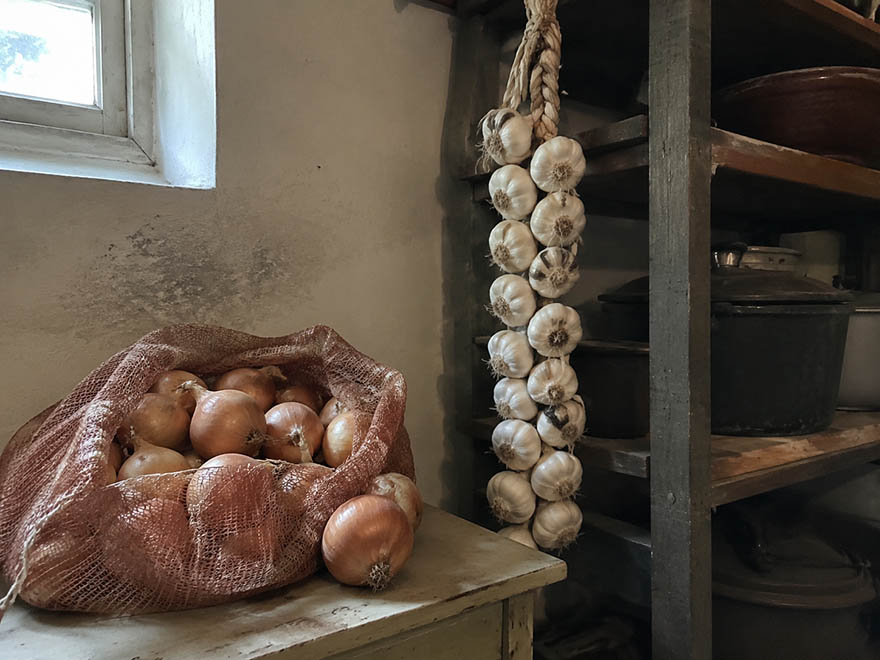
- Storage onions (pungent, long-day and intermediate types): Cure well and keep 3 to 6 months. Your best long-term keepers.
- Sweet onions: Cure the same way, but eat within a few weeks. High sugar and water content means they never store long.
- Hardneck garlic: Cure and store cold. Great flavor, keeps about 4 to 5 months.
- Softneck garlic: The longest keeper, often 6 to 9 months. Braids well.
- Shallots: Treat exactly like storage onions. Cure and keep cool and dry.
Next season, alliums also earn their keep in the bed as companion plants that help deter some pests. If any onions yellowed early while growing, that is a separate issue from harvest ripeness.
When bulbs still sprout or rot in storage
If bulbs sprout or go soft too soon, check three things. First, the neck. A neck that was still soft at storage time means curing was cut short, so give it the full 2 to 3 weeks next time. Second, the temperature, especially for garlic in that 40 to 56°F (4 to 13°C) sprouting zone. Third, the humidity and airflow, since a damp, closed bin sweats and rots. For using up bulbs that will not keep, our guide on what to do with a harvest glut has preserving ideas that work for alliums too.
FAQ
When should I harvest onions for storage?
Harvest onions when about half the tops have fallen over on their own and the necks feel soft, usually in late summer. Stop watering once the tops start to flop. Pull on a dry day and move the bulbs straight into curing. Knowing when to harvest onions is the first step to bulbs that keep all winter.
How long do you cure onions and garlic?
Cure onions and garlic for storage for 2 to 3 weeks. They are done when the necks are fully dry and tight, the outer skins are papery, and the roots are dry and stiff. Thick-necked bulbs may take a little longer, and those are usually the ones to eat first.
How do you store garlic so it does not sprout?
Store garlic cool, dark, and dry at 32 to 40°F (0 to 4°C) or at cool room temperature around 56 to 65°F (13 to 18°C). Avoid the 40 to 56°F (4 to 13°C) range, which triggers sprouting fast. Good airflow and about 60% humidity keep it firm for months.
Can I store onions and garlic in the fridge?
A standard fridge crisper is too humid and makes them sprout or mold. Garlic can go in the coldest, driest part of the fridge if you have no cool room. Onions do best in a cool, dry, dark spot with airflow, like a mesh bag in an unheated basement.
How long will cured onions and garlic keep?
Well-cured storage onions keep 3 to 6 months, and sweet onions only a few weeks. Garlic keeps about 4 to 5 months for hardneck types and 6 to 9 months for softneck types. Storing onions over winter works best with pungent, long-day varieties bred for keeping.
Is there an app that reminds me when to harvest and cure?
Yes. easyDacha is a garden planner app that calculates your harvest window from your ZIP code and adds curing and storage checks to your two-week task list. The vegetable garden app keeps the whole schedule tied to your actual beds. You cure and store each crop at the right time without tracking it by hand.