
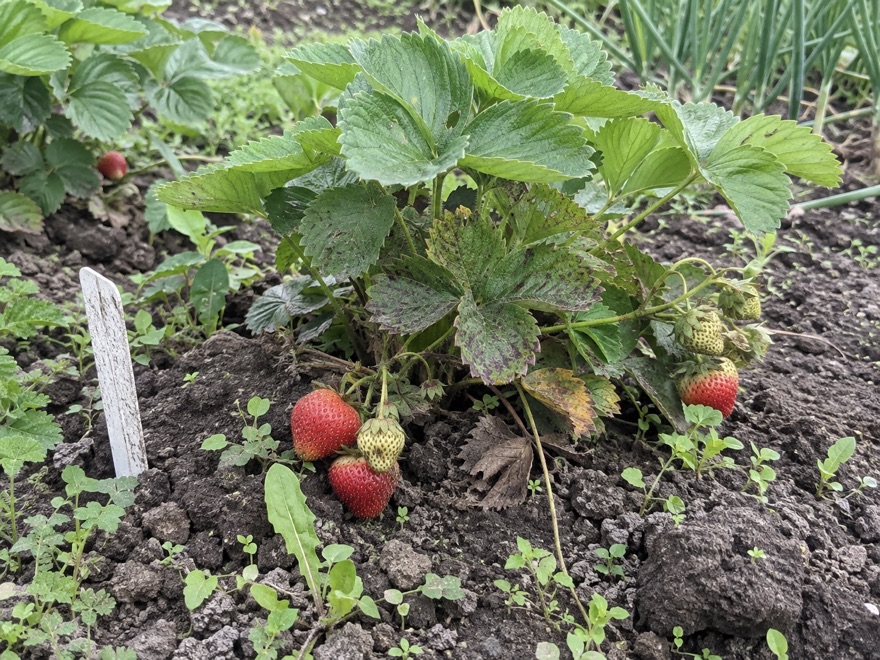
You have probably heard that a plain milk spray helps with powdery mildew, but this is a different recipe entirely. You boil the milk with a little sugar, then ferment it with a Bacillus subtilis starter for 24 to 48 hours. That breaks the milk protein down into peptides and free amino acids the plant absorbs directly. At the same time, live bacteria colonize the leaf surface and crowd out mildew and gray mold.
TL;DR: Bring 1 quart (1 L) of milk with 1 tablespoon of sugar to the boil and let it cool. Stir in 1 tablespoon (15 mL) of Bacillus subtilis biofungicide and keep it warm for 24 to 48 hours. Dilute a scant ½ cup (100 mL) of the culture in 2.6 gallons (10 L) of water. Pour 2 cups (0.5 L) at the root of each bush, or spray the leaves in the morning, every 10 to 14 days. Use it on strawberries, tomatoes, and cucumbers during fruiting for bigger, sweeter fruit and leaf protection.
The recipe
To start the ferment:
- 1 quart (1 L) low-fat milk
- 1 tablespoon sugar
- 1 tablespoon (15 mL) Bacillus subtilis biofungicide, sold as a garden biological fungicide
For the working spray, per 2.6 gallons (10 L) of water:
- scant ½ cup (100 mL) of the finished fermented culture
Mix it: Bring the milk with the sugar to the boil, then let it cool to room temperature. Pour it into a clean jar and stir in the Bacillus subtilis. Cover loosely so it can breathe without letting insects in, and keep it in a warm spot for 24 to 48 hours. Once fermented, dilute a scant ½ cup (100 mL) of the culture into 2.6 gallons (10 L) of water.
Shelf life: Use the diluted working solution within a day. Mix it fresh each time you apply it.
How to apply
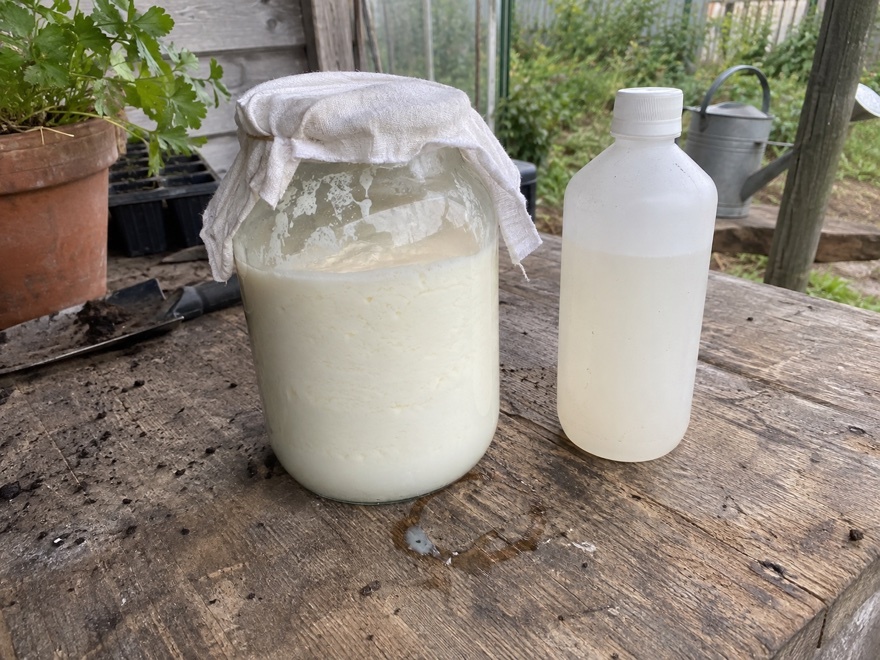
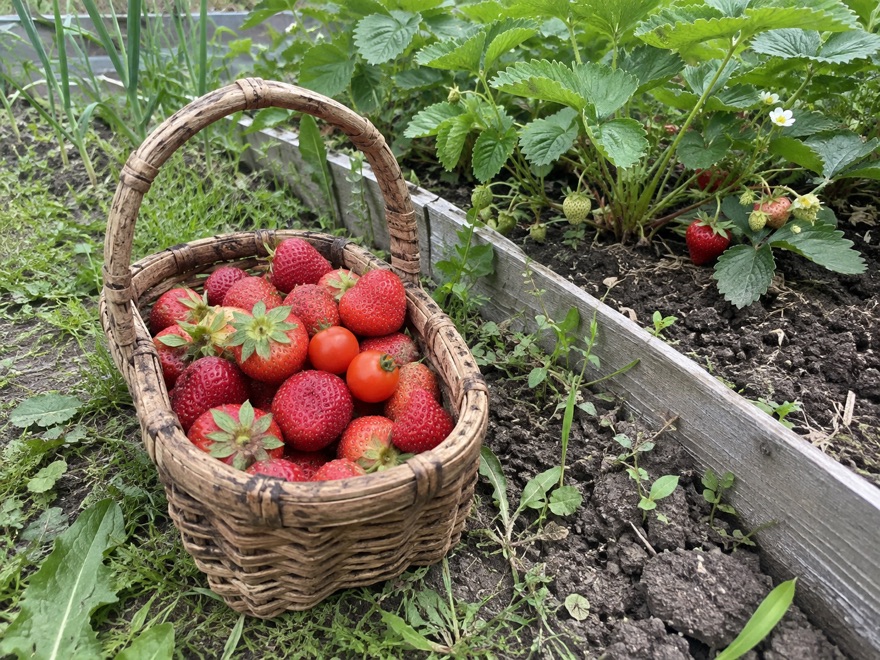
Use the diluted mixture in one of two ways. Water 2 cups (0.5 L) at the root of each bush, or spray the whole plant, covering the top and underside of the leaves. Focus on strawberries, tomatoes, and cucumbers during their fruiting stage. This is when the peptide and amino acid boost has the most impact on fruit size and sweetness.
Spray in the morning, not in full midday sun. That lets the live bacteria settle onto the leaf surface before the heat comes.
The mechanism works on two tracks at once. The fermented peptides and amino acids are absorbed through the leaf and support fruit development directly, while the live Bacillus subtilis bacteria that come along with the spray physically occupy space on the leaf surface, competitively excluding powdery mildew and Botrytis (gray mold) from taking hold there.
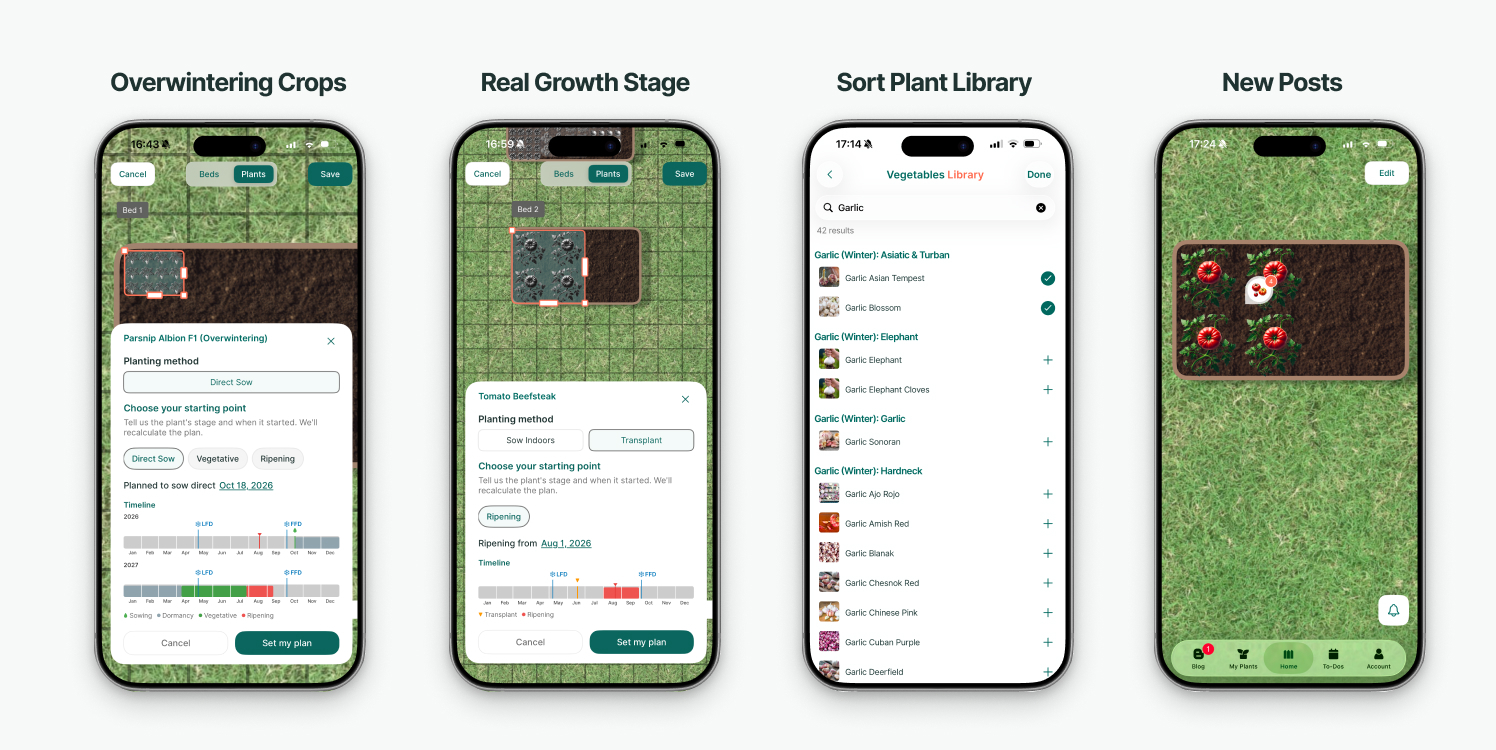
Repeat every 10 to 14 days through the fruiting period for the best cumulative effect. That is typically three to four applications across a full fruiting season, which is easy to lose track of alongside everything else going on in the garden at that time. easyDacha's task list keeps recurring feeding and spray tasks tied to each plant's fruiting stage, with reminders before each round. Download and try easyDacha, a vegetable garden app that tracks fruiting-stage care automatically.
Expect a noticeable improvement in fruit size and sweetness by the second or third application, along with visibly fewer new powdery mildew or gray mold spots on sprayed leaves.
Why this fermented feed works
Fermentation with Bacillus subtilis breaks down the casein and whey proteins in milk into shorter peptides and free amino acids, forms that a plant's leaf surface can absorb far more readily than intact milk protein.
The peptides and amino acids support active fruit development, contributing to the larger, sweeter fruit many growers notice on strawberries, tomatoes, and cucumbers treated during fruiting.
Live Bacillus subtilis on the leaf surface competes directly with powdery mildew and Botrytis for space and resources on the leaf, which is a different and complementary mechanism from a plain milk spray's antifungal effect.
This is why it is worth distinguishing this recipe from a simple fresh milk spray: fermenting the milk first changes both what nutrients reach the plant and how the leaf surface defends itself.
Is this safe for strawberries, tomatoes, and cucumbers?
Yes, this fermented spray is safe for edible fruiting crops at the dilution given above. Milk and Bacillus subtilis are both common, food-safe garden inputs.
- Use low-fat milk rather than full-fat, since excess fat can leave a residue on the leaf that attracts other issues
- Ferment in a clean container to avoid introducing unwanted bacteria alongside the Bacillus subtilis
- Wash harvested fruit as you normally would before eating, as with any foliar-sprayed crop
- Spray in the morning to protect the live bacteria from intense midday sun
What NOT to do
Don't confuse this with a plain milk spray. A fresh milk spray for powdery mildew is a different, simpler product. This recipe needs boiling and 1 to 2 days of fermentation with a live bacterial starter to get the peptide and colonization benefits.
Don't skip the fermentation step to save time. Unfermented milk does not deliver the same absorbable peptides, and it lacks the live bacterial population that helps protect the leaf.
Don't ferment in a sealed, airtight container. The culture needs to breathe during fermentation; a tightly sealed container can build pressure or ferment unevenly.
Don't spray in full midday heat. High heat can kill off the live bacteria before they have a chance to establish on the leaf surface.
Best for which plants
- Strawberries - one of the strongest responders, with noticeably bigger and sweeter fruit during active fruiting
- Tomatoes and cucumbers - respond well during fruiting, with the added leaf-surface protection against powdery mildew and Botrytis
- Peppers and eggplant - can use the same spray during fruiting, following the same schedule
This spray is aimed at the fruiting stage specifically, so hold off using it on plants still in early vegetative growth.
When fruit stays small despite this feed
If fruit size and sweetness are not improving after a few applications, check three things. Look at whether the plant is getting consistent watering, since irregular watering affects fruit size and sweetness more directly than any foliar feed can compensate for. Check overall sun exposure, since fruiting crops need substantial direct sun to convert any nutrient boost into bigger fruit. Finally, confirm the fermentation actually completed properly, since a culture that smells off or never developed the expected tang may not have fermented correctly and should be started over.
Try easyDacha for your fruiting-stage care plan
Fruiting stage is when the most feeding and spray tasks stack up at once. easyDacha, a garden planner app, keeps every fruiting-stage task, from feeding to disease prevention, on one schedule. Download and try easyDacha.
For related sprays, see how milk spray works against powdery mildew and how to use Bacillus subtilis with turmeric for a 100x boost. For strawberry-specific guidance, see 7 rules for planting strawberries right, and for another fermented amino acid option, how to make amino acid fertilizer from gelatin.
FAQ
How is this different from a plain milk spray for powdery mildew?
A plain milk spray uses fresh, unfermented milk and works mainly through its whey protein's antifungal effect. This recipe boils the milk with sugar and ferments it with a Bacillus subtilis starter for 1 to 2 days first. That produces absorbable peptides for fruit development plus a live bacterial population that protects the leaf.
How long should I ferment the milk before using it?
24 to 48 hours in a warm spot, after boiling the milk with sugar, until the culture develops a tangy smell.
Which plants benefit most from this fermented milk feed?
Strawberries show some of the strongest response, along with tomatoes and cucumbers during their fruiting stage.
How often should I spray this fermented feed?
Every 10 to 14 days through the fruiting period, for roughly three to four applications across a season.
Can I use full-fat milk instead of low-fat?
Low-fat milk is recommended, since excess fat from full-fat milk can leave a residue on the leaf surface that is not helpful here.
Is there an app that tracks fruiting-stage feeding for strawberries and tomatoes?
Yes. easyDacha is a gardening app that tracks each plant's growth stage and schedules fruiting-stage feeding and spray tasks automatically.
Does this spray also protect against gray mold (Botrytis)?
Yes. The live Bacillus subtilis bacteria that colonize the leaf surface after spraying compete with both powdery mildew and Botrytis for space, offering protection against both.