

Milk spray for powdery mildew sounds like an old wives' tale. It's not. University research has tested it repeatedly, and it works. A solution of 1 part whole milk to 9 parts water, sprayed on leaves weekly, prevents powdery mildew as effectively as some commercial fungicides. The proteins in milk create an antiseptic effect when exposed to sunlight. Lactic acid bacteria colonize the leaf surface and outcompete the mildew fungi for space. It's a two-part defense: chemical and biological. One ingredient, no mixing complications, and you probably have it in the fridge right now.
TL;DR: Mix 1 part whole milk to 9 parts water (for example, 1/2 cup / 120 ml milk to 4 cups / about 1 L water). Spray full foliar coverage every 7 to 10 days as a preventive. Every 5 days for active mildew. Use same day. No heating needed.
The recipe
One recipe. One ratio. Use whatever volume you need.
For about 1 quart (1 L) of spray:
- 1/2 cup (about 120 ml) whole milk. Not skim, not 2%. Whole milk. The fat and proteins are what make it work.
- 4 cups (about 1 L) water
Mix it:
- Pour 4 cups (about 1 L) of water into a spray bottle or garden sprayer.
- Add 1/2 cup (about 120 ml) of whole milk.
- Shake or stir to combine.
That's it. No heating, no straining, no soap, no waiting.
Scale up: for a 1-gallon (3.8 L) batch, use 1.5 cups (about 360 ml) milk and fill to 1 gallon with water. The ratio stays 1:9.
Shelf life: none. Use the same day you mix it. Milk sours fast, especially in warm weather. Sour milk spray smells terrible and can promote unwanted bacterial growth on leaves. Mix fresh every time.
How to apply
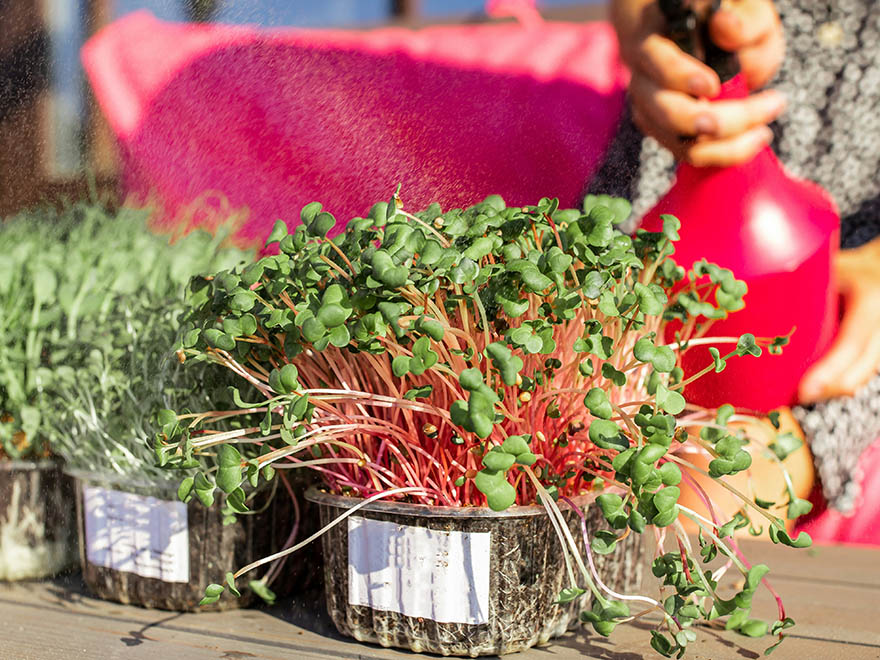
Spray both the tops and undersides of leaves until fully coated. Coverage is everything. Powdery mildew grows on both surfaces, and the milk needs to be where the mildew would land.
Timing: spray on a sunny morning. This is the opposite of most spray advice. Milk spray actually needs sunlight to activate. UV light triggers the proteins in milk to produce free radicals that are toxic to mildew spores. Spraying in the evening or on cloudy days reduces the effectiveness.
Frequency:
- Preventive: every 7 to 10 days, starting when conditions favor mildew (warm days, cool nights, humidity above 60%).
- Active mildew: every 5 days until the white patches stop spreading.
- After rain: reapply. Rain washes the spray off.
What to expect: milk spray prevents new mildew from colonizing healthy leaves. It does not remove existing white patches. Heavily infected leaves are already damaged. Remove them and focus the spray on the healthy foliage that's still clean.
Why milk spray works (the science)
Two mechanisms work together.
Protein antiseptic effect. When milk proteins (mainly lactoferrin and casein) are exposed to sunlight, UV light causes them to produce free radicals. These radicals are toxic to powdery mildew spores on the leaf surface. This is why spraying on a sunny morning matters. Without UV exposure, this mechanism doesn't activate.
Lactic acid bacteria colonization. Whole milk contains lactic acid bacteria. When sprayed onto leaves, these bacteria colonize the leaf surface and compete with mildew fungi for space and resources. This competitive exclusion is well documented in biological gardening research. The bacteria occupy the territory before the mildew can establish.
University trials at Adelaide and UConn tested 10% milk sprays against untreated controls. Results showed 50% to 90% reduction in powdery mildew severity. Some trials showed milk performing as well as synthetic fungicides on squash and cucumbers.
The fat in whole milk helps the solution adhere to waxy leaf surfaces. This is why skim milk is less effective. It lacks the fat that provides adhesion and the full protein content that drives the antiseptic reaction.
Milk vs. baking soda: which is better for mildew?
Both work. They work differently, and each has trade-offs.
Baking soda raises leaf surface pH above the range where mildew grows (above 8.0). It's a chemical barrier. The downside: sodium buildup on leaves with repeated use, and you can't exceed 1 teaspoon per quart without burning foliage.
Milk uses proteins and bacteria to fight mildew biologically. No sodium, no pH shift, no risk of leaf burn at the correct dilution. The downside: it needs sunlight to activate and smells slightly when drying.
For most home gardeners, milk is the easier choice. One ingredient, no concentration risk, no sodium buildup. Baking soda is better when you need a quick response and have cloudy weather (since it doesn't depend on UV). The best approach for heavy mildew pressure is to alternate them: milk one week, baking soda the next.
For the full baking soda recipe, see our baking soda powdery mildew guide.
What NOT to do

Don't use skim milk or 2%. The fat and proteins are what make milk spray work. Skim milk has too little of both. Whole milk only.
Don't spray in the evening or on cloudy days. The UV-activated protein reaction needs sunlight. Without it, you're just spraying diluted milk on your leaves, which invites bacterial and fungal problems instead of preventing them.
Don't store the mixed spray. Milk sours within hours in warm weather. Sour milk on leaves promotes unwanted bacteria and smells terrible. Mix fresh every time.
Don't increase the milk concentration. The 1:9 ratio (10% milk) is the tested and effective rate. Higher concentrations leave a milky residue that can clog leaf pores and promote sooty mold. More milk is not better.
Don't expect it to cure infected leaves. Like baking soda, milk spray is a preventive. It stops new mildew from colonizing clean leaves. White patches already on the plant are permanent damage. Remove those leaves.
Best for which plants
Milk spray is safe for all garden plants at 1:9 dilution. It's most useful on the crops that get hit hardest by powdery mildew.
- Squash, zucchini, pumpkin — the most mildew-prone crops in any garden. Start spraying preventively when the first true leaves appear.
- Cucumbers and melons — same family, same vulnerability. Weekly milk spray through the season.
- Tomatoes — powdery mildew is less common on tomatoes than cucurbits, but appears in humid, crowded conditions.
- Roses — a classic mildew target. Weekly milk spray works as well on roses as on vegetables.
- Zinnias and phlox — the most mildew-prone annual flowers. Spray from planting through fall.
- Grapes — powdery mildew is a major grape disease. Milk spray is used by organic vineyards worldwide.
When milk spray isn't enough
If you're spraying weekly and mildew still spreads, the environment is the problem. Powdery mildew thrives in poor air circulation, humidity above 60%, and warm days with cool nights. Fix the conditions first.
Space plants farther apart. Prune for airflow. Water at the base, never overhead. Remove the lowest leaves on vining crops to let air move under the canopy.
If mildew is severe despite good practices, alternate milk spray with baking soda spray on a 5-day rotation. For plants that get mildew every season, look for resistant varieties next year.
For a full pest and disease overview, see our homemade organic pesticide guide.
How do you stop powdery mildew on vegetables?
Powdery mildew is the white dusty coating on squash, cucumber, and zucchini leaves. The fastest home control is a milk spray: mix 1 part whole milk to 9 parts water and spray the tops and undersides of leaves once a week, in the morning sun. University trials show milk proteins react with light to suppress the fungus. Improve airflow and avoid wetting leaves at night to keep it from coming back.
FAQ
Does milk spray really work on powdery mildew?
Yes. University research at Adelaide and UConn found that a 10% milk solution reduced powdery mildew severity by 50% to 90%. The proteins produce free radicals under sunlight that kill mildew spores. Lactic acid bacteria also colonize the leaf and outcompete the fungus. It's one of the most studied home remedies in plant pathology.
Why does milk spray need sunlight to work?
UV light triggers milk proteins (lactoferrin and casein) to produce free radicals on the leaf surface. These radicals are toxic to powdery mildew spores. Without sunlight, this reaction doesn't happen. Always spray on a sunny morning for best results.
Can I use skim milk or 2% instead of whole milk?
Whole milk works best. The fat helps the solution stick to waxy leaves, and the higher protein content drives the UV-activated antiseptic effect. Skim milk and 2% have been tested and show reduced effectiveness. Use whole milk.
Is milk spray better than baking soda for mildew?
Both work through different mechanisms. Milk uses biological competition and UV-activated proteins. Baking soda raises leaf pH. Milk has no sodium buildup risk and no concentration danger. Baking soda works without sunlight. For heavy mildew, alternate them weekly.
How often should I spray milk for powdery mildew?
Every 7 to 10 days as a preventive. Every 5 days for active mildew. Reapply after rain. Spray on a sunny morning for the UV activation to work. Mix fresh each time since milk sours quickly.
Will milk spray make my garden smell bad?
Slightly, while drying. The smell fades within a few hours on a sunny day. It's much milder than fermented plant teas. If you spray in the morning sun, the UV exposure and evaporation clear the smell by midday.
Does powdery mildew go away on its own?
No, it spreads. Treat at the first white spots, before it covers the leaf.
Milk spray or baking soda, which is better?
Milk is gentler and lower risk of leaf burn. Baking soda works but can damage leaves if overused.
Is there a gardening app that schedules spray treatments?

Yes. The easyDacha garden planner app builds spray schedules into your weekly task list, tied to your actual beds and plants. It tells you when to spray and when to reapply. Download at easydacha.com/download.
The simplest spray in your fridge
One ingredient. No measuring cups, no overnight soaking, no straining. Just milk, water, and a sunny morning. But timing every spray is the part that's easy to forget.
The easyDacha gardening app builds spray schedules into your 7-day task list, tied to your actual garden beds. Each treatment lands on the right day. No guessing, no missed windows.
Try easyDacha app →. The garden planner app that plans your season in 60 seconds. Cancel anytime.
Related reading on easydacha.com
- Homemade Organic Pesticide for the Vegetable Garden — more DIY pest and disease recipes.
- Vegetable Gardening for Beginners: A Step-by-Step Guide — the full beginner guide covering soil, timing, and planning.
- Companion Planting Guide: Double Your Harvest Naturally — plant combinations that improve airflow and reduce disease.
- Seed Starting Troubleshooting: Why Seeds Fail and How to Fix It — diagnosing problems before plants reach the garden.