
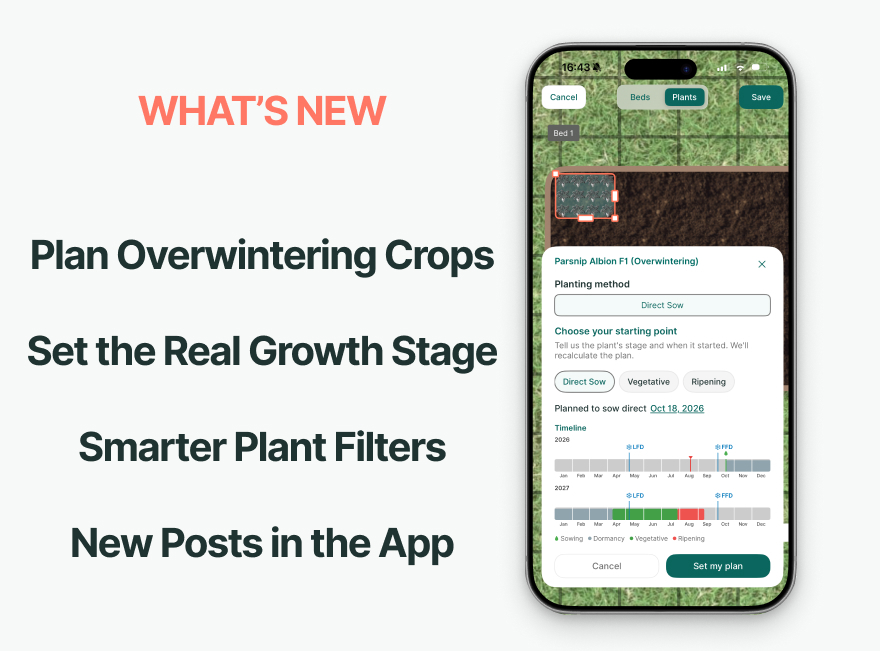
Nature does not read the calendar. A plant can flower two weeks early or set fruit late, and a fixed schedule falls apart the moment it does. So we built the newest updates around one idea: your plan should follow your real garden, not the other way around. Here is what just landed in easyDacha, including overwintering vegetables and a way to match your care plan to the exact stage your plant is in today.
TL;DR: easyDacha now lets you plan overwintering vegetables like spinach, carrot, and onion, sort the plant library by type and growth type, set your plant's real growth stage to get a matching care plan, and spot new blog posts right inside the app.
Plan overwintering vegetables now
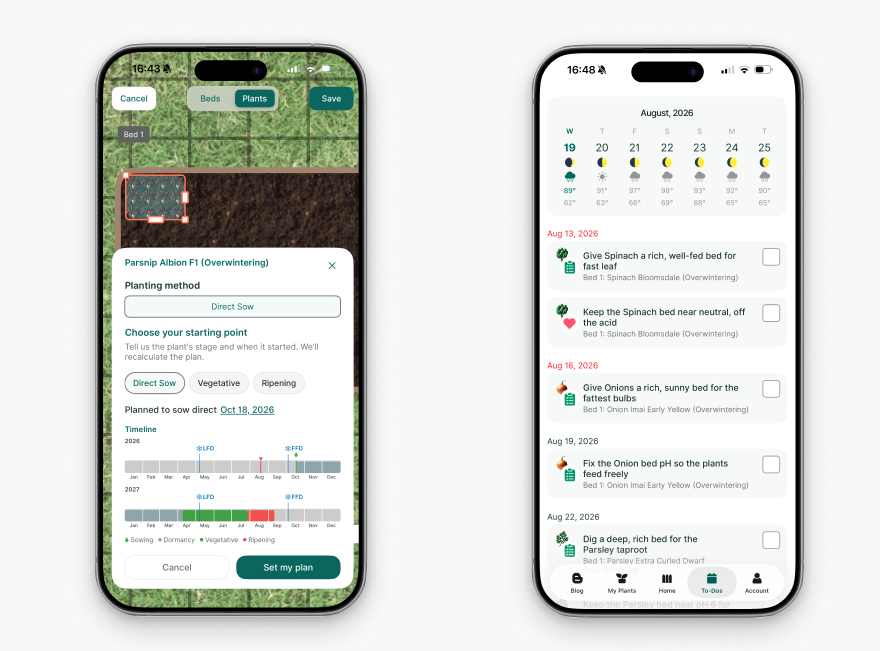
You can now plan overwintering vegetables in easyDacha and get a care plan that runs through fall, winter, and early spring. These are the cold hardy vegetables that survive the cold and reward you with an early harvest. The new list covers overwintering spinach, parsnip, onion, dill, cilantro, carrot, and parsley.
Each one earns its place. Spinach roots live through winter and push fresh leaves in spring. Parsnips shrug off hard freezes and turn sweeter after a frost. Onions and carrots settle in over winter for a jump on the spring harvest. Dill, cilantro, and parsley give you cold-season herbs when little else is growing.
Overwintering is easiest in zone 7 and zone 8, where winters stay mild. In colder ground like zone 4 and zone 5, a layer of straw mulch or a row cover carries hardy crops through. Add these plants and easyDacha builds the sowing, protection, and harvest tasks for your ZIP code. If you have been asking what to plant in fall, this is the answer, and it pairs well with the ideas in our succession planting guide. New to cool-season growing? Start with growing spinach.
A tidier plant library, grouped by type and growth type
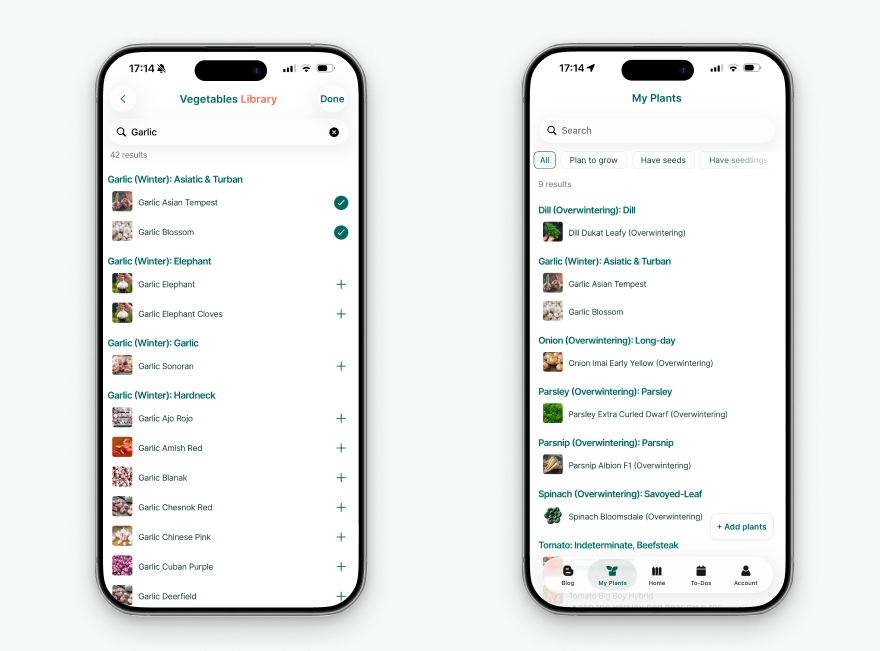
We reorganized the plant library so you find the right plant faster. Plants are now grouped by type first, then by growth type underneath. A tomato sits under its growth habit. A cool-season crop sits under overwintering. Fewer taps, less scrolling, no hunting.
The grouping also makes the new features easy to use. When you want an overwintering crop, they are together in one place. When you want a specific version of a plant, the growth type tells you which one you are choosing before you add it to a bed. Finding growing carrots or any other overwintering pick takes seconds.
Set your plant's real stage and get the matching plan
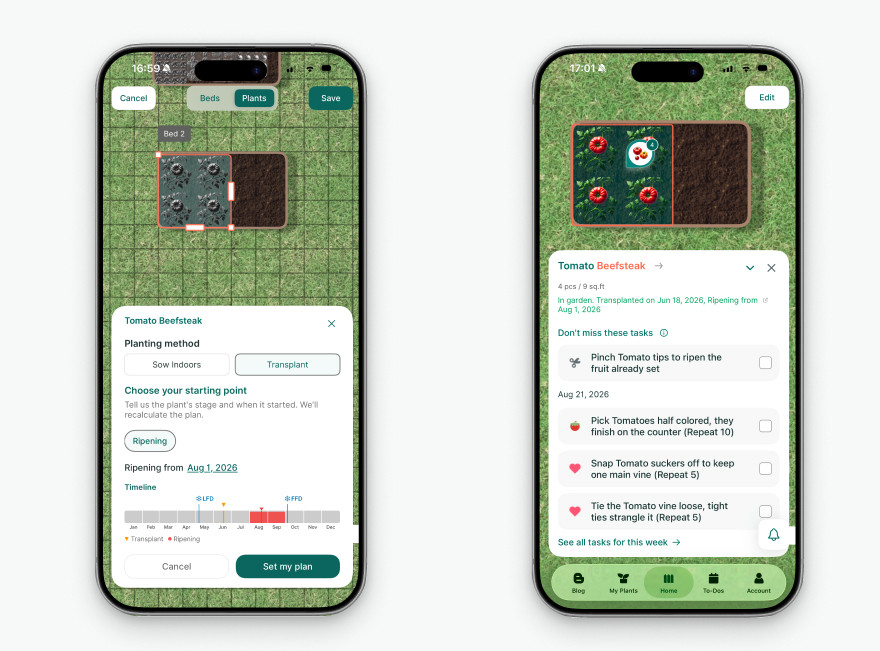
You can now tell easyDacha the exact stage your plant is in right now, and it rebuilds the care plan to match. Choose or edit the stage, and the tasks update to fit. It is a plant care plan by stage, not a plan locked to the day you sowed.
Gardens do not grow on a straight line. One pepper flowers early after a warm spell. A neighbor's tomato sets fruit two weeks behind yours. Before, a plan tied only to planting dates could not see that. Now it can. Mark that your plant just started flowering, or that fruit set came late, and the feeding, protection, and harvest tasks shift to the right moment.
That matters most at the turns of the season, when a late flower or an early frost decides whether you get a harvest at all. Instead of guessing, you set what is true and easyDacha gives you the next right step. It is the garden planner app that tells you what to do and when, for the plant in front of you. Try easyDacha. If you grow crops that flower and fruit, our fertilizer plan for flowering vegetables shows why stage-timed feeding pays off.
See new blog posts the moment you open the app
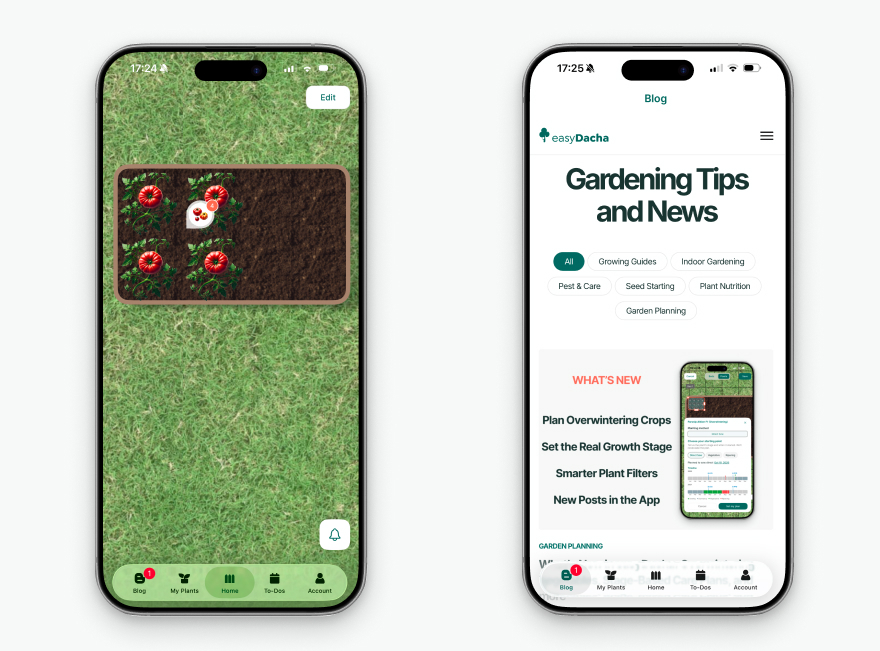
Open easyDacha and you will see right away when the blog has something new. This is an in-app alert, not a push notification that buzzes your phone. Nothing interrupts you and nothing nags you. A small marker inside the app simply shows that a fresh post is waiting.
Timing matters in a garden, and a good tip a week late is a tip you cannot use. Now a seasonal piece is easy to spot while it still helps. When we post a frost warning, a planting reminder, or a fix for a common problem, you catch it on your next visit. If you want a starting point today, our guide on when to plant seedlings is a solid read.
FAQ
What overwintering vegetables can I plan in easyDacha now?
You can plan overwintering garlic, spinach, parsnip, onion, dill, cilantro, carrot, and parsley. Each gets a care plan that runs through fall, winter, and early spring, built for your ZIP code. These are cold hardy vegetables that survive winter and give you an early harvest.
What does the new plant stage feature do?
You can set or edit the exact growth stage your plant is in right now, and easyDacha rebuilds the care plan to match. If a plant flowers early or sets fruit late, you mark it and the tasks shift to the right time. Your plan follows the real plant, not a fixed date.
Why would my plant's stage differ from the planting date?
Weather changes everything. A warm spell can push flowering early, and a cool stretch can delay fruit set. Two of the same plant, sown the same day, can land at different stages. Setting the real stage keeps your feeding, protection, and harvest tasks accurate.
How does the new plant library grouping work?
Plants are grouped by type first, then by growth type underneath. A tomato sits under its growth habit, and a cool-season crop sits under overwintering. It takes fewer taps to find the exact plant you want to add to a bed.
Will the app nag me when a new blog post goes up?
No. It is an in-app alert, not a push notification. When you open easyDacha, a small marker shows that a new blog post is up. Nothing buzzes your phone or interrupts you. You catch the tip on your next visit, while it still helps.
Is there an app that plans fall and winter vegetables for me?
Yes. easyDacha is a garden planner app that now plans overwintering vegetables and cold hardy vegetables for your exact ZIP code. It builds the sowing, protection, and harvest tasks, and adjusts them to the real stage your plant is in.