
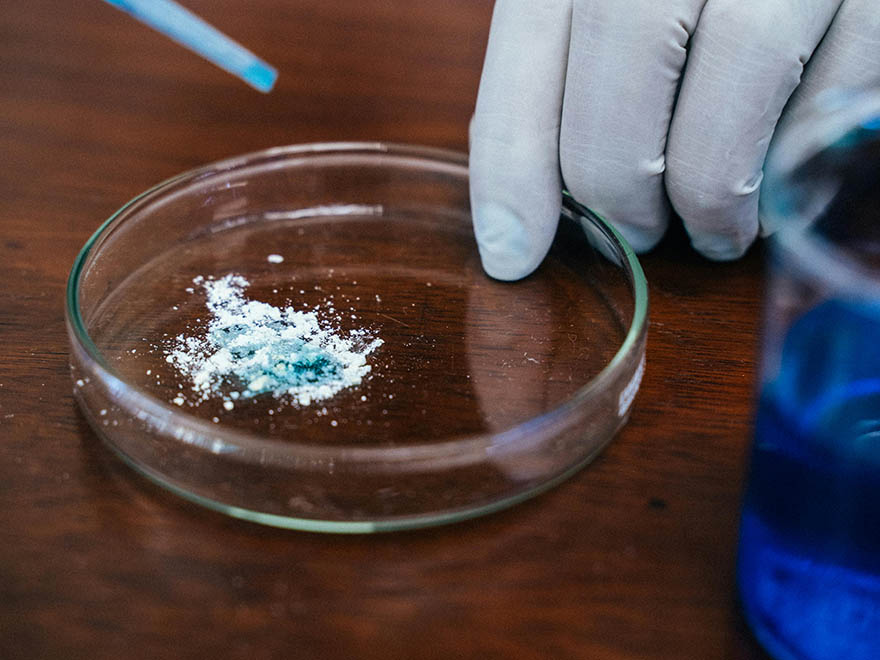
Bordeaux mixture is a copper-based fungicide that has been used since the 1880s. It prevents late blight, downy mildew, leaf spot, and a long list of fungal diseases. Two ingredients: copper sulfate and slaked lime. The lime buffers the copper so it does not burn leaves. The result is a slow-release protective film that sticks to foliage for weeks.
TL;DR: Dissolve about 3.5 oz (100 g) copper sulfate in 1.3 gallons (5 L) warm water (Solution A, blue). Dissolve about 3.5 oz (100 g) slaked lime in 1.3 gallons (5 L) water (Solution B, white). Pour A slowly into B while stirring. Never reverse. Test with an iron nail: if it turns copper-colored, add more lime. Use immediately. Spray leaves to wet coverage.
The recipe
This makes a standard 1% Bordeaux mixture. Enough for most garden applications.
You need:
- About 3.5 oz (100 g) copper sulfate crystals (blue crystals, sold at garden centers or online)
- About 3.5 oz (100 g) hydrated (slaked) lime, also called calcium hydroxide
- 2.6 gallons (10 L) of water total, split into two batches
- Two plastic or glass buckets (never use metal containers with copper sulfate)
- A stirring stick
- An iron nail or clean iron bolt for the pH test
Do it:
- Dissolve about 3.5 oz (100 g) of copper sulfate in 1.3 gallons (5 L) of warm water in your first bucket. Stir until fully dissolved. The solution turns bright blue. This is Solution A.
- In a separate bucket, mix about 3.5 oz (100 g) of slaked lime into 1.3 gallons (5 L) of water. Stir well. The result is a milky white liquid. This is Solution B.
- Pour Solution A (copper) slowly into Solution B (lime) while stirring constantly. Pour in a thin stream. Keep stirring.
- Never pour lime into copper. Always copper into lime. Reversing the order produces a grainy, unstable mixture that clogs sprayers and burns leaves.
- The combined mixture should be a pale sky-blue color with a milky consistency.
The nail test (pH check):
Dip a clean iron nail into the finished mixture for 30 seconds. Pull it out and look at the surface.
- If the nail stays clean: the mixture is ready. The lime has neutralized the free copper.
- If the nail turns copper-colored (reddish-brown deposit): the mixture is too acidic. Free copper ions are plating onto the iron. Add more slaked lime, one tablespoon at a time, and stir. Re-test after each addition until the nail stays clean.
The nail test is the only reliable way to know the mixture is safe for leaves. Do not skip it.
How to use it
Preventive foliar spray (only use):
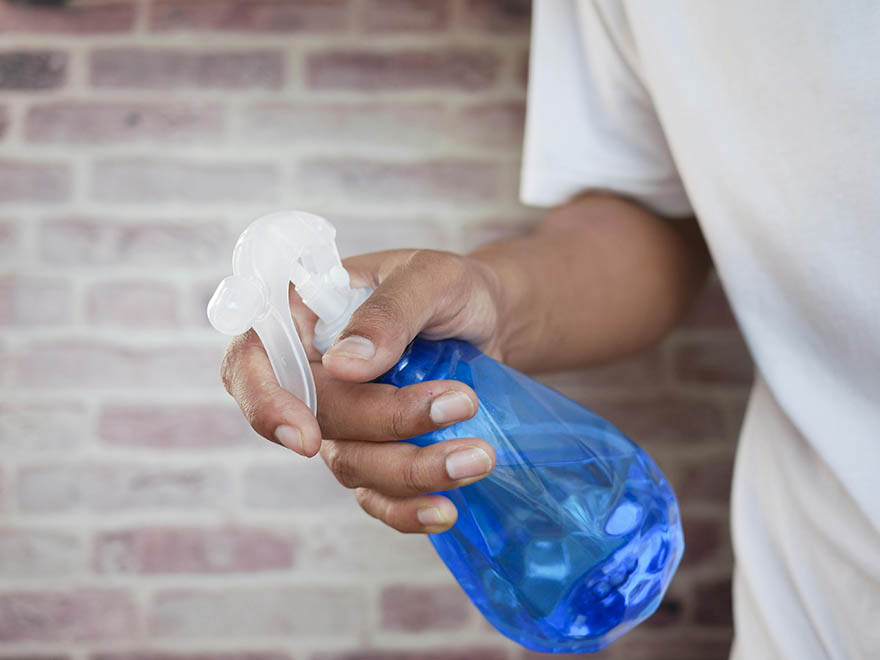
Spray Bordeaux mixture onto leaves, stems, and fruit surfaces until wet. The goal is full coverage, top and bottom of every leaf. The mixture dries into a thin, slightly bluish film. This film prevents fungal spores from penetrating the leaf surface. It does not kill existing infections. It blocks new ones.
Apply in the morning or evening when temperatures are below 85°F (29°C). Do not spray in direct midday sun. The copper can cause leaf scorch on hot, sunny days.
Use immediately. Bordeaux mixture begins to settle within 1 hour of mixing. The copper and lime particles separate and the mixture loses its protective quality. Mix only what you can spray in one session. Do not store it.
Reapply every 10 to 14 days during the growing season, or after heavy rain. Rain washes the protective film off the leaves.
Which plants benefit most
Bordeaux mixture works on a wide range of crops, but some benefit more than others.
Best for: Grapes. This is the original use. Bordeaux mixture was invented specifically for grape downy mildew in the vineyards of France. It remains the most effective preventive treatment for grapevine diseases. Apply from bud break through harvest season.
Strong results: Tomatoes and potatoes. Bordeaux mixture prevents late blight (Phytophthora infestans), the most destructive disease for these crops. Start spraying when late blight conditions appear (warm days, cool nights, morning moisture). Use it in rotation with biological treatments like Bacillus subtilis to reduce copper accumulation.
Good results: Stone fruits (peaches, cherries, plums). Apply in early spring before bud break and again in fall after leaf drop. Effective against brown rot, leaf curl, and bacterial canker. Roses also respond well to a 1 to 2% spring application for black spot and rust prevention.
Useful for: Cucumbers, peppers, and eggplant. Bordeaux mixture prevents downy mildew and various leaf spot diseases on cucurbits and nightshades.
Less useful for: Leafy greens (lettuce, spinach, kale). The copper residue is visible on leaves and hard to wash off. For salad crops, use biological alternatives instead.
Avoid on: Plants you spray with sulfur-based products. Mixing sulfur and copper on the same plant causes severe leaf burn. If you use sulfur for powdery mildew, wait at least 2 weeks before applying Bordeaux mixture. Or pick one treatment and stick with it for the season.
Why it works
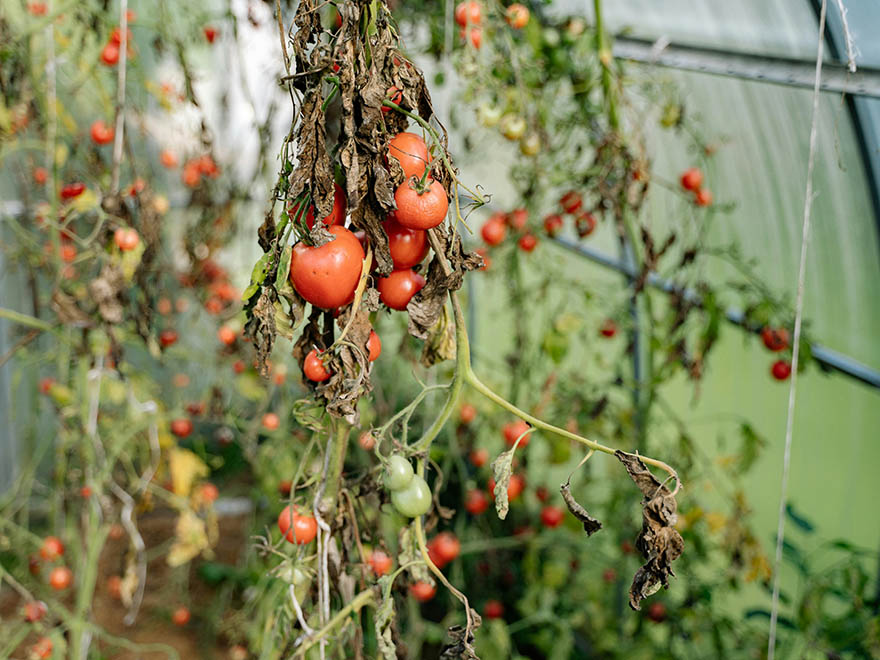
Copper ions are toxic to fungal spores. When a spore lands on a leaf coated with Bordeaux mixture, the copper disrupts the spore's cell membrane and prevents germination. The lime in the mixture serves two purposes. First, it neutralizes the acidity of copper sulfate so it does not burn living leaf tissue. Second, it acts as a sticker. The calcium hydroxide bonds the copper to the leaf surface, creating a film that resists rain and stays active for 10 to 14 days.
This is a contact protectant, not a systemic fungicide. The copper stays on the leaf surface. It does not enter the plant's vascular system. That means it only protects the tissue it touches. New growth that emerges after spraying is unprotected and needs a fresh application.
Bordeaux mixture also repels some pests. Whiteflies and spider mites avoid surfaces coated with copper. This is a bonus effect, not the primary use.
The copper toxicity problem
This matters. Copper does not break down. Every time you spray Bordeaux mixture, some copper washes off the leaves and enters the soil. Over years of repeated use, copper accumulates. It binds with phosphates in the soil to form insoluble compounds. Your plants cannot absorb that phosphorus anymore, even if you are fertilizing correctly. That is why soil in old vineyards and orchards often tests high for copper and low for available phosphorus.
Worse, if you try to fix the phosphorus problem with organic acids or microbial products, those same products release the bound copper back into the soil solution. Now you have copper toxicity on top of phosphorus deficiency.
The rule: Do not use Bordeaux mixture as your only disease prevention strategy. Rotate it with biological alternatives. Use Bacillus subtilis and Trichoderma as your primary biocontrol. Reserve Bordeaux mixture for high-pressure situations when biological methods alone are not enough. Alternate copper and iron sulfate treatments year to year so neither metal accumulates to toxic levels.
What NOT to do
Do not pour lime into copper. Always pour the copper solution into the lime solution. The reverse order creates a chunky, acidic mixture that burns foliage and clogs sprayer nozzles.
Do not store the mixed solution. Bordeaux mixture separates within an hour. The copper and lime settle out and the protective properties are lost. Mix fresh every time.
Do not mix with sulfur products. Copper plus sulfur on the same plant causes severe leaf burn. Space applications at least 2 weeks apart if you must use both.
Do not use metal buckets. Copper sulfate corrodes metal containers. Use plastic, glass, or ceramic for mixing. Metal contamination changes the chemistry.
Do not spray on hot, sunny days. Apply in the morning or evening when temperatures are below 85°F (29°C). Copper on wet leaves in full sun causes scorch.
Do not rely on it exclusively. Long-term Bordeaux use causes copper buildup in soil. This locks up phosphorus and can stall root development. Rotate with biological protectants and limit copper applications to a few times per season.
FAQ
What is Bordeaux mixture made of?
Bordeaux mixture is a combination of copper sulfate (blue crystals) and hydrated lime (calcium hydroxide) dissolved in water. The copper kills fungal spores on contact. The lime neutralizes the acidity so the mixture does not burn plant leaves. Together they form a protective film.
Why is the mixing order important?
Pouring copper into lime produces a stable, fine-particle suspension that sticks to leaves and sprays evenly. Pouring lime into copper creates large, unstable particles that clog sprayers, settle quickly, and can burn foliage. Always pour copper solution into lime solution.
How do I know if my Bordeaux mixture is safe for plants?
Use the nail test. Dip a clean iron nail into the mixture for 30 seconds. If the nail stays clean, the mixture is properly balanced. If it turns copper-colored, there is too much free copper. Add more lime, one tablespoon at a time, until the nail stays clean.
Can Bordeaux mixture cure an existing fungal infection?
No. Bordeaux mixture is a preventive treatment only. It creates a barrier on the leaf surface that blocks new spore germination. It cannot reach fungal infections inside the leaf tissue. For active late blight, use Clonostachys rosea, which colonizes plant tissue internally.
How often should I spray Bordeaux mixture?
Every 10 to 14 days during the growing season. Reapply after heavy rain. The protective film washes off gradually, so regular reapplication maintains coverage on new growth and replaces what rain removes.
Does Bordeaux mixture damage soil over time?
Yes. Copper accumulates in soil and binds with phosphates, making phosphorus unavailable to plants. Limit Bordeaux mixture to a few applications per season. Rotate with biological fungicides like Bacillus subtilis and Trichoderma. Alternate copper with iron sulfate treatments year to year.
Is there a gardening app that schedules fungicide applications?
Yes. The easyDacha garden planner app schedules protection tasks by growth stage for your ZIP code. It tracks weather patterns and alerts you when disease conditions are approaching. Download at easydacha.com/download.
A 140-year-old recipe that still works

Bordeaux mixture was the first effective fungicide ever invented. It is still one of the best for preventing late blight, downy mildew, and leaf spot. The recipe is simple. The mixing order is not negotiable. The nail test takes 30 seconds and tells you if the batch is safe. Use it wisely, rotate with biologicals, and your copper stays in the sweet spot between protection and toxicity.
The easyDacha gardening app schedules disease prevention tasks and sends weather alerts so you spray before the pathogens arrive.
Try easyDacha app →. The garden planner app that plans your season in 60 seconds. Cancel anytime.
Related reading on easydacha.com
- How to Make Iodine-Milk Spray Against Late Blight (Tomato and Potato Recipe) — a lighter, copper-free alternative for weekly late blight prevention. Use iodine-milk for routine spraying, Bordeaux for heavy disease pressure.
- How to Use Bacillus subtilis with Turmeric (100x Boost Recipe) — the biological fungicide to rotate with copper. Bacillus colonizes leaf surfaces and outcompetes pathogens without soil toxicity.
- How to Culture Clonostachys rosea at Home (Late Blight Fighter) — for active infections that Bordeaux mixture cannot treat. Clonostachys works from inside the plant tissue.
- How to Make Bioavailable Phosphorus Fertilizer from Bones (Citric Acid Method) — if copper applications have locked up phosphorus in your soil, this recipe delivers it in a form plants can absorb.