
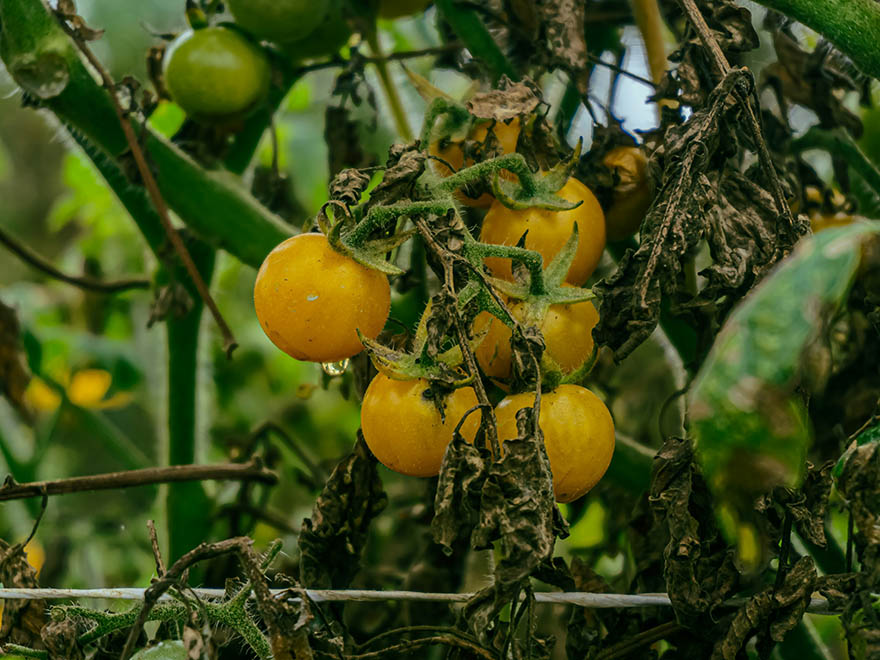
Late blight kills tomato and potato plants faster than almost any other garden disease. This iodine-milk spray is a pharmacy-and-grocery-store preventive that costs under $1 per season. Mix it in 2 minutes. Spray weekly. It will not cure an active infection, but it stops spores from gaining a foothold.
TL;DR: Mix 5 drops of 5% pharmacy iodine and 1 tablespoon (15 ml) of milk into 1 quart (1 L) of water. Spray leaves top and bottom every 7 days starting when nighttime temperatures begin dropping below daytime highs by 15+ degrees. Apply in the morning so leaves dry before evening. Use the same day you mix it.
The recipe
You need:
- 5 drops of 5% pharmacy iodine tincture (standard brown bottle from any drugstore)
- 1 tablespoon (15 ml) of milk (whole, 2%, or skim all work)
- 1 quart (1 L) of room-temperature water
- A spray bottle or pump sprayer
Do it:
- Pour 1 quart (1 L) of room-temperature water into your spray bottle.
- Add 1 tablespoon (15 ml) of milk. Shake or stir to combine.
- Add 5 drops of 5% iodine tincture. Shake again.
- Spray immediately. Cover leaves top and bottom. Get the stems too.
That is the working solution. Use it all the same day. Do not store it overnight. The iodine breaks down in dilute solution within hours.
How to use it
Preventive foliar spray (main use):
Spray tomato and potato foliage every 7 days. Start when you see the first late blight conditions: warm days followed by cool nights, morning dew that lingers, or fog rolling in. In most US growing zones, this means mid-July through September. The spray creates a thin protective film on the leaf surface. The milk proteins stick the iodine to the leaf. The iodine reacts with the leaf surface to form a barrier that blocks Phytophthora spores from penetrating.
Reapply after every rain. Rain washes the film off and you lose protection.
After-harvest fruit dip (bonus use):
If you pick tomatoes green to beat the blight, dip them in a mild iodine bath before storing. Use 1 ml (about 20 drops) of 5% iodine per 1 quart (1 L) of warm water at about 120°F (50°C). Submerge the fruit for 30 seconds. This sanitizes the surface and prevents hidden Phytophthora spores from rotting the fruit during ripening indoors. Pat dry and store at room temperature.
Which plants benefit most
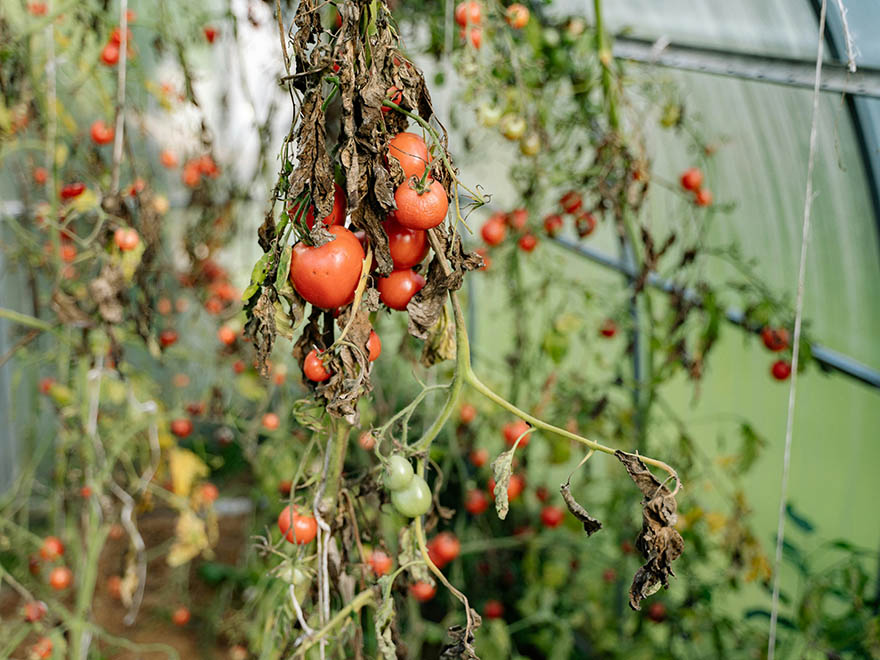
Late blight is a specific disease caused by Phytophthora infestans. It attacks a narrow range of crops, so this spray is targeted.
Primary targets: Tomatoes and potatoes. These are the two crops that late blight devastates. Every tomato and potato grower in a humid climate should use this spray preventively. If you grow nothing else in your garden, this is the recipe to know.
Also useful for: Peppers and eggplant. These are in the same plant family (Solanaceae) and can catch late blight, though less commonly. The spray works the same way on their foliage.
Moderate benefit: Cucumbers and squash. These crops get downy mildew (Peronospora), a related oomycete pathogen. The iodine-milk film offers some deterrence, but it is less effective than on tomatoes. For cucumbers, pair this with Bacillus subtilis for better coverage.
Skip for: Onions and garlic. Research from biological gardening databases shows that iodine treatments on allium crops correlate with yield loss. Do not spray onions or garlic with this solution.
Skip for: Brassicas (cabbage, broccoli, kale). They do not get late blight. Different pathogens attack brassicas, and this spray does nothing for them.
Why it works
Late blight is not a fungus. It is an oomycete, a water mold. Phytophthora infestans spreads through water droplets. Spores land on wet leaves, germinate, and penetrate the leaf tissue within hours. Once inside, the infection spreads fast and there is no cure. The only viable strategy is prevention.
The iodine-milk spray works through two mechanisms. First, iodine reacts with substances on the leaf surface to form a chemical barrier. This barrier blocks spore penetration. It does not kill the spores directly. It prevents them from getting in. Second, the milk proteins create a sticky film that holds the iodine in place. Without milk, rain washes the iodine off almost immediately.
The trigger for late blight is specific: large temperature swings between day and night combined with moisture. Hot days followed by cool, dewy nights create condensation on leaves. That condensation is the highway for Phytophthora spores. This is why the spray timing matters more than the spray itself. Start before the conditions arrive and reapply every 7 days.
The iodine + vitamin C variant
There is a second iodine formula worth knowing. It does something completely different.
Mix 20 drops of 5% iodine with 1 crushed vitamin C tablet (500 mg ascorbic acid) in 1.3 gallons (5 L) of water. Stir until dissolved. Use as a root drench.
This combination triggers geotropism, the process by which roots grow downward and branch out. It works as an emergency root booster after transplant shock, root damage from flooding, or any event that stalls root development. It does not prevent late blight. It is a root stimulant. Think of it as a companion tool for different situations.
Use the iodine-milk spray on leaves for blight prevention. Use the iodine-vitamin C drench on roots for recovery.
What NOT to do
Do not spray in the evening. Wet leaves overnight invite the exact conditions late blight needs. Always spray in the morning. Give the foliage time to dry before nightfall.
Do not increase the iodine dose. Five drops per quart is enough. More iodine does not mean more protection. High concentrations of iodine cause leaf burn. Potatoes are especially sensitive. One heavy dose can damage more foliage than the blight would.
Do not use this as a cure. If you already see brown spots, water-soaked lesions, or white fuzz on the underside of leaves, the blight is inside the tissue. This spray cannot reach it. Remove affected leaves, bag them, and treat the remaining foliage to slow the spread. For active infections, use Clonostachys rosea, which colonizes plant tissue internally and can suppress Phytophthora within hours.
Do not store the mixed solution. Mix fresh every time. The iodine degrades in water, and the milk proteins begin to sour. A batch made yesterday is useless today.
Do not spray onions or garlic. Iodine treatments reduce yields in allium crops. This is well documented in biological gardening research. If you need disease protection for onions, use a different approach.
When to start spraying
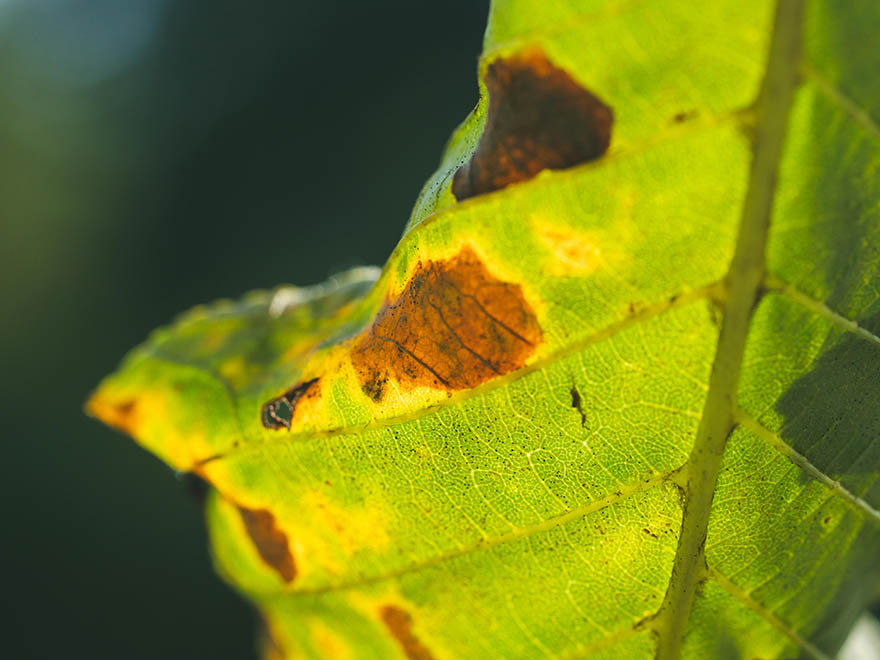
Timing is everything with late blight. Spray too early and you waste product. Spray too late and the spores are already inside.
Watch for the trigger conditions: Daytime temperatures above 75°F (24°C) followed by nighttime drops below 60°F (15°C), combined with morning dew, fog, or recent rain. In most of the US, this pattern starts in mid-July.
Start spraying 1 week before you expect these conditions. The spray is preventive. It needs to be on the leaves before the spores arrive.
Continue weekly through September or until you harvest everything. Do not stop just because you do not see symptoms. Late blight can go from invisible to devastating in 3 days.
After rain, reapply within 24 hours. Rain strips the protective film. No film means no protection.
The easyDacha gardening app tracks frost dates and weather patterns for your ZIP code and sends reminders when it is time to act.
FAQ
What is late blight and why is it so dangerous?
Late blight is caused by Phytophthora infestans, a water mold that destroys tomato and potato crops. It spreads through water droplets during humid conditions with large day-night temperature swings. Once inside the leaf, it kills tissue within days. There is no cure for infected tissue. Prevention is the only effective strategy.
How much iodine and milk do I use per quart of water?
Five drops of 5% pharmacy iodine and 1 tablespoon (15 ml) of milk per 1 quart (1 L) of water. Do not increase the iodine. Higher concentrations cause leaf burn, especially on potatoes.
Can I use this spray to cure late blight?
No. This is a preventive spray only. It creates a barrier on the leaf surface that blocks spore penetration. Once late blight is inside the tissue, no surface spray can reach it. Remove infected leaves and use a biological agent like Clonostachys rosea for active infections.
When should I start spraying for late blight?
Start one week before late blight conditions arrive: warm days above 75°F (24°C), cool nights below 60°F (15°C), and morning moisture. In most US zones, this means mid-July. Spray weekly through September. Reapply after every rain.
Does the type of milk matter?
No. Whole milk, 2%, skim, or even powdered milk reconstituted in water all work. The milk proteins act as a sticker that holds iodine to the leaf surface. Fat content does not affect this function.
Can I mix iodine-milk spray with other garden treatments?
Keep it simple. Apply the iodine-milk spray on its own. If you use Bacillus subtilis or Trichoderma as part of your biocontrol rotation, apply them on different days. Iodine can inhibit live bacterial cultures if applied at the same time.
Is there a gardening app that reminds me when to spray for blight?
Yes. The easyDacha garden planner app schedules protection tasks by growth stage for your ZIP code. It tracks weather patterns and sends alerts when late blight conditions are approaching. Download at easydacha.com/download.
A $1 insurance policy for your tomatoes

Late blight has wiped out entire crops in a single week. A bottle of pharmacy iodine and a splash of milk from the fridge are all you need to keep it from starting. The recipe takes 2 minutes. The habit of spraying weekly takes discipline. But the payoff is tomatoes that make it to September.
The easyDacha gardening app schedules blight prevention tasks and sends weather-based alerts so you never miss a spray window.
Try easyDacha app →. The garden planner app that plans your season in 60 seconds. Cancel anytime.
Related reading on easydacha.com
- How to Culture Clonostachys rosea at Home (Late Blight Fighter) — when prevention fails, this biological agent colonizes plant tissue and suppresses Phytophthora from inside.
- How to Use Bacillus subtilis with Turmeric (100x Boost Recipe) — weekly Bacillus spraying is the primary biocontrol against late blight. Pair it with the iodine-milk spray for layered defense.
- How to Identify Plant Diseases: Early Signs and What to Do — learn to spot late blight lesions before they spread.
- How to Use Milk Spray Against Powdery Mildew (It Actually Works) — milk works against powdery mildew too, through a different mechanism. Two milk-based sprays for two different diseases.