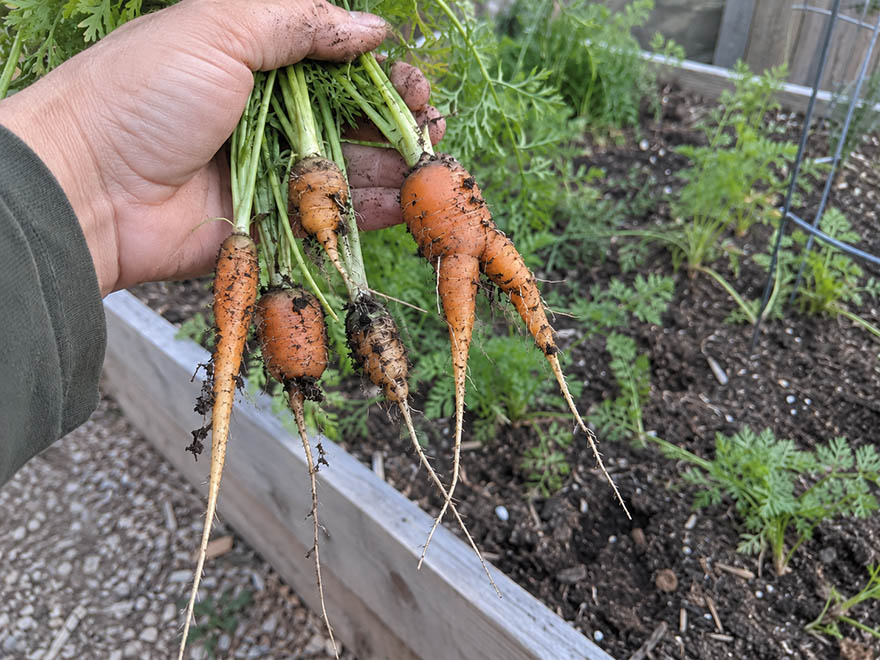
You pulled your carrots expecting fat orange roots and got pale, stringy fingers instead. Some forked into two legs. Others stayed the width of a pencil no matter how long you waited. Thin carrots are almost never bad luck. Three fixable things cause it: packed soil, crowded seedlings, and soil that is too rich in nitrogen.
TL;DR: Carrots growing thin usually means the soil was too compacted, the seedlings were never thinned, or nitrogen was too high. Loosen the top 10 inches of soil, thin roots to 2 to 3 inches apart, and skip fresh manure.
How to fix carrots growing thin
Fix the three root causes and your next crop comes up full-size. Here is the order that matters.
1. Loosen the bed deep. Loose soil for carrots is the single biggest factor in root size. Carrots need loose, stone-free soil to size up. Dig and crumble the top 10 inches (25 cm) before you sow. Pull out rocks, root chunks, and hard clods. Standard varieties need 8 to 10 inches (20 to 25 cm) of friable soil. Long types like Japanese carrots want a full 24 inches (60 cm).
2. Thin without mercy. When the tops reach 2 to 3 inches (5 to 8 cm) tall, thin the seedlings to 2 to 3 inches (5 to 8 cm) apart. Snip the extras at soil level with scissors so you do not tug the keepers loose. Crowded carrots stay thin because each root fights its neighbors for room.
3. Cut the nitrogen. Do not add fresh manure or high-nitrogen feed to a carrot bed. Nitrogen pushes leafy top growth, not root bulk. Feed with potassium instead once the tops are established.
4. Water steady. Give the bed 1 inch (2.5 cm) of water a week. Swings between bone-dry and soaked make roots split and stall.
How to apply this to your bed
Start with the soil, because that is where thin carrots begin. Fork the bed before sowing and rake it smooth. If your ground is heavy clay, build a raised bed or a deep container filled with loose mix. Learn to read your light too, since carrots want full sun, which you can map with our guide on garden sun mapping for vegetables.
Thin on schedule, not when you remember. The first thinning is at 2 to 3 inches tall. A second pass two weeks later opens more room as roots swell. For a potassium boost that builds root bulk, use a light drench of wood ash for potassium. A mild potato peel potassium ferment works too.
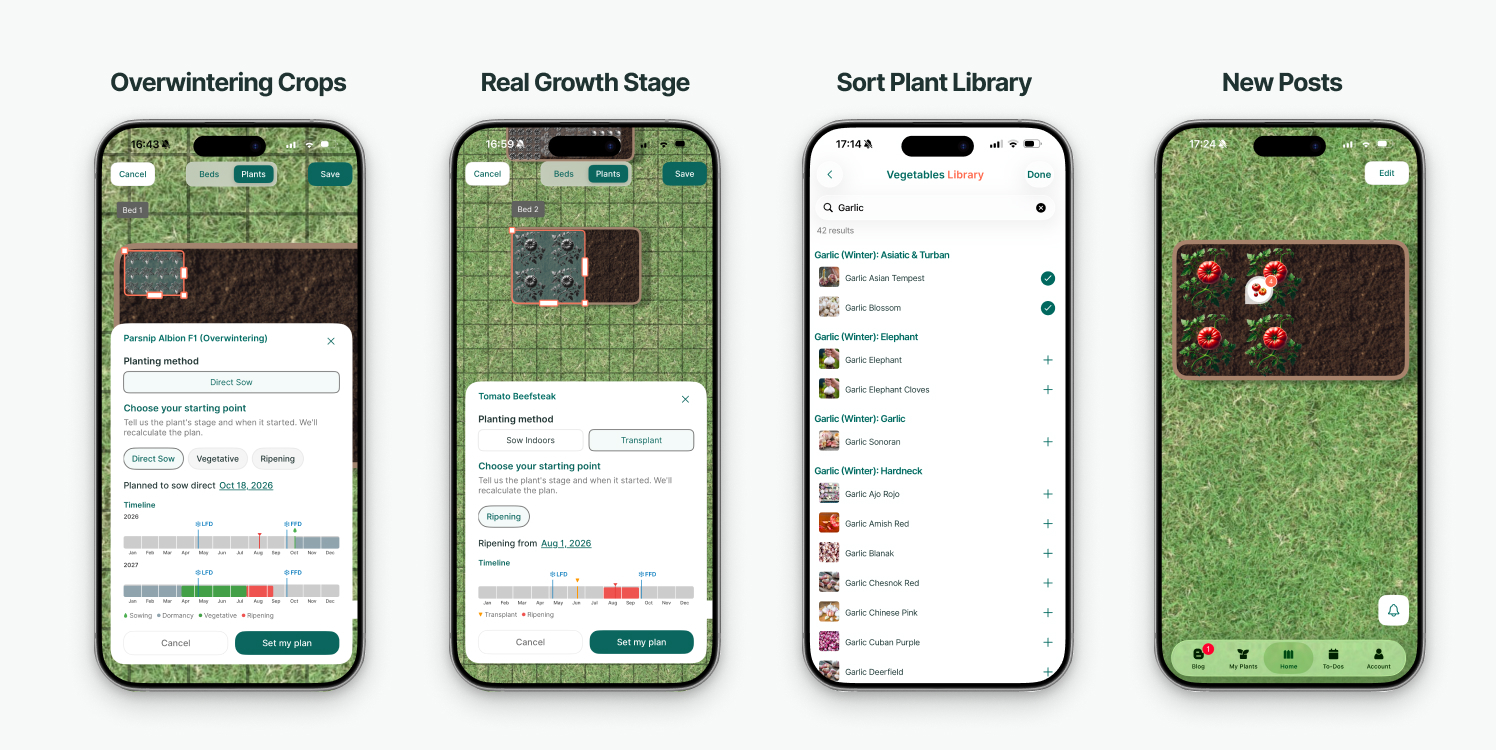
Water the same amount on the same days. That single habit prevents most splitting and forking. From sowing to harvest a carrot needs steady moisture for about four months. That is roughly 16 weekly waterings, two thinnings, and one feeding to track per bed. easyDacha builds that full schedule into your two-week task list and reminds you before each step, so no thinning window gets missed. It is the kind of timing a vegetable garden app handles better than memory. Download easyDacha.
Why thin carrots happen
Carrots grow thin for reasons you can see once you know them. Each cause has a clear fix.
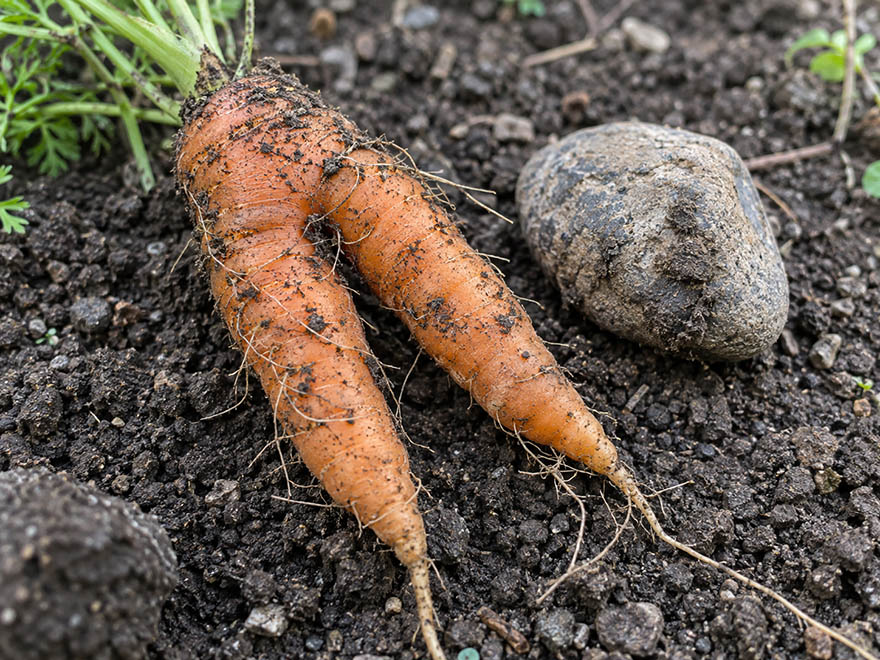
Compacted or rocky soil. Roots hit resistance and either stall or fork around the obstacle. The main forked carrots causes are stones, hard clods, and beds that were poorly prepared. Forked carrots form most often in heavy soils. Excess chunky organic matter causes the same forking.
Crowding. Twisting and intertwined roots come from seeding too thick and never thinning. Seeds sit so close that no root gets room to widen.
Too much nitrogen. Carrots do not like high nitrogen. Excess nitrogen feeds the tops and leaves the roots thin. This is why fresh manure ruins a carrot crop.
Uneven water. Dry spells followed by heavy soaking crack roots and interrupt steady sizing.
Is it safe to eat thin or forked carrots?
Yes. Thin, stubby, and forked carrots are perfectly safe to eat. The problem is cosmetic and size, not quality. A pencil-thin carrot tastes the same as a fat one, just with less to eat. Trim any green tops and use them like normal. Only toss roots that are actually rotten, slimy, or holed by pests.
What NOT to do
Do not add fresh manure before sowing. It spikes nitrogen and forks the roots.
Do not skip thinning to save seedlings. Every carrot you leave crowded stays thin.
Do not sow into unbroken clay. Roots cannot push through, so they stall or split.
Do not let the bed dry out then flood it. That swing causes cracking and stunted roots.
Best for which plants
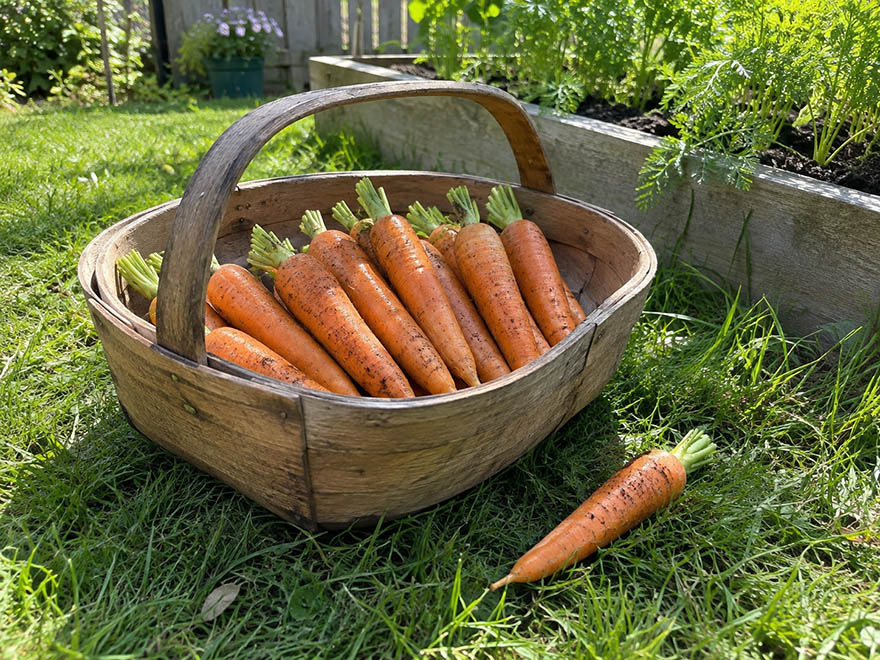
This same loose-soil, thin-early, low-nitrogen approach works across the root crops:
- Carrots and parsnips need the deepest, most stone-free soil for straight, full roots.
- Beets, radishes, and turnips also fork in packed ground, though they tolerate slightly firmer beds than carrots.
- Leafy crops and brassicas are the opposite. They want the nitrogen carrots hate, so keep them in a separate bed.
When thin carrots keep coming back
Check three things if roots stay thin season after season. First, dig a test hole and feel for a hard layer 6 inches down, since a hidden pan stops roots cold. Second, confirm you are thinning at the two-leaf stage, not later. Third, ask whether the bed got compost or manure recently, because leftover nitrogen lingers. If roots also fork with small knots and side hairs, root-knot nematodes may be the cause, which calls for crop rotation away from that bed. Rotation is easier when you track it, and our guide on why you shouldn't replant in the same spot explains the pattern.
FAQ
Why are my carrots small and thin?
Carrots growing thin almost always trace to three causes: compacted soil, seedlings left too crowded, or too much nitrogen. Loosen the top 10 inches of soil, thin roots to 2 to 3 inches apart, and skip fresh manure. Fix those and roots size up.
How far apart should I thin carrots?
Thin carrots to 2 to 3 inches (5 to 8 cm) apart once the tops reach 2 to 3 inches tall. Snip the extras at soil level instead of pulling, so you do not disturb the roots you keep. Crowded carrots stay thin.
Does too much nitrogen make carrots thin?
Yes. Too much nitrogen pushes leafy top growth at the expense of the root. Carrots store their energy in the root only when nitrogen stays low and potassium is available. Avoid fresh manure and high-nitrogen feed on carrot beds.
Why did my carrots fork into two legs?
Forked carrots form when the root hits a stone, a hard clod, or a pocket of chunky organic matter and splits around it. Heavy, poorly prepared soil is the usual cause. Deep, loose, stone-free beds grow straight roots.
Can I still grow bigger carrots this season?
If you sowed recently, yes. Thin now to 2 to 3 inches apart, water steadily, and hold off on nitrogen. If the bed is already packed or the season is closing, prep a loose bed now for a strong start next round.
Is there an app that reminds me when to thin and water carrots?
Yes. easyDacha is a garden planner app that builds a full carrot care plan from sowing to harvest, then sends reminders before each thinning, watering, and feeding task. It tracks the schedule for your exact beds so no window slips past.