
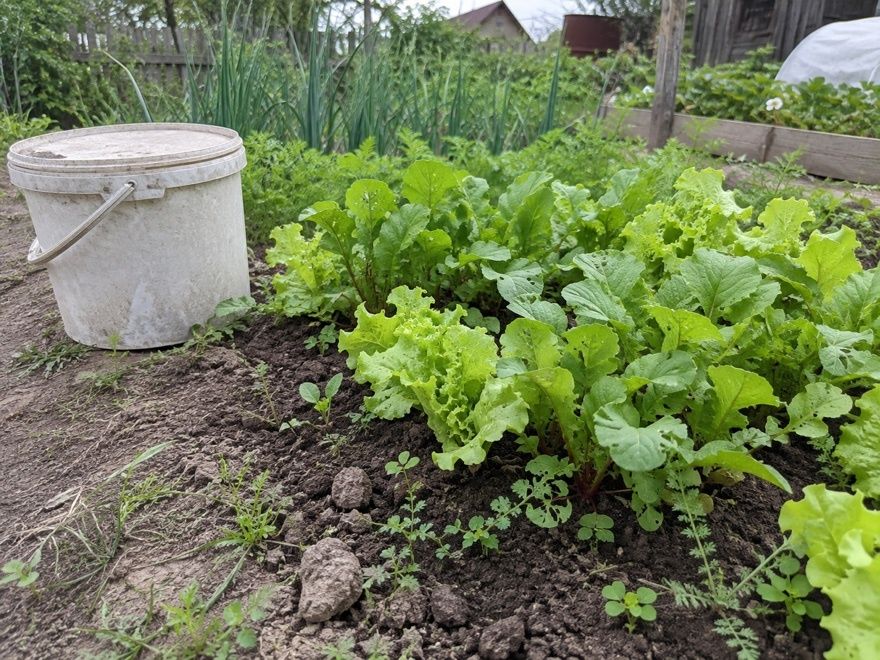
Grandma's old chicken manure bucket in the corner of the yard actually worked, but it took weeks to steep and smelled bad the whole time. A modernized version of that same tonic, chicken manure and dandelion root steeped with a Bacillus subtilis starter, gets you the same vegetative growth boost faster and with less mess, using dandelion root for growth factors and beneficial bacteria to speed the fermentation along.
TL;DR: For a chicken manure dandelion root fertilizer that drives vegetative growth, steep chicken manure, chopped dandelion roots, and a Bacillus subtilis biostimulant in water for one week, then dilute and root-drench every two to three weeks during leaf growth only, stopping before flowering.
The recipe
For 2.6 gallons (10 L) of water:
- 2 cups (0.5 L) bird droppings or chicken manure, well-composted or aged rather than fresh
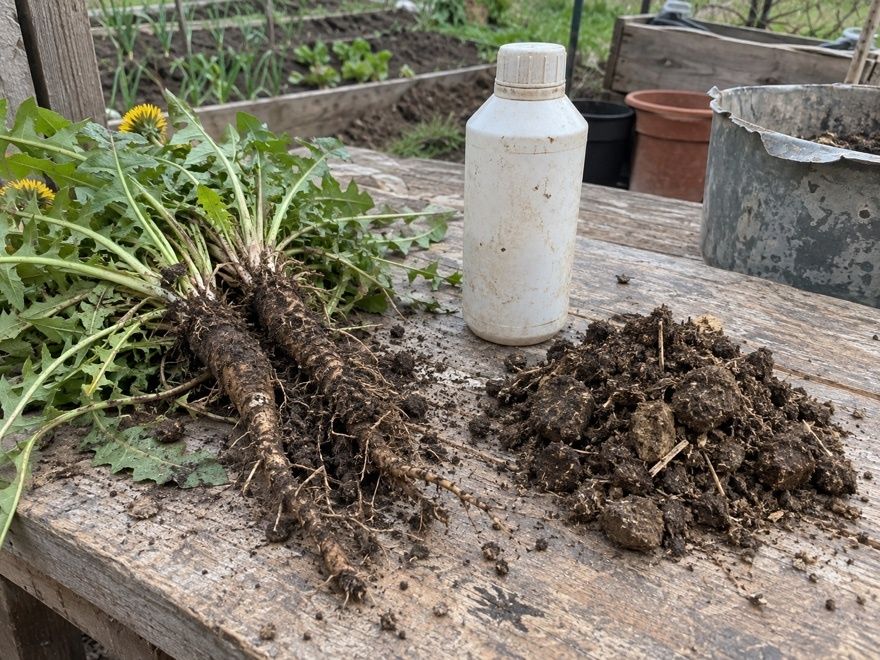
- 5 to 6 chopped dandelion roots, dug up whole and rinsed of soil before chopping
- 2 tablespoons (30 mL) of a Bacillus subtilis biostimulant, sold as a soil inoculant or biofungicide starter in garden centers and online
Mix it: Combine everything in a bucket with the water, stir well, and cover loosely so it can breathe without letting insects or heavy rain in. Let it steep for one week, stirring once or twice along the way.
Shelf life: Use the finished tonic within a couple of weeks of steeping. Dilute it fresh each time you water, since the diluted working solution does not keep.
How to apply
Strain out the solids after the week of steeping, then dilute the liquid at a ratio of 1 part tonic to 10 parts water before applying. Root-drench around the base of each plant, avoiding direct contact with the stem.
Apply only during the vegetative growth phase, when the plant is actively building leaf mass. This is the single most important rule with this tonic: stop using it once a plant starts flowering or setting fruit, since the high nitrogen content from the manure delays fruit set and pushes the plant to keep growing leaves instead of producing.
Water every two to three weeks through the vegetative stage rather than more frequently, since manure-based feeds build up in the soil faster than you might expect.
The Bacillus subtilis addition speeds up fermentation compared to a plain manure steep, and the live bacteria also help suppress the rot-causing microbes that give old-fashioned manure tea its bad reputation for smell. Tracking exactly which growth stage each plant is in, so you know when to stop this feed and switch to a flowering-stage routine, is easier with a plan built around your actual plants. easyDacha's care plan tracks each plant by growth stage from seedling through fruiting and adjusts feeding recommendations accordingly. Download and try easyDacha, a gardening app that keeps your feeding schedule matched to each plant's actual stage.
Expect visibly fuller, greener leaf growth within one to two weeks of the first application, most noticeable in new growth at the top of the plant.
Why this tonic works
Chicken manure is a strong, well-balanced source of nitrogen and other nutrients, historically one of the most reliable homemade fertilizers for pushing vegetative growth.
Dandelion root contributes inulin, a natural carbohydrate, along with plant growth factors that support root and shoot development, adding a mild biostimulant effect on top of the manure's raw nutrient load.
Bacillus subtilis accelerates the fermentation process compared to a plain manure steep, breaking down organic matter into forms plants absorb more readily, while its presence also competes against the rot-causing bacteria that make an unfermented manure tea smell bad and lose potency.
Is this safe for vegetables?
Yes, this tonic is safe for vegetables when properly diluted and used only during the vegetative growth stage as described. Well-composted or aged manure carries far less pathogen risk than fresh manure, and dilution further reduces any concern.
- Use aged or well-composted manure rather than fresh manure whenever possible
- Always dilute 1 part tonic to 10 parts water before applying, never use the concentrated steep directly
- Stop using this tonic once a plant begins flowering or fruiting, since the nitrogen load delays fruit set
- Wait at least a few weeks between the last application and harvest of any leafy crop grown close to the soil
What NOT to do
Don't apply once flowering starts. The high nitrogen content actively delays fruit set on flowering and fruiting plants; switch to a different feeding approach at that stage.
Don't skip dilution. Applying the concentrated steep directly can burn roots and overload the soil with nitrogen.
Don't use fresh, unaged manure if you can avoid it. Aged or composted manure carries a much lower risk of pathogens and is gentler on tender roots.
Don't feed more often than every two to three weeks. Manure-based nitrogen builds up in soil faster than synthetic fertilizers, and more frequent feeding risks nitrogen overload.
Best for which plants

- Leafy greens and brassicas (lettuce, kale, cabbage) - benefit strongly from this nitrogen push during their leaf-growth phase
- Tomato, pepper, and cucumber seedlings - useful early in the season while plants are still building leaf mass, but must stop once flowering begins
- Herbs grown for foliage - respond well during active leaf production, following the same stop-before-flowering rule
This tonic is not appropriate for houseplants indoors due to the smell during steeping, and it is not meant for any plant already in its flowering or fruiting stage.
When vegetative growth stays weak despite feeding
If plants still look thin after using this tonic, check three things. Look at whether the plant is getting enough direct sun, since even well-fed plants stretch thin and pale in too much shade. Check your watering consistency, since inconsistent watering blocks nutrient uptake regardless of how well-fed the soil is. Finally, confirm the manure was well-aged rather than very fresh, since fresh manure can actually stress roots and slow growth rather than help it in the short term.
Try easyDacha to track your feeding stages
Knowing exactly when to stop a nitrogen-heavy feed and switch gears matters more than the recipe itself. easyDacha, a garden planner app, tracks each plant's growth stage and adjusts your feeding tasks to match. Download and try easyDacha.
For more organic feeding options, see how to make fermented weed fertilizer, how to brew compost tea the right way, and how to ferment nettle for liquid fertilizer. For a Bacillus subtilis primer, see how to use Bacillus subtilis with turmeric, and for a related potassium-focused ferment, how to make potato peel ferment for potassium-hungry plants.

FAQ
What does the Bacillus subtilis addition actually do in this tonic?
It speeds up fermentation of the manure and dandelion root mixture and helps suppress the rot-causing bacteria that make an unfermented manure tea smell worse and lose effectiveness over time.
Can I use this tonic once my tomatoes start flowering?
No. Stop applying once a plant begins flowering or setting fruit, since the high nitrogen content delays fruit set and keeps pushing leaf growth instead.
How long should I steep the chicken manure and dandelion root tonic?
One week, with occasional stirring, before straining and diluting for use.
Is fresh chicken manure safe to use in this recipe?
Aged or well-composted manure is safer and gentler on roots than fresh manure. Use fresh manure only if that is all you have, and be extra cautious with dilution and timing before harvest.
How often should I apply this tonic during vegetative growth?
Every two to three weeks through the leaf-growth stage, stopping once the plant transitions to flowering.
Is there an app that tracks which growth stage my plants are in?
Yes. easyDacha is a vegetable garden app that tracks each plant's stage from seedling through fruiting and adjusts feeding guidance to match.
Can I dig up dandelion roots from my own yard for this recipe?
Yes, as long as the area has not been treated with herbicide or other chemicals. Rinse the roots thoroughly before chopping and adding them to the steep.