
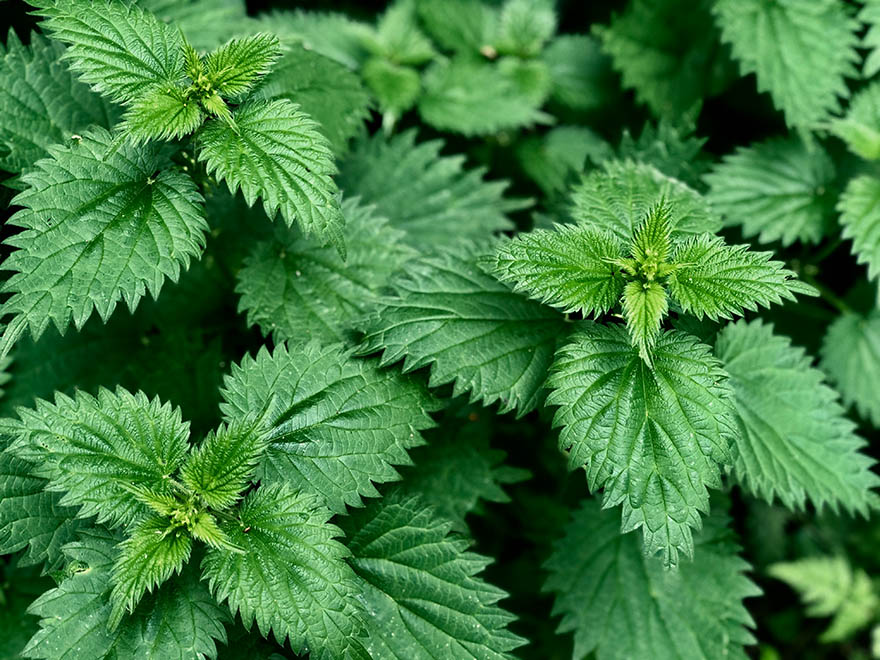
Stinging nettles are one of the most nitrogen-rich plants you can find growing wild. Their leaves and stems contain roughly 2% to 3% nitrogen by dry weight, plus iron, magnesium, and silica. Pack fresh nettles into a bucket of water and let them sit for 7 to 10 days. The nutrients dissolve into a dark, potent liquid fertilizer. The NPK ratio runs roughly 2.0-0.5-1.5. That nitrogen-forward profile is ideal for leafy vegetables and plants in the vegetative growth stage. It costs nothing. It works. And it smells terrible. All three of those things are true, and the smell is the price you pay.
TL;DR: Fermented nettle tea is a free, nitrogen-rich liquid fertilizer made by soaking fresh nettles in water for 7 to 10 days. Strain, dilute 1:10 to 1:20, and apply 2 cups (about 500 ml) per square yard (about 1 m²) every 1 to 2 weeks. The concentrate stores for 2 to 3 months sealed.
The recipe
One method. Time does the work.
You need:
- A 5-gallon (19 L) bucket with a loose-fitting lid
- Fresh stinging nettles, enough to fill the bucket about halfway. Wear thick gloves when harvesting. Stinging nettles earn their name.
Brew it:
- Pull or cut fresh stinging nettles. Wear heavy gloves. Harvest before the plants go to seed. Pre-seed nettles have the highest nutrient concentration, and their tea spreads no nettle seeds.
- Chop or tear the nettles roughly. Smaller pieces ferment faster.
- Pack the chopped nettles into the bucket until it's about half full.
- Fill with water to cover the nettles. Leave 2 to 3 inches (5 to 8 cm) of headspace for bubbling.
- Place a lid loosely on top. Do not seal it tight. Fermentation produces gas that needs to escape.
- Set the bucket outdoors, away from your house and any seating areas. This will smell strongly by day 3.
- Stir once a day with a stick. Stirring introduces oxygen, which helps the fermentation process and breaks up the nettles.
- Ferment for 7 to 10 days. The liquid will turn dark brown and stop bubbling when it's done. In warm weather (above 75°F, 24°C), it finishes closer to 7 days. In cooler conditions, give it the full 10.
- Strain through burlap, old cloth, or a mesh bag. Squeeze out as much liquid as you can.
- Compost the leftover nettle mush. It's still full of nutrients and breaks down fast.
Before using: dilute 1:10 to 1:20 with water. One part nettle concentrate to 10 or 20 parts water. Use 1:10 for established, heavy-feeding plants. Use 1:20 for younger plants, containers, and foliar spray.
Storage: the strained concentrate keeps 2 to 3 months in a sealed container stored in a cool, dark place. The smell doesn't get worse once fermentation is done, but it doesn't get better either.
How to apply
Pour 2 cups (about 500 ml) of the diluted solution per square yard (about 1 m²) of soil as a drench. Water the root zone, not the leaves, when using the 1:10 dilution. The stronger mix can stain and sometimes irritate foliage.
You can also use nettle tea as a foliar spray at 1:20 dilution. Pour the diluted tea into a spray bottle and mist leaves in the early morning. At this weaker strength, it won't cause leaf burn and delivers a light nitrogen boost through the foliage.
Frequency: once every 1 to 2 weeks during the vegetative growth stage. That's the period when plants are putting out leaves, stems, and roots, before flowering begins. Once plants start flowering and setting fruit, switch to a potassium-rich feed (like comfrey tea) instead.
Managing the smell
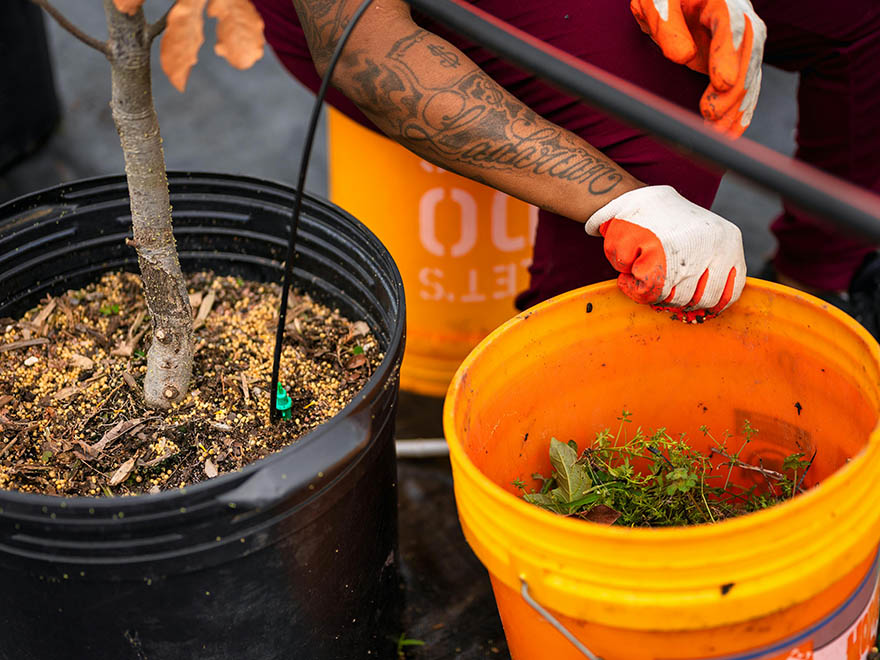
Fermented nettle tea smells like a mix of rotting vegetation and swamp water. There's no version of this recipe that smells good. But you can manage it.
Location. Put the fermentation bucket at the far end of the garden, downwind from the house and patio. Keep the lid on between stirring sessions.
Stirring. Stir once a day, not more. Each stir releases a burst of smell. A quick stir with a long stick, lid back on, walk away.
Additives that help. Adding a handful of rock dust or a few drops of EM (effective microorganisms) to the bucket can reduce the worst of the sulfur smell. Some gardeners throw in a few stems of lavender or mint. These don't eliminate the smell, but they take the edge off.
Once strained, the concentrate in a sealed bottle smells much less than the open bucket. The worst smell is during active fermentation (days 3 through 10). After straining and sealing, it's tolerable.
After application, the smell on your soil fades within a day. It doesn't linger.
Why fermented nettle works as fertilizer
Nettles are nutrient accumulators. Their root systems pull nitrogen, iron, magnesium, calcium, and silica from the soil and concentrate them in leaf tissue. Fresh nettle leaves contain roughly 2% to 3% nitrogen by dry weight. That's higher than most compost and comparable to some commercial organic fertilizers.
When you ferment nettles in water, bacteria break down the plant cells and release those nutrients into solution. The fermentation also produces organic acids and microbial byproducts that make the nutrients more bioavailable to plant roots than raw plant material would be. This is the same principle behind compost tea, but with a much higher nitrogen content in the starting material.
The approximate NPK of finished nettle tea (before dilution) is 2.0-0.5-1.5. That nitrogen-heavy profile is why it's best for vegetative growth. Leafy greens, brassicas, and young transplants that need to build foliage respond most visibly to nettle feedings.
Is nettle tea safe for all plants?
Yes, at proper dilution. The 1:10 to 1:20 ratio is safe for all vegetables, herbs, flowers, and fruit.
Undiluted concentrate is too strong and will burn roots. Always dilute.
The nitrogen-heavy profile means nettle tea is best suited for plants in the leaf-growth stage. Avoid feeding fruiting plants (tomatoes, peppers, squash) with nettle tea once they start flowering. Too much nitrogen at that point pushes leaf growth at the expense of fruit. Switch to a potassium-rich feed like comfrey tea once flowers appear.
What NOT to do
Don't harvest nettles bare-handed. Stinging nettles inject formic acid through tiny hollow hairs on the stems and leaves. Wear thick gloves, long sleeves, and ideally garden gauntlets up to the elbow. The sting is painful and lasts for hours.
Don't seal the lid tight. Fermentation produces CO2 and other gases. A sealed lid builds pressure. Keep the lid loose or cover with cloth secured by a bungee cord.
Don't ferment longer than 10 days. By then, the useful nutrients are fully extracted. Longer fermentation just produces more anaerobic bacteria and worse smell without any extra benefit.
Don't use nettles that have gone to seed. Nettle seeds can survive fermentation. If you pour seedy nettle tea on your beds, you'll plant nettles everywhere. Harvest before the plants flower.
Don't use undiluted. The concentrate is far too strong. It will burn roots and damage soil biology. Always dilute 1:10 to 1:20.
Best for which plants
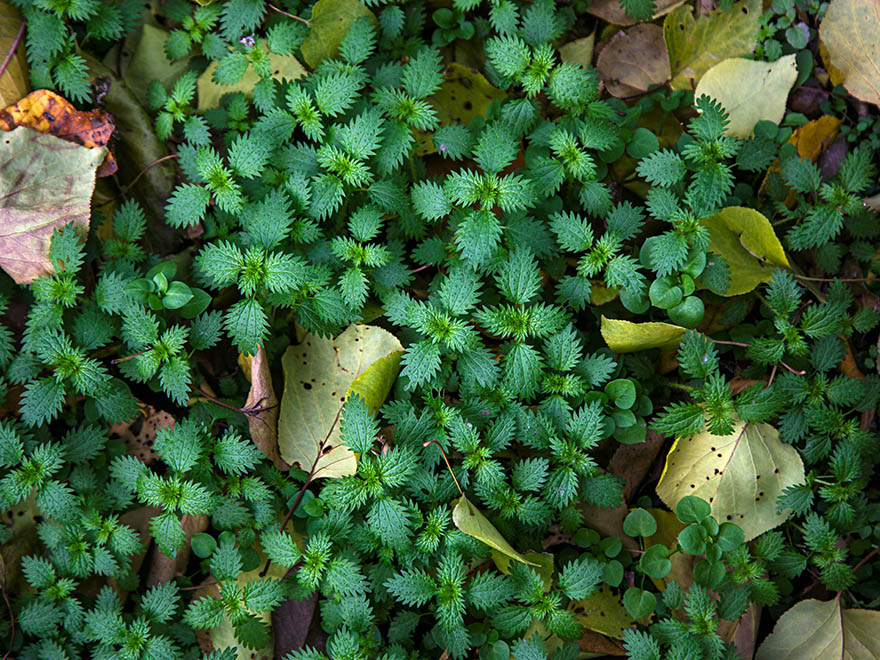
Nettle liquid fertilizer is a nitrogen feed. It's built for the vegetative stage, when plants need to grow leaves, stems, and roots.
- Leafy greens (lettuce, spinach, kale, chard) — pure leaf crops that thrive on nitrogen all season long. Nettle tea is ideal for them from transplant through harvest.
- Brassicas (broccoli, cabbage, cauliflower) — heavy nitrogen feeders, especially in the first 4 to 6 weeks after transplanting.
- Corn — one of the heaviest nitrogen feeders in the garden. Nettle tea every 2 weeks through the vegetative stage.
- Young transplants of any kind — a diluted nettle drench (1:20) in the first week after transplanting gives roots a nitrogen boost to establish fast.
- Herbs (basil, parsley, cilantro) — leaf herbs benefit from nitrogen. Feed every 2 weeks.
- Compost accelerator — pour undiluted nettle concentrate on your compost pile to add nitrogen and speed up decomposition.
Skip for: tomatoes, peppers, and squash once they start flowering. They need potassium at that stage, not nitrogen.
When nettle tea isn't making a difference
If you've been feeding with nettle tea and plants still look pale, stunted, or yellow, check three things. First: soil drainage. Waterlogged soil suffocates roots and blocks nitrogen uptake regardless of what you feed. Second: soil pH. Nitrogen availability drops sharply below pH 5.5 and above pH 7.5. Test your soil. Third: temperature. Cool soil (below 50°F / 10°C) slows microbial activity and nitrogen cycling. Fermented nettle tea works best in warm growing conditions.
For a full feeding schedule by growth stage, see our vegetable gardening beginner guide.
FAQ
What is the NPK of fermented nettle tea?
Fermented nettle tea has an approximate NPK of 2.0-0.5-1.5 before dilution. It's nitrogen-forward, with moderate potassium and low phosphorus. This profile makes it ideal for vegetative growth: leaf production, stem development, and root establishment. It's not a balanced fertilizer, so pair it with a potassium source (like comfrey tea) once plants start flowering.
How long does it take to ferment nettle tea?
Seven to ten days at outdoor temperatures. In warm weather above 75°F (24°C), fermentation finishes closer to 7 days. In cooler conditions, give it the full 10 days. The tea is ready when it turns dark brown and stops actively bubbling.
How do I make nettle tea smell less?
You can't eliminate the smell, but you can manage it. Keep the bucket far from the house with a loose lid. Stir once a day, no more. Adding a handful of rock dust or a few drops of EM (effective microorganisms) reduces the worst sulfur odors. The smell is strongest during active fermentation (days 3 through 10) and fades after straining.
Can I use nettle tea on tomatoes?
Yes, but only during early vegetative growth before flowering begins. Nettle tea is high in nitrogen, which drives leaf and stem growth. Once tomatoes start flowering, switch to a potassium-rich feed. Too much nitrogen during fruiting pushes foliage at the expense of fruit production.
How long does nettle fertilizer concentrate last?
Strained concentrate keeps 2 to 3 months in a sealed container stored in a cool, dark place. The nutrients remain stable. The smell stays contained as long as the seal is tight. Once you open it and dilute for use, apply the diluted solution within a day.
Can I use nettles that have gone to seed?
No. Nettle seeds can survive the fermentation process. If you apply seedy nettle tea to your beds, you risk planting stinging nettles throughout your garden. Always harvest nettles before they flower and set seed.
Is there a gardening app that schedules feeding tasks?

Yes. The easyDacha garden planner app schedules feeding tasks by growth stage for every plant in your garden. It tells you when to apply nitrogen feeds like nettle tea and when to switch to potassium. Download the app at easydacha.com/download.
Feed the right nutrient at the right stage
Nitrogen for leaves. Potassium for fruit. Phosphorus for roots. Every growth stage asks for something different, and timing the switch is what separates a good harvest from a great one.
The easyDacha gardening app builds a feeding schedule tied to each plant's growth stage. It tells you when to feed nitrogen, when to switch to potassium, and when to stop feeding entirely before harvest. No guessing, no spreadsheets.
Try easyDacha and get 7-day care plan for free →. The garden planner app that plans your season in 60 seconds. Cancel anytime.
Related reading on easydacha.com
- Vegetable Gardening for Beginners: A Step-by-Step Guide — soil, timing, feeding, and first-year planning from scratch.
- Homemade Organic Pesticide for the Vegetable Garden — DIY pest and disease control recipes.
- Companion Planting Guide: Double Your Harvest Naturally — plant combinations that support healthy growth.
- How to Care for Vegetable Seedlings Indoors — raising strong seedlings before they go outside.