
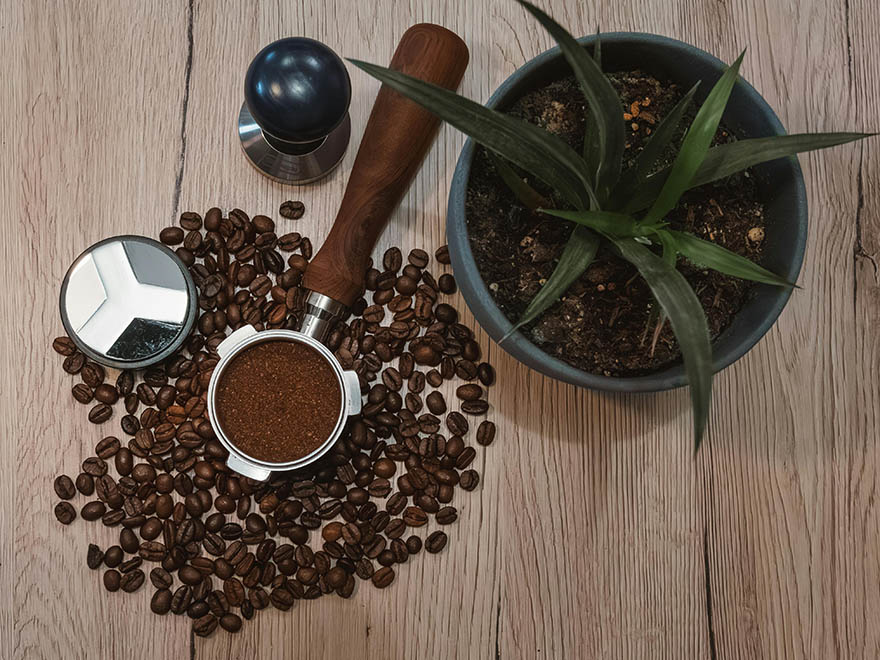
Used coffee grounds are one of the most common kitchen scraps that gardeners toss on their beds. And for good reason. Spent grounds contain about 2% nitrogen by weight, plus smaller amounts of potassium, phosphorus, and magnesium. They improve soil structure, feed earthworms, and help sandy soil hold moisture. But there's a catch that trips up most people. Coffee grounds are not the acidic miracle amendment the internet claims. Spent grounds have a near-neutral pH of 6.5 to 6.8. The acid stays in the coffee you drank. The grounds themselves won't change your soil pH in any meaningful way.
TL;DR: Spread 1 to 2 cups (240 to 480 ml) of used coffee grounds per plant as a thin surface mulch, no more than half an inch (1 cm) thick. Or steep 1 cup (about 240 ml) grounds in 1 gallon (3.8 L) water overnight and pour around plants. Use fresh grounds only. Don't over-apply.
Two ways to use coffee grounds
Both methods work. Pick the one that fits your routine.
Method 1: Surface mulch (direct application)
The simplest approach. Scatter and forget.
You need:
- Used coffee grounds, cooled to room temperature. Fresh from the filter is fine once cool. Not moldy.
Apply it:
- Spread 1 to 2 cups (240 to 480 ml) of used grounds around the base of each plant.
- Keep the layer thin. No more than half an inch (1 cm) thick. This is critical. Coffee grounds compact when wet and form a dense mat that repels water. A thin layer avoids this.
- Scratch the grounds lightly into the top inch of soil with your fingers or a hand rake. This prevents caking on the surface.
- Water the area after applying. The moisture starts the decomposition process and washes nitrogen into the root zone.
Frequency: once every 2 to 4 weeks during the growing season. One household produces enough grounds for a few plants. Don't stockpile and dump a month's worth at once.
Method 2: Coffee ground tea (liquid feed)
A mild liquid feed that delivers nutrients more evenly than surface application.
For 1 gallon (3.8 L) of tea:
- 1 cup (about 240 ml) used coffee grounds
- 1 gallon (3.8 L) water
Brew it:
- Add 1 cup of used coffee grounds to a bucket or large jar.
- Pour 1 gallon (3.8 L) of water over the grounds.
- Let it steep overnight (12 to 24 hours) at room temperature.
- Pour the entire mixture around plants. No need to strain. The grounds will break down in the soil.
Frequency: once every 2 to 3 weeks. This is a mild feed. It won't burn or overfeed at this rate.
The acidity myth (read this first)
This is the most repeated piece of wrong advice in gardening. "Coffee grounds make soil acidic. Use them for blueberries and azaleas." It sounds logical because coffee is acidic. But the acid doesn't stay in the grounds.
During brewing, hot water extracts most of the organic acids from the grounds. What's left is spent grounds with a pH between 6.5 and 6.8. That's nearly neutral. Spreading used coffee grounds on your soil will not lower the pH enough to matter. Multiple university extension studies have confirmed this.
Fresh, unbrewed grounds are slightly more acidic (pH around 5.5 to 6.0), but even those lose their acidity quickly once exposed to soil microbes. If you need to acidify soil for blueberries or azaleas, use sulfur or peat moss. Coffee grounds won't get you there.
What coffee grounds do well is add organic matter and nitrogen. That's the real value. Stop thinking of them as an acidifier and start thinking of them as a slow-release nitrogen source that also improves soil texture.
Why coffee grounds work in the garden
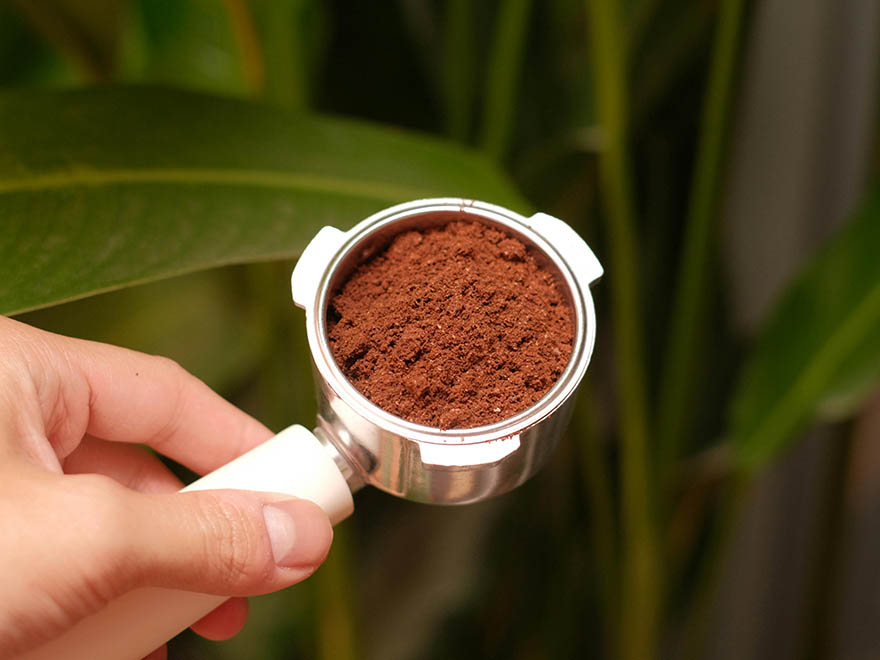
Coffee grounds are about 2% nitrogen by dry weight. That's comparable to grass clippings and higher than most leaves. Nitrogen is released slowly as soil microbes break down the grounds over weeks. It's not a fast-acting feed. It's a steady background source.
The grounds also improve soil structure. They add organic matter that loosens clay and helps sandy soil retain moisture. Earthworms love them. If your soil has an active worm population, coffee grounds will attract more activity around the root zone.
The carbon-to-nitrogen ratio of coffee grounds is around 20:1. That's close to the ideal range for composting. Grounds break down well in both garden beds and compost bins without tying up nitrogen the way high-carbon materials (like sawdust or wood chips) do.
How much is too much
This is where most people go wrong. More is not better with coffee grounds.
Maximum thickness on soil surface: half an inch (1 cm). Coffee grounds are fine-textured. When piled thicker than this, they compact into a dense layer that repels water instead of absorbing it. Rain and irrigation water will run off the surface instead of soaking through.
Maximum proportion in soil mixes: 10% to 15% by volume. For raised beds or container mixes, coffee grounds should be a small fraction, not a primary ingredient. Higher concentrations can slow seed germination and stunt young seedlings.
For composting: mix coffee grounds with brown materials (dried leaves, cardboard, straw) at a ratio of roughly 1 part grounds to 3 parts browns. Grounds alone in a compost bin will turn into a soggy, compacted mess that goes anaerobic.
Which plants benefit most
Coffee grounds are a mild nitrogen source and soil conditioner. Most plants benefit from a thin application.
- Tomatoes and peppers — respond well to the slow nitrogen release during vegetative growth. Apply as mulch around the base after transplanting.
- Roses — a traditional use. The organic matter and nitrogen support healthy foliage.
- Root vegetables (carrots, radishes, beets) — coffee grounds loosen heavy soil and improve tilth in the root zone.
- Leafy greens (lettuce, spinach, kale) — nitrogen-loving crops that benefit from steady feeding.
- Compost bins — the best use for large quantities. Coffee grounds are an excellent nitrogen-rich "green" material for composting.
- Container plants — a thin layer on the surface of potting mix adds organic matter that containers lack. Keep it light. Containers are easy to over-apply in.
Which plants to skip
Some plants don't respond well to coffee grounds. Avoid or limit use on these.
Seedlings and seeds. Coffee grounds can inhibit seed germination. Studies at several university extension programs found that direct application of grounds reduced germination rates in some crops. Keep grounds away from seed beds and very young seedlings. Wait until plants are established (at least 4 to 6 weeks old) before applying.
Plants sensitive to nitrogen excess. Fruiting plants that are already flowering don't need extra nitrogen. It pushes leaf growth at the expense of fruit. If your tomatoes are already lush and green but not setting fruit, skip the coffee grounds.
Succulents and cacti. These prefer lean, fast-draining soil. Coffee grounds hold moisture and add nutrients they don't need.
What NOT to do
Don't pile it thick. Half an inch (1 cm) maximum on the soil surface. Thick layers compact, repel water, and can grow mold. This is the most common mistake.
Don't use moldy grounds. If your grounds have been sitting in the filter for days and have visible mold, throw them out. Mold on coffee grounds can introduce harmful fungi to your garden soil. Use fresh grounds only.
Don't apply to seedlings or seed beds. Coffee grounds can inhibit germination and stunt very young plants. Wait until plants are well established.
Don't expect it to acidify your soil. Used coffee grounds are nearly pH neutral (6.5 to 6.8). They will not make your soil acidic enough for blueberries, azaleas, or other acid-loving plants. Use sulfur or peat moss for that.
Don't dump a week's worth at once. A daily cup of grounds is more than enough for one or two plants. Spread them thin across multiple plants or add the excess to your compost bin.
Coffee grounds in compost
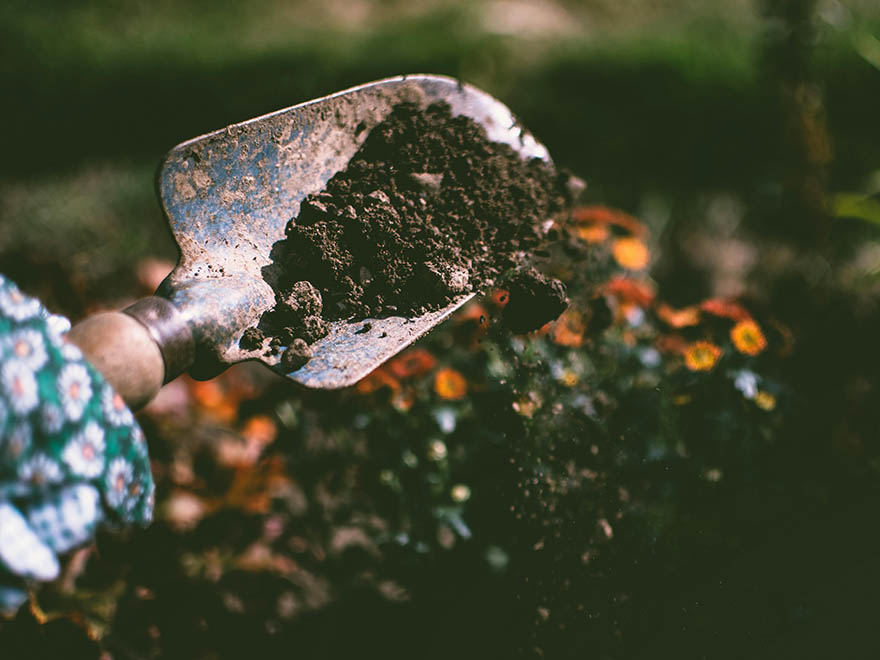
If you have more grounds than your garden beds can use, compost is the best destination. Coffee grounds are a nitrogen-rich "green" material with a carbon-to-nitrogen ratio around 20:1.
Mix grounds with "brown" materials at roughly 1 part grounds to 3 parts browns (dried leaves, shredded cardboard, straw). This balance keeps the pile aerated and prevents the grounds from compacting into a wet, airless mass.
Coffee filters are compostable too. Tear them up and toss them in with the grounds. They count as brown material.
One household's daily grounds are a perfect steady addition to a compost bin. Don't save up a garbage bag full and dump it all at once. That much green material in one spot will go anaerobic and smell.
FAQ
Do coffee grounds make soil acidic?
No. Used (brewed) coffee grounds have a nearly neutral pH of 6.5 to 6.8. The brewing process extracts most of the organic acids. Spent grounds will not lower your soil pH enough to benefit acid-loving plants like blueberries or azaleas. If you need acidic soil, use sulfur or peat moss instead.
How much coffee grounds should I put on my garden?
Apply 1 to 2 cups (240 to 480 ml) per plant as a thin surface layer, no more than half an inch (1 cm) thick. Scratch it lightly into the top inch of soil. Thicker layers compact and repel water. For soil mixes, keep coffee grounds under 15% of total volume.
Can I use coffee grounds on tomatoes?
Yes. Tomatoes benefit from the slow nitrogen release during vegetative growth. Spread a thin layer around the base after transplanting. Stop applying once the plant starts flowering and setting fruit. Excess nitrogen at that stage pushes leaves instead of fruit.
Are coffee grounds good for all plants?
Most established plants benefit from a thin application. Avoid using grounds near seedlings or seed beds since they can inhibit germination. Skip them on succulents, cacti, and fruiting plants that are already flowering. For everything else, a light mulch every 2 to 4 weeks works well.
Can I put coffee grounds directly on the soil?
Yes. Spread used grounds as a thin surface mulch (half an inch / 1 cm maximum) and scratch them into the top inch of soil. Water after applying. Do not pile them thick. Compacted grounds form a water-repelling mat that hurts more than it helps.
Should I compost coffee grounds or use them directly?
Both work. Direct application gives individual plants a mild nitrogen boost. Composting is better if you produce more grounds than your beds can absorb. In compost, mix 1 part grounds with 3 parts brown materials. Coffee filters are compostable too.
Is there a gardening app that tracks soil amendments?
Yes. The easyDacha garden planner app builds a feeding schedule for every plant in your garden, timed to each growth stage. It tells you when to feed, what to apply, and when to stop. Download at easydacha.com/download.
Your kitchen scraps, your garden's gain

Every morning's coffee filter holds a small dose of nitrogen for your soil. But feeding is just one piece of the growing season. Every plant needs different care at different times.
The easyDacha gardening app builds a week-by-week task list for every plant in your garden. Feeding, watering, spraying, harvesting. Each task lands on the right day. No guessing, no spreadsheets.
Try easyDacha app →. The garden planner app that plans your season in 60 seconds. Cancel anytime.
Related reading on easydacha.com
- Vegetable Gardening for Beginners: A Step-by-Step Guide — the full beginner guide covering soil, timing, and planning.
- Homemade Organic Pesticide for the Vegetable Garden — more DIY garden recipes.
- Companion Planting Guide: Double Your Harvest Naturally — plant combinations that support soil health.
- Why You Shouldn't Plant Tomatoes in the Same Spot as Last Year — crop rotation basics for soil health.