
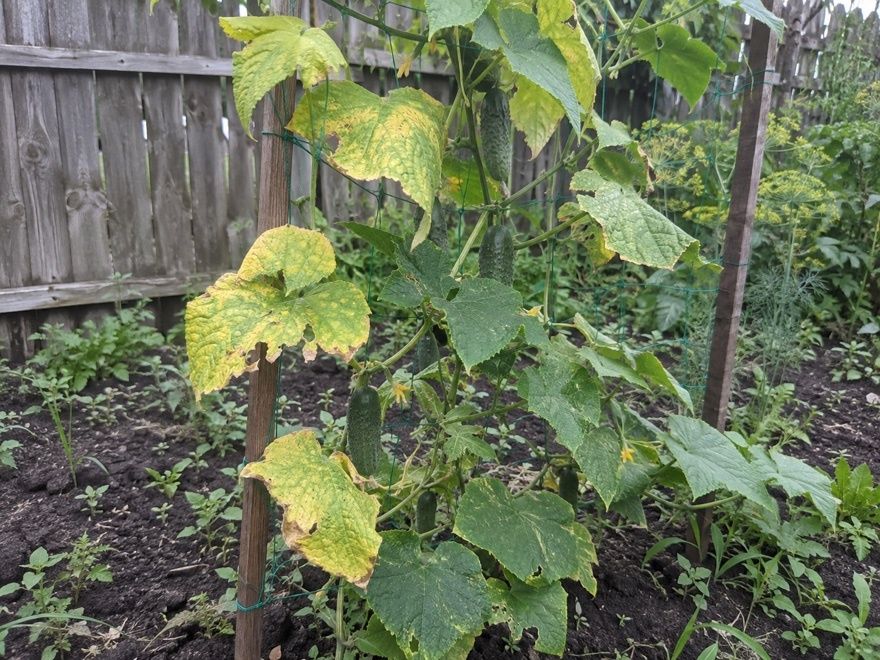
Your cucumber leaves are turning yellow across the plant, not just one leaf here and there, and it is happening in the middle or tail end of the season when the plant should still be producing. That general yellowing usually points to a nitrogen and potassium gap at the same time, and a urea and potassium sulfate root feed addresses both in a single application.
TL;DR: For cucumber leaves turning yellow from a nitrogen and potassium gap, dissolve 1 tablespoon (about 15 g) of urea and 1 tablespoon (about 15 g) of potassium sulfate in 2.6 gallons (10 L) of warm water, and root-drench on already-moist soil.
The recipe
For 2.6 gallons (10 L) of warm water:
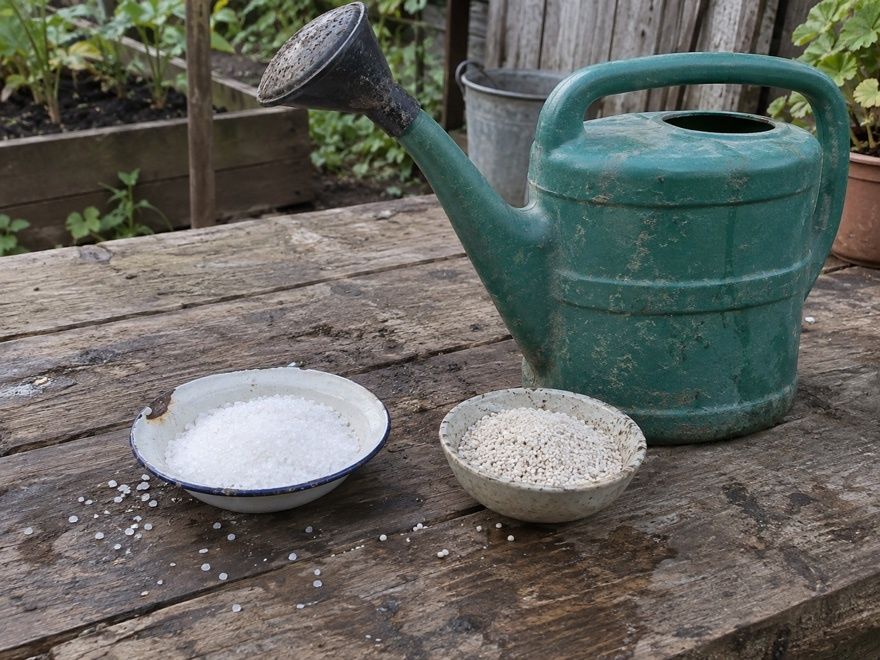
- 1 tablespoon (about 15 g) urea (46-0-0), a concentrated nitrogen fertilizer sold as granules or prills
- 1 tablespoon (about 15 g) potassium sulfate, a chloride-free potassium source
Mix it: Dissolve both fully in warm water, stirring until no granules remain visible, before applying to the soil.
Shelf life: Mix fresh and use the same day. Once dissolved, urea in particular starts converting in solution and is best applied right away.
How to apply
Water the soil around the base of the cucumber plant first if it is dry, then apply the feed as a root drench once the soil is already moist. Applying urea to dry soil risks burning the roots, so this order matters.
Pour the mixed solution evenly around the root zone, not directly against the stem, giving each plant roughly a gallon (3.8 L) of the diluted feed depending on plant size.
If you notice that only the leaf margins are yellowing while the rest of the leaf stays green, that is a potassium deficiency specifically rather than a general nitrogen and potassium gap, but the same feed and dose fixes it either way.
Expect improvement within a week to ten days as new growth comes in a healthier green, though leaves that are already badly yellowed will not fully recover their color.
This is usually a one-time correction rather than a recurring weekly feed, but if yellowing returns later in the season you may need to repeat it. Keeping track of when you last fed a specific bed, especially across several cucumber plants at different stages, gets confusing fast. easyDacha's care plan schedules feeding tasks by growth stage for each plant in your garden, so you always know what was fed and when. Download and try easyDacha, a gardening app that keeps your whole feeding schedule organized by plant and bed.
Why this feed works
Urea is a fast, concentrated source of nitrogen, which is the nutrient most directly tied to leaf greening through chlorophyll production. A general nitrogen shortage shows up as pale, yellowing leaves across the whole plant.
Potassium sulfate supplies potassium without chloride, which some cucumber plants are sensitive to at higher concentrations. Potassium plays a role in water regulation within the leaf and in overall plant vigor, and a shortage often shows up first as yellowing along the leaf margins specifically.
Together, these two minerals cover the two most common causes of general yellowing in mid to late season cucumbers, which is why a combined feed works faster than guessing which single nutrient is short.
Is this safe for cucumber plants?
Yes, this feed is safe at this concentration when applied correctly to already-moist soil. Urea and potassium sulfate are both standard mineral fertilizers used at low, single-application doses here.
- Always water the soil before applying, never onto dry soil, since urea can scorch dry roots
- This recipe is already at the practical ceiling for potassium sulfate in a single feeding, so avoid adding another potassium source the same week
- Keep the solution off the stem and leaves directly, applying it to the root zone in the surrounding soil
- Wash harvested cucumbers as you normally would before eating
What NOT to do
Don't apply to dry soil. Urea on dry soil concentrates around the roots and can burn them; always water first.
Don't add another potassium feed the same week. This dose is already at the practical ceiling for potassium sulfate in one application.
Don't assume every yellowing pattern is the same cause. Margin-only yellowing with a green leaf center points specifically to potassium, while overall pale yellowing points to nitrogen, though this feed addresses both at once.
Don't overwater right after feeding. Heavy watering immediately after can wash the nutrients past the root zone before the plant absorbs them.
Best for which plants
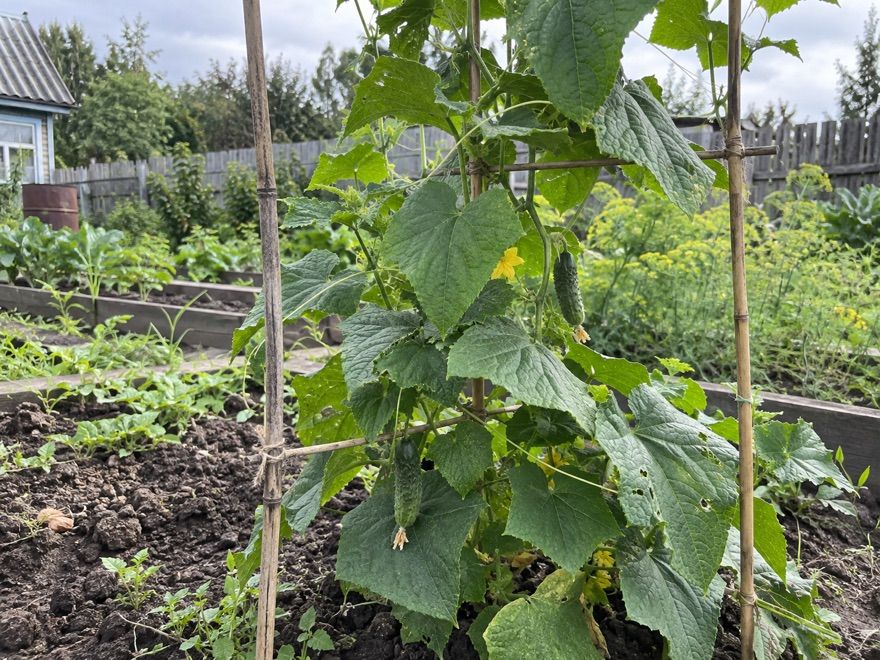
- Cucumber - the primary target, especially plants showing general yellowing in mid to late season
- Summer squash and zucchini - share similar nitrogen and potassium needs and respond to the same feed
- Melon - a related vine crop that shows comparable yellowing patterns under the same nutrient gaps
This is an outdoor vegetable garden feed for vining crops, not intended for houseplants or ornamentals.
When cucumber leaf yellowing keeps coming back
If leaves keep yellowing even after feeding, check three things. Look at your watering consistency, since inconsistent watering stresses roots and blocks nutrient uptake even when the soil has enough fertilizer in it. Check the soil pH, since cucumbers absorb nitrogen and potassium poorly outside their preferred range, and a pH that has drifted too high or too low can mimic a nutrient deficiency that feeding alone will not fix. Finally, check the lower leaves specifically, since some yellowing and dying back of the oldest leaves is a normal part of the plant redirecting energy to fruit production late in the season, not a deficiency at all.
Try easyDacha for cucumber feeding schedules
Catching a nutrient gap early means knowing your cucumber's feeding history at a glance. easyDacha, a garden planning app, tracks each plant's care plan by growth stage so feeding never falls through the cracks. Download and try easyDacha.
For related cucumber troubleshooting, see bitter cucumbers, white powder on leaves, and the rotation fix, curled, pinched, or fat-bottomed cucumbers and what the shape tells you, and too many cucumbers, what to do before they go soft. For a broader feeding reference, see the best fertilizer recipe for seedlings and plants and how to use Epsom salt in the garden for magnesium deficiency, which covers a related mineral gap that can also show up as leaf yellowing.
FAQ
Why are my cucumber leaves turning yellow all over?
General yellowing across the whole plant in mid to late season usually points to a combined nitrogen and potassium shortage, which a urea and potassium sulfate root feed addresses directly.
What does potassium deficiency look like specifically on cucumber leaves?
Yellowing and drying concentrated at the leaf margins while the center of the leaf stays green, distinct from the overall pale yellowing typical of nitrogen shortage.
How much urea and potassium sulfate should I use per cucumber plant?
Dissolve 1 tablespoon (about 15 g) of each in 2.6 gallons (10 L) of warm water, and apply roughly a gallon per plant to already-moist soil.
How soon will yellow cucumber leaves turn green again?
New growth should come in a healthier green within a week to ten days, though leaves that are already badly yellowed will not recover their color.
Can I use this feed earlier in the season too?
This feed is aimed at correcting an active yellowing problem in mid to late season. Earlier in the season, a balanced feeding plan through the full care schedule is usually enough without this specific correction.
Is there an app that schedules cucumber feeding automatically?
Yes. easyDacha is a vegetable garden app that schedules feeding tasks by growth stage for every plant in your garden, so you know exactly when your cucumbers are due for their next feed.
Should I feed the whole cucumber bed or just the yellowing plant?
Feed any plant showing the symptom. If the whole bed shows general yellowing, treat the whole bed at the same rate per plant rather than guessing which individual plants need it most.