
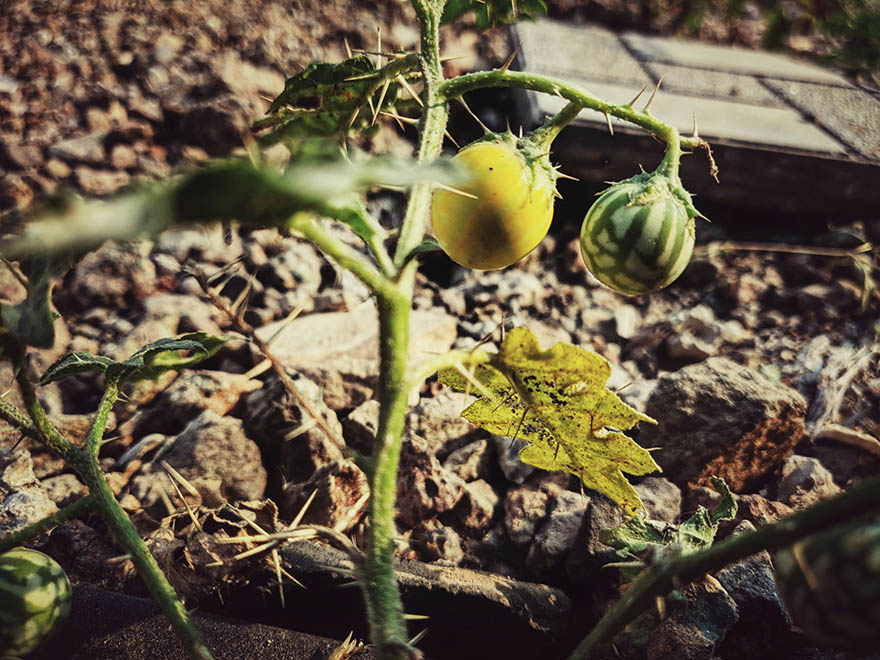
The lower leaves go first. They turn yellow between the veins — the veins stay green, but the tissue in between fades to pale yellow, then brown. It starts at the bottom of the plant and climbs. The fruit sets but stays small and tasteless. The plant looks tired. That is magnesium deficiency, and it is the most common mid-season nutrient problem in tomatoes, peppers, and container plants. Epsom salt — magnesium sulfate. One tablespoon, two ways to use it.
TL;DR: Foliar spray (fast fix): 1 tablespoon Epsom salt per 1 quart (1 liter) of water, spray leaves morning or evening, greens up in 3 to 5 days. Soil drench (maintenance): 1 tablespoon per 2.5 gallons (10 liters), pour at the base every 14 days. Container plants: 1 teaspoon per quart with every watering. Works on tomatoes, peppers, roses, and any plant showing yellow-between-green-veins on lower leaves.
The recipe
You need
- Epsom salt (magnesium sulfate, MgSO₄): sold at pharmacies and grocery stores in the health/bath section. A 2 lb bag costs $3 to $4 and lasts the entire season.
- Water
- A spray bottle (for foliar) or watering can (for drench)
Do it — Foliar spray (fast correction)
- Pour 1 quart (1 liter) of water into a spray bottle.
- Add 1 tablespoon of Epsom salt. Shake until fully dissolved. Epsom salt dissolves easily — the water stays clear.
- Spray immediately. Use the same day.
Do it — Soil drench (maintenance)
- Pour 2.5 gallons (10 liters) of water into a watering can or bucket.
- Add 1 tablespoon of Epsom salt. Stir until dissolved.
- Pour at the base of each plant — 2 cups (0.5 liters) per plant for standard-sized vegetables, up to 1 quart (1 liter) for large tomato or pepper plants in full production.
How to use it
Foliar spray (fast fix):
Spray tops and undersides of all leaves until lightly wet. The magnesium absorbs through the leaf surface and reaches the chloroplasts directly — visible greening starts in 3 to 5 days. Use a fine mist setting. This is the method for correcting an active deficiency that is already showing symptoms.
Soil drench (prevention):
Pour at the base of the plant onto the root zone. The magnesium enters through the roots and builds up gradually. This is the method for maintaining magnesium levels throughout the season so deficiency does not develop in the first place.
Container plants:
Containers lose magnesium fast — every watering flushes some out. Add 1 teaspoon of Epsom salt per quart (1 liter) of water at every watering throughout the season. This low, steady dose prevents the deficiency from developing.
Schedule:
Every 14 days during active growth. Start when plants have 4 to 6 true leaves and continue through fruit development. The most critical window is mid-season through harvest — that is when heavy fruiting depletes magnesium fastest.
Timing: Morning or evening. Avoid foliar spraying in direct midday sun — the droplets can concentrate and spot leaves as they dry.
Pairing with other treatments: Do not apply Epsom salt and calcium-based treatments (calcium nitrate or calcium acetate) on the same day. Magnesium and calcium compete for uptake channels in root cell membranes — applying both simultaneously reduces the effectiveness of each. Space them at least 3 to 4 days apart. The potassium nitrate foliar spray can be applied on the same schedule without conflict.
Which plants benefit most
Best for: Tomatoes, peppers, and eggplant during fruiting — the crops that demand the most magnesium and show deficiency first. On tomatoes, low magnesium means yellow lower leaves and bland, small fruit with poor sweetness. On peppers — pale foliage climbing up the plant from the bottom. Container-grown tomatoes and peppers benefit the most because magnesium leaches out with every watering. Also roses — magnesium drives chlorophyll production and bloom quality, and roses in alkaline soil run short mid-season.
Good results: Conifers (spruce, pine, fir) — magnesium is critical for needle color and vibrancy. A monthly drench during the growing season keeps them dark green. Garlic and onions during bulbing. Any plant in sandy soil, which holds magnesium poorly and loses it to rain and irrigation.
Not suited for: Acid-loving plants in already-acidic soil (blueberries, azaleas, rhododendrons at pH below 5.5) — the sulfate in Epsom salt lowers pH further. Seedlings before 4 true leaves — they do not need supplemental magnesium yet. Plants already receiving the Micronutrient Shield — that recipe already contains 1 tablespoon of Epsom salt per 2.5 gallons, so adding more on top would exceed the safe dose.
Why it works
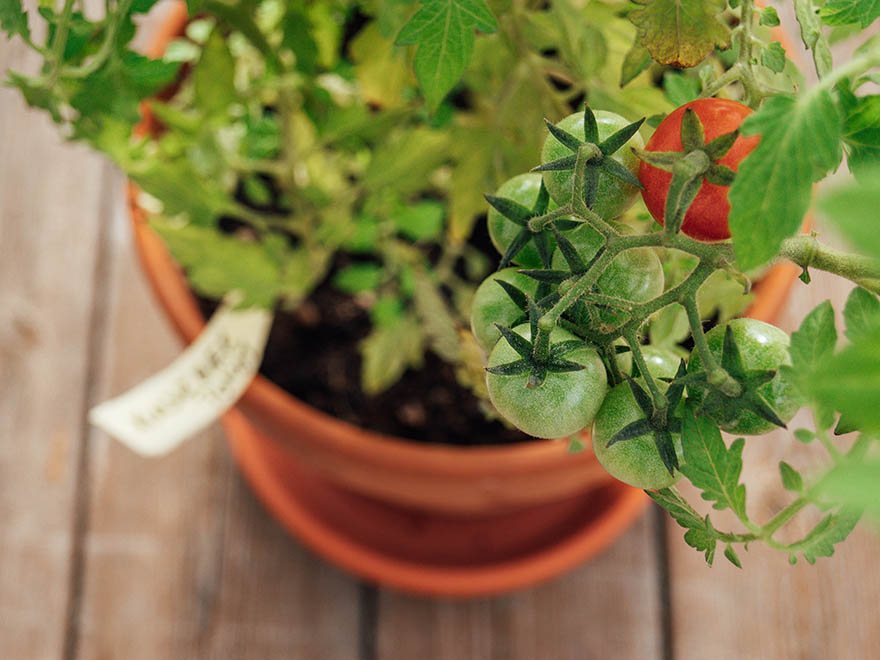
Magnesium does one job that nothing else can do: it sits at the center of the chlorophyll molecule. Every chlorophyll molecule in every green leaf on every plant contains one magnesium atom. Without it, chlorophyll cannot form, photosynthesis slows, and the plant stops making the sugars that feed the fruit.
Magnesium is a mobile nutrient. When the supply runs low, the plant cannibalizes its own older leaves — pulling magnesium out and sending it to the new growth and the fruit. That is why deficiency always shows on the lower leaves first and climbs up. The veins stay green longer because they have the highest concentration of chlorophyll, and the tissue between them yellows first. This interveinal chlorosis pattern on older leaves is the diagnostic signature of magnesium deficiency.
The sulfur in magnesium sulfate has its own role. Sulfur is a building block of amino acids (cysteine and methionine), which are essential for protein synthesis. Plants that get both magnesium and sulfur produce more protein from the nitrogen they absorb — which is why Epsom salt pairs well with nitrogen fertilizers.
Why does magnesium run out mid-season? Three reasons. First, heavy fruiting draws it out of the soil faster than roots can replace it. Second, high potassium levels in soil (from tomato fertilizers, wood ash, or potassium-heavy feeds) block magnesium uptake — potassium and magnesium compete for the same transport channels. Third, sandy and acidic soils hold magnesium poorly — it leaches with every rain and every watering. Container plants combine all three problems: limited soil volume, frequent watering, and concentrated fertilizer.
What NOT to do
Do not exceed the dose. One tablespoon per quart for foliar, one tablespoon per 2.5 gallons for drench. Excess magnesium blocks calcium uptake at the root level — which can actually cause blossom end rot in tomatoes. More Epsom salt is not better.
Do not apply with calcium treatments on the same day. Magnesium and calcium compete for the same uptake channels. Applying both at once means neither gets absorbed well. Space them 3 to 4 days apart.
Do not use on seedlings. Plants under 4 true leaves do not need supplemental magnesium. The seed and starter soil provide enough.
Do not treat Epsom salt as a complete fertilizer. It provides only magnesium and sulfur — no nitrogen, no phosphorus, no potassium. It supplements a feeding program; it does not replace one. You still need a nitrogen source (whey-ammonia drench, calcium nitrate, etc.) and potassium (potassium nitrate or potato ferment).
Do not apply to waterlogged soil. In soggy conditions, excess magnesium can accumulate and cause nutrient lockout. Let the soil drain first.
Do not confuse magnesium deficiency with iron deficiency. Both cause interveinal chlorosis (yellow between green veins). The difference: magnesium deficiency shows on lower/older leaves first (mobile nutrient — the plant pulls it from old growth). Iron deficiency shows on upper/new leaves first (immobile nutrient — the plant cannot move it). If the yellowing is at the top, use chelated iron instead.
FAQ
How do I know if my plants need magnesium?
Yellow tissue between green veins on the lower and older leaves — that is the signature. It starts at the bottom of the plant and moves up. If the whole leaf turns uniformly yellow (including veins), that is nitrogen deficiency, not magnesium. If the yellowing is on the newest leaves at the top, that is iron deficiency. The plant disease identification guide has photos to help you tell them apart.
How fast does Epsom salt work?
Foliar spray: visible greening in 3 to 5 days. Soil drench: 7 to 14 days. Foliar is faster because magnesium goes straight into the leaf cells and chloroplasts. Soil drench takes longer because the magnesium has to dissolve in soil water, reach the roots, and get transported up.
Can I just add Epsom salt to the planting hole?
You can — 1 tablespoon mixed into the soil at planting. It gives the plant a starting reserve. But it will not last the whole season. You will still need to drench or spray every 14 days during fruiting when demand peaks.
What is the difference between this and the Micronutrient Shield?
The Micronutrient Shield combines Epsom salt (magnesium) with iron chelate. The iron adds the enzyme that converts nitrates into proteins — an anti-nitrate function. If your main concern is magnesium deficiency, Epsom salt alone is enough. If you are also feeding nitrogen (calcium nitrate, whey-ammonia) and want to prevent nitrate buildup, use the full Shield instead.
Is there a gardening app that tracks when to apply Epsom salt?
Yes. The easyDacha garden planner app tracks growth stages and sends task reminders for feeding at the right time. Download at easydacha.com/download.
One ingredient, two ways

Epsom salt from the pharmacy. One tablespoon in a spray bottle or a watering can. The yellowing stops, the green comes back, the fruit gets the sugar it was missing. The cheapest fix in the garden, and one of the most reliable.
The easyDacha gardening app tracks nutrient schedules by growth stage so you feed at the right time, not when it is too late.
Try easyDacha app →. The garden planner app that builds your full care schedule. Cancel anytime.
Related reading on easydacha.com
- How to Make the Micronutrient Shield (Iron Chelate + Epsom Salt) to Prevent Nitrate Buildup — the upgraded version. Adds iron chelate to the Epsom salt for nitrate-to-protein conversion. Use this if you are also feeding nitrogen.
- How to Make DIY Chelated Iron from Iron Sulfate and Citric Acid (Iron Chlorosis Fix) — for when the yellowing is on new/upper leaves, not old ones. That is iron deficiency, not magnesium.
- How to Use Calcium Nitrate to Stop Flower Drop and Protect Fruit (Ovary Protection) — calcium for cell walls, magnesium for chlorophyll. Space them 3-4 days apart.
- How to Use Potassium Nitrate Foliar Spray to Double Potassium Uptake — potassium for sugar transport. Compatible with Epsom salt on the same schedule.
- How to Identify Plant Diseases: Early Signs and What to Do — magnesium deficiency mimics iron deficiency and early nitrogen deficiency. Confirm before treating.
- Simple Fertilizer Plan for Flowering Vegetables — the full feeding schedule. Epsom salt fits the maintenance layer.