
Your dill is growing thin and a little pale instead of the full, feathery, deep-green fronds you were expecting, and you keep cutting it back before it really fills in. A three-sulfate feed built from ammonium sulfate, magnesium sulfate, and potassium sulfate pushes dill and similar cut-and-come-again herbs toward lush, juicy leaf growth, using sulfate forms that skip the chloride herbs tend to dislike.
TL;DR: For a dill fertilizer that builds lush, juicy growth, dissolve ammonium sulfate, magnesium sulfate (Epsom salt), and potassium sulfate in water and root-drench dill on already-moist soil during active leaf growth, before the plant starts to flower.
The recipe
For 2.6 gallons (10 L) of water, start with:
- 1 tablespoon (15 mL) ammonium sulfate, only if the soil was limed, for a nitrogen push toward leafy growth
- Magnesium sulfate (Epsom salt) at the label amount, for deep green color and to guard against interveinal yellowing
- Potassium sulfate at the label amount, for tissue strength and flavor
Magnesium sulfate and potassium sulfate go at the amount on their label. Ammonium sulfate at 1 tablespoon (15 mL) per 2.6 gallons (10 L) is for dill on already limed soil. Start light, water in, and watch the next round of growth.
Mix it: Dissolve each sulfate fully in water, one at a time, stirring between additions, before applying.
Shelf life: Mix fresh and use the same day.
How to apply
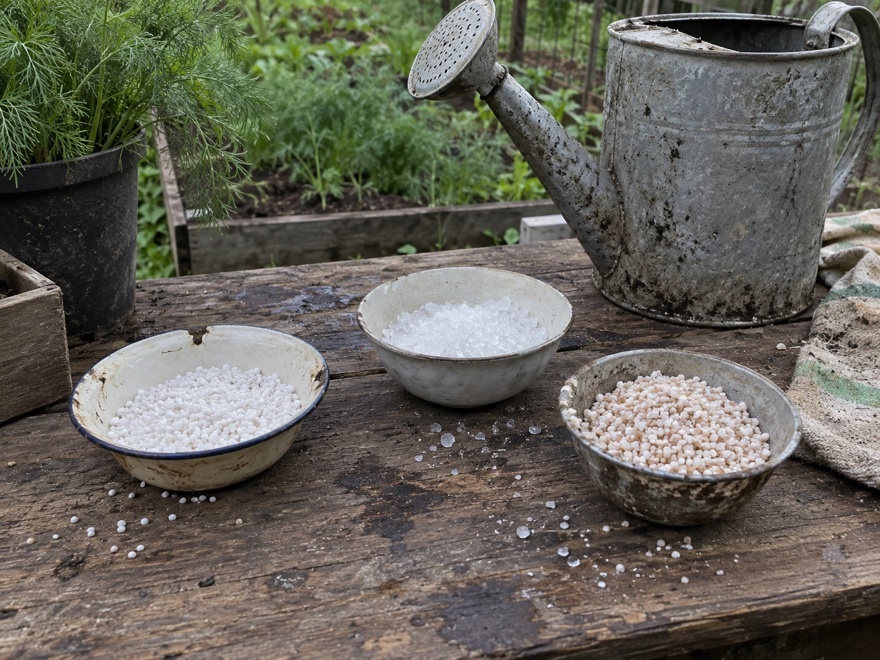
Water the soil first if it is dry, then apply the sulfate feed as a root drench once the soil is already moist, avoiding the plant's crown and foliage.
Apply during the active leaf-growth phase, before the dill starts to bolt and flower. Once a dill plant switches to flowering and seed production, feeding for leaf growth no longer helps the leaves you want to harvest.
The sulfate forms matter here specifically because dill and many culinary herbs are sensitive to chloride, which is common in cheaper chloride-based fertilizer salts and can taint both growth and flavor. Sulfate-based nitrogen, magnesium, and potassium avoid that problem entirely.
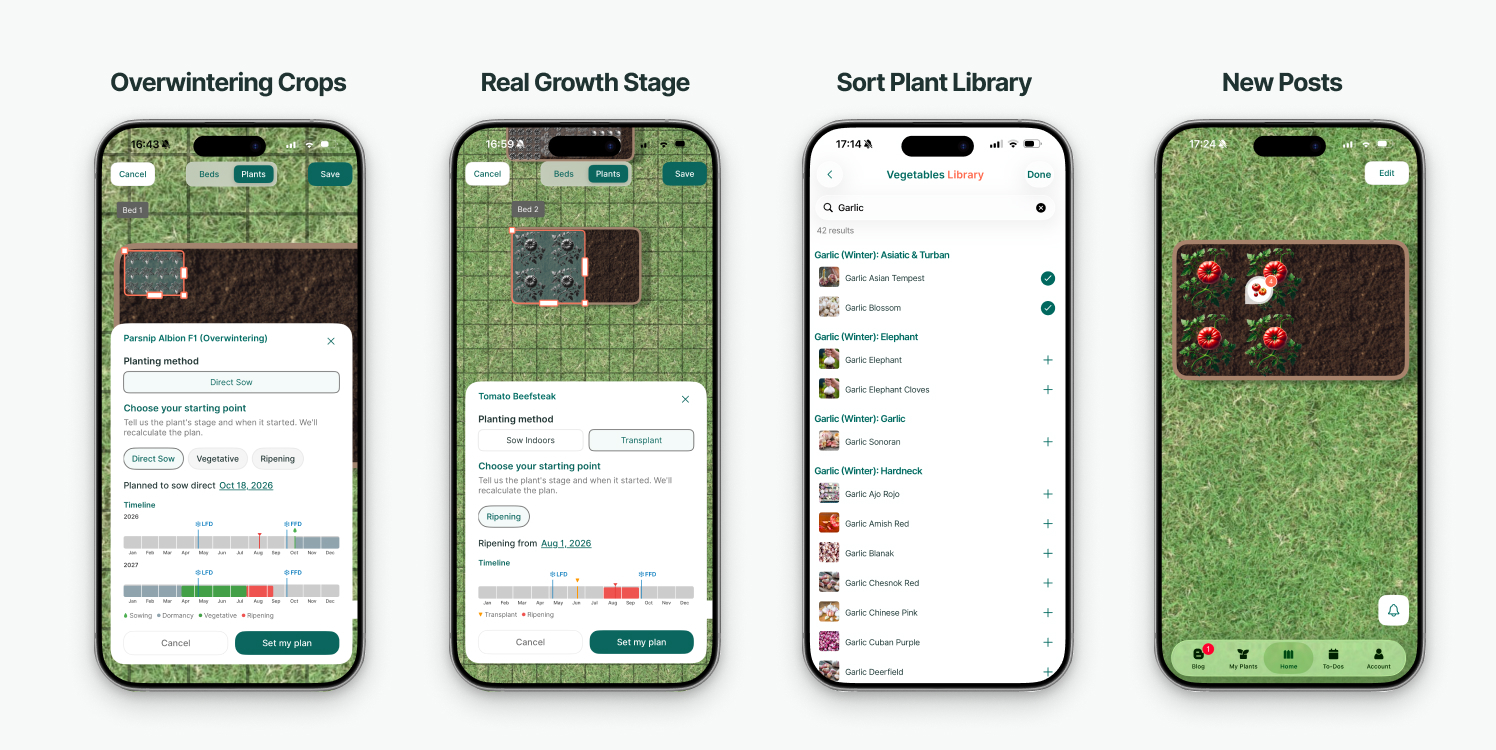
Cut-and-come-again herbs like dill benefit from feeding roughly every three to four weeks through their active growing period rather than a single one-time application, since you are continuously harvesting leaf mass. Keeping several herbs on staggered feeding schedules gets hard to track by memory alone. easyDacha's care plan schedules feeding tasks by growth stage for each plant, including herbs, so you always know which bed is due next. Download and try easyDacha, a garden planner app built to handle exactly this kind of recurring herb care.
Expect fuller, greener new growth within one to two weeks of a feeding, most visible in the newest fronds at the top of the plant.
Why this three-sulfate feed works
Ammonium sulfate delivers a fast, direct dose of nitrogen, the nutrient most responsible for driving new leaf mass, which is exactly what you want on a crop you are harvesting for its foliage.
Magnesium sulfate (Epsom salt) supplies magnesium, a core component of chlorophyll. A magnesium shortage typically shows up as yellowing between the leaf veins while the veins themselves stay green, and this feed heads that off before it starts.
Potassium sulfate rounds out the mix with potassium, which supports overall tissue strength and is often linked to better flavor concentration in culinary herbs, without introducing the chloride that plain potassium chloride fertilizers carry.
Using the sulfate form of all three nutrients means none of them bring chloride along for the ride, which matters more for herbs than for most vegetables.
Is this safe for dill and other herbs?
Yes, this feed is safe for dill and similar herbs when kept at the conservative starting rates above and applied to already-moist soil. All three ingredients are standard mineral fertilizer salts used here at low, herb-appropriate concentrations.
- Start at the lower end of the range given here, since the combined dose for this specific mix is not independently confirmed
- Always water the soil before applying, not onto dry soil
- Stop feeding for leaf growth once the plant begins to flower, since the goal shifts at that point
- Avoid overfeeding nitrogen close to harvest, since you will be eating the leaves soon after
What NOT to do
Don't overfeed nitrogen right before harvest. Dill leaves you are about to cut and eat should not be pushed with a heavy feed in the final days before harvest.
Don't apply to dry soil. Always water first to avoid root stress from concentrated fertilizer salts.
Don't keep feeding for leaf growth once the plant bolts. Once dill starts flowering, its energy shifts to seed production, and a leaf-growth feed no longer serves the harvest you want.
Don't guess at double the dose to fix slow results faster. Because the combined ratio here is a conservative estimate, increase gradually between feedings rather than jumping to a much stronger mix.
Best for which plants
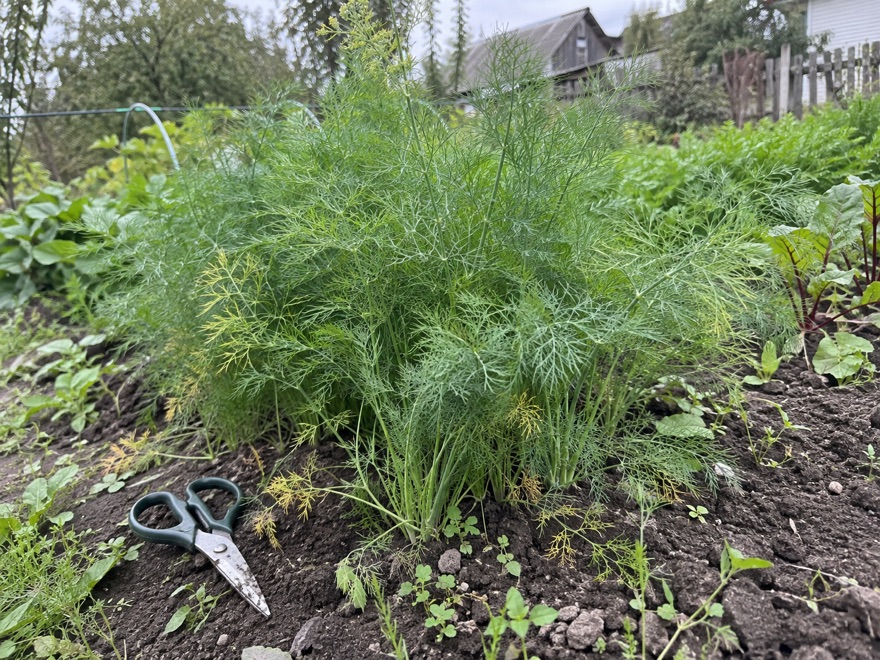
- Dill - the primary target, especially plants being harvested repeatedly for fresh fronds
- Cilantro and parsley - similar cut-and-come-again leafy herbs that respond to the same chloride-free sulfate approach
- Basil - benefits from the same nitrogen and magnesium support during active leaf growth, though basil tolerates slightly more heat and less frequent feeding
This feed is built for leafy culinary herbs in active growth, not for herbs that are already flowering or going to seed.
When thin, pale dill keeps coming back
If dill stays thin and pale despite feeding, check three things. Look at how much direct sun the bed gets, since dill grown in too much shade stretches thin and pale regardless of feeding. Check watering consistency, since inconsistent watering blocks nutrient uptake even with enough fertilizer in the soil. Finally, check whether the plant has already started to bolt, since a dill plant that has shifted to flowering will not fill back in with more leaf growth no matter how it is fed.
Try easyDacha for your herb feeding schedule
Keeping several herbs on staggered feeding cycles is easier with a plan built around your actual garden. easyDacha, a vegetable garden app, schedules feeding by growth stage for every plant, herbs included. Download and try easyDacha.
For related feeding guidance, see how to use Epsom salt in the garden for magnesium deficiency, the best fertilizer recipe for seedlings and plants, and how to grow lavender, thyme, and oregano together in one pot for broader herb care. For herbs grown in containers or smaller spaces, see the best soil for an herb garden, and for a mineral mobilizer that pairs well with sulfate feeding, how to use citric acid to unlock calcium and magnesium in soil.
FAQ
Why is my dill growing thin and pale?
Usually a combination of insufficient nitrogen for leaf growth and, in some cases, a magnesium shortage causing yellowing between the veins. A three-sulfate feed addresses both at once.
Why use sulfate forms instead of regular fertilizer for dill?
Sulfate-based nitrogen, magnesium, and potassium avoid the chloride found in many standard fertilizer salts, which culinary herbs like dill are more sensitive to than most vegetables.
How often should I feed dill for continuous harvest?
Roughly every three to four weeks during active leaf growth, since you are continuously cutting leaf mass for harvest.
Can I use this three-sulfate feed on other herbs besides dill?
Yes, cilantro and parsley respond well to the same chloride-free sulfate approach during their active leaf-growth phase.
Should I feed dill once it starts to flower?
No. Once dill bolts and begins flowering, its energy shifts to seed production, and a leaf-growth feed no longer benefits the leaves you want to harvest.
Is there an app that tracks herb feeding schedules?
Yes. easyDacha is a gardening app that schedules feeding tasks by growth stage for every plant you grow, including herbs like dill.
How much of each sulfate should I use?
Use 1 tablespoon (15 mL) of ammonium sulfate per 2.6 gallons (10 L), and only if the soil was limed. Use magnesium sulfate and potassium sulfate at the amount on their label. Start light and adjust gradually based on how your dill responds.