
You added calcium. You added more calcium. The tomatoes still have brown, sunken bottoms. The pepper leaves are still curling. The problem is not that calcium is missing from your soil — it is that your soil will not let go of it. In alkaline or heavy clay soil (pH above 6.5), calcium and magnesium form insoluble compounds that sit inches from the roots and do nothing. The plant starves while surrounded by minerals it cannot reach.
TL;DR: Dissolve 1 teaspoon of citric acid powder in 2.5 gallons (10 liters) of water. Pour 2 cups (0.5 liters) at the base of each plant. The acid temporarily drops the root zone pH and chelates locked-up calcium and magnesium into forms roots absorb directly. Repeat every 14 days. Works on tomatoes, peppers, cabbage, broccoli, and anything in alkaline soil showing calcium or magnesium deficiency.
The recipe
You need
- Citric acid powder: 1 teaspoon per 2.5 gallons (10 liters). Sold in the grocery baking aisle or at pharmacies. A 1 lb bag costs $4 to $5 and lasts an entire season.
- Water: 2.5 gallons (10 liters)
- A watering can or bucket
- A measuring spoon (1 teaspoon)
Do it
- Pour 2.5 gallons (10 liters) of water into a watering can or bucket.
- Add 1 teaspoon of citric acid powder. Stir until fully dissolved. The water turns slightly cloudy then clears — that means the acid is in solution.
- Use immediately. The solution is most effective fresh.
How to use it
Soil drench (the only method for this recipe):
Pour about 2 cups (0.5 liters) of the solution at the base of each plant, directly onto the root zone. Water lightly first if the soil is dry. The citric acid enters the soil and immediately starts dissolving insoluble calcium and magnesium compounds into soluble citrates that roots can absorb.
For larger plants (mature tomatoes, peppers in full fruit), use up to 1 quart (1 liter) per plant.
Schedule:
Every 14 days during active growth. Start when plants begin flowering — that is when calcium demand spikes and BER risk is highest. Continue through fruit development.
Timing: Apply in the morning or evening. Avoid midday heat — water evaporates before the solution reaches the root zone.
Pairing: This drench works best as a partner to calcium treatments, not a replacement for them. If you are using calcium acetate for blossom end rot, the citric acid drench makes that calcium far more available. Apply them on different days — spacing 3 to 4 days apart is ideal.
Which plants benefit most
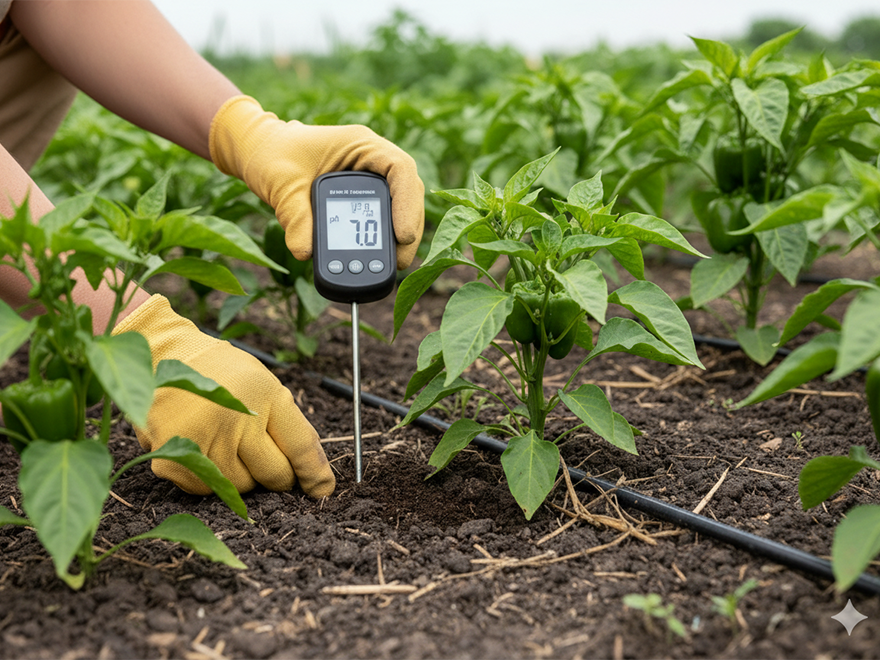
Best for: Tomatoes, peppers, eggplant, cabbage, broccoli, and cauliflower — any fruiting or heading crop in alkaline or heavy clay soil where calcium is physically present but chemically locked up. On tomatoes, it prevents blossom end rot. On peppers — curled leaves and soft fruit bottoms. On cabbage — internal tipburn. On broccoli — hollow stems. Start at first flower (fruiting crops) or head formation (brassicas) and continue biweekly through harvest.
Good results: Any plant in alkaline soil (pH above 7.0) or container plants watered with alkaline tap water. The drench temporarily lowers root zone pH, which unlocks calcium, magnesium, phosphorus, and trace minerals that bind up at high pH. In many US regions, tap water runs pH 7.5 to 8.5 and pushes container soil pH up over time — a biweekly drench counteracts this drift.
Not suited for: Acid-loving plants (blueberries, azaleas, rhododendrons) in already-acidic soil — more acid can push pH too far. Seedlings — the acid can damage tender roots, wait until 4 to 6 true leaves. Plants in naturally acidic soil (pH below 6.0) — at low pH, calcium and magnesium are already soluble, and adding citric acid can mobilize aluminum, which is toxic to roots.
Good results: Any plant in alkaline soil (pH above 7.0) or container plants watered with alkaline tap water. The drench temporarily lowers root zone pH, which unlocks calcium, magnesium, phosphorus, and trace minerals that bind up at high pH. In many US regions, tap water runs pH 7.5 to 8.5 and pushes container soil pH up over time — a biweekly drench counteracts this drift.
Not suited for: Acid-loving plants (blueberries, azaleas, rhododendrons) in already-acidic soil — more acid can push pH too far. Seedlings — the acid can damage tender roots, wait until 4 to 6 true leaves. Plants in naturally acidic soil (pH below 6.0) — at low pH, calcium and magnesium are already soluble, and adding citric acid can mobilize aluminum, which is toxic to roots.
Why it works
Cucumber roots figured this out millions of years ago. Cucumber plants naturally exude organic acids — oxalic, citric, and malic acid — through their roots. These acids dissolve soil-bound minerals and make them available for absorption. Tomato roots do not do this as efficiently. They exude mostly sugars, which feed soil microbes but do not directly dissolve minerals.
This drench replicates what cucumber roots do naturally. You are giving tomato roots (and peppers, and cabbage) the same chemical advantage that cucumbers have built in.
Here is the chemistry. In alkaline soil, calcium exists as calcium carbonate (CaCO₃) — essentially chalk. Roots cannot absorb chalk. Citric acid (C₆H₈O₇) reacts with calcium carbonate and produces calcium citrate — a soluble, plant-available form. The same reaction unlocks magnesium from insoluble magnesium carbonate into soluble magnesium citrate.
Citric acid also acts as a chelating agent. It wraps around mineral ions and holds them in solution, preventing them from immediately re-binding to soil particles. This gives roots a window of several hours to absorb the freed minerals before they lock up again.
This is the same principle behind the chelated iron recipe — citric acid keeps iron soluble too. And it is why the bone citrate phosphorus recipe works: citric acid dissolves insoluble calcium phosphate from bone meal into a form roots can use.
What NOT to do
Do not exceed 1 teaspoon per 2.5 gallons (10 liters). More acid is not better. Excess citric acid can mobilize aluminum in the soil, which is toxic to roots. It can also drop the pH too far and damage beneficial soil bacteria.
Do not use on seedlings or very young transplants. Wait until plants have at least 4 to 6 true leaves and established root systems. Tender roots are sensitive to pH swings.
Do not apply to acid-loving plants in acidic soil. Blueberries, azaleas, and rhododendrons already have mechanisms for low-pH nutrient uptake. Adding acid to already-acidic soil (pH below 6.0) risks aluminum toxicity.
Do not combine with lime or wood ash on the same day. Lime and ash raise pH. Citric acid lowers it. Applying both cancels out the effect and wastes both products. If you are liming your soil, wait at least a week before using the citric acid drench.
Do not use this as a substitute for adding calcium. This drench unlocks calcium that is already in your soil. If your soil is actually calcium-deficient (rare, but possible in very sandy or highly leached soil), you need to add calcium first — then use citric acid to make it available. The calcium acetate drench adds calcium. This drench unlocks it.
Do not confuse calcium lockout with calcium deficiency. Both cause blossom end rot, but the treatment is different. Calcium lockout happens in alkaline or clay soil where calcium is present but unavailable (this drench fixes it). True calcium deficiency happens in very sandy, low-organic-matter soil where calcium has leached away (you need to add calcium first). A soil test tells you which problem you have.
FAQ
How do I know if my soil has calcium lockout vs. calcium deficiency?
Get a soil test. If the report says calcium is adequate or high but your plants still show BER or deficiency symptoms, that is lockout — the calcium is there but the roots cannot access it. This drench is your fix. If the soil test says calcium is low, you need to add calcium first (with calcium acetate or gypsum), then use citric acid to keep it available.
Can I use lemon juice instead of citric acid powder?
Technically yes — lemon juice is about 5 to 6% citric acid. You would need roughly 3 tablespoons of lemon juice to equal 1 teaspoon of pure citric acid powder. But lemon juice also contains sugars and other compounds that can attract insects and encourage mold at the soil surface. Pure citric acid powder is cleaner, cheaper, and more consistent.
Can I mix citric acid with fertilizer in the same watering can?
It depends on the fertilizer. Citric acid works well with nitrogen and potassium fertilizers — it actually helps stabilize them in solution. But avoid mixing it with calcium nitrate in the same container. The citric acid chelates the calcium, which is the goal when it hits the soil, but in a concentrated tank mix the reaction can form calcium citrate precipitate before you even pour it. Apply them separately, a few days apart.
How fast will I see results?
If blossom end rot is your problem, new fruit forming after treatment should be clean within one to two weeks. Fruit that already has BER will not recover — that damage is permanent. The goal is preventing BER on the next flush of fruit. For general calcium and magnesium deficiency symptoms (pale new growth, leaf curling), improvement is visible in 7 to 14 days.
Does this replace soil pH adjustment?
No. This is a short-term fix that works drench by drench. The citric acid lowers the root zone pH temporarily — for a few hours to a day — then the soil's natural buffering brings it back. For long-term pH reduction in alkaline soil, you need sulfur or acidic organic matter (peat moss, pine needles). The citric acid drench keeps your current crop fed while you work on the longer fix. Check the soil pH guide for the full pH management plan.
Is there a gardening app that reminds me when to apply citric acid drench?
Yes. The easyDacha garden planner app tracks growth stages and sends task reminders for feeding and protection at the right time. Download at easydacha.com/download.
One teaspoon, one problem solved

Citric acid from the grocery baking aisle. One teaspoon in a bucket of water. That unlocks the calcium and magnesium your soil is hoarding. The commercial mineral mobilizers charge $10 to $15 for the same chemistry.
The easyDacha gardening app tracks nutrient schedules by growth stage so you feed at the right time, not when it is too late.
Try easyDacha app →. The garden planner app that plans your season in 60 seconds. Cancel anytime.
Related reading on easydacha.com
- How to Make Calcium Acetate from Wood Ash and Vinegar (Blossom End Rot Fix) — adds calcium. This citric acid drench unlocks it. Use both for the full BER prevention stack.
- How to Make DIY Chelated Iron from Iron Sulfate and Citric Acid (Iron Chlorosis Fix) — same citric acid, different mineral unlocked. If you have yellow leaves with green veins, iron is the problem.
- How to Make Bioavailable Phosphorus Fertilizer from Bones (Citric Acid Method) — citric acid also mobilizes phosphorus from bone meal. Same grocery store ingredient, three minerals unlocked.
- Simple Fertilizer Plan for Flowering Vegetables — the full feeding schedule. Citric acid drench fits into the mineral support layer.
- Soil Acidity (pH): What It Is, How to Change It — the full guide to long-term pH management. This citric acid drench is the short-term fix while you work on the bigger picture.
- How to Identify Plant Diseases: Early Signs and What to Do — BER mimics other problems. This guide helps you confirm the diagnosis before treating.