
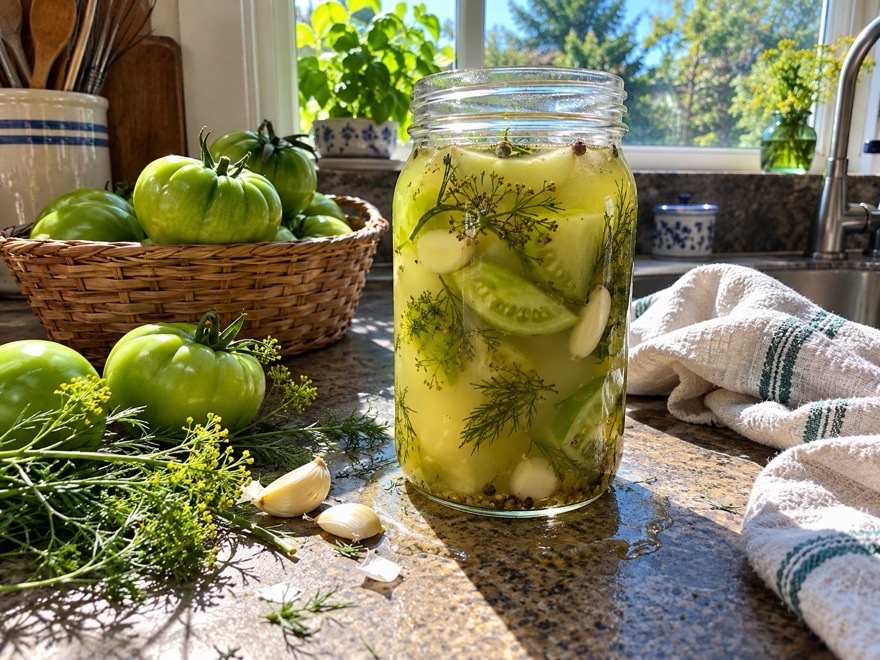
The first frost is in the forecast, and your vines still hold a pile of hard green tomatoes. You do not have to compost them. Some will ripen indoors, and the rest make excellent fermented green tomatoes. This guide gives you a brine strength, a time, and a temperature from university extension advice. It also lists clear signs of a bad batch. For the ripening side, start with our guide on whether green tomatoes will ripen before frost.
TL;DR: Fermented green tomatoes need a 3.5 percent salt brine, a steady 68 to 72°F (20 to 22°C) room, and 3 to 4 weeks. Keep the fruit under the brine. Throw out any batch that turns soft, slimy, or smelly.
What to do with green tomatoes: ripen first, ferment the rest
Sort your green tomatoes before you do anything else. Tomatoes that already show a pale green or blush color, called mature green, often ripen indoors. Small, hard, dark green tomatoes rarely do.
Ferment the hard ones. Pick firm fruit with no cracks, soft spots, or blight spots. Smaller tomatoes ferment more evenly because the brine reaches the center. Gardeners in cold USDA zones such as zone 4 and zone 5 face this first.
How to make fermented green tomatoes
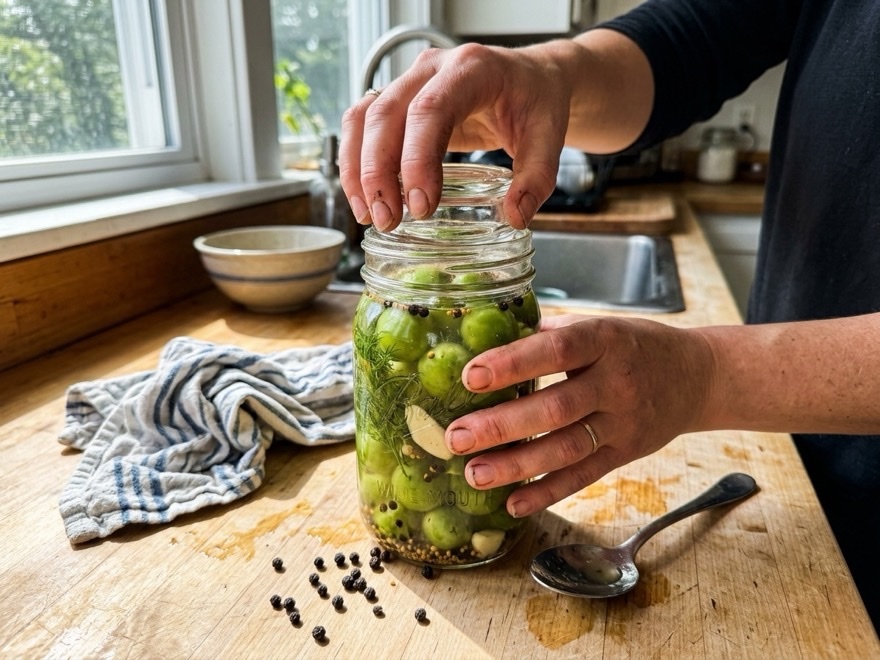
You pack firm fruit in a jar and cover it with salty brine. Natural bacteria then sour it at room temperature. This is one of the simplest green tomato recipes, scaled for one quart jar.
For one quart (1 L) jar:
- About 1 lb (450 g) small, firm green tomatoes
- 2 cloves garlic, lightly crushed
- 1 or 2 dill heads or 1 teaspoon dill seed
- 5 to 8 whole black peppercorns
- Optional: 1 small hot pepper
- Brine: 2 tablespoons canning or pickling salt in 1 quart (about 1 L) of water
About the salt: Use canning or pickling salt, not iodized table salt. Two tablespoons per quart gives a brine near 3.5 percent. For more exact results, weigh the salt: about 1.2 oz (33 g) per quart. Extension guidance for fermented pickles runs from 3 to 5 percent. University of Minnesota Extension suggests 1 to 3 tablespoons per quart for most vegetables.
Do this:
- Wash a quart jar and rinse it well. Wash the tomatoes and trim the stems. Prick large tomatoes once or cut them in halves.
- Put the garlic, dill, peppercorns, and hot pepper in the jar. Pack the tomatoes in tightly, leaving about 1 inch (2.5 cm) of space at the top.
- Stir the salt into the water until it fully dissolves.
- Pour the brine over the tomatoes so every piece is covered.
- Weigh the tomatoes down. Virginia Tech Extension says vegetables should stay 1 to 2 inches (2.5 to 5 cm) below the brine. A small glass dish or a zip bag filled with brine works as a weight.
- Cover the jar loosely so gas can escape. Set it on a plate in a spot at 68 to 72°F (20 to 22°C), out of direct sun.
How long to ferment green tomatoes
Plan on 3 to 4 weeks at 68 to 72°F (20 to 22°C). Extension sources agree on this range for fermented vegetables. Fermentation runs slower below 68°F and can take 5 to 6 weeks. Above 78°F (26°C) it can over-ferment and spoil.
You may see recipes that say 8 to 12 days. Extension guidance does not support a time that short, so give your batch the full 3 to 4 weeks. The ferment is ready when the bubbling stops. Test strips can confirm it: a pH of 4.6 or lower means the batch is acidic enough, according to University of Minnesota Extension.
Check the jar every few days. Press the tomatoes back under the brine if they float. Taste a tomato at week 3.
When to throw a batch out
Throw the batch out if the tomatoes turn soft or slimy, if the brine smells rotten, or if you see fuzzy mold. Penn State Extension gives the same rule for fermented pickles: discard them if they become soft, slimy, or develop a bad odor.
Bubbling and a cloudy brine are normal while it ferments. So is a sour, tangy smell. A foul smell is not. When in doubt, throw it out.
Store them after fermenting
Move the finished jar to the refrigerator. Virginia Tech Extension says refrigerated fermented pickles keep about 4 to 6 months. Keep the tomatoes under the brine, use a clean fork, and always seal the jar.
Want pickled green tomatoes that keep on the shelf?
For shelf storage, use a tested canning recipe instead of canning your ferment yourself. Extension specialists say canning should follow a tested and proven recipe. The National Center for Home Food Preservation has several tested recipes. They include Pickled Sweet Green Tomatoes, Spiced Green Tomatoes, and Pickled Green Tomato Relish.
Follow the processing time for your altitude exactly. In the sweet recipe, pints process 10 minutes at 0 to 1,000 feet. At 1,001 to 6,000 feet they need 15 minutes in a boiling-water canner. Do not change the vinegar, salt, or amount of tomatoes. If you have more fruit than jars, you can also look at other ways to preserve vegetables besides freezing.
Are green tomatoes safe to eat? What about tomatine?
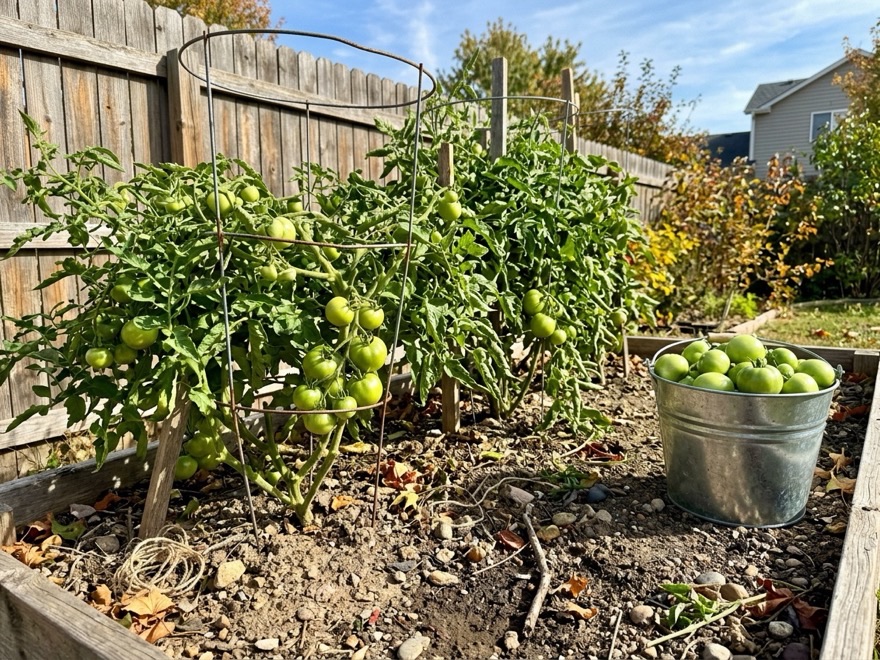
Green tomatoes contain tomatine, a bitter compound that drops as the fruit ripens. Researchers report about 500 mg per kg in unripe fruit versus about 5 mg per kg in ripe fruit. People have eaten fried, pickled, and cooked green tomatoes for generations in normal serving sizes.
Can fermentation lower tomatine? Possibly. One review notes that lactic fermentation may reduce glycoalkaloids by up to about half, depending on the bacteria. No one has measured the exact drop in a home crock, so do not count on it. Enjoy fermented green tomatoes as a tangy side, not as a health food. A few slices with a meal is plenty. If green tomatoes upset your stomach, eat less or skip them.
Fermented foods are also salty. If you watch your sodium or have kidney or blood pressure issues, ask your doctor how much is right for you.
Make the most of the last tomatoes
Green tomatoes often come from a late planting or a cool summer. Next year, start earlier. Our guide on growing tomatoes from seed without a greenhouse shows how. You can also rotate beds so tomatoes do not sit in the same spot, as crop rotation advice explains.
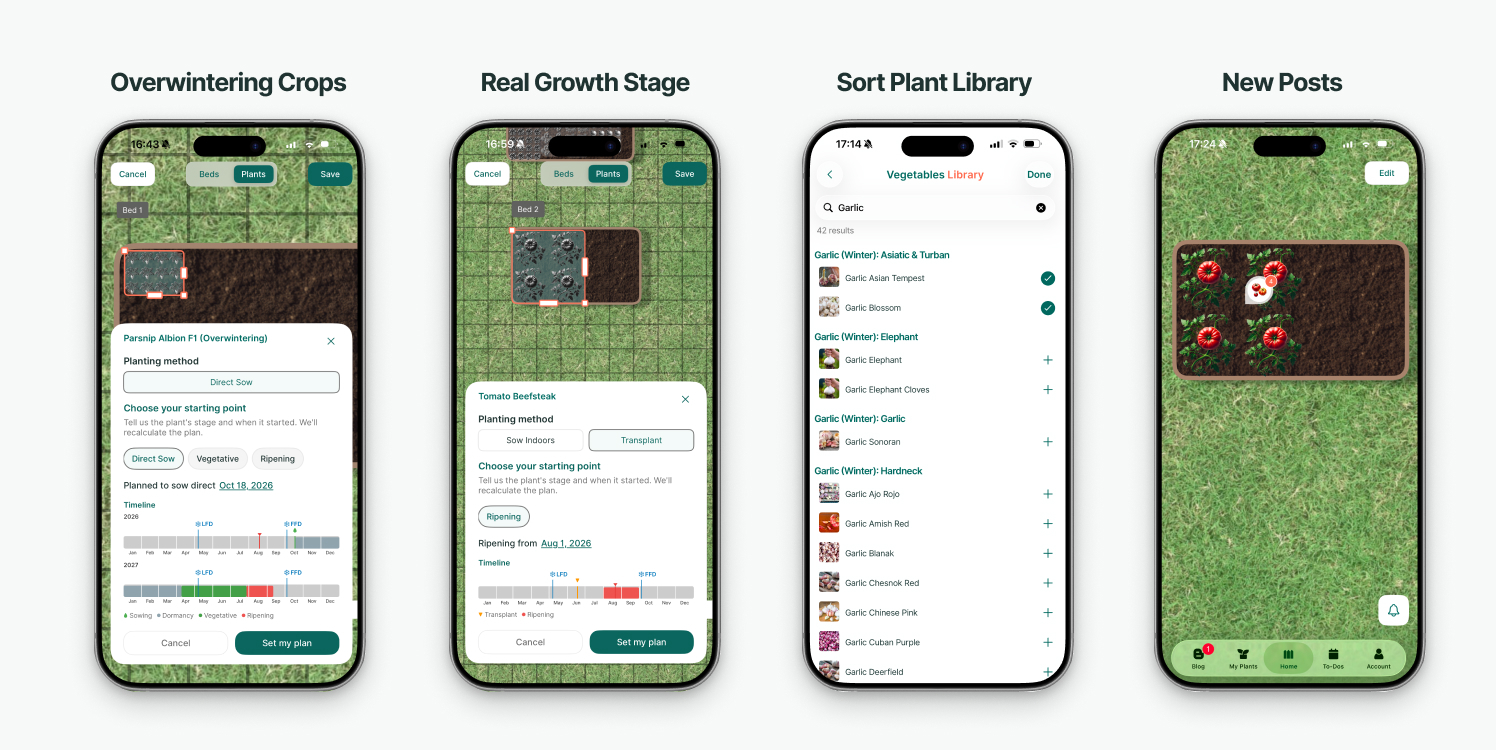
Most green tomato piles come from timing. easyDacha is a gardening app that calculates planting dates from your ZIP code and local frost dates. Its care plan runs from seed to harvest, so you see when to start, transplant, and expect fruit. The two-week task list shows what to do next in your own beds. Download easyDacha and plan a tomato season that ripens on time.
Do not let the next tomatoes get caught by frost
Know your dates before next spring. easyDacha builds a care plan for each plant from seed to harvest, based on your ZIP code. Try easyDacha and see your tomato calendar in minutes.
FAQ
Are fermented green tomatoes safe to eat?
Yes, when you follow tested brine and time guidelines. Use a brine of about 3.5 percent salt, keep the tomatoes under the liquid, and ferment at 68 to 72°F for 3 to 4 weeks. Throw out soft, slimy, or bad-smelling batches.
How much salt do I use for fermented green tomatoes?
Use about 2 tablespoons of canning or pickling salt per quart (1 L) of water, which makes a brine near 3.5 percent. Extension guidance for fermented pickles runs from 3 to 5 percent salt.
How long do fermented green tomatoes take?
Plan on 3 to 4 weeks at 68 to 72°F (20 to 22°C). Cooler rooms can take 5 to 6 weeks. Do not rely on short times such as 8 to 12 days.
What is the difference between fermented and pickled green tomatoes?
Fermented tomatoes sour in a salt brine through natural bacteria and stay in the refrigerator. Pickled green tomatoes are made with vinegar and, when canned from a tested recipe, can be shelf stable.
Can I can fermented green tomatoes for the pantry?
Not on your own. Use a tested recipe, such as the National Center for Home Food Preservation recipes. Follow the processing time for your altitude.
Is there a gardening app that tells me when to plant tomatoes so they ripen?
Yes. easyDacha is a gardening app and garden planner app. It builds planting dates from your ZIP code and frost dates. Then it gives you a care plan and a two-week task list.