
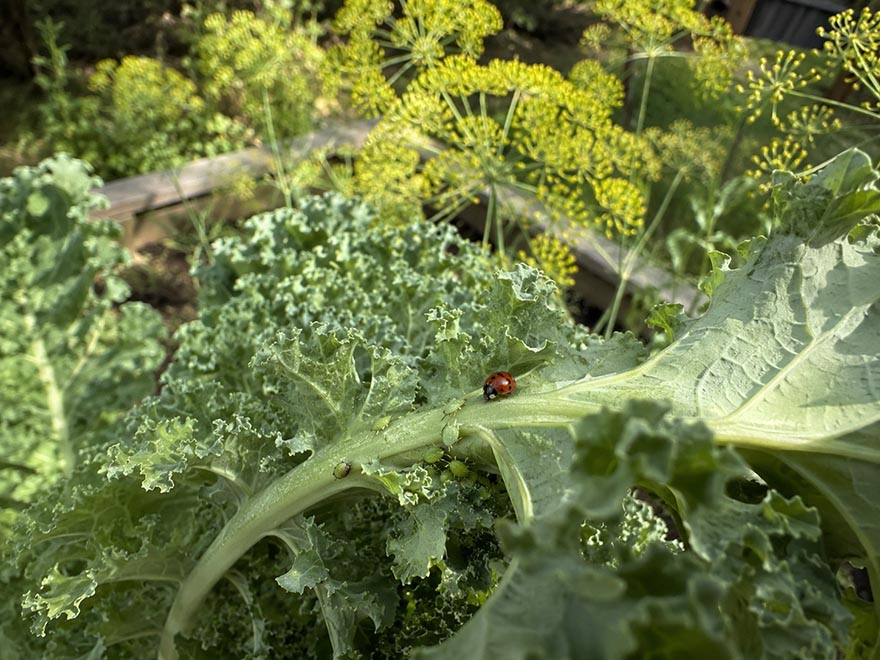
You have an aphid problem, so you bought a tub of ladybugs, tipped them onto your plants, and woke up to find them gone. That is the wrong move. Store-bought ladybugs almost always fly away. The real fix is to make your garden a place ladybugs choose to live, breed, and hunt. Here is how to keep ladybugs in your garden for the whole season.
TL;DR: To keep ladybugs in your garden, plant nectar and pollen flowers like dill, yarrow, and cosmos, add a shallow water dish, stop using broad-spectrum sprays, and leave a few aphids as food. A single ladybug eats up to 5,000 aphids in its life.
The habitat setup (what ladybugs need to stay)
Ladybugs stay where they find food, flowers, water, and shelter. Give them all four and they raise the next generation right in your beds. Here is the full setup.
Flowers for nectar and pollen:
- Dill, cilantro, fennel, and other flat-topped herbs (let a few go to flower)
- Yarrow, cosmos, coreopsis, and blanketflower
- Sunflower, coneflower, and marigold
- Sweet alyssum as a low border
Food:
- A few aphids left in place. Ladybugs will not stay where there is nothing to eat.
Water:
- A shallow dish filled with pebbles, topped up so beetles can drink without drowning.
Shelter:
- A clump of native grass or a low groundcover for overwintering
- A patch of the garden left a little wild, not sprayed and not tidied
Set it up: Tuck flowering herbs among your vegetables, set the water dish in shade, and leave one corner unsprayed. That is the whole system.
How to keep ladybugs in your garden all season
Attract wild ladybugs instead of buying them, and they stay because they arrived on their own. Wild beetles find your garden by following the smell of aphids and flowers. Plant the flowers above and the beetles come to you.
Plant for bloom across the whole season, not one burst. Ladybugs feed on pollen and nectar when aphids are scarce, so something should always be flowering. A gap in bloom sends them looking elsewhere.
Leave a light aphid population alone. This feels wrong, but a garden scrubbed clean of every pest starves its predators. A few aphids on a sacrificial plant keeps the ladybugs fed and breeding.
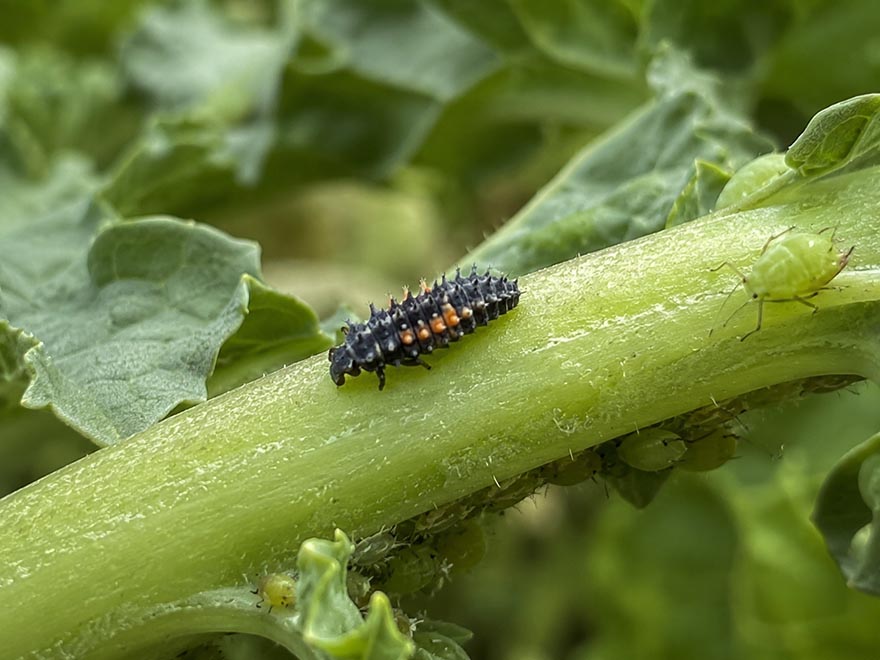
Watch for the larvae, which look like tiny black and orange alligators. Those are baby ladybugs, and they eat more aphids than the adults. Never squash them.
Keeping a steady bloom and habitat schedule going all season is the part people forget. easyDacha maps your planting and bloom times across the year so something is always flowering for your beneficials. The garden planner app puts those sowing and care tasks on a 7-day list so the habitat never has a gap.
Set up your plan here:
Set up your plan here:
If the aphids are already out of hand, our guide on how to get rid of aphids organically covers sprays that spare your ladybugs.
Why this works
Ladybugs are predators with an enormous appetite for soft-bodied pests. One adult eats up to 5,000 aphids over its life, and it also clears mites, mealybugs, and insect eggs.
Flowers are what hold them there between aphid booms. Adult ladybugs need pollen and nectar as fuel, so a garden with steady bloom keeps them fed even when pests drop off.
For natural aphid control, ladybugs are the beneficial insects to build the garden around, and aphid control comes free once they settle in. Flat-topped flowers like dill, cilantro, and yarrow do double duty. They also draw tiny parasitic wasps that attack aphids and caterpillars, so you get two kinds of free pest control from one plant.
Is this safe for bees and pollinators?
Yes, and it helps them. The same flowers and spray-free corners that keep ladybugs also feed bees, hoverflies, and lacewings.
The key rule is simple. Broad-spectrum insecticides do not tell friend from foe, so they kill ladybugs and bees along with the aphids. A habitat garden works because you stop spraying and let the predators do the job.
Follow these rules to protect every beneficial:
- Skip broad-spectrum sprays entirely in the beds you want ladybugs to patrol.
- Never release or spray after treating a plant with insecticide. Residue kills the beetles.
- If you must spot-treat, use a targeted method in the evening when bees are not flying.
What NOT to do
- Do not buy and release store-bought ladybugs as your main plan. They are collected wild, arrive stressed, and most fly away within a day.
- Do not spray broad-spectrum insecticide. It wipes out the predators you are trying to keep and leaves the aphids to rebound.
- Do not kill every aphid. No prey means no reason for ladybugs to stay.
- Do not tidy the garden bare in fall. Ladybugs overwinter in leaf litter and grass clumps. Leave them a spot.
Best for which gardens
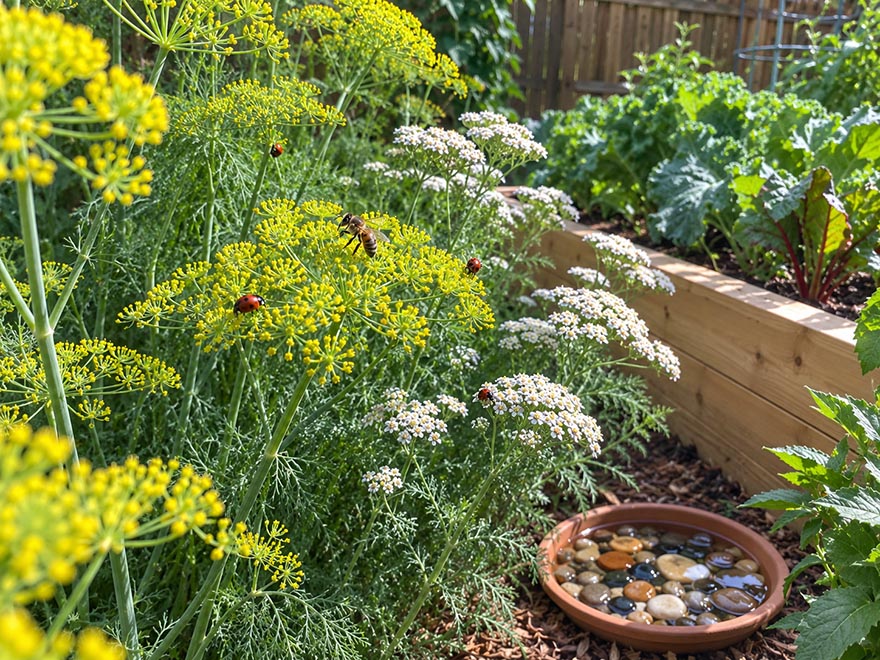
- Vegetable beds with aphids on peppers, kale, and beans benefit most. Tuck flowering herbs right between the rows.
- Container and balcony gardens can host ladybugs too. Add a pot of alyssum or dill and a small water dish.
- Flower borders with yarrow, cosmos, and coneflower become a permanent base the beetles return to each year.
For a border that pulls its weight, our list of the 7 best flowers for your vegetable garden pairs beauty with pest control. To grow your own living pest defense, our guide on making Beauveria bassiana at home is a targeted option that spares ladybugs.
When the aphids keep winning
Ladybugs slow to arrive usually means one of three things. First, there is not enough bloom, so add more flowering herbs. Second, you sprayed recently and the residue is keeping them out, so wait two weeks. Third, the aphid colony exploded faster than the predators could catch up, which calls for a gentle knockdown first. A hard spray of water or an aphid spray safe for flowering plants buys the ladybugs time to catch up. For spotting the pest early, our top 10 common garden pests guide helps you tell aphids from lookalikes.
FAQ
How do I keep ladybugs from flying away?
Attract wild ladybugs with flowers and aphids instead of releasing bought ones. Beetles that arrive on their own stay because the food and habitat are already there. Plant nectar flowers, add water, stop spraying, and leave a few aphids. That is how to keep ladybugs in your garden.
What plants attract ladybugs?
Ladybugs are drawn to dill, cilantro, fennel, yarrow, cosmos, coreopsis, coneflower, marigold, and sweet alyssum. Flat-topped flowers and umbels work best because they offer easy pollen and nectar. Plant several so something blooms all season and the beetles stay fed.
Should I buy ladybugs for my garden?
Usually no. Store-bought ladybugs are wild-collected, arrive stressed, and most fly off within a day. Building habitat with flowers, water, and a light aphid supply keeps wild ladybugs in your garden far longer. Save the money and plant flowers instead.
Do ladybug larvae eat aphids too?
Yes, even more than the adults. The larvae look like small black and orange alligators and hunt aphids constantly. If you see them, leave them alone. Squashing them removes your best aphid control before it matures.
Is there an app that helps me plan a pollinator-friendly garden?
Yes. easyDacha is a garden planner app that maps your planting and bloom times so something is always flowering for ladybugs and bees. The gardening app keeps your sowing and care tasks on a 7-day list.