
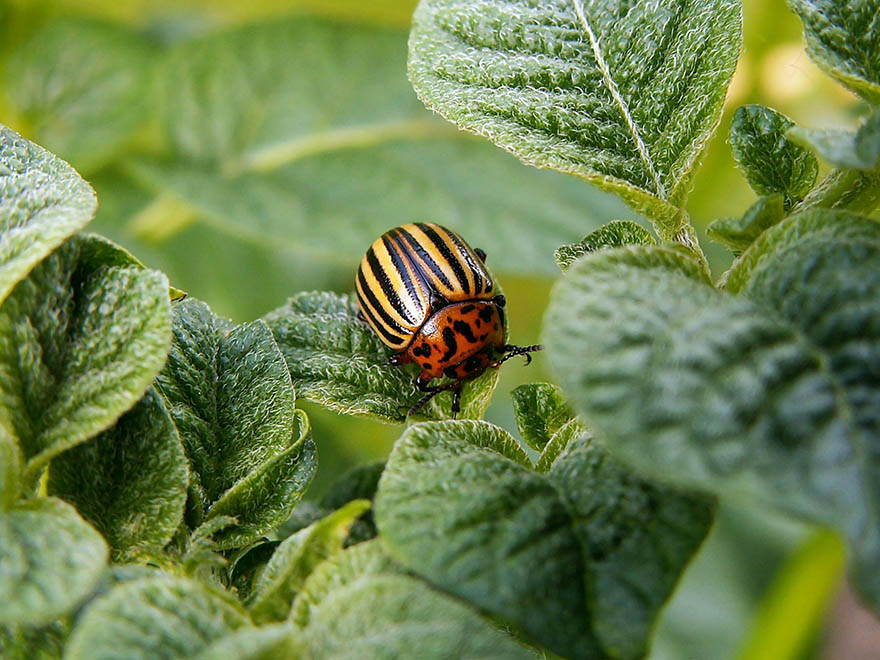
Beauveria bassiana is an entomopathogenic fungus. It kills insects by infecting them through their outer shell. Aphids, whiteflies, thrips, beetles, and mites all die within days of contact. The fungus is naturally present in soils worldwide. You can buy commercial products containing it, or you can grow it at home on sterilized grain for a fraction of the cost. One batch lasts an entire season. You sterilize grain in a jar, add a starter culture, and wait 3 to 5 weeks.
TL;DR: Sterilize 1 cup (240 ml) rice or barley in a jar. Cool, add Beauveria starter. Incubate 3 to 5 weeks at 77 to 81°F (25 to 27°C) in a dark, humid spot. Harvest white spore mass when grain is fully colonized. Mix 1/3 teaspoon (about 1.5 ml) spores per 2.5 gallons (10 L) water plus 1 tablespoon (15 ml) liquid soap. Spray in the evening only. Repeat every 7 to 10 days. Store dried spores up to 6 months.
The recipe
One recipe, two substrate options. Sterilization is critical. Without it, mold takes over before Beauveria can establish.
You need:
- 1 cup (240 ml) white rice, oats, or barley groats. Rice is easiest. If using barley or wheat, add 1 teaspoon (5 ml) flax seeds. The lipids in flax stimulate fungal growth and spore production.
- About 1 cup (240 ml) water (for cooking the grain)
- Beauveria bassiana starter (commercial product or spores from a previous batch)
- A glass jar, about 14 oz (400 ml) or larger, with a screw-top lid
- Aluminum foil
- A paper napkin or coffee filter and a rubber band (for the breathable lid)
Make it:
- Cook or pressure-cook the grain until soft but not mushy. If using a pressure cooker, 20 minutes is enough. Stovetop takes about 25 minutes. Drain any excess water. The grain should be moist, not soupy.
- Sterilize your jar. Cover it with foil and bake at 350 to 400°F (180 to 200°C) for 20 to 30 minutes. Let it cool in the oven with the foil on.
- Spread the cooked grain into the sterilized jar. The layer should be 1/2 to 1 inch (1 to 2.5 cm) deep. A thinner layer colonizes more evenly.
- Let the grain cool to room temperature. Do not add the starter to hot grain. Heat kills the fungus.
- Add a small amount of Beauveria bassiana starter per the product label. If using spores from a previous batch, a pinch scraped onto the grain surface is enough.
- Replace the metal lid with a breathable cover. Place a paper napkin or coffee filter over the jar opening and secure with a rubber band. Beauveria needs air exchange during incubation.
- Place the jar in a dark, warm spot at 77 to 81°F (25 to 27°C). A closet shelf or cupboard in a warm room works well. Beauveria grows best in the dark with moderate humidity.
- Wait 3 to 5 weeks. Check weekly without opening the jar. The grain will gradually turn white as the fungus colonizes it. A dense, powdery white coating means success.
How to tell it worked: the grain surface is covered in a white, powdery or fluffy layer. This is the spore mass. It should look like the grain is dusted with white powder or cotton.
If you see green growth: that is likely Trichoderma or Penicillium, not Beauveria. The jar is contaminated. Discard and start over with clean equipment and fresh sterilization.
If you see black, orange, or pink growth: also contamination. Discard immediately.
If you see green growth: that is likely Trichoderma or Penicillium, not Beauveria. The jar is contaminated. Discard and start over with clean equipment and fresh sterilization.
If you see black, orange, or pink growth: also contamination. Discard immediately.
What Beauveria bassiana does
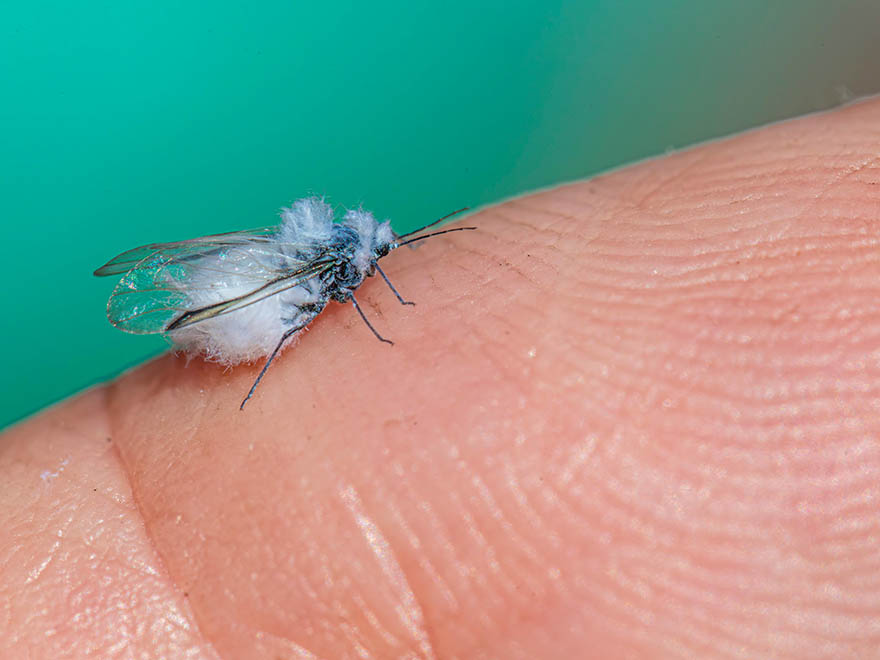
Beauveria bassiana is a white muscardine fungus. When its spores land on an insect, they germinate, penetrate the outer shell (cuticle), and grow inside the body. The insect dies within 3 to 7 days. After death, the fungus produces new spores on the outside of the body. The dead insect turns white and fuzzy. Those new spores spread to nearby insects.
This is contact-based infection, not a stomach poison. The insect does not need to eat anything. It only needs to touch the spores. That makes Beauveria effective against sap-sucking pests that don't chew leaves, like aphids, whiteflies, and thrips.
Beauveria is safe for humans, pets, earthworms, and bees (when applied in the evening after bees stop foraging). It only infects insects and related arthropods. It cannot grow at mammalian body temperature.
How to harvest and store spores
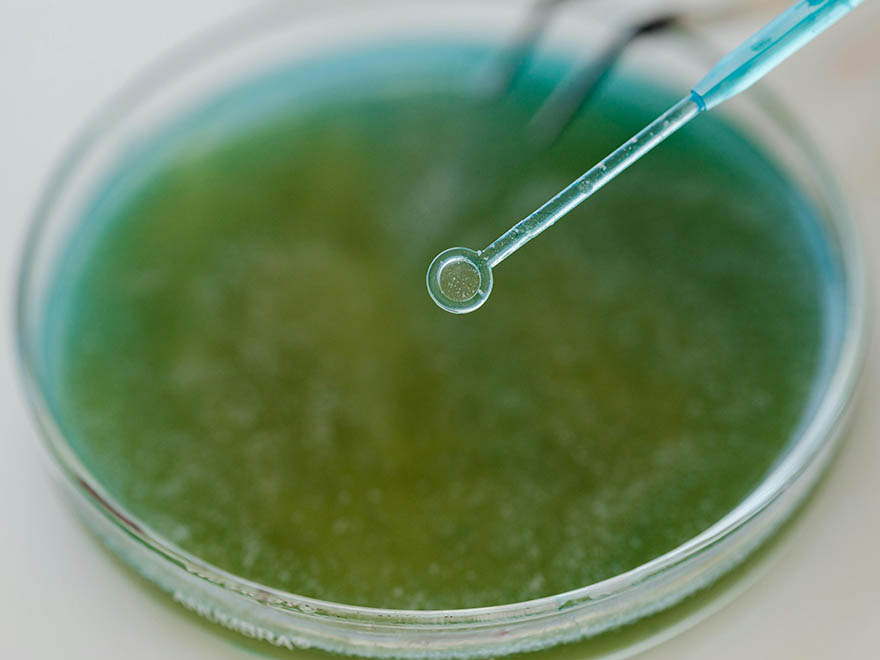
Once the grain is fully covered in white spore mass, harvest time.
Clean your tools. Wipe spoons, scrapers, and your work surface with rubbing alcohol before handling the culture. Contamination at this stage introduces unwanted organisms into your stored spores.
Scrape the white spore mass off the grain using a clean spoon or flat scraper. Collect the powder into a clean, dry container with a tight-fitting lid.
Drying: spread the harvested spores on a clean surface in a dark, dry room for 24 to 48 hours. Dry spores store far longer than moist ones.
Storage: dried Beauveria spores stay viable for up to 6 months in a sealed container at room temperature. Refrigeration extends viability even further. Keep them dark and dry. Moisture and UV exposure are the two enemies.
Reuse the substrate: if the grain is not contaminated, you can add a fresh layer of sterilized grain on top to start a second cycle. This works once or twice before you should begin completely fresh.
How to apply
Beauveria spores are hydrophobic. They repel water and float on the surface without a surfactant. The soap is not optional.
Working solution: mix 1/3 teaspoon (about 1.5 ml) of dried spore mass into 2.5 gallons (10 L) of water. Add 1 tablespoon (15 ml) of plain liquid dish soap. Stir well. The soap breaks surface tension so spores suspend evenly.
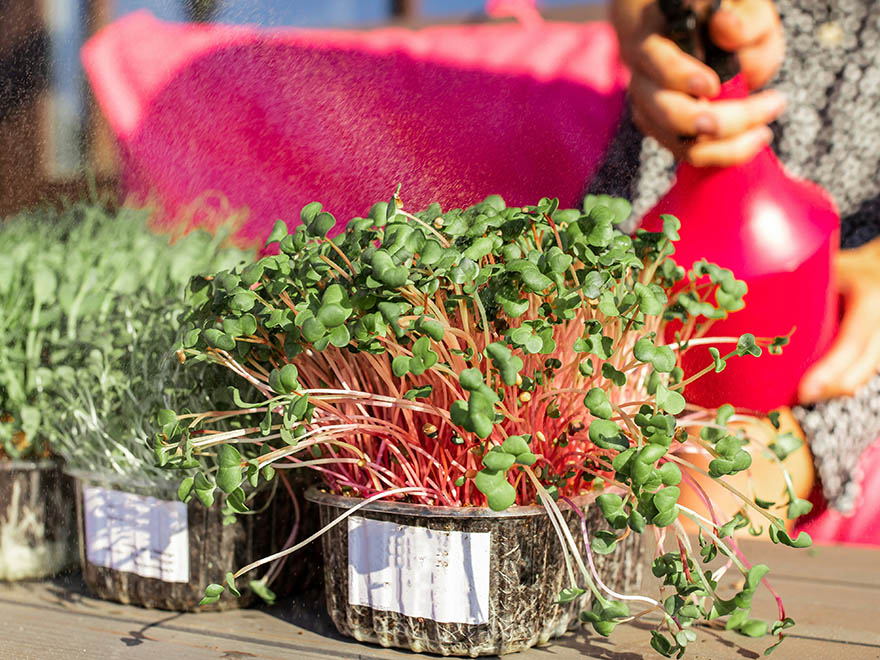
Foliar spray: pour into a spray bottle or garden sprayer. Coat both the tops and undersides of leaves. Target the undersides especially. That is where aphids, whiteflies, and thrips feed and lay eggs.
Spray in the evening only. This is the most important rule for Beauveria. UV light from direct sunlight degrades the spores rapidly. Spores applied in the afternoon sun lose most of their viability within hours. Evening application gives the spores the entire night to attach to insects and begin germinating before morning UV exposure.
Frequency: every 7 to 10 days during active pest pressure. The spores degrade on exposed leaf surfaces between applications, so regular reapplication maintains the population of active spores.
Soil drench for soil pests: mix at the same concentration and pour about 2 cups (500 ml) per plant at the base. This targets fungus gnat larvae, wireworms, and other soil-dwelling insects. For soil pests, UV is not a concern since the spores are below the surface.
Why evening spraying matters
UV light is the main killer of Beauveria spores. Research shows that direct sunlight degrades spore viability by 50% or more within a few hours. Spores applied at midday on a sunny day may be mostly dead before they can infect a single insect.
Spraying at dusk or after sunset gives the spores 8 to 12 hours of darkness. During that time, they land on insects, attach to the cuticle, and begin germinating. Once germination starts and the fungal thread penetrates the insect's shell, UV exposure no longer matters. The infection is established inside the insect.
This is also why Beauveria works better in greenhouses and under row covers. Filtered light reduces UV exposure. Indoor growers and greenhouse operators get the highest success rates because the environment protects the spores around the clock.
Which pests it kills
Beauveria bassiana targets a wide range of insects through contact infection.
- Whiteflies — the #1 greenhouse pest. Beauveria infects both adults and nymphs on leaf undersides. Spray the undersides thoroughly.
- Aphids — soft-bodied and highly susceptible. Beauveria colonizes aphid colonies rapidly once established.
- Thrips — feeding on flowers and leaves. Evening foliar spray catches thrips resting on plant surfaces overnight.
- Spider mites — susceptible to contact infection. Heavy infestations may need 2 to 3 weekly applications.
- May beetles and June beetles — soil drench targets larvae (white grubs) in the root zone.
- Wireworms — soil-dwelling click beetle larvae. Drench the root zone at planting time.
- Colorado potato beetle — Beauveria infects both larvae and adults.
Not effective against: slugs and snails (Beauveria repels them but does not parasitize their eggs), hard-shelled borers already inside plant tissue, or any pest that never contacts treated surfaces.
What NOT to do
Don't spray in direct sunlight. UV kills Beauveria spores within hours. Evening only. This is the single most common reason for failure.
Don't skip the soap. Beauveria spores are hydrophobic. Without dish soap as a surfactant, the spores float on the water and never contact the insects. One tablespoon per 2.5 gallons.
Don't mix with chemical fungicides. Conventional fungicides kill Beauveria on contact. If you use chemical fungicides, space them at least 10 days apart from Beauveria applications. Copper fungicides are also incompatible.
Don't skip sterilization. The grain substrate is food for every airborne mold spore. Beauveria is a slow colonizer. Without sterile conditions, faster-growing contaminants (Trichoderma, Penicillium, Aspergillus) take over the jar first.
Don't incubate in light. Beauveria grows best in darkness. UV and even bright indirect light slow down colonization. A closet, cupboard, or drawer is the right spot.
Don't expect overnight results. Beauveria takes 3 to 7 days to kill infected insects. You will see the pest population drop over 1 to 2 weeks, not overnight. Dead insects turn white and fuzzy as the fungus sporulates on their bodies.
Beauveria vs. Metarhizium: what is the difference?
Both are entomopathogenic fungi that kill insects through contact infection. They complement each other and can be used together.
Beauveria bassiana produces white spore masses and works best as a foliar spray against above-ground pests (aphids, whiteflies, thrips). It is highly UV-sensitive, so evening application is essential.
Metarhizium anisopliae produces green spore masses and works best as a soil drench against soil-dwelling pests (fungus gnat larvae, wireworms, white grubs). It is also UV-sensitive but less so than Beauveria.
Using both gives you the broadest biological pest coverage: Beauveria for the canopy, Metarhizium for the soil. It is recommended to combine them with Bacillus subtilis and Trichoderma for a complete biological protection system covering both pests and diseases.
FAQ
How long does it take to grow Beauveria bassiana at home?
Three to five weeks at 77 to 81°F (25 to 27°C) in a dark spot. The grain turns white when the spore mass is ready to harvest. Warmer temperatures within the range speed colonization. Check weekly without opening the jar.
Is Beauveria bassiana safe for bees and beneficial insects?
Beauveria can infect bees and beneficial insects on contact. Spray in the evening after pollinators stop foraging. By morning, the spray dries and the risk to bees drops. Avoid spraying open flowers directly. Evening application protects pollinators while still targeting pests.
Why do I have to spray Beauveria in the evening?
UV light from sunlight degrades Beauveria spores within hours. Evening application gives the spores 8 to 12 hours of darkness to land on insects and begin germinating. Once germination starts inside the insect's shell, UV no longer matters. Daytime spraying wastes most of the spores.
Can I use Beauveria bassiana with other biological controls?
Yes. Beauveria works well alongside Metarhizium for broader pest coverage. It is also compatible with Trichoderma and Clonostachys rosea. Do NOT mix with chemical fungicides or copper sprays. Those kill Beauveria on contact.
How do I know if my Beauveria culture is contaminated?
A healthy Beauveria culture turns the grain white with a powdery or fluffy coating. Green growth means Trichoderma or Penicillium contamination. Black, orange, or pink growth also means contamination. Discard the jar, clean and re-sterilize, and start fresh. White is the only correct color.
How long can I store dried Beauveria spores?
Up to 6 months in a sealed container at room temperature in a dark, dry place. Refrigeration extends viability further. Moisture and UV exposure are the two enemies of stored spores. Keep the container sealed and away from light.
Is there a gardening app that schedules biological spray treatments?
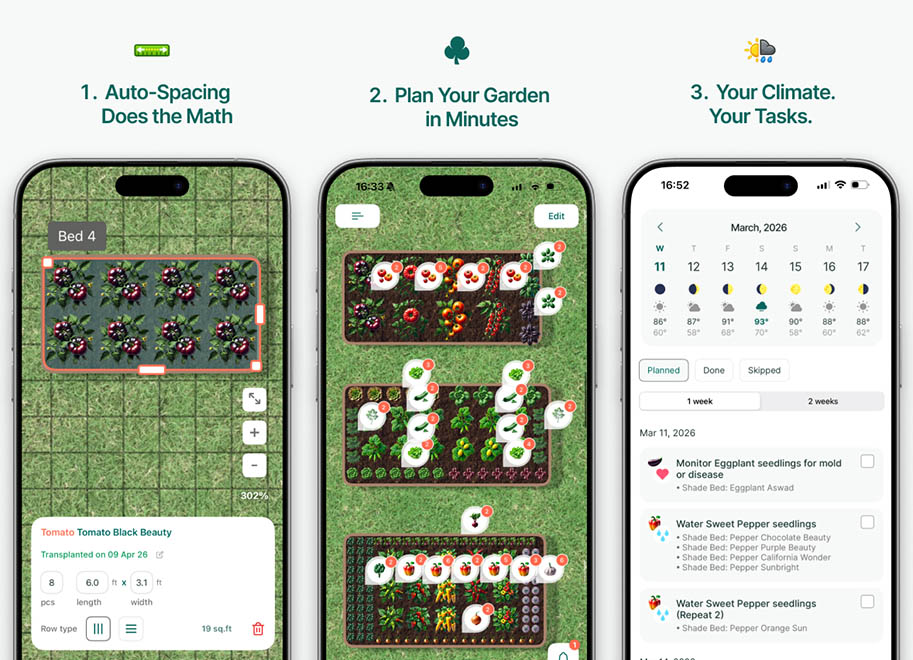
Yes. The easyDacha garden planner app builds pest control tasks into your weekly schedule, tied to your actual beds and plants. Download the appl at easydacha.com/download.
The white fungus that clears your greenhouse
Aphids, whiteflies, thrips. Beauveria infects them on contact and turns them white within a week. One jar of grain, a few weeks of patience, and you have enough spores for an entire season.
The easyDacha gardening app schedules biological treatments, feeding, and spray tasks by growth stage. Each task tells you what to apply and when. No guessing, no spreadsheets.
Try easyDacha →. The garden planner app that plans your season in 60 seconds. Cancel anytime.
Related reading on easydacha.com
- How to Grow Metarhizium at Home to Kill Fungus Gnat Larvae — the companion entomopathogenic fungus for soil pests.
- How to Grow Trichoderma at Home (2 Easy Methods) — another home-cultured biological for disease suppression.
- Top 10 Most Common Garden Pests: Identification and Treatment Guide — identify the pests before choosing a treatment.
- How to Identify Plant Diseases: Early Signs and What to Do — disease identification guide for when the problem isn't pests.