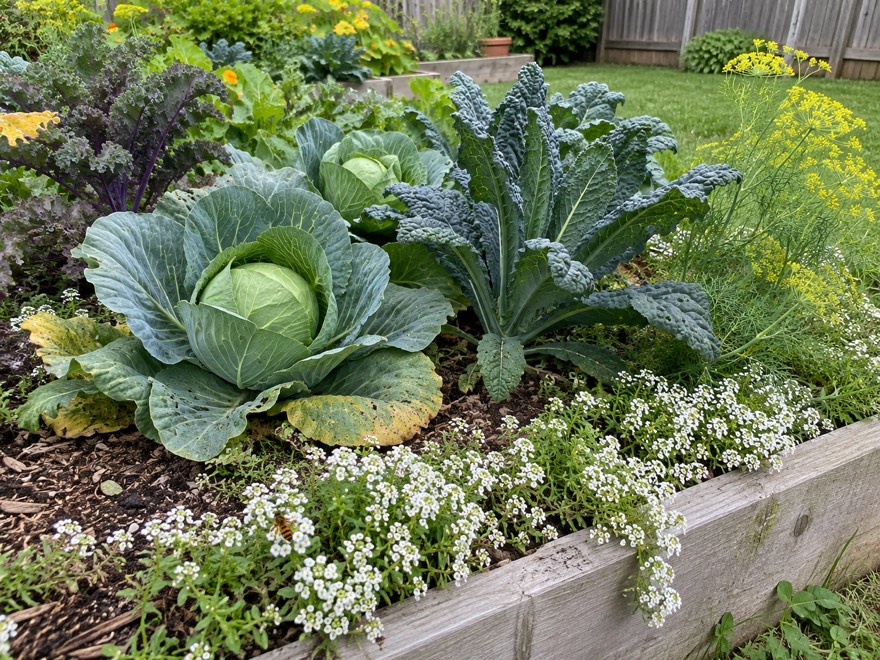
You sprayed the aphids off your kale in June. By July they were back, and so were the green caterpillars on the cabbage. The insects that eat these pests already live near your yard. They just have nothing to eat between meals, so they leave. Insectary flowers give beneficial insects in your garden the nectar they need to stay, hunt, and breed right next to your crops.
TL;DR: Plant insectary flowers like sweet alyssum, dill, parsley, cilantro, buckwheat, and phacelia in strips beside your beds early in the season, and beneficial insects in your garden will stay to control aphids and caterpillars.
The recipe
This is a planting method, not a spray. There is no dose. The "ingredients" are six flowering plants and a spot next to your crops.
The six core insectary plants:
- Sweet alyssum: low, white or purple carpet of tiny flowers. The top pick for edging beds and filling gaps.
- Dill: tall flat flower heads (umbels) that small wasps can feed from easily.
- Parsley: flowers in its second year. Let a few plants bolt instead of pulling them.
- Cilantro: bolts fast in warm weather. Leave the flowering plants in place.
- Buckwheat: fast summer cover that flowers within weeks of sowing.
- Phacelia: fuzzy blue-purple flowers loved by hoverflies and bees.
Nice additions if you have them: a shallow dish of water with pebbles for landing, and a patch of bare ground or mulch where ground beetles can shelter.
Plant it: Sow or transplant the flowers in blocks or strips around or between crop beds. Start early in the season so blooms open before pest numbers climb.
How long it lasts: Sweet alyssum and phacelia bloom for weeks. Resow buckwheat and cilantro every few weeks to keep flowers going. A succession planting schedule keeps something in bloom from spring to fall.
How to apply
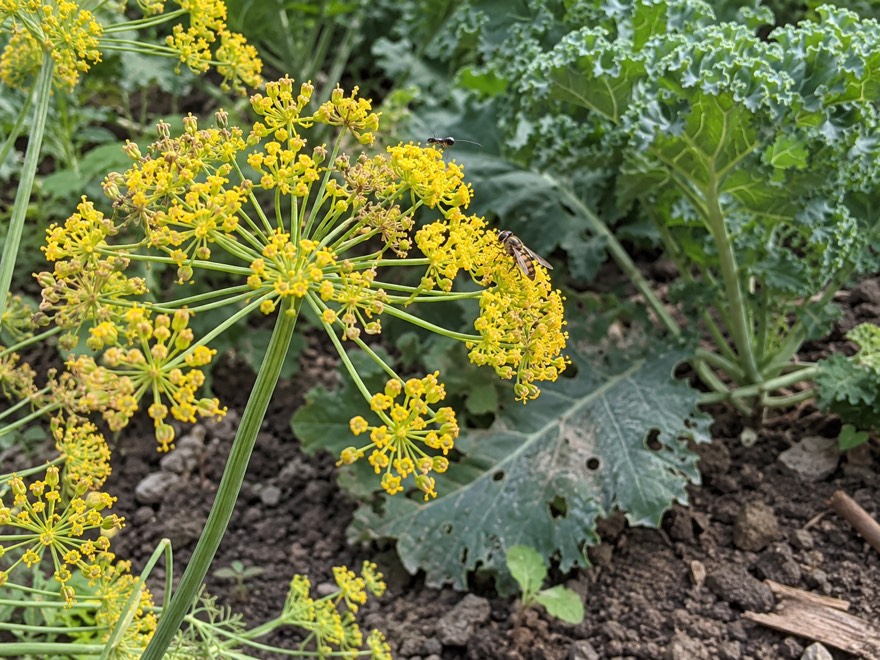
Place strips where pests show up first. For brassicas, run a line of sweet alyssum along the bed edge and tuck dill or cilantro at the ends. A strip 1 to 2 feet (30 to 60 cm) wide along one side of a bed is enough for a backyard garden.
Plant early. The goal is to have flowers open when aphids and caterpillar moths arrive in spring. Beneficials need nectar before the pest boom so their numbers are ready.
Let the flowers bloom continuously. Do not deadhead your insectary plants, and do not pull bolting herbs right away. A flowering cilantro plant feeds more helpers than a leafy one.
Expect results in weeks, not days. The first season builds the population. By the second year, you will see hoverflies over the beds and swollen, tan "mummy" aphids that tiny wasps have parasitized.
Why insectary flowers bring beneficial insects to your garden
Adult parasitic wasps and hoverflies do not eat pests. They drink nectar and eat pollen. Their larvae do the pest control. A hoverfly larva can clean up aphid colonies, and parasitic wasps lay eggs inside aphids and caterpillars, including diamondback moth larvae on brassicas.
These adults are tiny. They cannot reach nectar in deep flowers like petunias. They need small, open flowers with shallow nectar. That is why umbels (dill, parsley, cilantro) and tiny clusters (sweet alyssum) top the list.
The effect is supported by university extension research on brassica pests and habitat plantings. A nectar source close to the crop keeps the helpers working in your beds instead of the neighbor's hedge. Once they settle in, keeping ladybugs in your garden gets easier too.
Map the strip before you sow
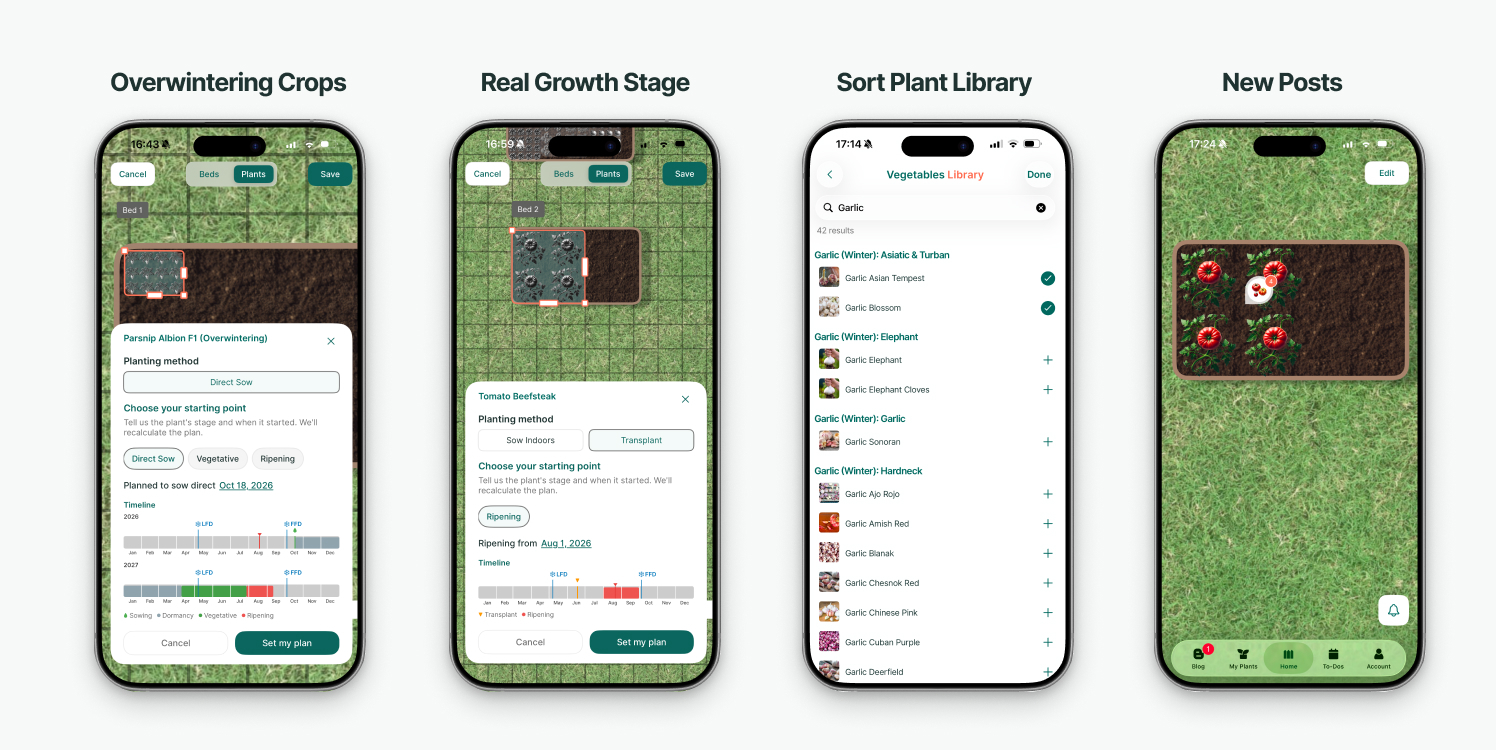
The easiest insectary strip is the one you planned in winter. In easyDacha, draw a narrow bed along your brassica beds on the garden map and add dill, parsley, and cilantro from the plant library. If sweet alyssum or phacelia is missing from the library, add it as a custom plant, and it gets its own care plan and dates. Sowing dates come from your ZIP code, so the strip blooms before the pests arrive. Try easyDacha →
Is this safe for bees and pollinators?
Yes. Insectary flowers feed bees, butterflies, and other pollinators along with the pest hunters.
The only real risk is spraying. Broad insecticides kill the beneficials you just invited. If you must treat a bad outbreak, pick a targeted option and spray in the evening when bees are not foraging.
Simple rules:
- Skip broad-spectrum sprays near the strip.
- Water the strip during dry spells so flowers keep producing nectar.
- Leave a few plants to self-seed for next year.
- Check that every species is not invasive in your region before planting.
What NOT to do
Do not plant invasive flowers. Check your state's invasive plant list before you sow anything new.
Do not wait until pests explode. Flowers planted in midsummer bloom too late to build the helper population.
Do not deadhead the strip. Every removed flower head is lost food for wasps and hoverflies.
Do not rely on one species. Mixing early and late bloomers covers the whole season.
Best for which plants
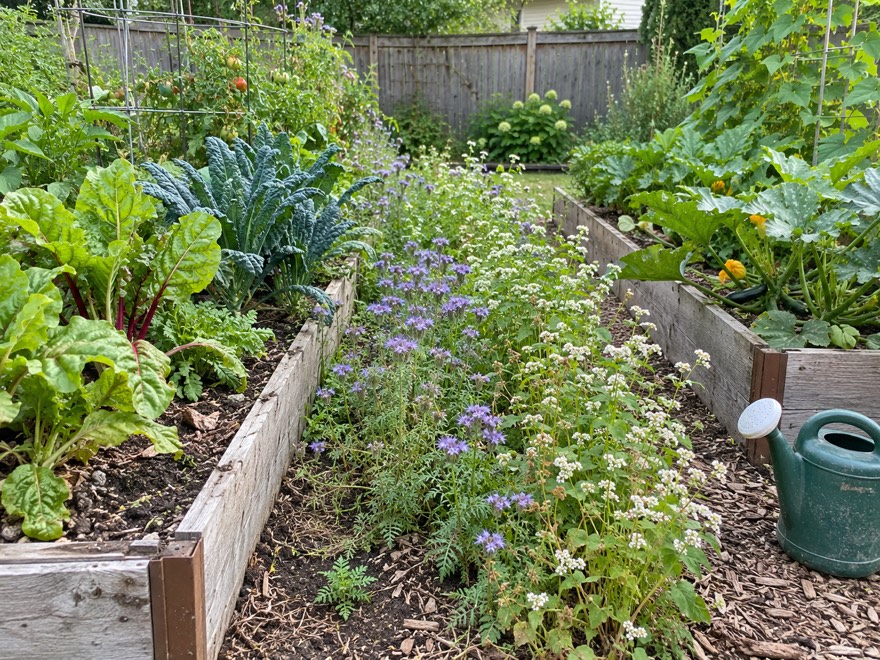
- Brassicas (cabbage, broccoli, kale, cauliflower): the biggest winners. Parasitic wasps target diamondback moth and cabbage caterpillars, and hoverflies target aphids.
- Lettuce, peppers, and other aphid-prone crops: hoverfly larvae clear aphid colonies on these too. For heavy outbreaks, pair the strip with our organic aphid control guide.
- Tomatoes and cucurbits: they benefit from general beneficial activity and extra pollinators.
- All vegetable beds: a strip does not compete much for space and helps the whole yard.
If you want showier flowers alongside these six, our list of the best flowers for a vegetable garden adds color. Keep the six core insectary plants as the base. Growing your own parsley from seed gives you second-year flowers for free.
When pests keep coming back
If aphids and caterpillars still win, check three things. Are flowers blooming when pests first appear, or weeks later? Are you still using broad sprays nearby? Is the strip close enough, within a few steps of the crop? Fix the timing first. Late blooms are the most common reason a strip seems to fail. Next season, combine the strip with companion planting and crop rotation so pests cannot build up in one bed.
Plan a Garden That Protects Itself
A strip of insectary flowers only works if it blooms on time, next to the right crops. easyDacha, the vegetable garden app that plans your exact beds, puts sowing dates and care tasks for every plant on one list. Open the app and the next two weeks are ready.
FAQ
What are the best insectary flowers for beneficial insects in a garden?
Sweet alyssum, dill, parsley, cilantro, buckwheat, and phacelia. Their small, open flowers suit tiny parasitic wasps and hoverflies. Plant insectary flowers early so beneficial insects in your garden settle in before pests peak.
How far from my crops should an insectary strip be?
As close as possible. Along the bed edge or between beds works best. Small wasps do not travel far from their nectar source.
Which flowers attract parasitic wasps?
Plants with flat umbels and tiny flower clusters: dill, parsley, cilantro, and sweet alyssum. Deep, tube-shaped flowers are hard for these small wasps to use.
Can I use sweet alyssum for aphids?
Yes. Sweet alyssum attracts hoverflies, and their larvae eat aphids. Plant it as an edging along brassica and lettuce beds.
Do insectary flowers replace sprays completely?
They reduce pest pressure over time, especially from the second season on. For a sudden heavy outbreak, you may still need a targeted treatment. Spray carefully so you do not kill your helpers.
Is there an app that helps me plan an insectary strip?
Yes. easyDacha is a garden planner app where you draw beds on a map and add plants, including custom ones. Each plant gets sowing dates for your ZIP code and appears on your two-week task list.