
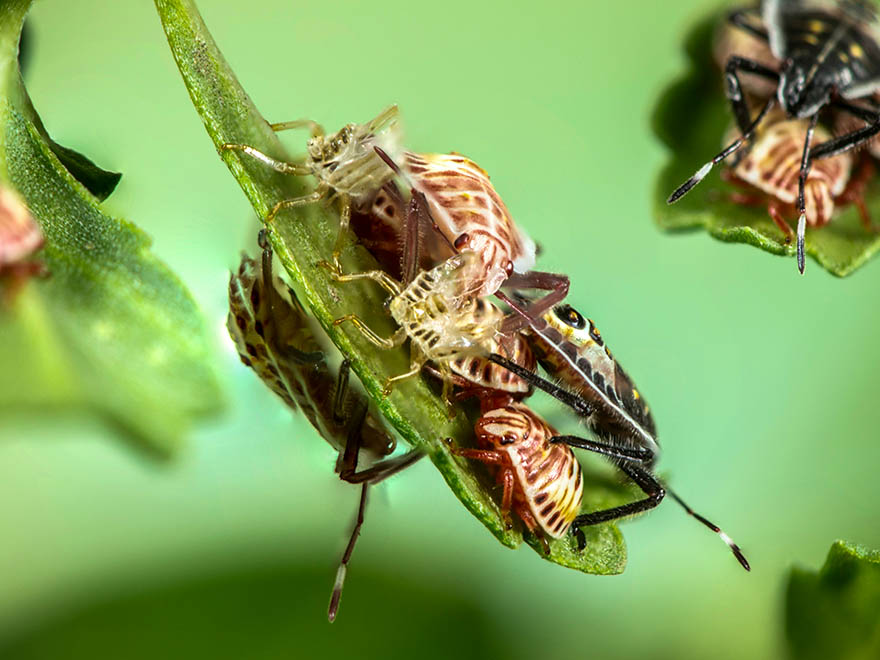
Metarhizium anisopliae is a fungus that kills insects. It infects them through their skin, grows inside their bodies, and kills them within days. It is one of the most effective biological controls for fungus gnat larvae, wireworms, white grubs, and other soil-dwelling pests. You can buy it as a commercial product. You can also grow it at home on sterilized grain. The process takes 1 to 1.5 months and produces a green spore mass you scrape off the grain and mix into water. One batch treats a lot of plants. The grain method is simple, but it requires patience and clean technique. Contamination is the main risk, so sterilization matters.
TL;DR: Cook 1.5 to 2 tablespoons (22 to 30 ml) barley or wheat groats with 1 teaspoon (5 ml) flax seeds in about 1 1/4 cups (300 ml) water. Cool, spread in a sterilized jar, add Metarhizium starter. Cover with a breathable lid. Incubate at 72 to 82°F (22 to 28°C) for 1 to 1.5 months until the grain turns green. Scrape spore mass. Mix 1/3 teaspoon (about 1.5 ml) spores into 2.5 gallons (10 L) water plus 1 tablespoon (15 ml) liquid soap. Apply to soil.
The recipe
One recipe. Sterilization is the critical step. Skip it and you grow mold instead of Metarhizium.
You need:
- 1.5 to 2 tablespoons (22 to 30 ml) barley or wheat groats (pearl barley or whole wheat berries both work)
- 1 teaspoon (5 ml) flax seeds. The lipids in flax stimulate Metarhizium growth. Don't skip this.
- About 1 1/4 cups (300 ml) water
- Metarhizium anisopliae starter (commercial product or a piece of previously grown culture)
- A glass jar, about 14 oz (400 ml) size, with a screw-top lid
- Aluminum foil
- A paper napkin or coffee filter and a rubber band (for the breathable lid)
Make it:
- Combine the groats, flax seeds, and water in a small pot. Cook until the groats are soft and the mixture is semi-liquid. This takes about 15 to 20 minutes on medium heat.
- While the grain cooks, sterilize your jar. Cover the open jar with foil and place it in the oven at 350 to 400°F (180 to 200°C) for 20 to 30 minutes. Let it cool in the oven with the foil still on.
- Spread the cooked grain mixture into the sterilized jar. The layer should be about 1/4 to 1/2 inch (0.5 to 1 cm) deep. Not thick. A thin layer colonizes faster and more evenly.
- Let the grain cool to room temperature inside the jar. Do not add the starter to hot grain.
- Add a small amount of Metarhizium starter. Follow the product label if using a commercial starter. If using spores from a previous batch, a pinch is enough.
- Replace the screw-top lid with a breathable cover. Place a paper napkin or coffee filter over the jar opening and secure it with a rubber band. The fungus needs air exchange during the long incubation.
- Place the jar in a warm spot at 72 to 82°F (22 to 28°C). A shelf in a warm room works. Avoid direct sunlight.
- Wait 1 to 1.5 months. Check weekly. The grain will slowly dry out and the Metarhizium will colonize it. You are looking for the grain to turn green with a dense layer of spores.
How to tell it worked: a successful culture turns the grain surface bright green. The texture looks powdery and dry. The grain underneath dries into a hard "cracker." That green powder is the spore mass you will harvest.
If you see white fuzz only: that may be early-stage Metarhizium. Wait another week. If it stays white and doesn't turn green, it may be a contaminant.
If you see black, orange, or pink growth: the culture is contaminated. Discard the entire jar. Clean and re-sterilize before trying again.
What is Metarhizium
Metarhizium anisopliae is an entomopathogenic fungus. That means it kills insects. It exists naturally in soil around the world. When a fungus gnat larva or other soil insect contacts Metarhizium spores, the spores attach to the insect's outer shell. They germinate, penetrate the shell, and grow inside the insect. The insect dies within 3 to 7 days. The fungus then produces new spores on the dead insect, spreading to nearby pests.
This is not a poison that insects eat. It is a living organism that infects them on contact. That distinction matters. Chemical insecticides break down and stop working. Metarhizium reproduces in the soil and keeps working as long as target insects are present.
Metarhizium is safe for humans, pets, and plants. It does not infect mammals, birds, or earthworms. It is approved for organic use and is widely used in commercial agriculture and greenhouse operations worldwide.
How to harvest spores
Once the grain is covered in green spore mass and the substrate has dried, it is time to harvest.
Clean your tools first. Wipe all spoons, scrapers, and work surfaces with rubbing alcohol or alcohol-based wipes. Metarhizium spores are safe for humans but contamination from dirty tools ruins the harvest.
Scrape the green spore mass off the dried grain surface using a clean spoon or flat scraper. Collect the green powder into a clean, dry container with a tight lid.
Storage: keep the harvested spores in a sealed container in a cool, dry place. Spores stay viable for several months at room temperature. Refrigeration extends viability.
Reuse the substrate: if the remaining grain is not contaminated, you can add fresh cooked groats on top to start a new cycle. This works 1 to 2 times before you should start completely fresh.
How to apply
Metarhizium spores are hydrophobic. They repel water. Without soap, the spores float on the surface and don't reach the soil. The soap is not optional.
Working solution: mix 1/3 teaspoon (about 1.5 ml) of harvested spore mass into 2.5 gallons (10 L) of water. Add 1 tablespoon (15 ml) of plain liquid dish soap. The soap acts as a surfactant, breaking the surface tension so spores suspend evenly in the water.
Soil drench: pour the solution at the base of each plant. About 2 cups (500 ml) per plant for vegetables. For seedlings and small pots, about 1/2 cup (120 ml) per pot. The spores need to reach the soil where larvae live.
Frequency: apply every 7 to 14 days during active pest pressure. For prevention, once a month is enough to maintain a Metarhizium population in the soil.
When to apply: anytime during the growing season. For fungus gnats on indoor seedlings, apply as soon as you notice the tiny flies around your pots. For outdoor soil pests, apply after transplanting and repeat through the season.
Target the soil, not the leaves. Metarhizium kills soil-dwelling larvae and insects. Foliar spray is not the primary use. Pour the solution directly into the soil where the pests live.
Why it works
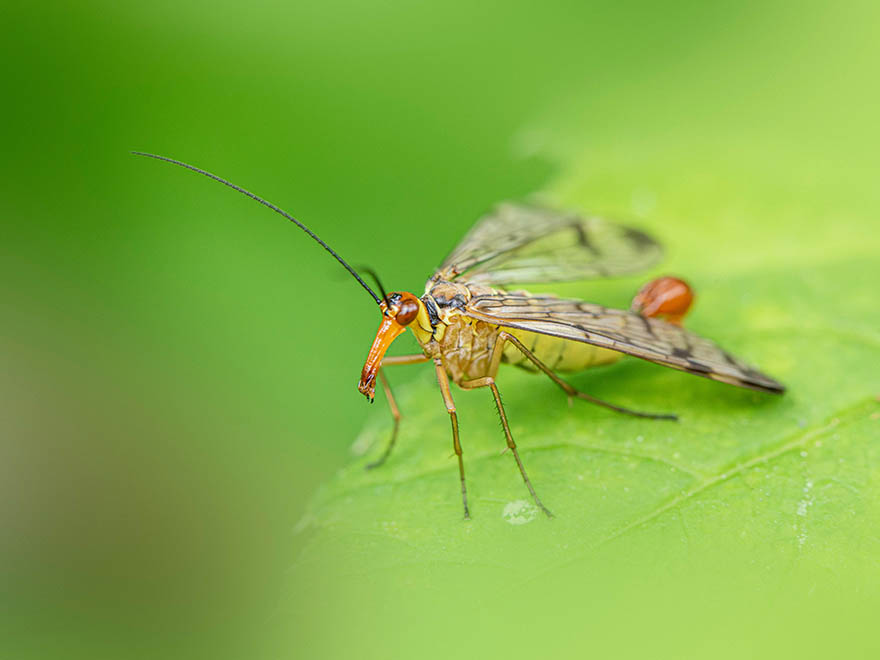
Metarhizium kills insects through infection, not toxicity. The mechanism has four stages.
Contact. Spores land on the insect's outer shell (cuticle). They attach using natural adhesion proteins.
Penetration. The spores germinate and produce enzymes that dissolve the insect's cuticle. The fungal thread (hypha) pushes through the shell into the insect's body.
Colonization. Inside the insect, Metarhizium multiplies rapidly. It consumes the insect's internal tissues. The insect dies within 3 to 7 days.
Sporulation. After the insect dies, Metarhizium produces new spores on the outside of the dead body. These spores spread to other insects in the soil. One dead larva becomes a source of infection for nearby pests.
The flax seeds in the grain recipe provide lipids that Metarhizium needs during the colonization stage. Without it, the culture grows more slowly and produces fewer spores.
Safety: is Metarhizium safe for pets and humans?
Yes. Metarhizium anisopliae is safe for mammals, birds, fish, and earthworms. It only infects insects and related arthropods. The fungus cannot grow at mammalian body temperature (98.6°F / 37°C). It needs the cooler temperatures found in soil and on insect surfaces.
Metarhizium is approved for organic agriculture in the US and EU. It is used commercially in greenhouses, field crops, and turf management. The EPA classifies Metarhizium-based products as reduced-risk pesticides.
Common-sense precautions: avoid breathing in large amounts of dry spore powder during harvest. Work in a ventilated area. Wash hands after handling. These are the same precautions you would take with any fine dust, not because Metarhizium is toxic but because inhaling any fine particles irritates airways.
Pets can walk on treated soil safely. The spores target insects, not mammals. No waiting period is needed after application.
Which pests it kills
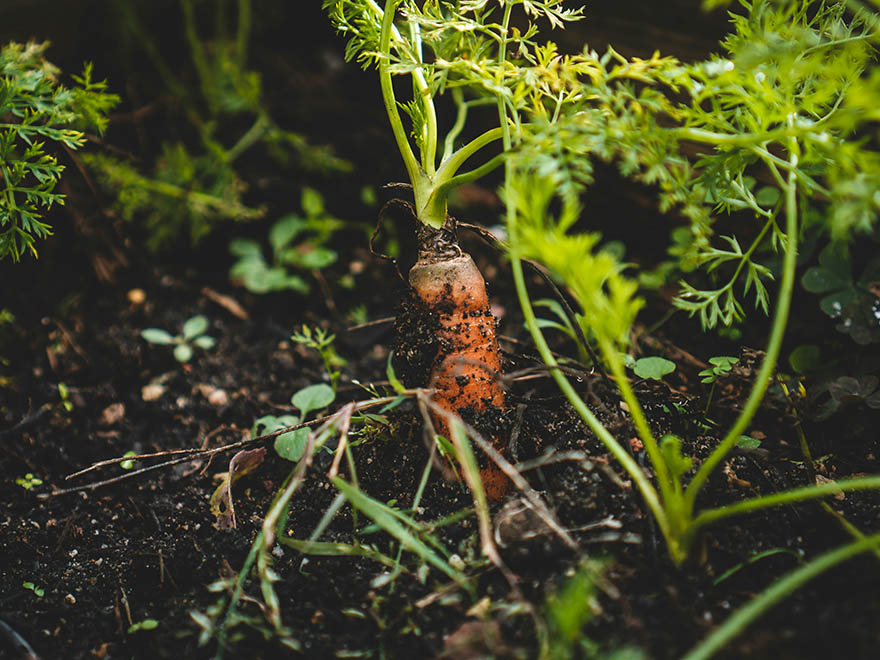
Metarhizium anisopliae targets soil-dwelling insects and some above-ground pests.
- Fungus gnat larvae — the primary indoor and seedling pest. Larvae live in moist potting soil and eat roots. Metarhizium infects them on contact in the soil.
- Wireworms — the larvae of click beetles. A serious root crop pest in carrots, potatoes, and onions.
- White grubs — the larvae of June beetles and Japanese beetles. They eat grass and vegetable roots.
- Mole crickets — soil-dwelling insects that tunnel through root zones.
- Fly larvae — various fly species that attack seedlings at the soil line.
- Rose chafer adults — Metarhizium suppresses populations when combined with Beauveria bassiana.
Not effective against: aphids, caterpillars, or any pest that doesn't contact the soil. Metarhizium works in the soil zone. For above-ground insects, use Beauveria bassiana or other foliar biologicals.
What NOT to do
Don't skip the sterilization. The grain substrate is food for every mold spore in the air. If you don't sterilize the jar, competing fungi colonize the grain first. Metarhizium is a slow grower. It needs a clean start.
Don't skip the flax seeds. The lipids in flax stimulate Metarhizium growth and spore production. Without flax, the culture grows slower and produces a thinner spore layer.
Don't skip the soap when applying. Metarhizium spores are hydrophobic. Without dish soap as a surfactant, the spores float and never reach the soil. One tablespoon per 2.5 gallons. This step is not optional.
Don't incubate above 82°F (28°C). Higher temperatures slow Metarhizium growth and can kill the fungus. Keep the jar in a warm room, not on a heat mat or in direct sun.
Don't expect overnight results. Metarhizium takes 3 to 7 days to kill infected insects. You won't see dead gnats the next morning. The population drops over 1 to 2 weeks as the fungus spreads through the larvae.
Don't use contaminated cultures. Green is correct. Anything else (black, orange, pink) means contamination. Discard and start over. Using contaminated cultures introduces unwanted organisms into your soil.
FAQ
How long does it take to grow Metarhizium at home?
The full incubation takes 1 to 1.5 months at 72 to 82°F (22 to 28°C). You are waiting for the grain substrate to turn green with a dense layer of spores. Check weekly. The timeline depends on temperature and the amount of starter used. Warmer temperatures within the range speed things up.
Is Metarhizium safe for pets and children?
Yes. Metarhizium anisopliae cannot infect mammals, birds, or fish. It only targets insects and related arthropods. The fungus cannot grow at mammalian body temperature. It is approved for organic use and classified as a reduced-risk pesticide by the EPA. Pets can walk on treated soil safely.
Why do I need flax seeds in the grain recipe?
Flax seeds provide lipids that stimulate Metarhizium growth and spore production. The lipids from flax are essential for a strong, productive culture. Without them, the fungus grows slower and produces fewer spores.
Why do I need to add soap when applying Metarhizium?
Metarhizium spores are hydrophobic. They repel water. Without a surfactant like liquid dish soap, the spores float on the water surface and never reach the soil where larvae live. One tablespoon (15 ml) of soap per 2.5 gallons (10 L) breaks the surface tension and suspends the spores evenly.
How do I know if my Metarhizium culture is contaminated?
A healthy Metarhizium culture turns the grain bright green. That green powder is the spore mass. If you see black, orange, or pink growth, the culture is contaminated. Discard the entire jar, clean and re-sterilize, and start fresh. White fuzz in the first weeks may be early-stage growth. Wait and check again.
Can I use Metarhizium together with other biological controls?
Yes. Metarhizium works well alongside Beauveria bassiana for broader pest coverage. It is also compatible with Trichoderma and Clonostachys rosea. These organisms target different pests and diseases and do not interfere with each other in the soil.
Is there a gardening app that schedules pest control treatments?
Yes. The easyDacha garden planner app builds pest control tasks into your weekly schedule, tied to your actual beds and plants. Download at easydacha.com/download.
The slow weapon that keeps working

Metarhizium takes a month to grow and a week to kill. But once it is in your soil, it reproduces. Every dead larva becomes a spore factory that infects the next one. That is biological control at its best.
The easyDacha gardening app schedules biological treatments, feeding, and spray tasks by growth stage. Each task tells you what to apply and when. No guessing, no spreadsheets.
Try easyDacha app →. The garden planner app that plans your season in 60 seconds. Cancel anytime.
Related reading on easydacha.com
- Homemade Organic Pesticide for the Vegetable Garden — more DIY pest and disease recipes.
- Vegetable Gardening for Beginners: A Step-by-Step Guide — the full beginner guide covering soil, timing, and planning.
- Companion Planting Guide: Double Your Harvest Naturally — plant combinations that reduce pest pressure.
- Why You Shouldn't Plant Tomatoes in the Same Spot as Last Year — crop rotation for pest management.