
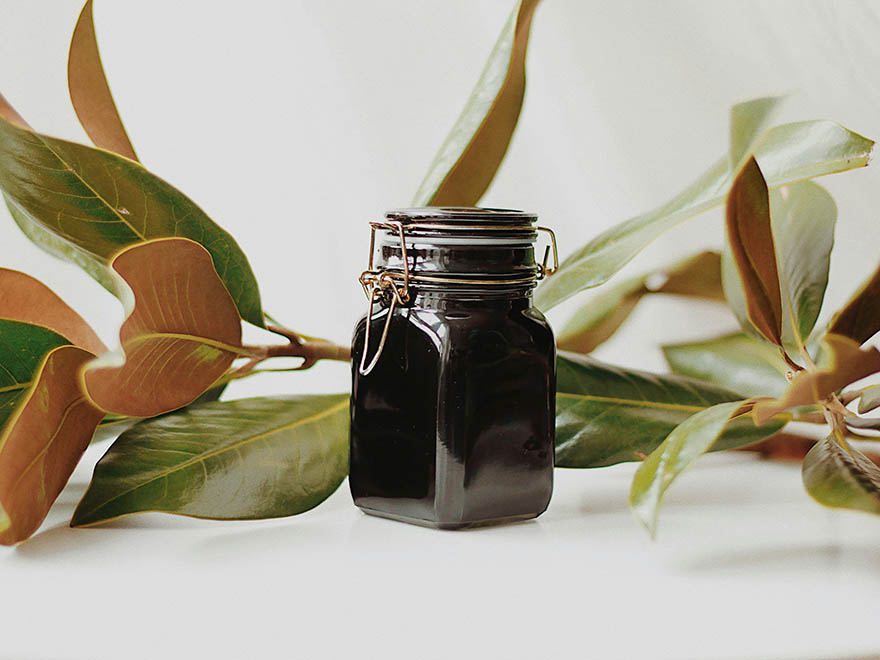
Molasses is not a fertilizer. It contains almost no nitrogen, phosphorus, or potassium. What it does contain is sugar. And sugar is what soil microbes eat. Dissolve a tablespoon of blackstrap molasses in a gallon of warm water and pour it on your garden beds. You're feeding the bacteria and fungi that live in your soil. Those microbes are the ones that actually break down organic matter and convert it into nutrients your plants can absorb. Think of it as fuel for the engine that runs your soil. The molasses doesn't feed the plant. It feeds the biology that feeds the plant.
TL;DR: Mix 1 to 2 tablespoons (15 to 30 ml) of unsulfured blackstrap molasses in 1 gallon (3.8 L) of warm water. Stir until dissolved. Pour 2 to 4 cups (500 ml to 1 L) per square yard (about 1 m²) as a soil drench. Use within 24 hours. Repeat every 2 to 4 weeks during the growing season.
The recipe
One recipe. One ingredient from the grocery store.
For 1 gallon (3.8 L) of drench:
- 1 to 2 tablespoons (15 to 30 ml) unsulfured blackstrap molasses
- 1 gallon (3.8 L) warm water. Warm helps the molasses dissolve. Not hot, just comfortable to the touch.
Mix it:
- Pour 1 gallon (3.8 L) of warm water into a watering can or bucket.
- Add 1 to 2 tablespoons (15 to 30 ml) of unsulfured blackstrap molasses.
- Stir for 30 seconds until the molasses fully dissolves. It's thick and sticky. Warm water makes this much easier than cold.
- Use immediately or within 24 hours. Sugar water left sitting breeds unwanted bacteria and attracts insects.
That's it. Ready to pour.
Shelf life: none. Mix fresh every time. Molasses water ferments quickly in warm weather. Don't store it.
How to apply
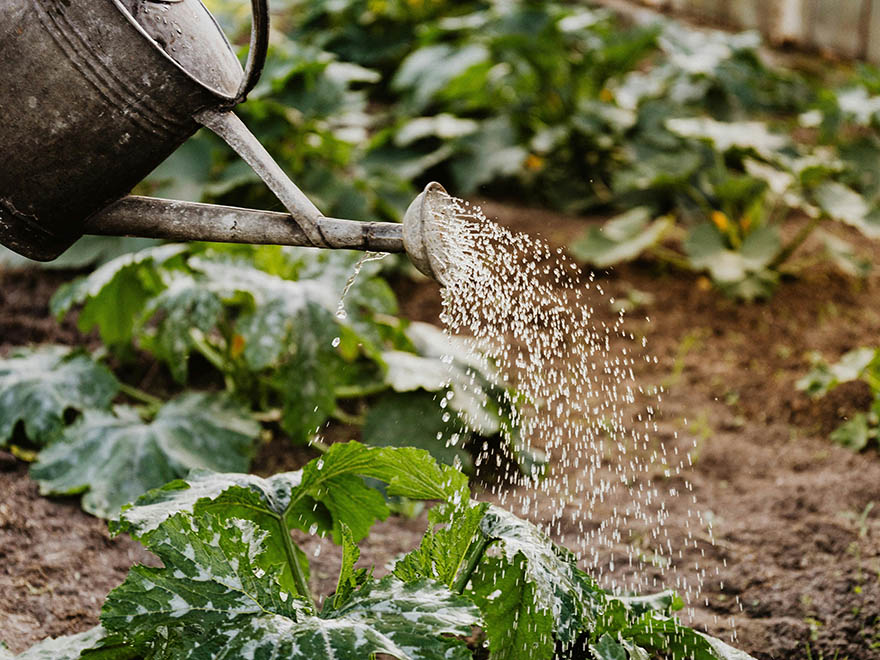
Pour 2 to 4 cups (500 ml to 1 L) of the molasses solution per square yard (about 1 m²) of garden bed. Water the soil directly, not the leaves. This is a soil drench, not a foliar spray.
Frequency: once every 2 to 4 weeks during the growing season. Start in spring when soil temperatures reach 60°F (15°C). Microbes are dormant in cold soil. Stop in late fall when the soil cools down.
Best timing: apply after watering or rain when the soil is already moist. Moist soil has more active microbial life. Drenching dry soil wastes most of the benefit.
For containers: use the same concentration but reduce the volume. Pour about 1 cup (240 ml) per large container (5 gallons / 19 L or bigger). Containers dry out faster than beds, so the solution doesn't stay in the root zone as long.
Which molasses to buy
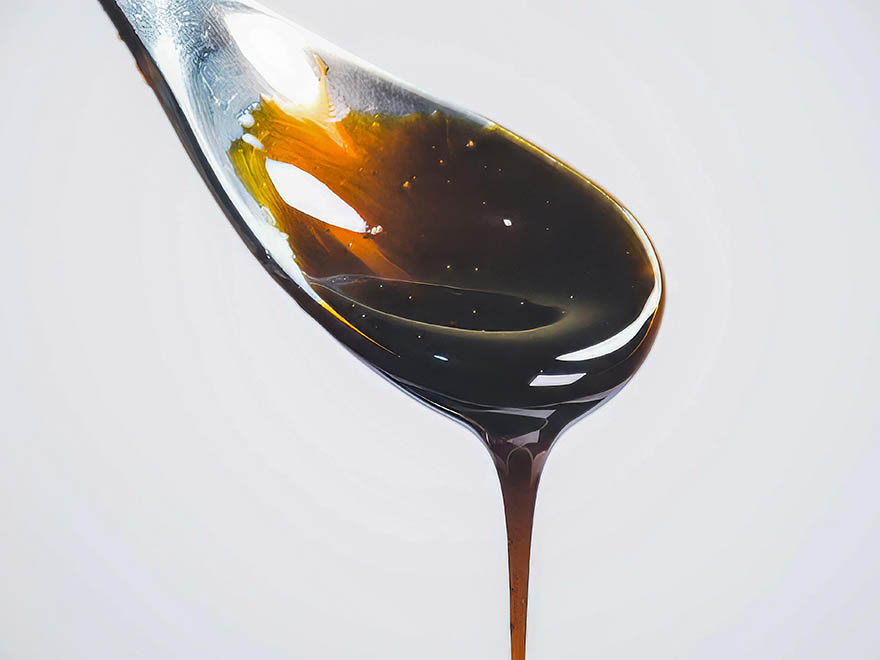
This matters. Not all molasses works for garden use.
Buy unsulfured blackstrap molasses. Blackstrap is the final extraction from sugarcane processing. It has the highest mineral content (iron, calcium, magnesium, potassium) and the least sugar of any molasses grade. The minerals are a bonus for your soil. "Unsulfured" means no sulfur dioxide was used in processing. Sulfur residue can harm soil microbes, which defeats the entire purpose.
Where to find it: grocery store baking aisle, usually $4 to $8 for a 12-ounce (355 ml) bottle. That's enough for 12 to 24 gallons of drench. One bottle lasts most of a season. Grandma's, Plantation, and Brer Rabbit are common US brands. Any brand works as long as the label says "unsulfured" and "blackstrap."
Don't use: regular (light) molasses, sulfured molasses, table syrup, corn syrup, or honey. Light molasses has too much sugar and too few minerals. Sulfured molasses contains sulfur dioxide that kills the microbes you're trying to feed. Syrups and honey attract ants and don't have the mineral profile of blackstrap.
Why molasses works in the garden
Soil is alive. One teaspoon of healthy garden soil contains billions of bacteria and miles of fungal threads. These organisms break down organic matter, cycle nutrients, and make minerals available to plant roots. Without active soil biology, even nutrient-rich soil is a warehouse with no workers.
Molasses provides simple carbohydrates (mostly sucrose) that soil bacteria consume as an energy source. When bacteria get a surge of food, they multiply. More bacteria means faster decomposition of organic matter, more nutrient cycling, and better soil structure. The effect is most visible in soil that already has organic matter to work with.
Blackstrap molasses also contains iron, calcium, magnesium, and potassium. These are trace contributions, not enough to replace fertilizer, but they add to the overall soil mineral pool.
The key distinction: molasses is a microbial stimulant, not a plant fertilizer. It doesn't feed your tomatoes. It feeds the biology that makes nutrients available to your tomatoes. If your soil has no organic matter and no microbial life, molasses alone won't fix it. Add compost first. Then use molasses to keep that biology active.
An important warning
Molasses feeds all soil microbes. Not just the beneficial ones. In soil with poor drainage, compaction, or anaerobic conditions, sugar can fuel the growth of harmful bacteria and fungi instead of helpful ones. This is a real risk, not a theoretical one. Agricultural research has documented pathogenic bacteria multiplying rapidly in sugar-fed environments with poor aeration.
Before using molasses, make sure your soil is healthy. Good drainage, adequate organic matter, and decent aeration. If your soil is waterlogged, compacted, or smells sour, fix those problems first. Adding sugar to sick soil makes it worse, not better.
Also: don't add molasses to aerated compost tea. Some recipes suggest it, but the combination can promote rapid growth of harmful organisms. Keep the molasses drench separate and simple. Molasses plus warm water, poured on the soil. That's the safest approach.
What NOT to do
Don't use more than 2 tablespoons per gallon. Higher concentrations can create an anaerobic sugar spike in the soil. Too much sugar, too fast, overwhelms the aerobic microbes and gives the anaerobic ones an advantage. Stick to the recipe.
Don't use sulfured molasses. Sulfur dioxide kills soil microbes. Check the label. If it doesn't say "unsulfured," don't use it in the garden.
Don't store the mixed solution. Sugar water ferments within hours in warm weather. It breeds bacteria you don't want and attracts ants and flies. Mix fresh every time you drench.
Don't pour it on leaves. Molasses on foliage is sticky, attracts insects, and can promote fungal growth. This is a soil drench only. Pour at the base.
Don't expect it to replace fertilizer. Molasses contains almost no NPK. It feeds microbes, which cycle existing nutrients. If your soil has no organic matter, the microbes have nothing to break down. Add compost or organic amendments first. Molasses is the accelerator, not the fuel.
Don't apply to cold soil. Below 60°F (15°C), microbial activity slows to almost nothing. The sugar just sits there and can attract pests. Wait for warm soil.
Best for which plants
Molasses benefits the soil, not any specific plant. Every plant growing in biologically active soil benefits indirectly.
- Established vegetable beds — beds with compost and mulch respond best. The microbes have organic matter to decompose, and molasses speeds up the process.
- Tomatoes, peppers, squash — heavy feeders in nutrient-cycling soil. A biweekly drench during the growing season keeps microbial activity high around the root zone.
- Raised beds — raised beds lose biology faster than in-ground beds. Molasses helps maintain microbial populations between compost additions.
- Perennial borders and fruit trees — 2 to 3 applications per season support long-term soil health under established plantings.
- Lawns — a single application in spring and fall feeds the soil biology under turf. Use a hose-end sprayer for large areas.
- After adding compost — the best time to drench with molasses is right after topdressing with compost. The fresh organic matter plus the sugar gives microbes both food and energy at once.
When molasses isn't making a difference
If you've been drenching for a few weeks and don't notice any change, check three things. First: organic matter. Molasses feeds microbes, but microbes need organic matter to break down. In sandy, depleted, or sterile soil, there's nothing for them to work on. Add compost first. Second: drainage. Waterlogged soil goes anaerobic. Molasses in anaerobic soil feeds the wrong organisms. Third: temperature. Below 60°F (15°C), microbial activity is too slow for molasses to make a visible impact. Wait for warm weather.
For a complete feeding schedule by growth stage, see our vegetable gardening beginner guide.
FAQ
Does molasses fertilize plants directly?
No. Molasses contains almost no nitrogen, phosphorus, or potassium. It feeds soil microbes by providing simple carbohydrates (sugar) as an energy source. Those microbes then break down organic matter and cycle nutrients into forms plant roots can absorb. Molasses is a microbial stimulant, not a fertilizer.
What kind of molasses should I use in the garden?
Unsulfured blackstrap molasses. Blackstrap has the highest mineral content and the least sugar. "Unsulfured" means no sulfur dioxide was added during processing. Sulfur kills soil microbes. Check the label. Common US brands include Grandma's, Plantation, and Brer Rabbit. Usually $4 to $8 at any grocery store.
How often should I apply molasses to my garden?
Every 2 to 4 weeks during the growing season, starting when soil warms above 60°F (15°C). Apply after watering or rain when the soil is already moist. Stop in late fall when the soil cools. One to two tablespoons per gallon of warm water is the standard rate.
Can I add molasses to compost tea?
Keep them separate. Adding molasses to aerated compost tea can promote rapid growth of harmful bacteria alongside the beneficial ones. Use molasses as a standalone soil drench: dissolved in warm water, poured directly on the ground. Simple and safer.
Will molasses attract ants or pests?
It can if applied to foliage or left sitting as a mixed solution. Always pour it on the soil, not on leaves. Mix fresh and use within 24 hours. Once absorbed into the soil, the sugar is consumed by microbes quickly and doesn't attract surface pests.
Can I use regular molasses instead of blackstrap?
Blackstrap is the best choice. Regular (light) molasses has more sugar and fewer minerals. Higher sugar content can overwhelm soil biology and create anaerobic conditions. Blackstrap has the right balance of carbohydrates and minerals for soil use. Avoid sulfured molasses entirely.
Is there a gardening app that schedules soil care tasks?

Yes. The easyDacha garden planner app builds a care schedule for every plant in your garden, including feeding and soil amendment tasks by growth stage. Download at easydacha.com/download.
Feed the biology that feeds your plants
Healthy soil is living soil. Molasses keeps the engine running. But every growth stage needs something different, and timing is what makes the difference between a good season and a great one.
The easyDacha gardening app builds a week-by-week task list for every plant in your garden. Feeding, watering, spraying, harvesting. Each task lands on the right day. No guessing, no spreadsheets.
Try easyDacha app →. The garden planner app that plans your season in 60 seconds. Cancel anytime.
Related reading on easydacha.com
- Vegetable Gardening for Beginners: A Step-by-Step Guide — the full beginner guide covering soil, timing, and planning.
- Homemade Organic Pesticide for the Vegetable Garden — more DIY garden recipes.
- Companion Planting Guide: Double Your Harvest Naturally — plant combinations that support soil health.
- Why You Shouldn't Plant Tomatoes in the Same Spot as Last Year — crop rotation basics for soil health.