
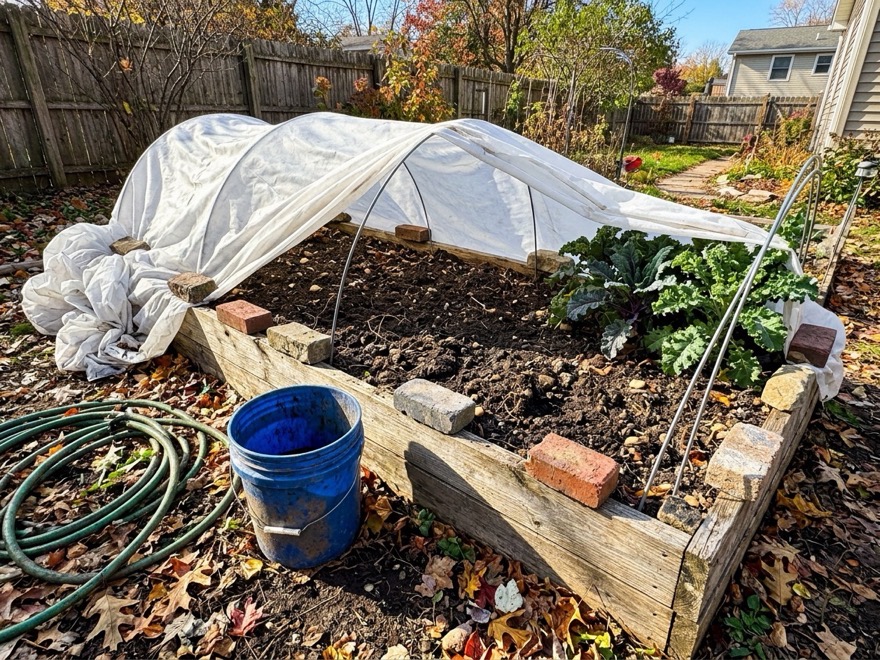
The forecast says 30 degrees F and your beds are still full. You find a roll of row cover in the garage, but is it thick enough? Picking the wrong weight is the most common mistake with row cover for frost protection. Too light and the cold gets through. Too heavy and your plants sit in the dark.
TL;DR: The best row cover for frost protection is the heaviest fabric your crop can live under. Light covers add a few degrees. Heavy covers add up to about 8 degrees F but block more light.
How row cover weights compare
Row cover is a spun fabric that lays over plants. UGA Extension says frost protection increases with fabric thickness, but light penetration decreases. That tradeoff drives every choice.
Weights are sold in ounces per square yard. Degree figures come from manufacturers and vary, so treat them as rough guides.
Those numbers come from one seed company's chart, so they are a starting point. Other sources give similar ranges. Medium fabric gets roughly 2 to 6 degrees, and heavy frost blankets get up to about 8 degrees.
Which weight should you buy?
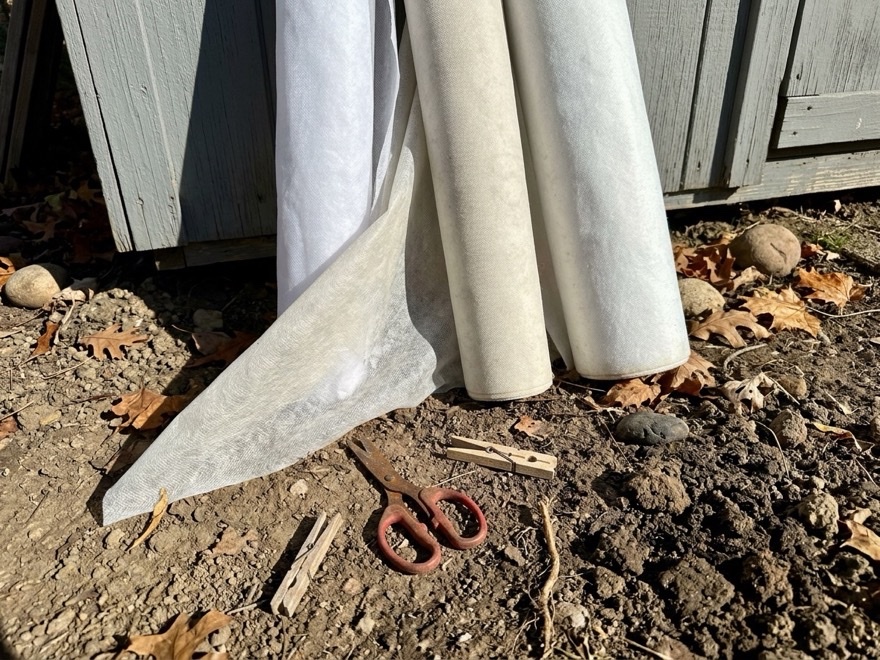
Light cover is mostly a bug barrier. It will not save tender crops from a real freeze. Use it to keep insects off, or to take the edge off a night just above freezing.
Medium cover is the all-around choice for fall and spring. It handles the nights that dip a few degrees below freezing and still lets plenty of light through for lettuce, spinach, and kale.
Heavy cover is for hard frost and for winter beds. It lets the least light in, so use it for nights, not for weeks. For long stretches, pick the heavy fabric your crop tolerates.
Extra heavy cover blocks the most light, so keep it on only through short cold snaps.
When you shop, read the label. UGA Extension says the weight, thickness, and percent of light transmission should be listed. If the label gives no numbers, pick a fabric that feels thicker.
How much cold can your plants take?
Row cover only adds a few degrees. So match the cover to the crop.
- Hardy crops like kale, spinach, carrots, and garlic can handle a frost already. Cover them for hard freezes. Our fall garlic guide shows how mulch and cover work together.
- Tender crops like tomatoes, peppers, and basil are damaged by frost. Heavy cover buys you a few degrees, but a hard freeze will still kill them. Pick the last ripe fruit first. See how to save green tomatoes before frost or overwinter peppers indoors.
- Winter greens do best under medium or heavy fabric on hoops, which keep leaves off the cloth.
How to put row cover on so it works
The fabric alone does not do the job. How you set it matters more than the label.
- Cover before sunset. The soil stores the day's heat. You want to trap it before it escapes.
- Use hoops for anything you can. UGA Extension says hoops lift the fabric away from plants to allow growth and prevent plant injuries. Heavy fabric lying on leaves can also pass the cold through.
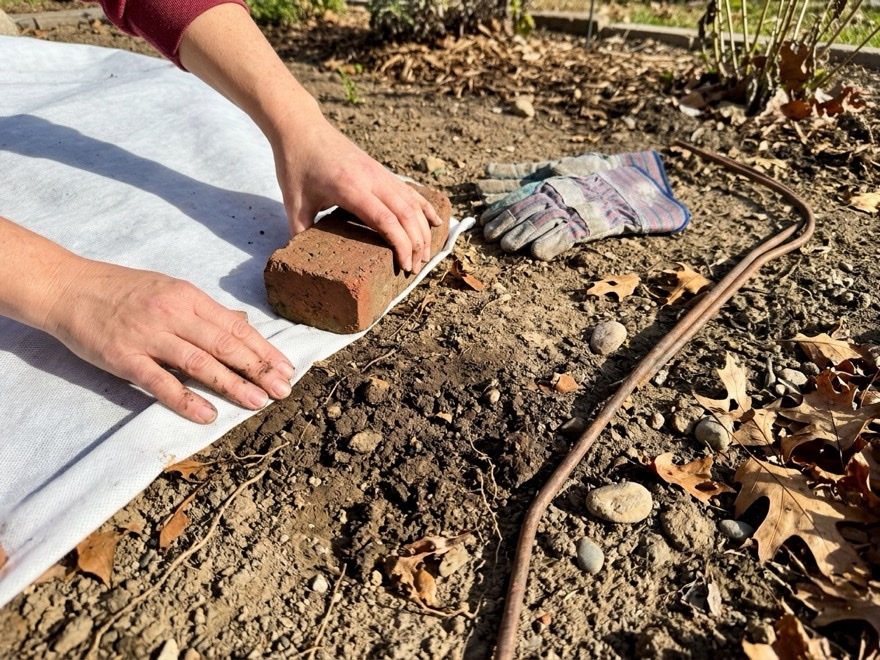
- Seal the edges. UGA Extension says the fabric should reach all the way to the ground on all sides of the bed. Hold it down with lumber, bricks, sandbags, or smooth rocks.
- Leave extra width. Plants grow under the cover, so give the fabric slack.
UGA Extension says that trapping heat can raise the temperature under a tunnel by 2 to 8 degrees F above the air outside. That is the real benefit of a tight seal.
When to take the cover off
Do not leave heavy fabric on for days without a plan. The plants need light. On a mild day, pull the cover back so the leaves get sun. Put it back on before the next cold night.
Lift the edge and look at your plants every few days.
What NOT to do
Do not use clear plastic as a night cover without airing it out. Plastic can overheat on a sunny day. UGA Extension says plastic must be pulled back daily to provide ventilation and release excess heat.
Do not drape fabric loosely and leave gaps. Cold air slips under open edges and the cover does little.
Do not trust the label degrees as a guarantee. Wind, bare soil, and clear skies all change the result.
Do not use a heavy cover on crops that need sun for weeks. Choose a lighter fabric for long stretches.
Row cover or something else?
Row cover is the easiest tool, but not the only one. Old sheets and blankets can cover short plants for one night. Take them off in the morning, and use hoops so the weight does not rest on the plants.
For beds you plan to keep growing through winter, a low hoop tunnel with heavy fabric lasts longer than a blanket. Our guide to planting vegetables for winter shows what to sow now for spring harvest.
In USDA zone 8 and zone 9, a medium fabric usually covers the occasional frost. In USDA zone 5, zone 6, and zone 7, plan for heavy fabric on hoops from late fall.
Know when frost is coming
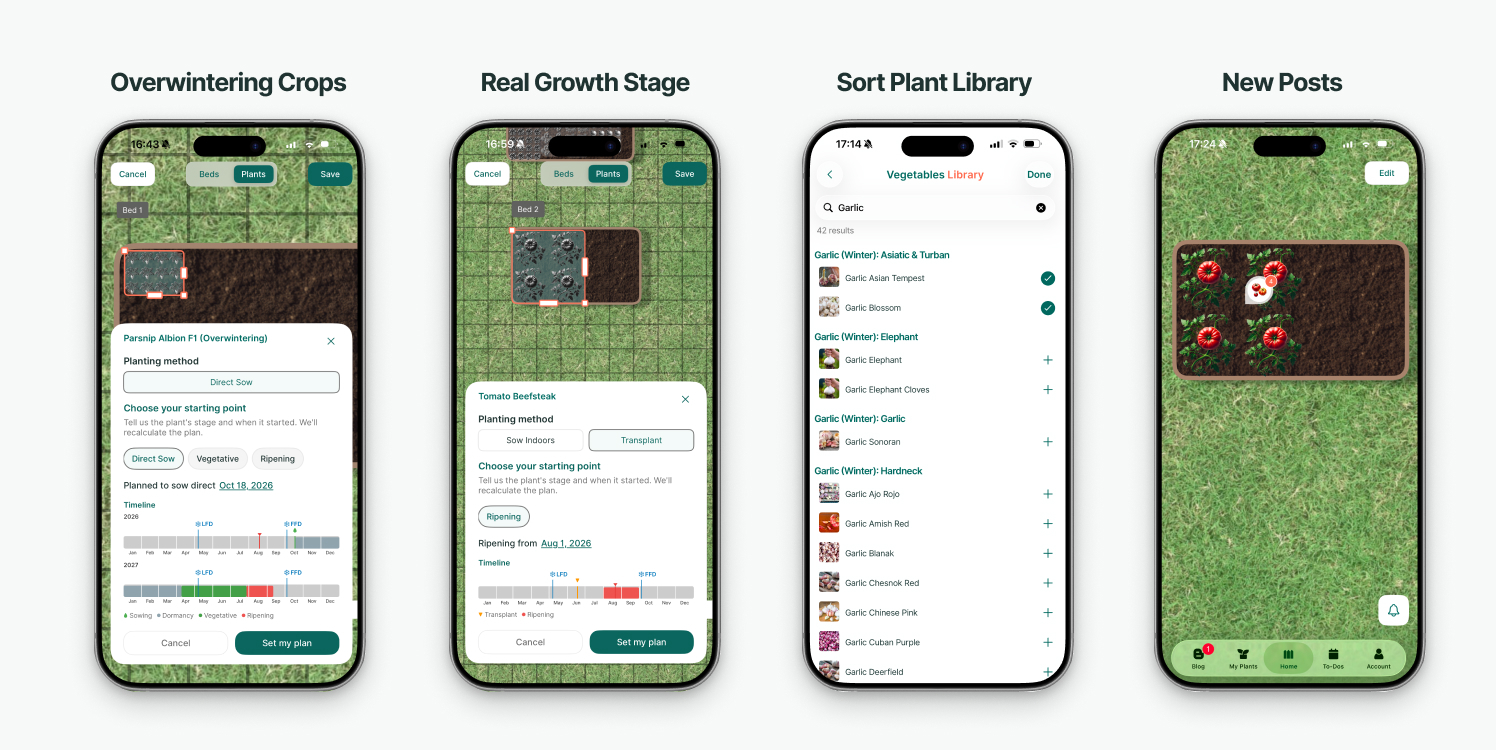
The best row cover is useless if you find out about the frost too late. easyDacha is a gardening app that calculates your planting dates from your ZIP code and your local frost dates. It builds a task list for the next two weeks around your own beds, so you see when to cover and harvest. Download easyDacha and map your beds. You can also read about overwintering vegetables in the app.
Get ready before the first frost
Set your beds up now, with hoops in place and fabric on hand. easyDacha keeps the schedule so you do not miss a cold night. Try easyDacha and stay ahead of the season.
FAQ
What is the best row cover for frost protection?
Medium weight, about 0.9 oz, is the best all-around choice for fall and spring. Use heavy fabric for hard frost. Light fabric is mostly an insect barrier.
How many degrees does row cover protect?
Light fabric adds roughly 2 to 4 degrees F, medium 4 to 6, and heavy 6 to 8 or more. Figures vary by product, so check the label.
Should row cover touch the plants?
Avoid it where you can. Hoops lift the fabric off the plants, which prevents injury and works better in the cold.
Can I leave row cover on all winter?
You can use heavy fabric on hoops for winter beds, but pull it back on mild days so plants get light.
How do I cover garden beds for winter?
Set hoops over the bed, lay heavy fabric across them, and seal the edges to the ground with boards, bricks, or sandbags.
Is there an app that tells me when to cover my garden?
Yes. easyDacha is a gardening app and garden planner app. It uses your ZIP code and local frost dates to build a task list for your beds.