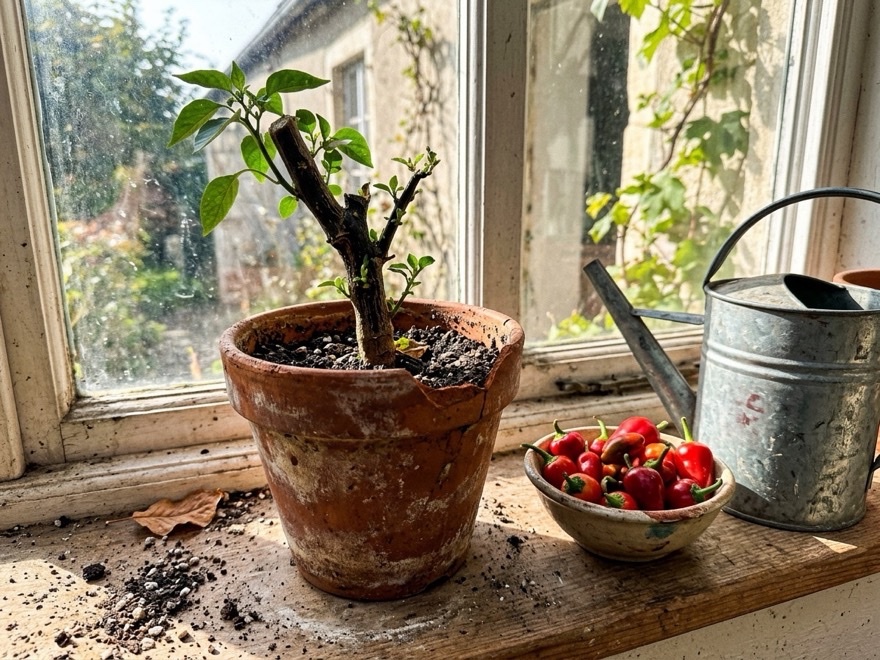
Your best pepper plant just gave you its biggest harvest, and the first frost is on the way. Pulling it feels wasteful. You do not have to. Overwintering peppers lets you keep that plant through winter and start next spring with a big root system instead of a tiny seedling.
TL;DR: For overwintering peppers, bring plants inside when nights fall to about 50°F (10°C), before the first frost. Prune hard, pot in fresh mix, and keep them cool at 50 to 65°F (10 to 18°C).
When to bring peppers inside
Start when night temperatures drop to about 50°F (10°C), and always before your first frost date. Pepper growth stalls near 50°F (10°C), and a freeze at 32°F (0°C) kills them.
If you grow in a short season, you can leave plants out a little longer to ripen fruit. Watch the forecast closely if you do. A single frosty night undoes the whole plan.
In USDA zone 9 and warmer, you can often keep peppers outdoors. Add mulch, reduce watering, and cover plants with a frost cloth on cold nights. In zone 8 and colder, bring them in.
How to overwinter peppers indoors, step by step
1. Pick your best plants. Not every plant is worth the space. Choose healthy ones with fruit you loved. Small, hot types like jalapeno and habanero are the easiest to keep in pots.
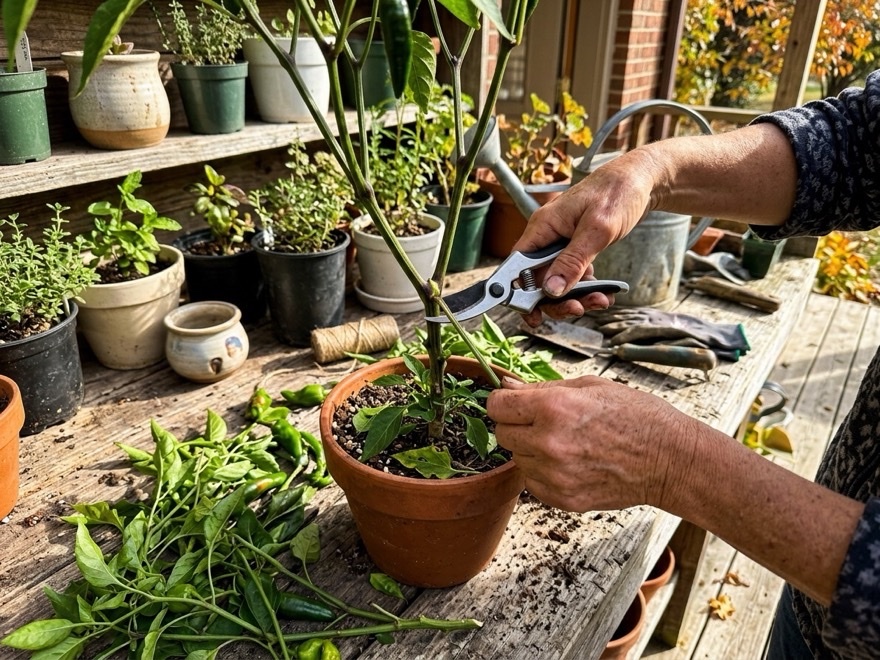
2. Harvest and prune hard. Pick all ripe fruit first. Remove remaining flowers and buds. Cut the plant back to the main Y-shaped fork, leaving about 4 to 6 inches (10 to 15 cm) of each main branch. Strip off most leaves. It looks harsh, and it is correct.
3. Pot it in fresh mix. Dig garden plants with as much of the root ball as you can. Use a clean pot about 2 to 3 gallons (8 to 11 L) with drainage holes and fresh potting mix. Plants already in pots only need a clean pot or a fresh top layer.
4. Check for pests. Rinse the plant with a strong jet of water. Look under leaves and around stem joints for aphids, spider mites, and whiteflies. Spray with insecticidal soap in the evening and repeat every 3 to 4 days over about 10 days before you move it in.
5. Find a cool, bright-enough spot. Aim for 50 to 65°F (10 to 18°C). A garage with a window, a basement, or an unheated spare room all work. Keep plants away from heating vents.
Winter care: water, light, and food
Water very little. A dormant pepper uses almost no water. Water every 2 to 4 weeks, only when the soil is dry. Overwatering is the most common reason overwintered peppers die.
Light. A window is enough for a dormant plant. If you want some growth, give it a grow light for about 8 hours a day. Our guide to choosing grow lights for seedlings covers what to buy.
Do not fertilize. The plant is resting. Wait until spring.
Leaves will drop. That is normal. Keep stems firm. If they shrivel and blacken, give a small drink and more light.
Why overwintering peppers works
Peppers are short-lived perennials. They only die in cold climates because frost kills them. Keep the plant above freezing, and the roots stay alive.
Hard pruning also matters. A big leafy plant needs more water and light than a winter window can give. A trimmed plant rests and then regrows strongly.
An established plant often gets a head start on a seedling the next year, since its roots are already large.
The tricky part is timing: when to bring plants in, when to wake them up, and when to put them outside again. easyDacha calculates dates from your ZIP code and local frost dates, then lists the next two weeks of tasks. Add your peppers to a pot on the garden map, and the app builds a care plan for them. Try easyDacha →
Waking peppers up in spring
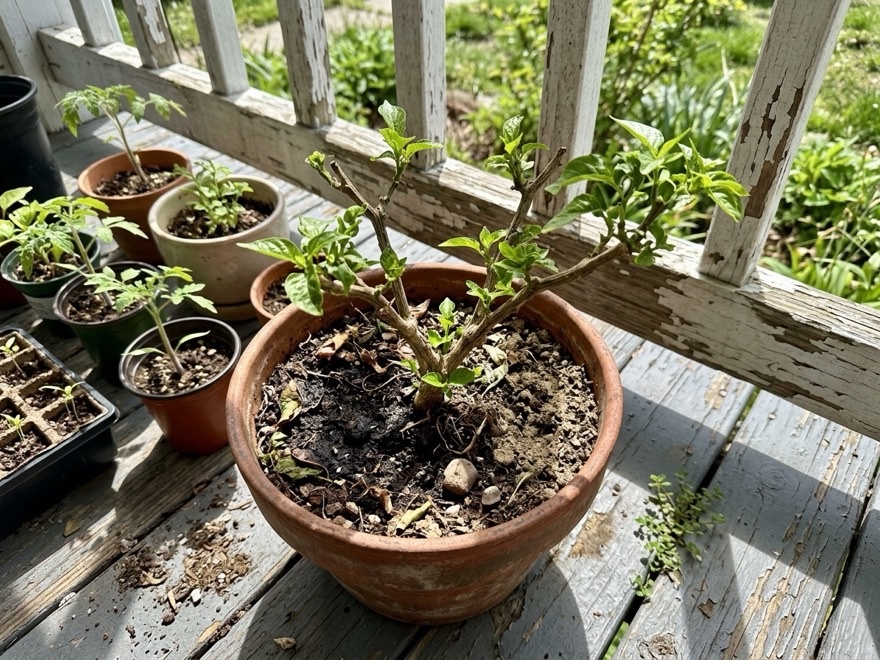
About six weeks before your last expected frost, move the pot to a warmer, brighter spot, around 65 to 75°F (18 to 24°C). Water more often as new growth appears, but let the soil dry a little between drinks.
Start a diluted liquid feed once leaves unfurl. Then harden the plant off by putting it outside for part of the day. Our guide to hardening off works for overwintered plants too. Move it outside for good once nights stay at 50°F (10°C) or above.
What NOT to do
Do not wait for frost. A frost-hit plant recovers poorly.
Do not bring in an infested plant. One pest outbreak can spread to every houseplant.
Do not keep it warm and wet. A heated room above 70°F (21°C) keeps growth going without enough light.
Do not feed in winter. Fertilizer on resting roots can burn them.
Best for which peppers
- Hot peppers (jalapeno, habanero, cayenne): the easiest. They do well in pots and often grow back fast.
- Sweet and bell peppers: they work too, but take more space. If your sweet peppers got spicy over summer, see why sweet peppers turn spicy.
- Not worth the effort: diseased or weak plants. Start fresh seedlings instead, using our guide to growing peppers from seed.
When your overwintered pepper is struggling
If the plant looks bad by midwinter, check three things. First, mold on the soil means too much water, so cut back. Second, soft new shoots mean it is too warm or too bright, so move it somewhere cooler. Third, tiny insects on stems mean pests. For fixes, see our guides to getting rid of aphids and spider mites. Moving other plants in at the same time? Read how to move garden plants indoors and choose the right pot.
Never Miss Your Frost Date
Overwintering peppers only works if you move plants before the cold. easyDacha, the garden planner app built around your beds and your ZIP code, keeps the dates for you. Open the app and your next two weeks of tasks are ready.
FAQ
Can you overwinter pepper plants?
Yes. Peppers are short-lived perennials. Overwintering peppers works by keeping the plant above freezing, pruning it back, and watering very little until spring.
When should I bring peppers inside?
When nights drop to about 50°F (10°C) and before your first frost date. Temperatures at or below 32°F (0°C) can kill a pepper plant.
How often do I water overwintered peppers?
Every 2 to 4 weeks, only when the soil is dry. A dormant plant uses very little water, and soggy soil causes root rot.
What temperature do overwintered peppers need?
Cool, at 50 to 65°F (10 to 18°C). Above 70°F (21°C) the plant keeps growing without enough light.
Do overwintered peppers need a grow light?
Not for dormancy. A window is enough. A grow light for about 8 hours a day helps if you want some growth.
Is there an app that reminds me to bring peppers in?
Yes. easyDacha is a gardening app that uses your ZIP code and local frost dates to schedule tasks. It lists the next two weeks of care for each plant on your garden map.