
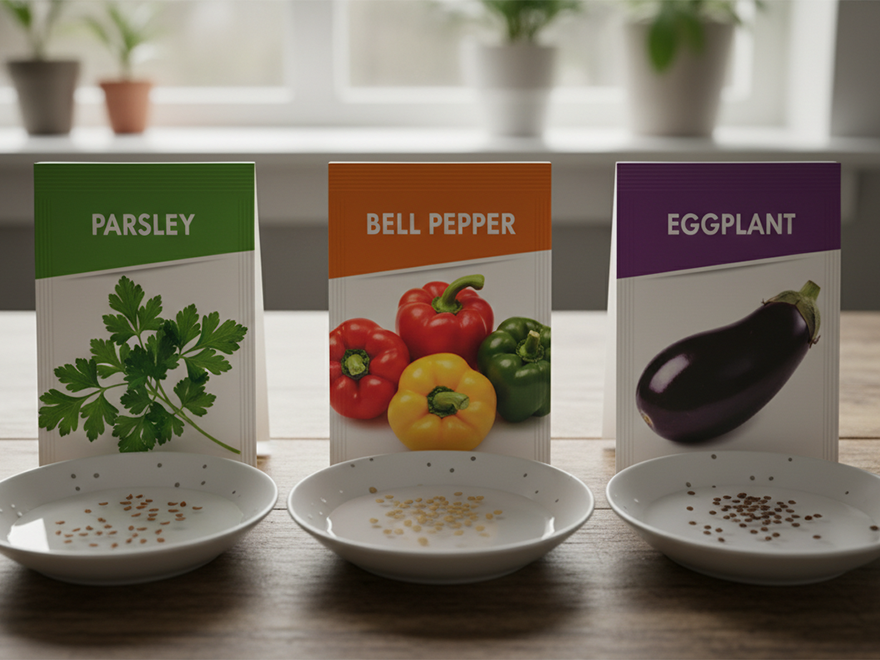
It has been two weeks. The pepper seeds are sitting in warm, moist soil and nothing is happening. The eggplant flat is empty. The parsley tray looks the same as the day you planted it. You checked the temperature, kept the soil moist, covered the trays — and still nothing. Some seeds just take their time. Peppers can sit for 14 to 21 days before showing a root tip. Eggplant is worse. Parsley and celery can take a month. And if the seeds are old — two, three years past the packet date — the germination rate drops to a coin flip.
This recipe speeds things up. Three ingredients, each attacking a different bottleneck in the germination process.
TL;DR: Dissolve 2 glycine tablets, 1 succinic acid tablet (0.1 g), and ½ teaspoon (2 g) potassium nitrate in 1 quart (1 liter) of warm water. Soak seeds for 6 to 24 hours. Plant immediately after soaking. Works on peppers, eggplant, parsley, celery, cilantro, and old seeds of any type. Do not soak longer than 24 hours — oxygen deprivation kills the embryo.
The recipe
You need
- Glycine tablets: 2 tablets per 1 quart (1 liter). Sold at health food stores and online as "L-glycine" or "glycine 500mg." A bottle costs $5 to $8. These are the same glycine tablets sold as a sleep supplement.
- Succinic acid tablets (0.1 g): 1 tablet per 1 quart (1 liter). Sold at pharmacies (especially Eastern European brands) and online as "succinic acid" or "amber acid." A pack of 50 tablets costs $5 to $7. The succinic acid plant drench article covers this ingredient in detail.
- Potassium nitrate (KNO₃): ½ teaspoon (2 grams) per 1 quart (1 liter). Sold at hardware stores as "stump remover" — check the label to confirm the active ingredient is potassium nitrate. A 1 lb container costs $5 to $8 and lasts for years.
- Warm water: 1 quart (1 liter), around 75-85°F (24-29°C) — warm enough to dissolve the tablets faster, not hot.
Do it
- Pour 1 quart (1 liter) of warm water into a jar or bowl.
- Drop in 2 glycine tablets and 1 succinic acid tablet. Stir until dissolved. Glycine dissolves quickly. Succinic acid takes a few minutes — keep stirring.
- Add ½ teaspoon (2 g) of potassium nitrate. Stir until dissolved. The solution stays clear.
- Place seeds into the solution. Let them soak for 6 to 24 hours at room temperature.
- Remove seeds, pat lightly with a paper towel, and plant immediately. Do not let soaked seeds dry out before planting — the embryo is awake now.
How to use it
Pre-sowing seed soak (the main method):
Drop seeds directly into the solution. For small seeds (parsley, celery, cilantro), use a fine mesh tea strainer inside the jar to make them easy to retrieve. Soak for 6 to 24 hours. The sweet spot for peppers and eggplant is 12 to 18 hours. For parsley and celery, the full 24 hours works best — these seeds have especially hard coats.
After soaking, plant at normal depth in pre-moistened seed starting mix. Keep soil temperature at 75-85°F (24-29°C) with a heat mat. The soak does not replace warmth — it works alongside it.
Foliar spray for stalled seedlings:
If seedlings emerged but then stalled — stopped growing, look pale, refuse to push past the cotyledon stage — spray the same solution on the leaves. The glycine and succinic acid absorb through the leaf surface and kick-start growth. One or two applications, 5 to 7 days apart, is usually enough.
Batch size:
One quart (1 liter) of solution soaks a lot of seeds — enough for several flats of peppers, eggplant, and herbs in one session. If you only need to soak one packet of seed, use half the recipe: 1 cup (250 ml) water, 1 glycine tablet, ½ succinic acid tablet, ¼ teaspoon KNO₃.
Which plants benefit most
Best for: Peppers, eggplant, parsley, celery, and cilantro — the notoriously slow germinators. Pepper seeds can take 14 to 21 days without treatment; with the soak, germination often starts in 7 to 10 days. Eggplant is similarly slow. Parsley and celery seeds have hard, oil-impregnated coats that repel water — the soak softens the coat and delivers the signal molecules directly to the embryo. Also old seeds of any type (2+ years past packet date) where germination rate has dropped — the succinic acid and glycine help restore viability in aging embryos.
Good results: Tomato seeds from saved fruit (fermented tomato seeds sometimes have uneven germination). Flower seeds with known dormancy issues (lavender, rosemary from seed, native wildflowers). Any seed that has been stored in non-ideal conditions (heat, humidity) and may have reduced vigor.
Not suited for: Fast germinators that do not need help — lettuce, radish, beans, peas, cucumbers. These sprout in 3 to 7 days on their own, and the soak adds no benefit. Pelleted or pre-treated seeds — the soak dissolves the coating (fungicide, nutrients, sizing material). Seeds you plan to cold-stratify — the KNO₃ signals "wake up," which conflicts with the cold-dormancy cycle.
Why it works
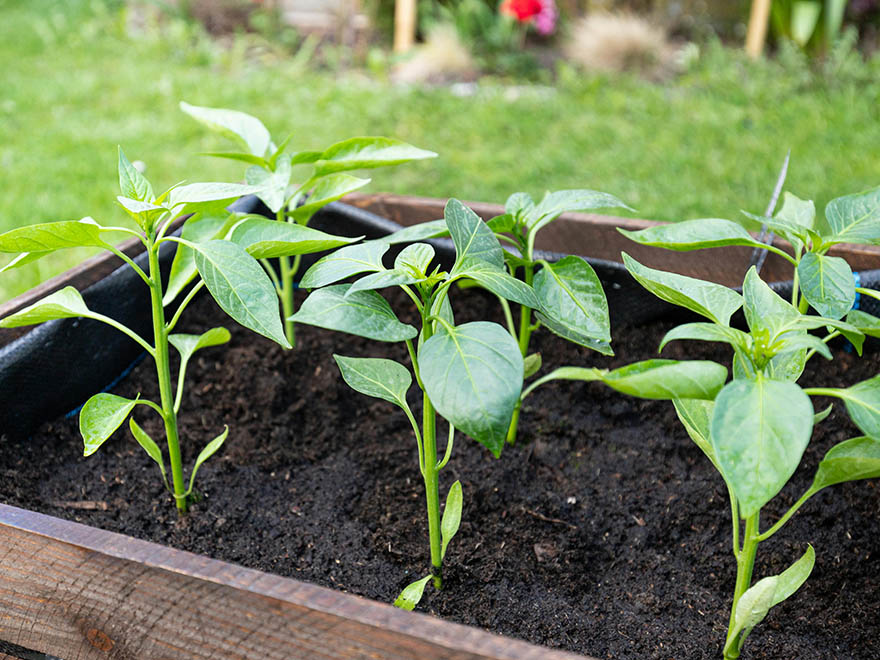
Each ingredient in this soak attacks a different bottleneck in the germination process.
Glycine is the smallest amino acid. Its small size means it penetrates seed coats and cell membranes easily. Once inside, glycine does two things. First, it chelates trace minerals (iron, zinc, manganese) in the soak water, making them available to the embryo in a form it can absorb immediately. Second, glycine triggers calcium ion channels in root cells — research shows that glycine and glutamic acid cause root cells to open calcium channels, allowing calcium uptake thousands of times faster than passive diffusion. Calcium is the signal that tells cells to start dividing. More calcium, faster cell division, faster root emergence.
Succinic acid (amber acid) is a direct participant in the Krebs cycle — the energy-producing cycle inside every mitochondrion. A dormant seed has its mitochondria in standby mode. Succinic acid, absorbed through the softened seed coat, feeds directly into the Krebs cycle and restarts ATP production. The embryo gets energy before it has even pushed a root out. This is why succinic acid is especially effective on old seeds — aging seeds lose mitochondrial efficiency, and an external dose of succinic acid compensates for that.
Potassium nitrate (KNO₃) is a well-documented dormancy breaker in seed science. The nitrate ion (NO₃⁻) triggers specific gene expression pathways that tell the seed coat to soften and the embryo to begin elongation. This is not folk gardening — potassium nitrate is used in commercial seed testing labs (ISTA standard protocols) to break dormancy in difficult species. The potassium provides osmotic support and early nutrient supply.
The three ingredients do not interfere with each other. Glycine opens doors. Succinic acid provides energy. Potassium nitrate delivers the "start" signal. Together, they compress the germination timeline.
What NOT to do
Do not soak longer than 24 hours. Seeds need oxygen. After 24 hours submerged, the embryo runs out of dissolved oxygen and starts suffocating. Twelve to eighteen hours is the sweet spot for most seeds. If you forget and hit 24 hours, plant immediately.
Do not use on pelleted or pre-treated seeds. The soak dissolves seed coatings — fungicide treatments, nutrient coatings, and clay pellets. If your seeds came coated, plant them dry as directed.
Do not exceed the potassium nitrate dose. Half a teaspoon (2 g) per quart is the dose. Higher concentrations of dissolved salts inhibit germination instead of promoting it — the osmotic pressure damages the embryo.
Do not let soaked seeds dry out before planting. Once the seed coat has softened and the embryo has started metabolic activity, drying re-hardens the coat and can kill the embryo. Plant within an hour of removing from the soak.
Do not store the mixed solution. Succinic acid degrades in water within 24 hours. Mix fresh for each batch.
Do not use for seeds that need cold stratification. The potassium nitrate sends a "break dormancy now" signal that conflicts with the cold-dormancy cycle required by many perennials, native flowers, and fruit tree seeds. For those, complete stratification first, then soak if needed.
FAQ
Does soaking seeds in plain water work just as well?
Plain water softens the seed coat, but it does not deliver the three active signals — calcium channel activation (glycine), mitochondrial energy (succinic acid), and dormancy-breaking (potassium nitrate). Research on pepper seeds shows that water soaking alone does not significantly reduce germination time compared to dry planting. The active ingredients are what make the difference.
Can I use just succinic acid without glycine and potassium nitrate?
You can. Succinic acid alone is a stress recovery and energy booster. It helps, especially with old seeds. But the full three-ingredient combo works faster because it attacks three bottlenecks at once. If you already have succinic acid tablets and do not want to buy glycine and KNO₃, succinic acid alone is still better than plain water.
Where do I buy succinic acid tablets?
Online (search "succinic acid 0.1g tablets" or "amber acid tablets"). Eastern European pharmacies carry them routinely. Health food stores sometimes stock them as a supplement. A pack of 50 tablets costs $5 to $7 and lasts for many soak batches.
Will this help if my problem is temperature, not the seed?
Temperature is the other half of the equation. Peppers need 75-85°F (24-29°C) soil temperature to germinate well. The soak speeds up the biochemistry inside the seed, but it cannot replace warmth. Use both: soak overnight, then plant in warm soil on a heat mat. The combination of pre-activated embryos and proper temperature gives the fastest results.
Is there a gardening app that tracks when to start soaking seeds?
Yes. The easyDacha garden planner app calculates your sowing dates based on your last frost date and sends reminders the day before, so you know when to start the soak. Free 14-day trial at easydacha.com/download.
Three tablets, one overnight soak

Glycine from the health food store. Succinic acid from the pharmacy. Potassium nitrate from the hardware store. Drop them in a jar of warm water, add seeds, and walk away. By morning, the embryos that were sitting dormant for weeks have their calcium channels open, their mitochondria firing, and their dormancy genes switched off. Plant them warm and wait for roots.
The easyDacha gardening app calculates sowing dates and sends reminders so you start seeds at the right time, not when it is too late.
Try easyDacha free for 14 days →. The garden planner app that builds your full care schedule. Cancel anytime.
Related reading on easydacha.com
- How to Use Succinic Acid for Plant Stress Relief (Pharmacy Tablets) — succinic acid used alone as a foliar spray and soil drench for stressed plants. This Alarm Clock recipe uses succinic acid as one of three ingredients in a seed soak.
- How to Soak Seeds in Aloe Vera or Jade Plant Extract (Two Recipes) — organic seed soak alternatives. Aloe provides natural rooting hormones, jade plant extract provides growth regulators.
- How to Make Natural Auxin Water from Cherry Branches (Rooting and Seed Soak) — another seed soak option based on natural auxins from dormant cherry branches.
- How to Use Onion Sprout Extract for Stubborn Seeds (Peppers and Eggplant) — an organic pre-soak specifically designed for pepper and eggplant germination.
- Seed Starting Troubleshooting: Why Seeds Fail and How to Fix It — the full diagnostic guide. If your seeds are not germinating, start here to rule out temperature, depth, moisture, and age problems.
- How to Make Amino Acid Fertilizer from Gelatin (Glycine + Proline Recipe) — gelatin is another source of glycine. The gelatin article uses it as a soil drench fertilizer; this recipe uses glycine tablets for a more concentrated seed soak.