
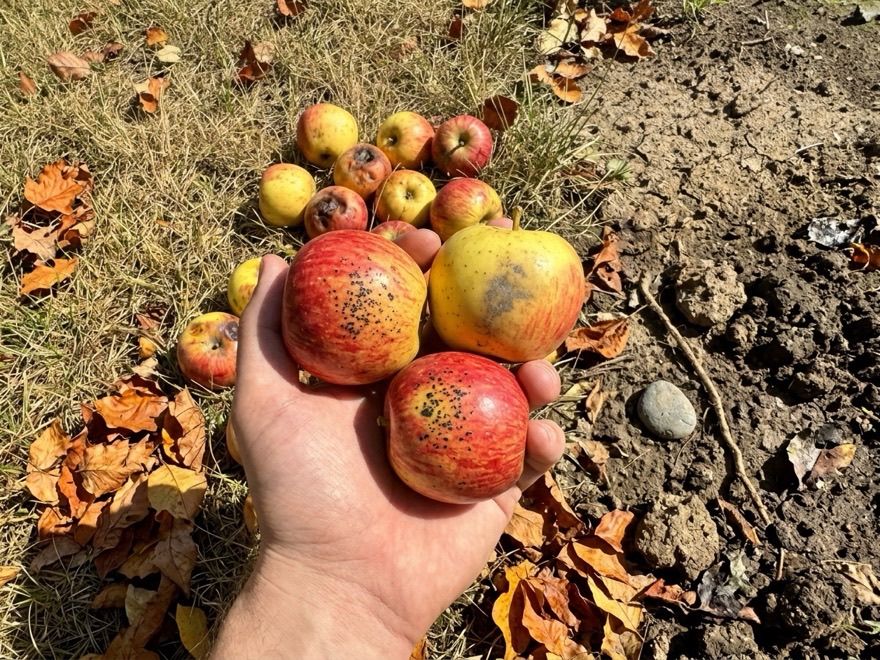
You pick a late apple and the skin is dotted with tiny black specks. You rub one and it does not wipe off. That is apple flyspeck, and it shows up after a wet late summer. The apples are fine inside, and what you do in fall decides how bad it is next year.
TL;DR: Apple flyspeck is a surface fungus that makes black dots on the skin. The fruit is edible. Prevent it next year by cleaning up fallen fruit and leaves in fall and by pruning for airflow.
What apple flyspeck looks like
Apple flyspeck appears as clusters of 6 to 50 or more slightly raised, shiny black dots. Iowa State Extension describes them that way. A sister problem, sooty blotch, looks like dull black smudges that merge.
The two often show up together, so extension writers call them sooty blotch and flyspeck. The dots sit on the surface of the fruit. NC State Extension says removing the affected skin shows no symptoms on the flesh.
Late varieties are hit hardest, because the fungus builds up through a wet summer.
Is apple with flyspeck safe to eat?
Yes. Iowa State Extension says the skins can be eaten, but they do not look appetizing. The same source says the black marks can be removed by vigorous rubbing. A fresh blemish may wipe off a little, but older marks usually stay.
The damage is cosmetic. Wash the fruit as you would any apple. If the look bothers you, peel it or use it for sauce and pies.
Why flyspeck shows up
Flyspeck loves moist weather. Iowa State Extension says the disease is favored by moderate temperatures and long wet periods in late summer and early fall. NC State Extension adds that the fungi grow best between about 61 and 84 degrees F (16 to 29 degrees C).
The fungus survives winter on the tree and on the ground. NC State Extension lists fruit mummies and apple twigs and branches as overwintering sources. Wild blackberries can carry it too. Pears and other garden plants can host it as well.
That is why last year's fruit on the ground matters. It restarts the problem every spring.
The fall cleanup that prevents apple flyspeck
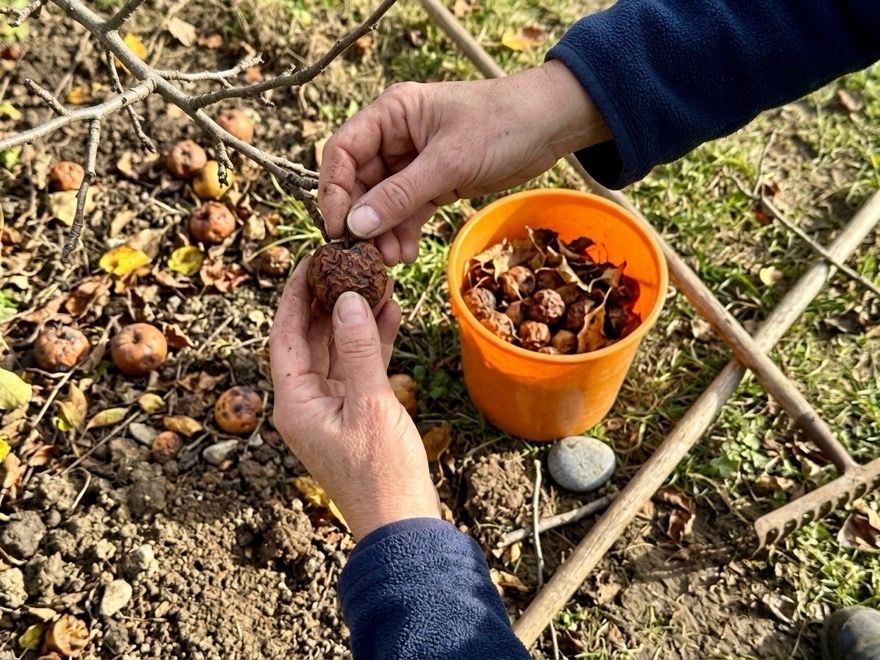
Fall cleanup is your best move, because the fungus waits on the debris until spring. Do these steps after leaf drop.
- Pick up every dropped apple. Rake them out from under the tree. Do not leave them to rot.
- Remove fruit mummies. These are shriveled apples still hanging on the branches. Pick them off and throw them away.
- Rake the fallen leaves. The fungus overwinters on leaf litter and fruit. Remove the leaf litter from under the tree.
- Cut back nearby brambles. NC State Extension says wild blackberries host the flyspeck fungus. Kentucky advice also lists removing bramble hosts.
- Mow around the tree. Short grass dries faster and lowers humidity under the canopy.
The Dzen gardener source also suggests treating the crown with trichoderma, a beneficial fungus, and treating fallen debris with the same. It gives no dose, so follow the label of any product you choose. Our trichoderma guide shows how to grow it at home. Our guide to the wild hay bacillus extract covers another biological option for summer.
Dormant clean-up sprays
Some gardeners add a dormant spray to the fall routine. Spray bare wood only, after the leaves drop and before buds swell. Our guides to the copper ammonia fall spray and the spring dormant spray window explain the timing and the safety rules. Read the product label for your site first. Another bare-wood option is liquid glass as a dormant spray.
Prune and thin to dry the fruit
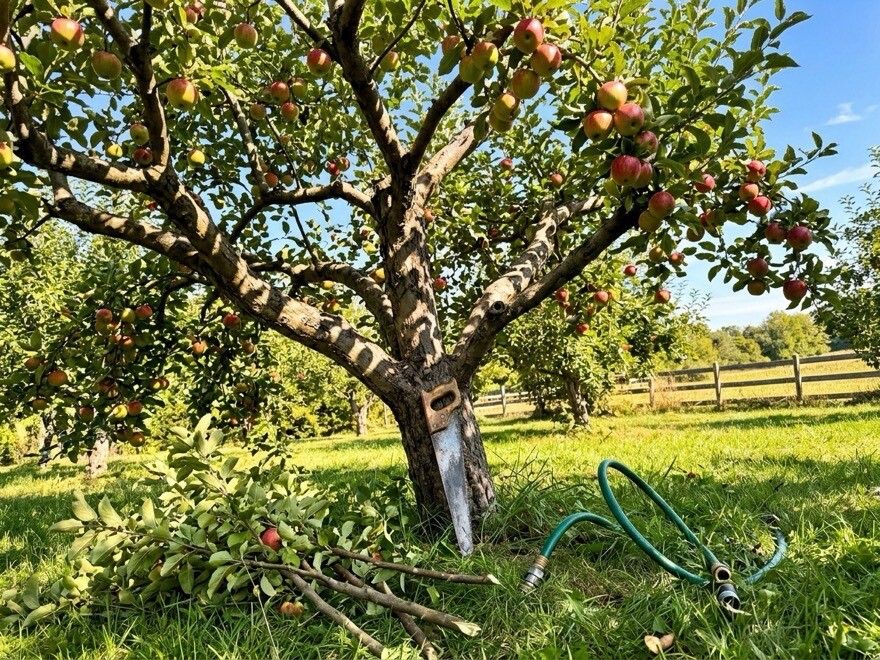
Pruning helps the fruit dry faster after rain. Iowa State Extension says pruning to promote drying reduces how often the disease shows up and how severe it is. It helps more in dry seasons than in wet ones.
Proper fruit thinning helps too, since fruit that touches stays wet longer. A Massachusetts study cited by Kentucky found summer pruning cut flyspeck on fruit by 50 percent compared with dormant pruning.
Open the center of the tree so sun and wind reach the fruit. Remove crossing branches and water sprouts.
Track your fall orchard jobs
Cleanup, pruning, and spray windows each have a date, and they differ by climate. easyDacha is a gardening app that builds a care plan for each plant you add, with a task list for the next two weeks. Add your apple tree and see what to do and when. Download easyDacha and start your fall plan.
What NOT to do
Do not leave dropped apples under the tree. They carry the fungus through winter.
Do not leave fruit mummies on the branches. They are an overwintering source.
Do not spray green leaves with a dormant spray. Those sprays are for bare wood only.
Do not skip summer pruning. A dense canopy keeps fruit wet.
When flyspeck keeps coming back
If flyspeck returns every year, check three things. First, look at your canopy for dense areas that stay wet after rain. Second, check for brambles, wild blackberries, or fruit trees nearby that could reinfect yours. Third, think about the season. A wet late summer in USDA zone 5, zone 6, and zone 7 can bring flyspeck even after good cleanup. Home gardeners often accept the spots, since the fruit is fine to eat.
Plan your fall orchard jobs
Cleanup works best when it happens on time. easyDacha, a vegetable garden app that also covers fruit trees, builds a care plan for every plant you add. Try easyDacha and plan your fall tasks.
FAQ
What is apple flyspeck?
Apple flyspeck is a fungus that causes clusters of small, shiny black dots on the fruit skin. It is a surface blemish, and the flesh is not affected.
Are apples with flyspeck safe to eat?
Yes. Iowa State Extension says the skins can be eaten, though they do not look appetizing. Wash the fruit and peel it if you prefer.
Does flyspeck rub off?
Sometimes a vigorous rub removes the marks, according to Iowa State Extension. Older spots often stay.
How do I prevent apple flyspeck next year?
Remove fallen fruit and mummies, rake the leaves, cut back nearby brambles, and prune for airflow. Do this in fall and summer.
What is the difference between flyspeck and sooty blotch?
Flyspeck forms clusters of small, raised black dots. Sooty blotch looks like dull black smudges that merge. They often occur together.
Is there an app that reminds me of fall tree care?
Yes. easyDacha is a gardening app and garden planner app. It builds a care plan for each plant and a two-week task list for your garden.