
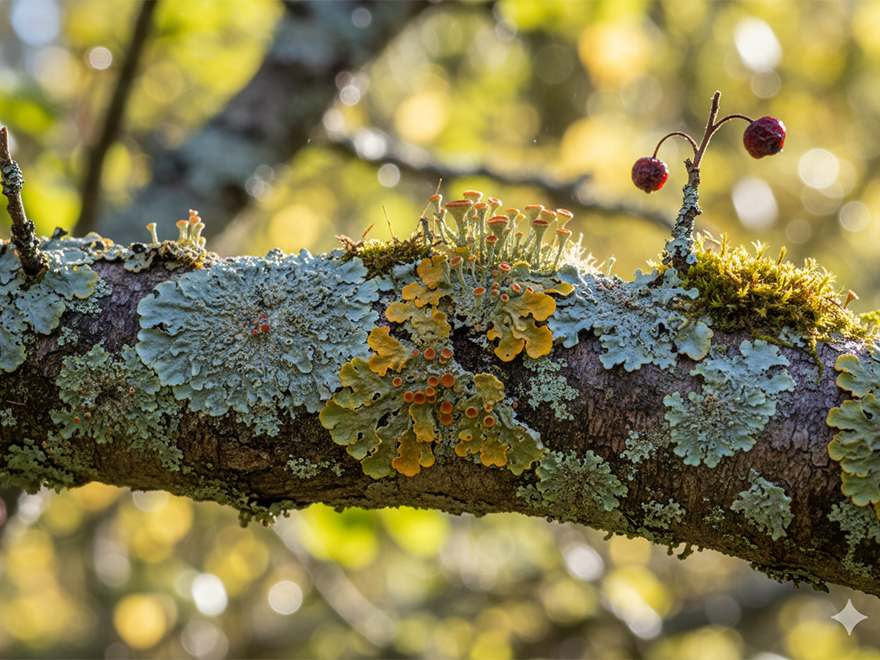
Gray-green patches on the bark. Lichen creeping up the trunk. Every spring, the same fungal diseases show up — scab on the apples, monilia on the cherries, powdery mildew on the currants. You spray copper, but the copper accumulates in the soil year after year and never breaks down. There is a cleaner option. Liquid glass — sodium silicate or potassium silicate, sold in hardware stores — coats the tree in a mineral barrier that suffocates overwintering spores, kills lichen and moss, and seals the bark. No copper accumulation. No soil contamination. And it cleans the sprayer of mineral scale while you work.
TL;DR: Mix 1/2 to 1 cup (100 to 250 ml) of liquid glass (sodium silicate) in 2.5 gallons (10 liters) of water. Add 1 tablespoon of baking soda if you have hard water. Spray all branches and trunk until dripping wet. Apply during dormancy or at green cone stage (before leaves emerge). Single application. Kills overwintering fungal spores, removes lichen and moss within 14 days. Works on apple, pear, cherry, plum, peach, currant, and gooseberry.
The recipe
You need
- Liquid glass (sodium silicate or potassium silicate): 1/2 to 1 cup (100 to 250 ml) per 2.5 gallons (10 liters). Sold at hardware stores, usually in the adhesives or masonry section. A quart bottle costs $5 to $8 and treats multiple trees.
- Baking soda: 1 tablespoon per 2.5 gallons (optional but recommended if your water is hard). Prevents the silicate from clumping in hard water.
- Water: 2.5 gallons (10 liters)
- A pump sprayer (hand or backpack)
Do it
- Pour 2.5 gallons (10 liters) of water into your sprayer tank or bucket.
- If using hard water (most tap water in the US), add 1 tablespoon of baking soda first and stir. This softens the water and prevents silicate clumping.
- Add 1/2 to 1 cup (100 to 250 ml) of liquid glass. Stir thoroughly. Use the lower dose (1/2 cup) for young trees and light infestations. Use the higher dose (1 cup) for mature trees with heavy lichen or persistent fungal problems.
- Spray immediately. Liquid glass begins to gel if left sitting in the tank for too long.
How to use it
Dormant spray (main method):
Spray all branches and trunk until dripping wet. Cover every surface — top and bottom of branches, the trunk from ground to canopy, any visible lichen or moss patches. The liquid glass forms a thin mineral film that coats the bark. As it dries, it suffocates overwintering fungal spores and creates a physical barrier against new infection.
When to spray:
The timing window is narrow and critical. Apply during dormancy or at the "green cone" stage — when buds are swelling but before green leaf tissue is visible. In most of the US, that is late February through early April depending on your zone.
Spring dormant spray: Best timing. Targets overwintering spores right before they activate.
Fall post-harvest spray: A second window. After leaf drop, spray trunk and branches to seal the bark for winter. This is especially useful for young trees (peaches, apricots) — the silicate film prevents moisture loss through thin bark during winter cold.
Coverage: One mature apple or pear tree takes about 1 to 1.5 gallons (4 to 6 liters) of spray solution. One young tree or berry bush takes about 1 quart (1 liter). Plan your batch size accordingly.
Drying time: Liquid glass needs about 4 hours of dry weather to bond to the bark. Do not spray if rain is expected within 4 hours.
Lichen and moss removal:
This is where liquid glass does something copper cannot. At the higher concentration (1 cup per 10 liters), the alkaline silicate film causes lichen and moss to blacken and peel away from the bark within 14 days. No scraping, no wire brushing, no mechanical damage to the bark. The dead lichen falls off on its own.
Which trees and shrubs benefit most
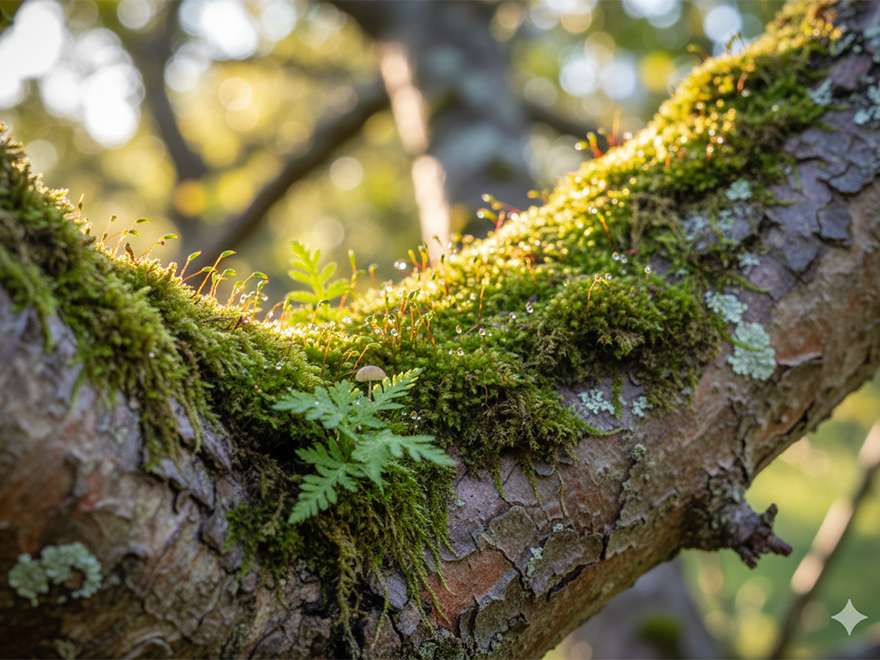
Best for: Apple and pear trees. These are the #1 targets for scab (Venturia inaequalis), which overwinters in bark crevices and fallen leaf debris. A dormant liquid glass spray kills the overwintering conidia on the bark surface. Pair with fall leaf cleanup for full scab prevention.
Best for: Cherry and plum trees. Monilia (brown rot) and bacterial canker overwinter in bark. The silicate barrier seals infection sites and suffocates the pathogens. Also helps with gummosis — the silicate film covers weeping wounds.
Best for: Peach and apricot trees. These thin-barked trees are the most vulnerable to winter damage and peach leaf curl (Taphrina deformans). The silicate film protects the bark from moisture loss in winter and kills overwintering curl spores. Apply in fall after leaf drop and again at green cone in spring.
Best for: Currant and gooseberry bushes. Powdery mildew and American gooseberry mildew overwinter in the buds. A dormant spray at bud swell kills surface spores. For gooseberry, liquid glass is safer than lime-sulfur (gooseberries are extremely sensitive to sulfur).
Strong results: Any fruit tree or berry with lichen-covered bark. Lichen is not technically harmful to healthy trees, but heavy lichen coverage traps moisture against the bark and harbors insects. Liquid glass cleans it off without damaging the tree.
Not suited for: Vegetable gardens. This is a fruit tree and berry treatment only. The concentration used for dormant spraying would burn vegetable foliage. (For silicon supplementation on vegetables, see the horsetail decoction recipe instead.)
Not suited for: Trees younger than 2 years. Very young trees have thin, tender bark that can be damaged by the alkaline silicate at dormant spray concentration. Wait until the bark has hardened.
Why it works
Liquid glass is a solution of sodium silicate (Na₂SiO₃) or potassium silicate (K₂SiO₃) in water. When you spray it on bark and it dries, two things happen.
First, the water evaporates and the silicate polymerizes — it forms a thin, glassy film on the bark surface. This film is a physical barrier. Fungal spores trapped under it cannot access oxygen or moisture, and they die. New spores landing on the surface cannot penetrate the film to reach the bark tissue underneath. The film persists for several weeks and resists rain wash-off.
Second, the solution is strongly alkaline (pH 11 to 13). Most fungal pathogens and their spores cannot survive in that pH range. Lichen and moss, which are sensitive to alkaline conditions, begin dying on contact. Within 14 days, heavy lichen patches blacken, lose their grip on the bark, and peel away.
The advantage over copper sprays is soil health. Copper is a heavy metal. It accumulates in topsoil with every application and never breaks down. Over years of annual copper spraying, copper levels can become toxic to soil biology, earthworms, and even the tree's own roots. Sodium silicate breaks down into silica (sand) and sodium — both naturally present in soil and non-toxic at these doses. There is no accumulation.
The cleaning bonus: liquid glass dissolves mineral scale inside your sprayer. If you have hard water buildup in nozzles and lines, running a batch of liquid glass through the system cleans it out.
What NOT to do
NEVER spray on active foliage. This is a dormant spray — apply only when the tree has no leaves, or at the green cone stage before leaf tissue is visible. Liquid glass at this concentration (100 to 250 ml per 10L) causes severe chemical burn on green tissue. This is the single most important rule.
Do not spray if rain is expected within 4 hours. The silicate needs time to dry and bond to the bark. Rain washes it off before the film forms.
Do not combine with copper or sulfur sprays in the same tank. Liquid glass is alkaline. Copper sulfate and lime-sulfur are acidic. Mixing them neutralizes both and can create insoluble precipitates that clog your sprayer. If you want to use copper and liquid glass, apply them on separate days with at least a week between.
Do not use on trees younger than 2 years. Very young bark is thin and can be damaged by the alkaline silicate film. Wait until the tree has developed mature bark.
Do not leave mixed solution sitting. Liquid glass begins to gel after a few hours in the tank. Mix and spray the same day. If the solution gels, it will clog your sprayer nozzle.
Do not confuse liquid glass with silicone sealant or silicone spray. Liquid glass is sodium or potassium silicate — an inorganic mineral product. Silicone is a synthetic polymer. They are completely different products. You need liquid glass, which is clear and water-thin.
FAQ
Where do I find liquid glass?
Hardware stores, in the adhesives or masonry section. It is sold as "sodium silicate," "potassium silicate," or "liquid glass." Some craft stores also carry it (it is used for fireproofing and egg preservation). A quart costs $5 to $8. Make sure the product is pure sodium or potassium silicate in water — no additives, dyes, or fragrances.
Can I use liquid glass during the growing season?
Not at dormant spray concentration (1/2 to 1 cup per 10L). That dose burns leaves. For growing-season silicon supplementation, use 1 tablespoon per 2.5 gallons (10L) — a much lower concentration. At that dose, liquid glass acts as a foliar silicon source that strengthens cell walls and improves heat tolerance. Or use horsetail decoction for a gentler silicon source on vegetables.
How is this different from lime-sulfur dormant spray?
Both are dormant sprays that kill overwintering spores. Lime-sulfur works through sulfur and hydrogen sulfide gas — it is more aggressive and has a strong smell. Liquid glass works through physical coating and alkaline pH — it is odorless and gentler on young bark. Lime-sulfur cannot be used on gooseberries (sulfur toxicity). Liquid glass is safe on gooseberries. Lime-sulfur breaks down faster and does not remove lichen. Liquid glass persists longer and peels off lichen.
Will liquid glass hurt beneficial insects?
The dormant spray timing minimizes contact with beneficial insects because they are mostly inactive during dormancy. The silicate film on bark is not toxic to insects that land on it later — it is a physical barrier, not a poison. Bees are not at risk because the spray is applied before flowers appear.
How often do I need to spray?
Once per season for most trees — a single spring dormant spray. For trees with severe fungal problems or heavy lichen, add a fall spray after leaf drop (two total per year). The silicate film persists for several weeks but does not last through the entire growing season.
Is there a gardening app that reminds me when to do dormant sprays?
Yes. The easyDacha garden planner app tracks growth stages and sends task reminders for protection treatments at the right time. Download at easydacha.com/download.
One spray before the buds open
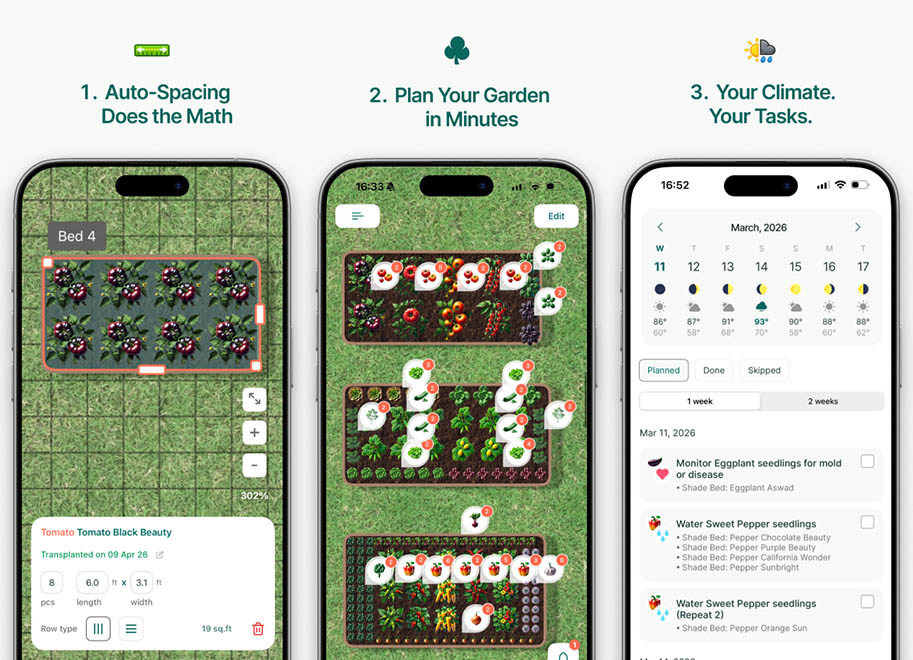
Liquid glass from the hardware store. Half a cup in a bucket of water. Spray the tree before it wakes up. That glass-thin film kills what overwintered on the bark, peels off the lichen, and keeps copper out of your soil.
The easyDacha gardening app tracks dormant spray timing by growth stage so you spray at the right window, not when it is too late.
Try easyDacha app →. The garden planner app that plans your season. Cancel anytime.
Related reading on easydacha.com
- How to Make Horsetail Decoction for Natural Silicon (Stronger Cell Walls) — for growing-season silicon on vegetables. Liquid glass is the dormant spray; horsetail is the growing-season alternative.
- How to Make Bordeaux Mixture at Home (Copper Fungicide Recipe) — the copper dormant spray that liquid glass replaces. If you still want copper, here is the recipe — but consider alternating years to reduce copper buildup.
- How to Identify Plant Diseases: Early Signs and What to Do — identify which disease you are dealing with before choosing a dormant spray strategy.
- How to Use Iodine-Milk Spray Against Late Blight (Tomato and Potato Recipe) — another disease prevention spray, but for growing-season use on vegetables.
- How to Culture Clonostachys rosea at Home (Late Blight Fighter) — biological disease prevention for the growing season. Liquid glass cleans the slate in dormancy; biologicals protect during growth.
- How to Use Peppermint Oil Spray Against Phytophthora and Garden Pests — another copper-free disease prevention option for the growing season.