
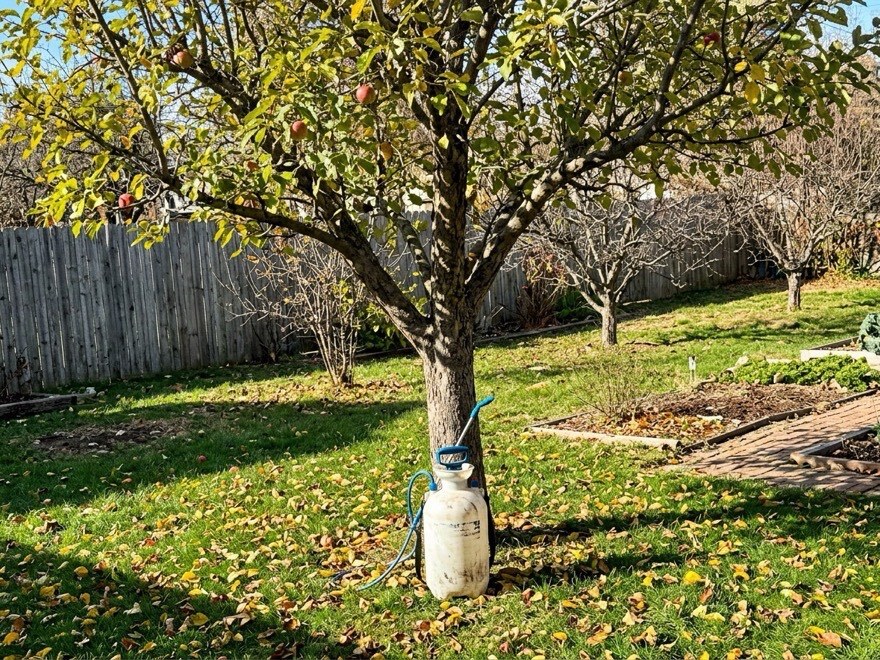
The apples are picked and the leaves are dropping, but the disease is not done. Scab, brown rot, and leaf spot spores overwinter on twigs, bark, and fallen leaves. They wait for the first warm, wet spring days. A copper sulfate fungicide sprayed now cuts down that spore load. This recipe adds ammonia to the copper sulfate, so it dissolves into a clear blue liquid with no lime and no sludge. It is a close cousin of our Bordeaux mixture recipe, mixed in a different way.
TL;DR: For a fall copper sulfate fungicide, dissolve 5.3 oz (150 g) of copper sulfate in warm water. Stir in 17 fl oz (500 ml) of 10% ammonia. Fill to 2.6 gallons (10 L).
The recipe: copper sulfate and ammonia fungicide
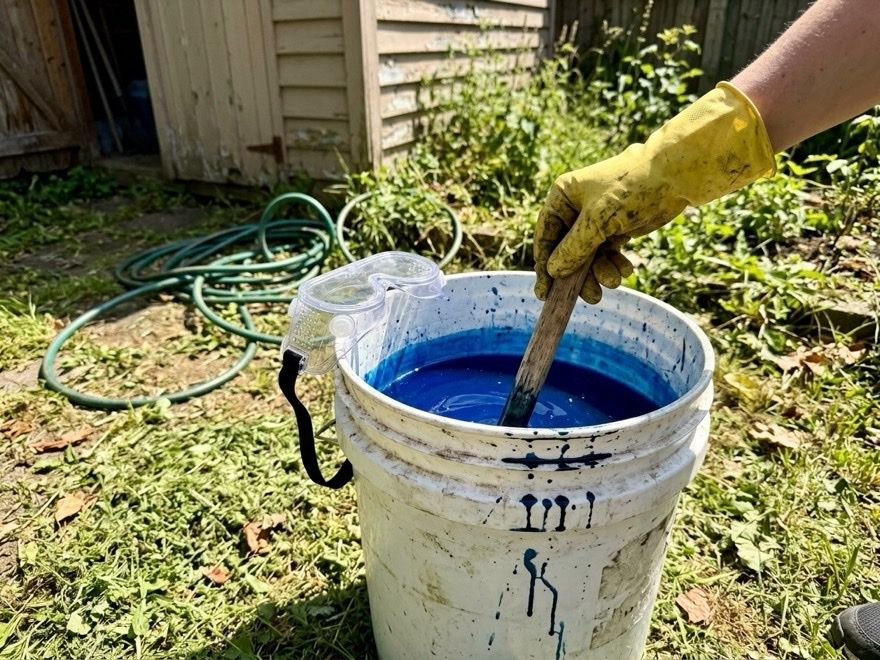
This makes one batch for a small home orchard: 2.6 gallons (10 L) of ready spray.
For 2.6 gallons (10 L) of water:
- 5.3 oz (150 g) copper sulfate. Pure blue crystals or fine powder from a farm, garden, or chemical supplier. Read the label: you want copper sulfate and nothing else in the bag.
- 17 fl oz (500 ml) ammonia solution, 10 percent. Buy 10% "clear ammonia" at a hardware store. Plain ammonia water only: no scent, no soap, no detergent, no cleaning additives. Ordinary household ammonia from the supermarket is weaker, usually 3 to 5 percent. The mix will not dissolve with it by this recipe, so do not use it.
- 2 to 3 quarts (2 to 3 L) of warm water for dissolving the crystals. Copper sulfate dissolves poorly in cold water.
Small batch for 1 gallon (3.8 L): use 2 oz (57 g) copper sulfate and 6.4 fl oz (190 ml) of 10% ammonia. Dissolve the crystals in about 1 quart (1 L) of warm water.
Mix it:
- In a plastic bucket, dissolve the copper sulfate in the warm water. Stir until no crystals remain.
- Pour in the ammonia slowly while you stir. The liquid turns cloudy first. Keep stirring and it clears into a deep, inky blue. That color means the copper complex has formed.
- Add water to reach the full volume, 2.6 gallons (10 L) or 1 gallon (3.8 L).
Shelf life: none. Mix it the same day and spray it all. Do not store it.
Legal status of this recipe
This recipe is traditional. It comes from gardeners' practice. A ready-made copper ammonia fungicide is registered in the US as an active ingredient, and a homemade mix has no label. Check the rules in your state before you mix it. If you use the homemade spray, you do so at your own risk.
Ready-made option
If you would rather not mix it yourself, look for a registered copper ammonia fungicide for fruit trees. Follow the label exactly. Labels name fall use after harvest, before the fall rains, and for apples against scab.
How to apply
Spray after leaf drop starts and before hard frost. Soak the branches, the trunk, and the soil in a circle under the canopy. The spores sit in bark cracks and on the ground, so coverage matters more than speed.
Pick a dry, calm day when the temperature stays above freezing. Use a plastic pump sprayer and rinse it well afterward. Spray the whole tree, including the inner branches and the base of the trunk.
You can repeat the same spray in early spring, up to the green tip stage. Green tip is the moment the buds open just enough to show a small tip of green. After that, stop. Ready-made products list their own timing on the label, so follow it. In spring that is usually up to late bud swell, and for plums up to pink bud. For what to spray next, see our guide to spraying fruit trees at pink bud.
Plan one fall spray and one early spring spray. Do not add extra rounds, because copper builds up in the soil.
Why this works
Copper stops fungal spores from germinating. That is why it has been a standard fruit tree fungicide for generations.
Ammonia changes the form of the copper. In the mix, copper and ammonia bind into a complex that stays dissolved in water. A dissolved form spreads evenly over bark and bud scales, where spores hide.
The spray targets the diseases that overwinter on the tree:
- Apple scab on apples and pears.
- Brown rot on peaches, plums, and cherries.
- Cherry leaf spot on cherries.
Copper lowers disease pressure. It does not make a tree immune. Pair it with cleanup, which we cover below.
Is this spray safe to handle?
Yes, when you follow the rules. Copper sulfate and ammonia are both harsh on skin, eyes, and lungs, so protect yourself first. Copper also harms fish and pond life, and it is toxic to bees on open flowers.
Follow these rules every time:
- Wear chemical-resistant gloves, safety goggles, and long sleeves. Add a mask that covers nose and mouth when you pour the ammonia.
- Mix outdoors or in a well-ventilated space. Ammonia fumes are strong, and you should not breathe them.
- Use plastic or enamel containers only. Do not use metal buckets, cans, or sprayers. Copper sulfate corrodes metal.
- Never mix it with bleach or other cleaners. Ammonia and bleach release a toxic gas.
- Keep it away from ponds, streams, storm drains, kids, and pets.
- Spray only on dormant trees. Do not spray during the growing season or on trees in flower.
Wash your hands and any exposed skin after you finish. Wash your clothes separately.
What NOT to do
Do not use a metal container. The copper sulfate eats into the metal, and the mix loses strength.
Do not spray green leaves or open blossoms. Copper burns fresh growth and can hurt visiting bees.
Do not store leftover spray. Mix only what you can use that day.
Do not double the dose. More copper does not mean more protection. It means more stress on the tree and more copper in your soil.
Best for which plants
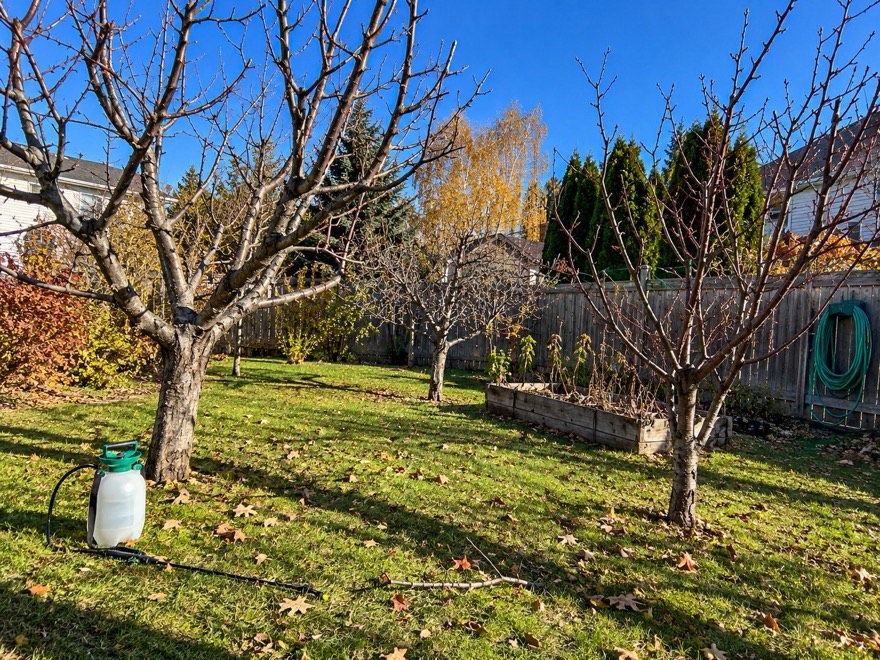
- Apples and pears: the main target. Fall and early spring sprays help with scab.
- Peaches, plums, apricots, and cherries: good for brown rot and cherry leaf spot.
- Fruit and ornamental shrubs: spray the same way once the leaves are down.
- Evergreens and anything with green leaves: skip it. This is a dormant season spray.
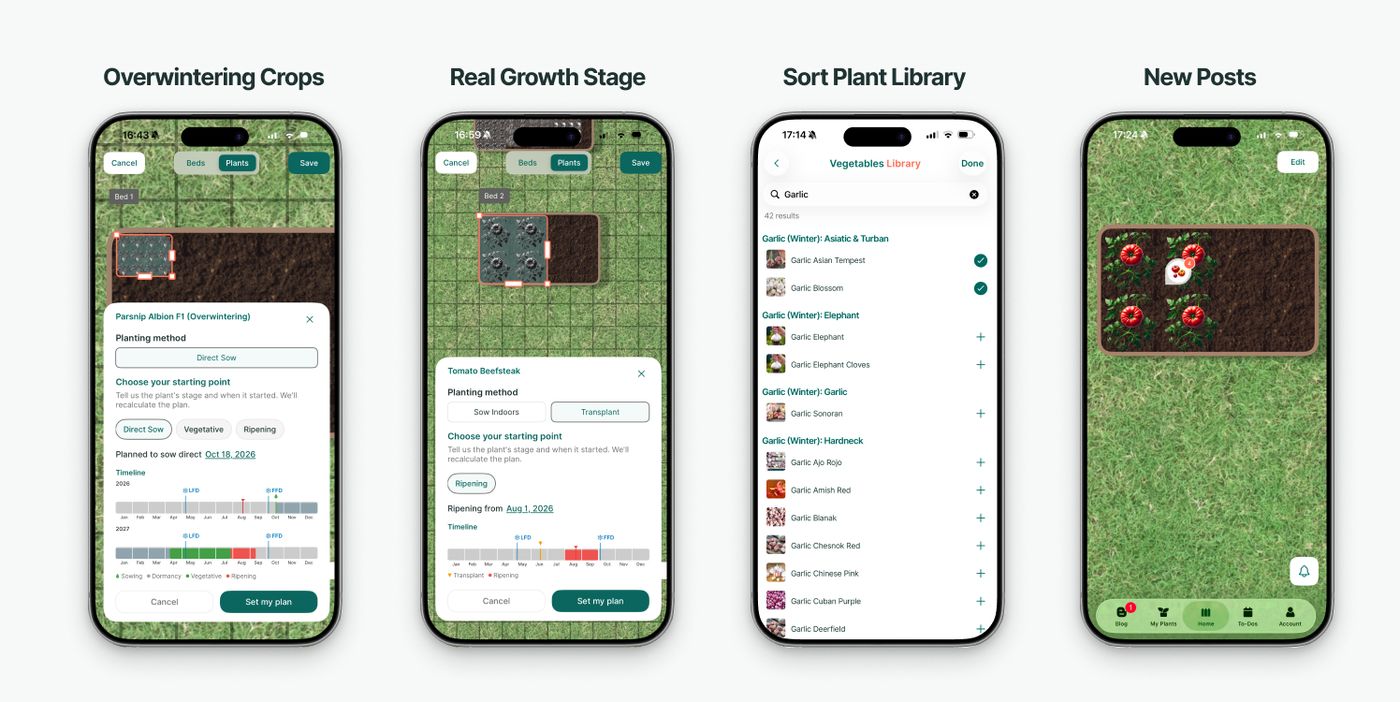
Fall spraying is easy to forget in the rush of cleanup. In easyDacha, you can add your apple, pear, or cherry tree as a custom plant. Each custom plant gets its own care plan and task list. The app shows your tasks for the next two weeks, set for your ZIP code. The fall protection job shows up when you need it. Try easyDacha →
When disease keeps coming back
If scab or brown rot returns every spring, check three things. First, rake up fallen leaves and mummified fruit and bag them, because that is where the spores live. Second, prune for airflow so leaves dry fast after rain. Third, look at your spring timing. Our liquid glass dormant spray guide and the bleach and MKP post-dormant sanitizer cover other sprays you can use in the dormant window. While you are cleaning up, you can also plan what to sow next with our list of vegetables to plant for winter.
Put the Fall Spray on Your Calendar
Spraying is simple. Remembering the right week is the hard part. easyDacha is a garden planner app built around your ZIP code. It keeps your tasks for the next two weeks in one place, so fall protection does not slip.
FAQ
What is a copper sulfate fungicide?
A copper sulfate fungicide is a spray made from copper sulfate crystals dissolved in water. Copper stops fungal spores from growing, so the spray protects trees from diseases like scab and brown rot.
How do I make copper sulfate and ammonia fungicide?
Dissolve 5.3 oz (150 g) of copper sulfate in 2 to 3 quarts of warm water. Slowly stir in 17 fl oz (500 ml) of 10% clear ammonia from a hardware store. Stir until the liquid turns clear blue. Add water to reach 2.6 gallons (10 L). Supermarket ammonia is too weak for this recipe.
When should I spray fruit trees in fall?
Start when the leaves begin to drop and finish before hard frost. Spray on a dry, calm day above freezing. A second spray in early spring, before the green tip stage ends, completes the plan.
What diseases does a fall copper spray prevent?
It lowers the spore load of apple scab, brown rot, and cherry leaf spot. These diseases overwinter on bark, twigs, and fallen leaves.
Can I spray copper sulfate fungicide on trees in bloom or in summer?
No. Use it only on dormant trees in fall and early spring. Copper can burn green leaves and blossoms, and it can hurt bees.
Is there an app that reminds me about fall orchard jobs?
Yes. easyDacha is a gardening app that builds a care plan for each plant, including custom plants like fruit trees. It shows your next two weeks of tasks for your ZIP code.