
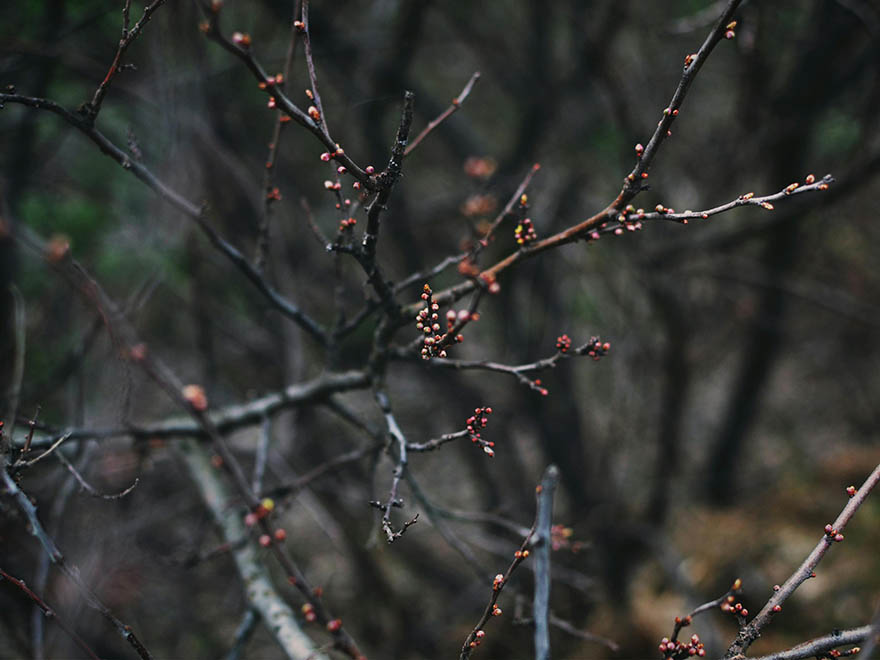
You missed the dormant spray window. The buds are swelling. Green tips are showing. And you know what overwintered in those bark crevices — scab spores on the apple tree, monilia on the cherry, leaf curl on the peach. The standard dormant sprays (copper, lime-sulfur, liquid glass) are too harsh now — they would burn the emerging tissue. But the disease spores are still sitting there, waiting for the first warm rain to infect.
This recipe fills that gap. Household bleach (sodium hypochlorite) kills the overwintering spores on contact. Monopotassium phosphate (MKP) delivers a phosphorus-potassium boost that strengthens root growth and bud development in early spring. One spray, applied at green cone to just before leaf emergence, sanitizes the tree and feeds it at the same time.
TL;DR: Mix 3.5 oz (100 g) of monopotassium phosphate into 2.5 gallons (10 liters) of water until dissolved. Then add 1 quart (1 liter) of household bleach. Spray all branches and emerging buds until dripping wet. Single application per season, at green cone stage only. Do not spray after leaves open — bleach kills chlorophyll on contact.
The recipe
You need
- Household bleach (sodium hypochlorite, 5-6%): 1 quart (1 liter) per 2.5 gallons (10 liters). Regular unscented bleach from the grocery store — not "splashless," not gel, not scented. A gallon costs $3 to $4.
- Monopotassium phosphate (MKP, KH₂PO₄): 3.5 oz (100 grams) per 2.5 gallons (10 liters). Sold online at garden supply stores as "monopotassium phosphate" or "MKP 0-52-34." A 1 lb bag costs $10 to $15 and lasts several seasons.
- Water: 2.5 gallons (10 liters)
- A pump sprayer (not a small trigger bottle — you need coverage on full-sized trees)
Do it
- Pour 2.5 gallons (10 liters) of water into a pump sprayer or bucket.
- Add 3.5 oz (100 g) of monopotassium phosphate. Stir until fully dissolved. MKP goes in first — it dissolves cleanly in water.
- Add 1 quart (1 liter) of household bleach. Stir gently.
- Spray immediately. Use within 1 hour — bleach loses potency in sunlight and open air.
How to use it
Spray method:
Spray all branches, trunk, and crotch joints — every surface where bark crevices can harbor overwintering spores. Spray the emerging buds thoroughly. The goal is full coverage: wet the tree until the solution drips off. A pump sprayer with an adjustable nozzle set to a wide cone pattern works best. For tall trees, use an extension wand.
The timing window:
This spray works in one narrow window: green cone to just before leaf emergence. That means the buds have swollen and cracked open, showing green tissue at the tips, but true leaves have not unfolded yet. In most US zones, this window lasts 5 to 10 days in early spring (late March through mid-April, depending on your region and the specific tree).
If you are earlier than green cone — the tree is still fully dormant — use liquid glass or copper instead. They are stronger dormant sprays.
If you are later than green cone — leaves are already opening — do not spray. Bleach kills chlorophyll on contact and will burn any open leaf tissue.
Single application: One spray per season. This is not a repeat treatment. The bleach sanitizes the bark surface and kills exposed spores. The MKP feeds the roots through the bark (phosphorus and potassium absorb through dormant bark tissue in small amounts) and through the soil when the spray drips down.
Weather: Spray on a dry day when no rain is expected for 24 hours. Temperature should be above 40°F (4°C). Do not spray in freezing conditions — the solution will not dry properly and can damage bark.
Which trees and shrubs benefit most
Best for: Apple, pear, cherry, plum, peach, and apricot trees — any fruit tree where you missed the dormant spray window and overwintering disease is a known problem. On apple and pear, it kills scab (Venturia inaequalis) and monilia spores in bark crevices. On cherry and plum — brown rot (Monilia) and bacterial canker. On peach and apricot — peach leaf curl (Taphrina deformans) spores that survived winter. This spray fills the gap between the dormant window (when liquid glass or copper is used) and first leaf (when it is too late for any bark sanitizer).
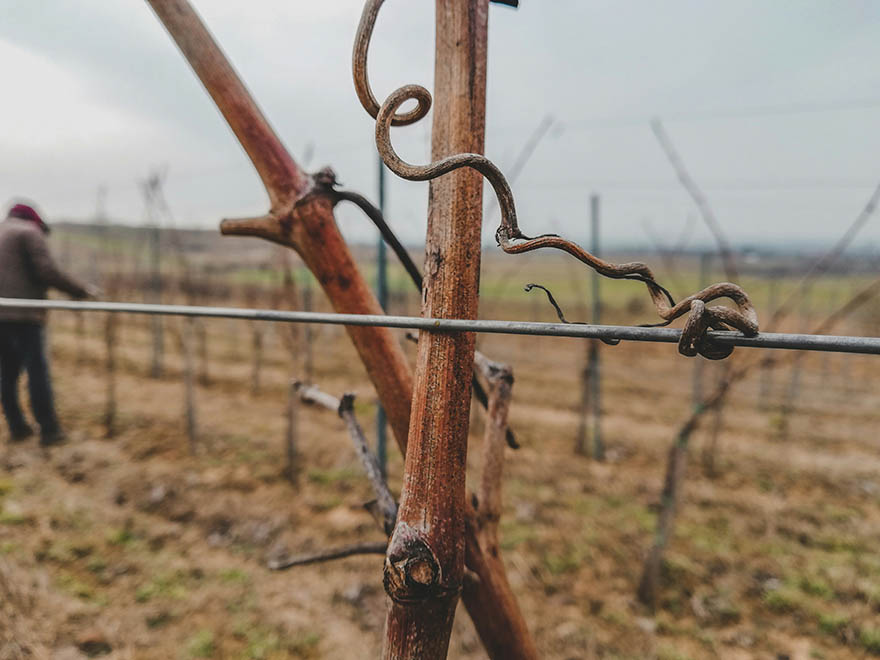
Good results: Grape vines at bud swell. Spring disease pressure on grapes (downy mildew, black rot) begins with overwintering spores on the canes. The bleach sanitizes the cane surface. The MKP phosphorus-potassium boost supports early root growth after winter dormancy.
Not suited for: Vegetable gardens — this is a fruit tree and berry treatment only. Berry bushes with very thin bark (young raspberry canes). Trees younger than 2 years — tender bark can be damaged. Any tree or shrub with leaves already open — bleach kills chlorophyll instantly.
Why it works
This spray does two jobs with two ingredients that do not interfere with each other.
Bleach (sodium hypochlorite) is a broad-spectrum oxidizer. It kills fungal spores, bacteria, and viral particles on contact by destroying their cell membranes. When it hits bark, it penetrates the surface crevices where overwintering spores of scab, monilia, leaf curl, and canker hide. The killing is fast — within minutes — but there is no residual protection. Once the bleach dries and breaks down (sodium hypochlorite degrades to salt and water in sunlight), the surface is clean but unprotected. That is why timing matters: you spray when the spores are still sitting on the bark, before the first warm rain washes them into the opening buds and triggers infection.
Monopotassium phosphate (MKP) is a fully soluble fertilizer with an NPK ratio of 0-52-34. It provides phosphorus (which drives root development and energy transfer) and potassium (which strengthens cell walls and regulates water balance). In early spring, fruit trees are pushing root growth before they push leaves. A phosphorus-potassium boost at green cone supports that root flush. The MKP also slightly acidifies the spray solution, which helps the bleach stay active longer in the tank.
The combination works because bleach is alkaline and MKP is slightly acidic — they partially buffer each other, keeping the solution in a range that is effective for sanitation but less damaging to emerging bud tissue than full-strength bleach alone. This is why this spray is gentler than a pure bleach or pure copper spray at the same growth stage.
What NOT to do
Do not spray after leaves have opened. This is the single most important rule. Bleach destroys chlorophyll on contact. If you see flat, unfolded leaves — you are too late. The spray window is green cone to just before leaf emergence, nothing after.
Do not mix bleach with any acid. Vinegar, citric acid, sulfur-based products — none of them. Bleach plus acid produces chlorine gas, which is extremely dangerous. The MKP in this recipe is a weak acid and is safe at the specified dose, but do not add any other acidic ingredient.
Do not exceed the bleach dose. One quart (1 liter) per 2.5 gallons (10 liters). Higher concentrations damage bark and can kill emerging buds.
Do not combine with biological products. Bleach kills everything — including beneficial microbes like Trichoderma, Bacillus subtilis, and mycorrhizae. If you use biological fungicides, wait at least 2 weeks after bleach application before applying them.
Do not use on trees younger than 2 years. Young bark is thin and porous. The bleach concentration that sanitizes mature bark can damage young bark tissue.
Do not store the mixed solution. Bleach degrades in sunlight and open air. Mix, spray, and discard any leftover within 1 hour.
Do not use "splashless" or scented bleach. These contain additives (thickeners, fragrances) that leave residue on bark and can interfere with bud development. Use regular, unscented household bleach only.
FAQ
What if I missed the green cone window too?
If leaves are already opening, do not spray. Switch to copper-based fungicides (like Bordeaux mixture) which are labeled for use on green tissue at reduced rates. Or apply biological fungicides — Bacillus subtilis or Trichoderma — which can be used on active foliage.
How is this different from the liquid glass dormant spray?
Liquid glass (sodium silicate) is a true dormant spray — it creates a physical silicate barrier that suffocates pathogens and protects bark through winter. It is applied in fall after leaf drop and/or at dormant bud stage before any swelling. The bleach + MKP spray is a post-dormant option for when you missed that window. It is gentler on emerging tissue but has no residual protection. Think of liquid glass as the winter coat and bleach + MKP as the spring cleanup.
Can I use this on berry bushes?
Yes, on currant and gooseberry at bud swell — the same timing window as fruit trees. Avoid young raspberry and blackberry canes (first-year growth) — their bark is too thin. Established blueberry bushes can tolerate it at green cone, but blueberries rarely need bark sanitation.
What concentration of bleach should I use?
Regular household bleach is 5-6% sodium hypochlorite. That is the assumed concentration for this recipe. If you have a higher-concentration bleach (8-10%, sometimes sold as "outdoor" or "concentrated"), reduce the amount proportionally. For 8% bleach, use 3 cups (750 ml) instead of 1 quart (1 liter).
Is there a gardening app that reminds me when to spray?
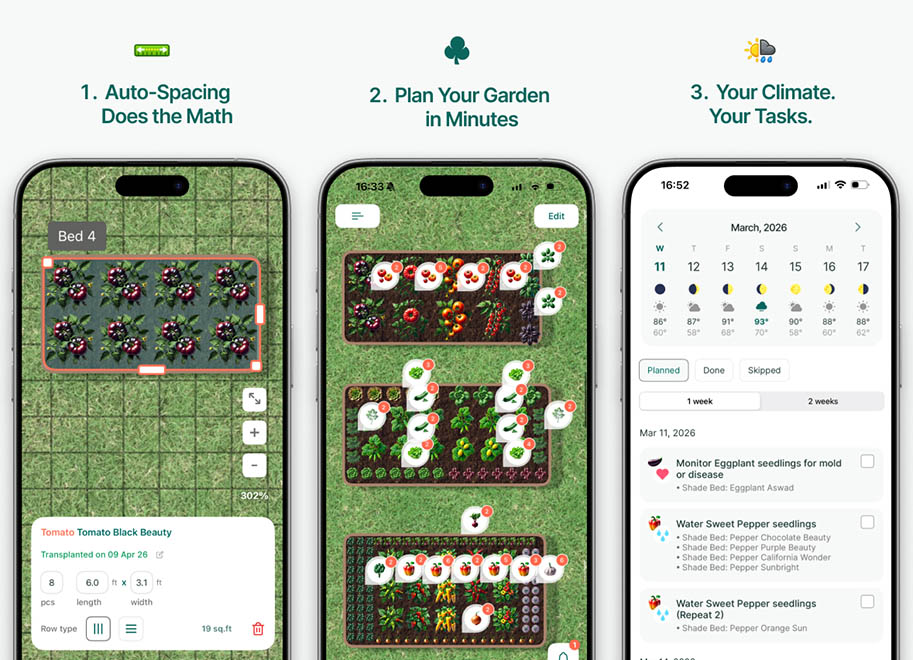
Yes. The easyDacha garden planner app tracks growth stages for fruit trees and sends task reminders at the right spray window. Download at easydacha.com/download.
One spray, two jobs
Household bleach from the grocery store. Monopotassium phosphate from the garden supply. Mixed in a bucket, sprayed at green cone. The bleach kills what overwintered in the bark. The MKP feeds phosphorus and potassium to the roots waking up below. One pass, one narrow window, and the tree starts the season clean.
The easyDacha gardening app tracks spray timing by growth stage so you hit the right window, not when it is too late.
Try easyDacha app →. The garden planner app that builds your full care schedule. Cancel anytime.
Related reading on easydacha.com
- How to Use Liquid Glass (Sodium Silicate) as a Dormant Spray for Fruit Trees — the true dormant spray. Use this if you still have time before buds swell. The bleach + MKP recipe is the follow-up for when liquid glass is too late.
- How to Make Bordeaux Mixture at Home (Copper Fungicide Recipe) — copper-based fungicide for active-season disease prevention. Use after the bleach + MKP window closes and leaves are open.
- How to Grow Trichoderma at Home (2 Easy Methods) — biological fungicide for ongoing disease suppression during the growing season. Apply 2 weeks after bleach to recolonize the bark with beneficials.
- How to Use Bacillus subtilis with Turmeric (100x Boost Recipe) — another biological option for after the bleach window. Effective against scab and monilia on active foliage.
- How to Identify Plant Diseases: Early Signs and What to Do — if you are not sure whether your tree has scab, monilia, or leaf curl, start here.
- How to Use Potassium Nitrate Foliar Spray to Double Potassium Uptake — for potassium feeding during fruiting season. The MKP in this recipe provides early-season potassium; potassium nitrate takes over once leaves are out.