
You planted your seedlings out and then nothing happened. No new leaves, no growth, just sulking plants after a cold night. Most yeast recipes you find online use sugar and fermentation, and that is a different remedy. Boiled yeast fertilizer hydrolysate has no sugar and no fermentation. You boil the yeast, cool it, and water it in the same day.
TL;DR: Boiled yeast fertilizer hydrolysate is 3.5 oz (100 g) of fresh yeast boiled in 1 quart (1 L) of water for 20 minutes, then diluted to 2.6 gallons (10 L). Use it after transplanting and during cold snaps. The aspirin version adds 6 aspirin tablets of 500 mg (or 9 regular 325 mg tablets) to the pot.
The recipe
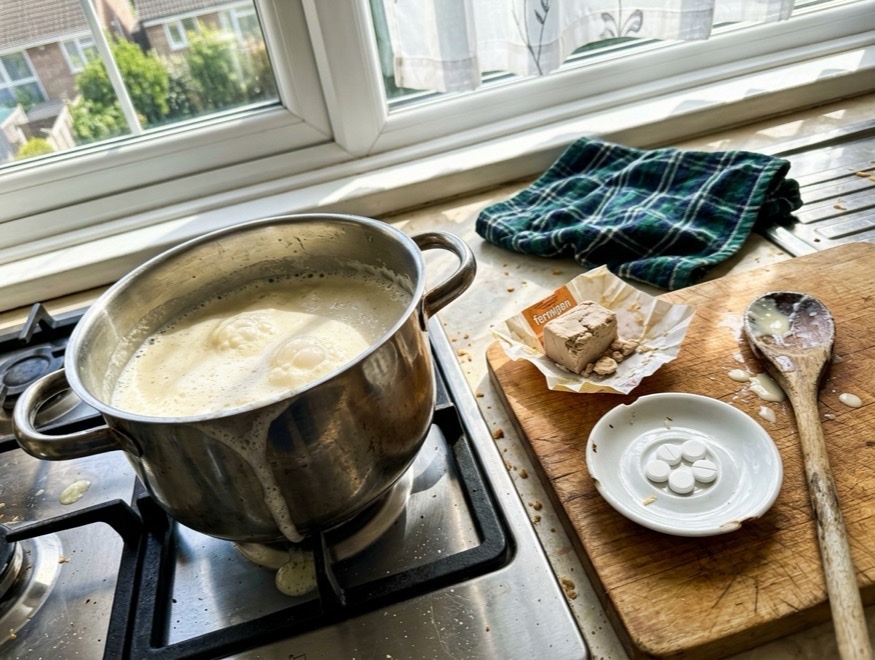
This makes one batch of about 2.6 gallons (10 L). Scale it down if you only have a few plants.
You need:
- 3.5 oz (100 g) fresh pressed yeast. Baking yeast from the grocery store works. Fresh yeast comes as a small cake in the refrigerated section.
- 1 quart (1 L) of water for boiling.
- Clean water to top up to a total of 2.6 gallons (10 L).
Mix it: Put the yeast and 1 quart (1 L) of water in a pot. Boil for 20 minutes. Cool completely. Pour into a bucket and add water until you reach 2.6 gallons (10 L).
Shelf life: There is none. Use the cooled solution the same day. Do not add sugar and do not let it ferment.
The aspirin version
Add 6 aspirin tablets of 500 mg (or 9 regular 325 mg tablets), plain and uncoated, to the pot with the yeast and water, then boil and dilute the same way. Skip coated and effervescent tablets. Boiling turns the aspirin into salicylic acid. It helps plants handle stress from transplanting and cold snaps and switches on their own defenses against fungal diseases such as late blight. The plain yeast recipe feeds the plant; the aspirin version also helps it protect itself.
How to apply
Water it at the root, spray it on the leaves, or do both.
Use it at two moments. First, after transplanting, when seedlings need to settle in. Second, during a cold snap, when growth stalls.
Apply in the evening or on a cloudy day so leaves do not dry too fast. Water the root zone, then spray the tops and undersides if you are doing a foliar round. Plants usually look perkier within several days, since the amino acids are available right away.
Do not use it on seeds. The remedy is for transplants and young vegetative plants only.
Why boiled yeast fertilizer hydrolysate works
Boiling kills the yeast and breaks the cells open. This process is called autolysis. The cells release amino acids, succinic acid, and B vitamins into the water.
That is why the effect is immediate. The plant gets ready-made building blocks instead of waiting for microbes to produce them.
Live yeast behaves differently. Unboiled yeast in soil competes for nutrients and can tie up nitrogen for a while. For the live version, see our yeast fertilizer for vegetables recipe. The two are different remedies for different jobs.
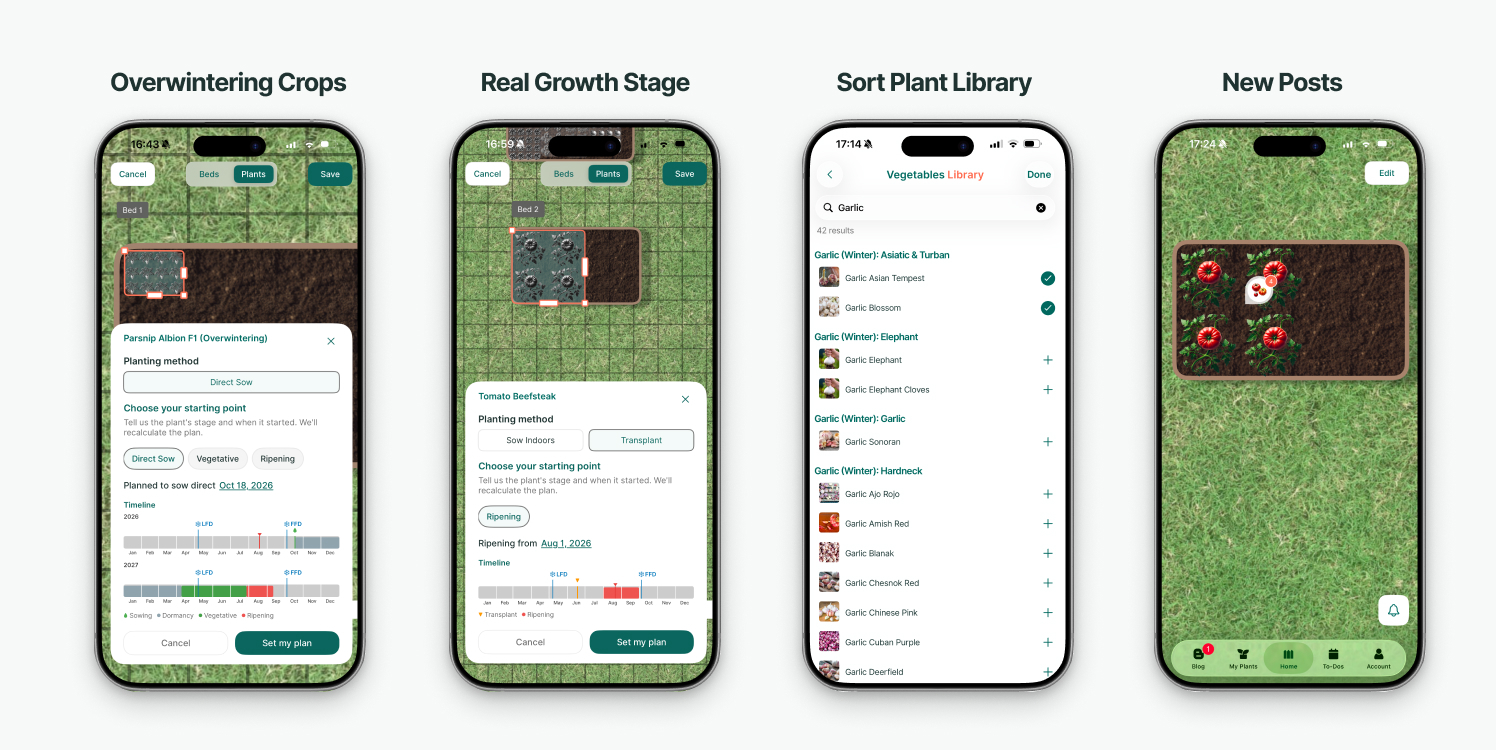
The recipe is simple. The hard part is remembering it on transplant day and again after the next cold night. easyDacha builds a care plan for every plant on your garden map, including feeding tasks for the transplant and vegetative stages. Enter your ZIP code and the app calculates transplant dates from local frost dates, then puts each task on your two-week list. Try easyDacha →
Is this safe for my plants and pollinators?
Yes. Boiled yeast is a food-grade product with no residue to wait out.
The solution has no waiting period before harvest. It does not target insects, so bees and other pollinators are not affected. Just follow a few rules:
- Use only the cooled solution, never hot.
- Mix a fresh batch each time.
- Water the root zone.
- Skip it on seeds and on plants already carrying fruit.
What NOT to do
Do not add sugar. Sugar feeds fermentation, and you are making a boiled hydrolysate, not a brew.
Do not store it. A leftover jar turns into an unplanned ferment. Mix only what you will use today.
Do not use live yeast instead. Unboiled yeast acts as a nutrient sink in the soil.
Do not pour hot liquid on plants. Cool it fully first.
Best for which plants
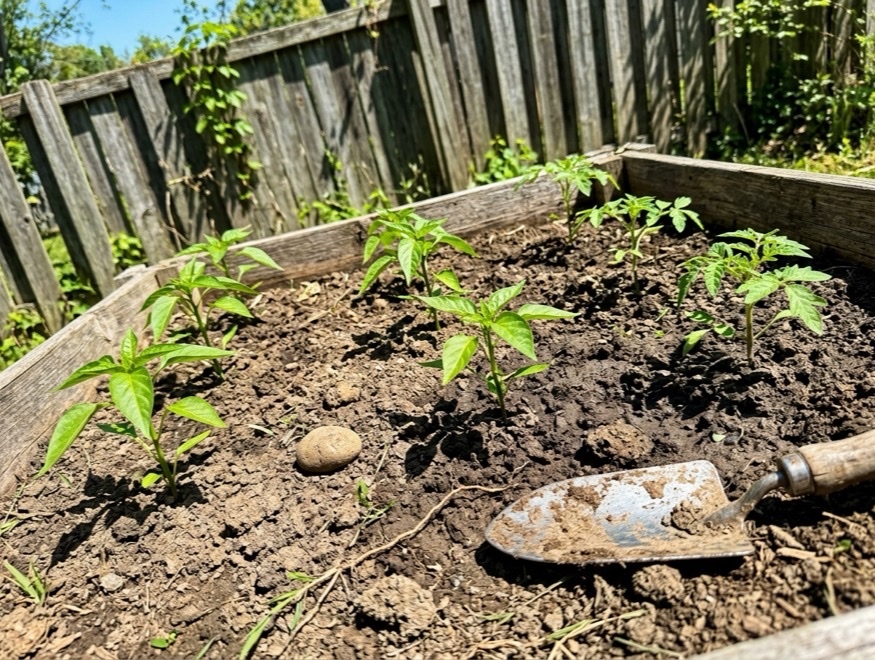
- Tomatoes, peppers, eggplant: feed after transplanting. Cold snaps hit these hardest. If you are also fighting transplant shock, pair the feed with good hardening off.
- Cucumbers, squash, melons: a root drench after planting out helps them settle.
- Brassicas and leafy greens: one feed after transplanting gives a gentle boost.
- Not for: seeds, plants with fruit already set, or anything in the middle of harvest.
The remedy suits all vegetables at the transplant and vegetative stages. A good overall routine is in our simple fertilizer plan for flowering vegetables.
When seedlings still will not grow
If a boiled yeast feed does not help, check three things. First, soil temperature, because cold roots cannot take up anything. Second, watering, since both soggy and dry soil stall seedlings. Third, root damage during planting. Read our guide on caring for transplanted seedlings for the first two weeks. Another gentle rescue option is the malt stimulant for weak seedlings.
Never Miss the Transplant Feed
A boiled yeast feed works only when it lands at the right moment, right after planting out. easyDacha, the garden planner app built around your beds and your ZIP code, puts transplanting and feeding on one schedule. Open the app and the next two weeks of tasks are ready.
FAQ
What is boiled yeast fertilizer hydrolysate?
It is yeast boiled in water so the cells break open and release amino acids, succinic acid, and B vitamins. Boiled yeast fertilizer hydrolysate is cooled, diluted, and watered in the same day. It contains no sugar.
How do I apply boiled yeast fertilizer?
Water the root zone, or spray the leaves. Use the whole batch the same day.
When should I use boiled yeast fertilizer?
Use it after transplanting and during cold snaps. These are the moments when plants slow down and need quick amino acids. Do not use it on seeds.
Is boiled yeast the same as live yeast fertilizer?
No. Live yeast with sugar ferments and works through soil biology. Boiled yeast is killed first, so nutrients are available immediately. They are two separate remedies.
Should I add aspirin to boiled yeast fertilizer?
That is the aspirin version. Add 6 aspirin tablets of 500 mg (or 9 regular 325 mg tablets), plain and uncoated, per 2.6-gallon (10 L) batch to the pot before boiling. Aspirin gives plants extra help with transplant and cold-snap stress and boosts their defenses against fungal diseases.
How much yeast do I need?
Use 3.5 oz (100 g) of fresh pressed yeast. Boil it for 20 minutes.
Is there an app that reminds me when to feed seedlings?
Yes. easyDacha is a gardening app that builds a care plan for each plant, with feeding tasks at the transplant and vegetative stages. Transplant dates come from your ZIP code, and tasks appear on your two-week list.