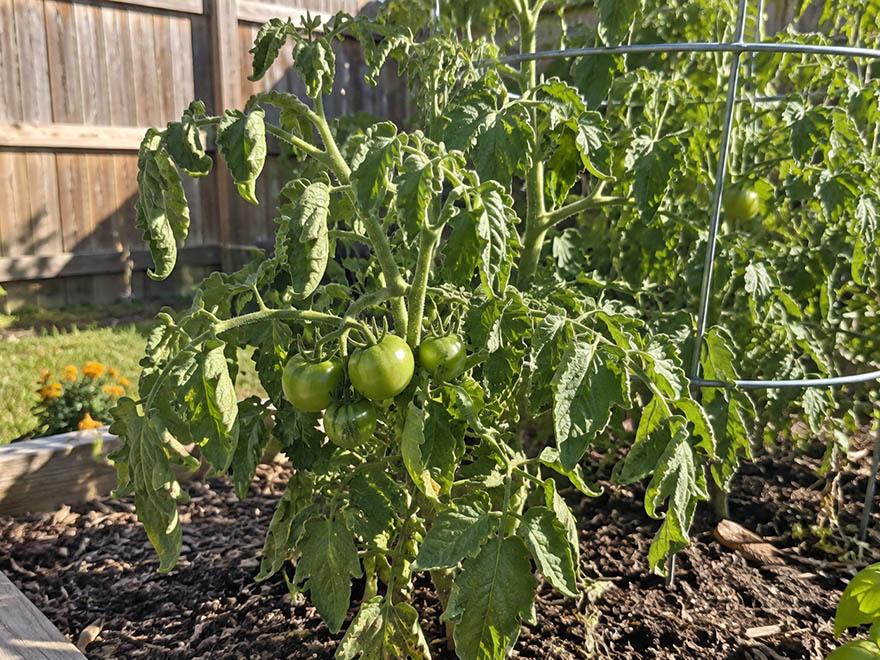
Your tomato plant looked fine this morning and now it is wilting in the afternoon sun. The leaves are curling, and you are not sure if it is dying or just hot. Most of the time it is heat, and the plant recovers by evening. This drooping tomato plant advice shows how to tell harmless heat stress from a real problem, so you fix the right thing.
TL;DR: The most useful drooping tomato plant advice is to check the plant in the cool of the morning. If it perks back up overnight, it is heat stress and harmless. If it stays wilted with yellowing or spots, suspect watering problems or disease.
Drooping tomato plant advice: run this check first
Look at your plant early in the morning, before the sun is high. This one habit answers most tomato questions.
- Wilts by afternoon, recovers by morning. This is normal heat stress. The plant is protecting itself. No action needed beyond steady watering.
- Stays wilted all day, soil is dry. The plant is thirsty. Water deeply at the base.
- Stays wilted all day, soil is wet. This points to overwatering or root problems, not thirst. Let it dry out and check drainage.
- Wilts with yellowing, spots, or brown streaks. This suggests disease. Look closer before you water more.
That morning check separates a scared new grower from a calm one. A tomato that bounces back overnight is doing exactly what it should.
Why are my tomato leaves curling?
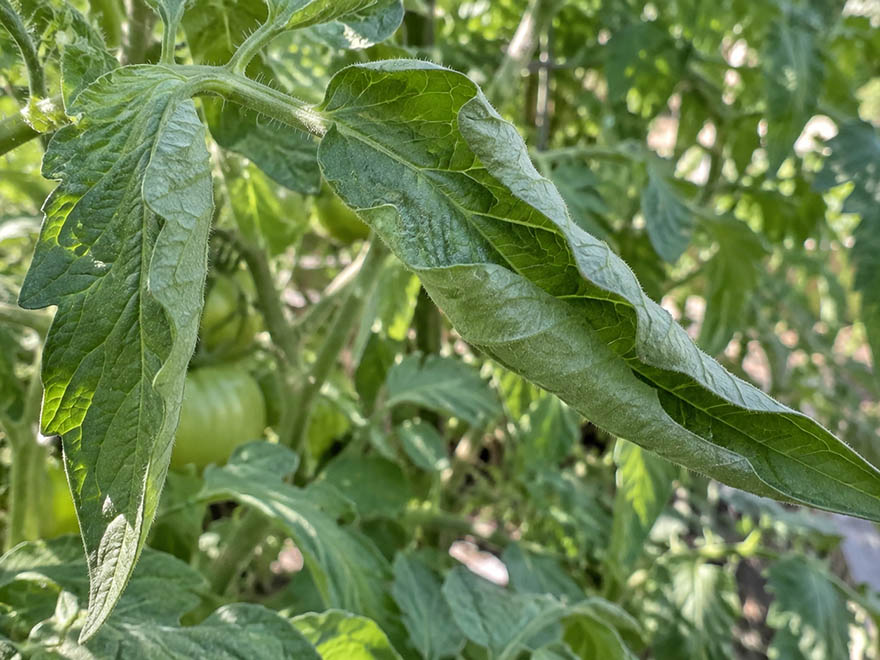
Curling leaves usually mean the plant is coping with stress, and most of the time it is harmless. Heat and dry air make tomato leaves roll inward and cup upward to save moisture. This is physiological leaf roll, and it does not hurt the harvest.
The rolling starts on the lower, older leaves and moves up. The leaflets fold lengthwise toward the middle vein. Extra water, heavy pruning, or root damage from hoeing too close can trigger the same response.
Heat stress leaf roll is not a disease and needs no spray. The plant keeps growing and fruiting through it. Our guide to protecting plants in a heat wave covers the shade and watering steps that ease it.
Tomato heat stress symptoms to expect
Heat stress shows up in predictable ways once daytime highs climb above 90°F (32°C). Knowing the signs stops you from overreacting.
- Afternoon wilting that recovers overnight.
- Leaves curling and cupping on the lower plant.
- Flowers dropping without setting fruit. Tomatoes shed blossoms around 90°F (32°C) as a heat response.
- Slow growth and pale new leaves during a long hot spell.
If flowers are falling instead of setting fruit, that is its own fixable issue. Our article on why tomato flowers fall off explains the causes and the fix.
In warm regions like USDA zone 9 and zone 10, including much of Florida and the Gulf Coast, tomatoes often slow down or stall through the hottest weeks. That stall is why tomatoes seem to grow slowly in Florida during summer. Growth picks back up as nights cool.
Tomato plant heat stress vs disease
Heat stress and disease look different once you know what to compare. Heat stress is even, temporary, and worst in the afternoon. Disease is uneven, spreading, and does not fix itself overnight.
Watch for these disease signs instead of heat:
- Yellowing that spreads from the bottom up, often on one side.
- Brown or black spots with rings or halos on the leaves.
- Wilting on only part of the plant, or a plant that never recovers.
- Dark streaks on the stem when you cut it.
If you see those, it is not heat. Our guide to identifying plant diseases early helps you match the symptom to the cause before you treat.
How to help a heat-stressed tomato
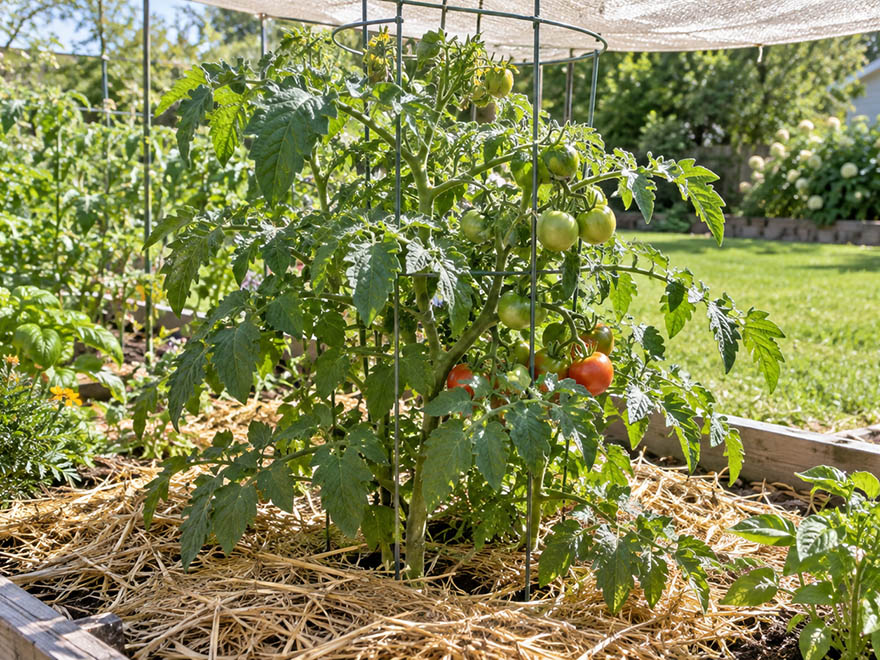
Water deeply and consistently at the base, not in light daily splashes. Deep watering every few days builds strong roots that ride out heat better than shallow watering does.
Mulch the soil with straw or shredded leaves to hold moisture and keep roots cooler. A 2 to 3 inch layer makes a real difference during a hot stretch.
Add afternoon shade during extreme heat. A shade cloth or even a patio umbrella over the plant from mid-afternoon eases the worst of it. Never prune heavily in a heat wave, since fewer leaves means more sun scald on the fruit. For a strong start that shrugs off stress later, our guide to growing tomatoes from seed sets the plant up well.
Best care for which situations
- Container tomatoes. Dry out fastest, so check the soil daily and water at the base.
- In-ground beds. Mulch heavily and water deeply every few days.
- Hot zones (USDA zone 9, zone 10). Expect a summer slowdown, then a fall rebound.
- Young transplants. Wilt easily at first, so shade them for a few days. Our tomato transplanting guide covers a smooth start.
easyDacha adapts your tomato plan to your climate
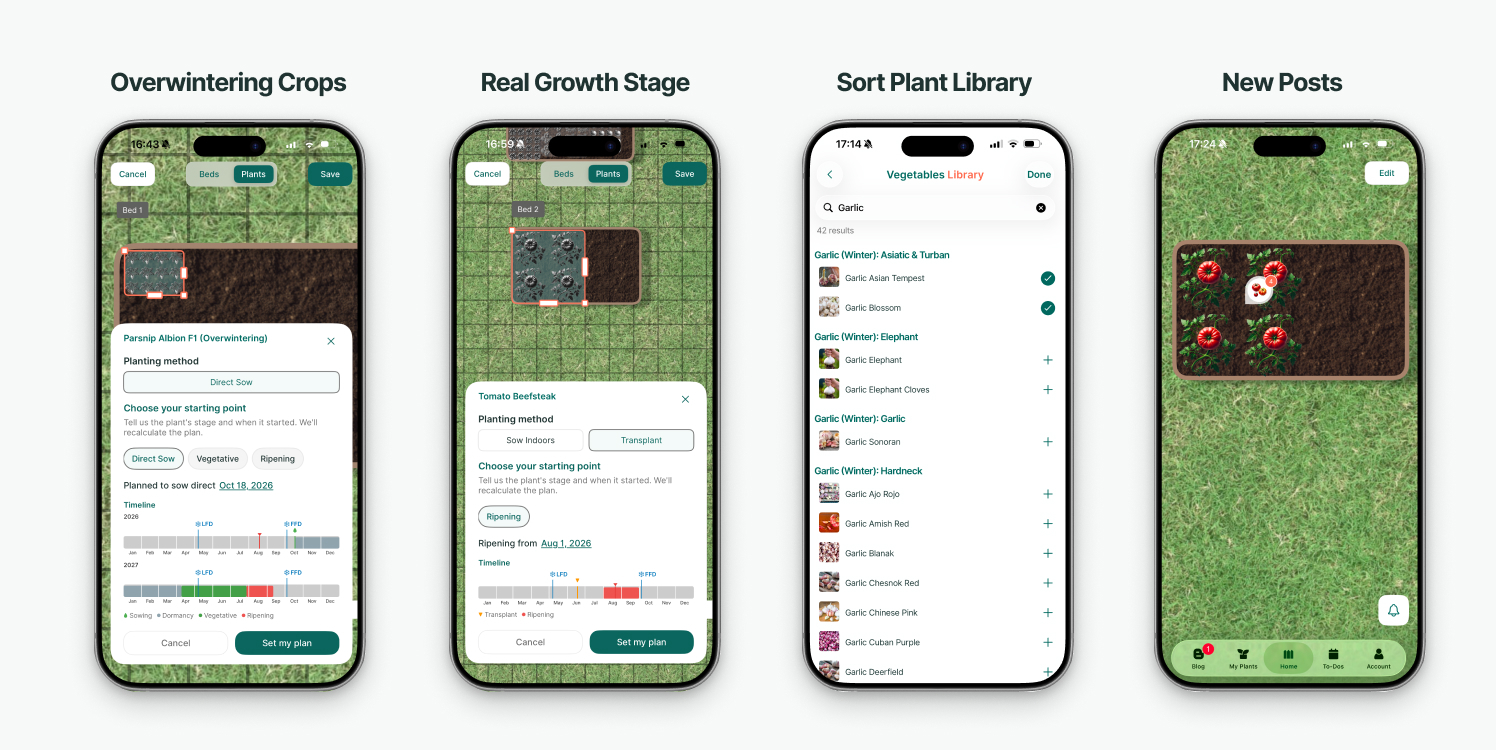
easyDacha works for all US growing zones, including hot zones like zone 9 and zone 10 across Florida and the Gulf Coast. The app calculates your planting dates from your ZIP code, so your tomatoes go in when your local conditions suit them, not on a generic national date.
Watering at the right depth and timing is the real fix for a garden planner app to handle. easyDacha builds a full care plan with watering, feeding, and protection tasks on a two-week list tied to your beds and your stage of growth. It reminds you before each job, so heat care happens before the plant suffers.
Try easyDacha, the vegetable garden app that plans around your climate. Cancel anytime.
FAQ
Why is my tomato plant drooping but the soil is wet?
If your tomato is drooping with wet soil, the problem is likely overwatering or poor drainage, not thirst. Roots need air, and soggy soil suffocates them. Let the soil dry out, improve drainage, and stop watering until the top 2 inches are dry.
Why are my tomato leaves curling upward?
Tomato leaves curl and cup upward mainly from heat and dry conditions, which is harmless physiological leaf roll. It starts on lower leaves and does not hurt the fruit. Extra water, heavy pruning, or root damage can cause the same curl.
At what temperature do tomatoes get heat stress?
Tomatoes show heat stress once daytime highs pass about 90°F (32°C). They wilt in the afternoon, roll their leaves, and drop blossoms without setting fruit. Growth resumes and flowers set again as temperatures cool.
How do I tell tomato heat stress from disease?
Heat stress is even and temporary, worst in the afternoon, and recovers overnight. Disease is uneven, spreads over days, and shows yellowing, spots, or stem streaks that do not fix themselves. If the plant bounces back by morning, it is heat.
Is there an app that helps with tomato care and watering?
Yes. easyDacha is a garden planner app that builds a tomato care plan from your ZIP code. It schedules watering, feeding, and heat protection tasks on a two-week list, so you act before the plant droops rather than after.