
Your tomatoes quit in the summer heat, and now the bed looks empty. Good news: winter is the best vegetable season in much of Florida. A small bed or a few pots can give you salad greens, carrots, and peas all season. This guide shows what to plant in a Florida winter vegetable garden in a small space, and how far apart to put each crop.
TL;DR: For a Florida winter vegetable garden in a small space, plant lettuce, kale, radish, carrots, beets, and bunching onions between October and February. Follow the UF/IFAS spacing and sow a little every few weeks.
Why winter works in Florida
Winter in South and Central Florida is cool, not cold. Cool-season crops grow well in these months. UF/IFAS Extension notes that Central Florida sees a frost or freeze now and then, while South Florida seldom does.
Most gardens in USDA zone 9, zone 10, and zone 11 can grow greens, roots, and peas from fall through winter. This is the opposite of the northern calendar. If you want the fall list for zone 9 and zone 10, see our what to plant in Florida in fall guide.
What to plant from October to February
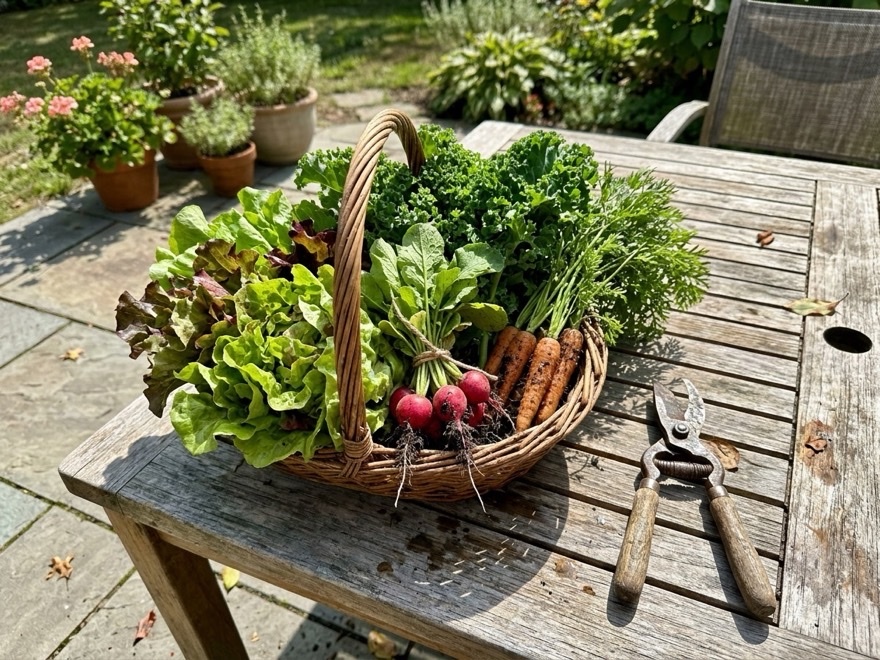
The UF/IFAS Florida Vegetable Gardening Guide lists planting months, spacing, and days to harvest. Here are the crops that fit a small bed in South and Central Florida.
Spacing is in inches (1 inch is 2.5 cm). Dates are the guide's planting months, so check your own area. A cold-snap year can shift them.
Warm crops also fit in South Florida in winter. The guide lists tomatoes from August to February, and cucumbers from September to February. They need more room, so give them a pot or a trellis.
A simple 4 by 4 foot layout
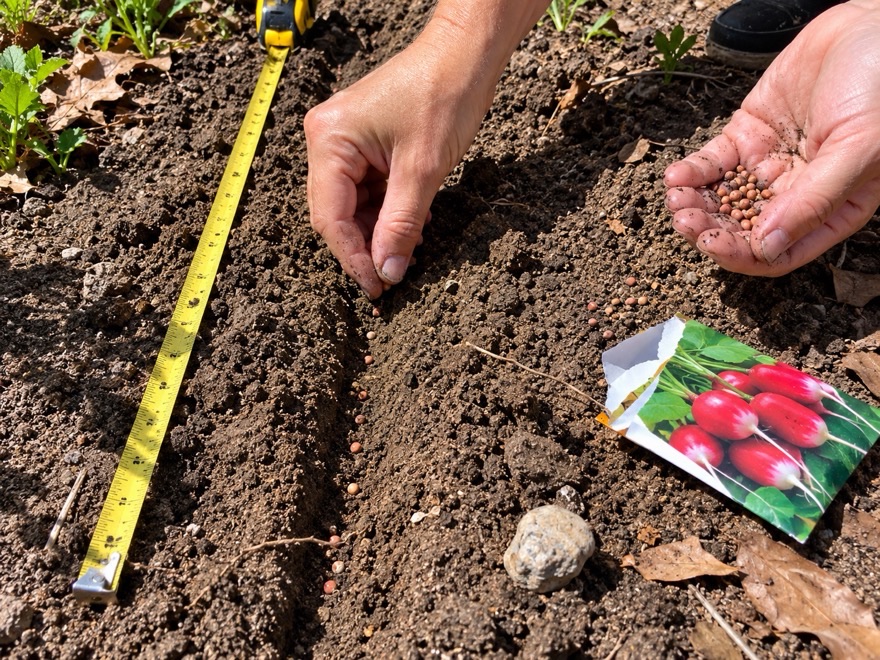
A 4 by 4 foot (1.2 by 1.2 m) bed holds a lot. Plan it in four blocks of 2 by 2 feet (60 by 60 cm). This layout is our own arithmetic from the UF/IFAS spacing numbers.
- Block one: lettuce. At 8 inches apart, a 2 foot block fits 3 rows of 3, about 9 plants.
- Block two: kale. At 12 inches apart, a 2 foot block fits 4 plants. Kale gets taller, so put it on the north side.
- Block three: roots. Sow carrots at 1 to 3 inches and beets at 2 to 4 inches. Carrots grow best on a raised bed, according to the UF/IFAS guide.
- Block four: quick crops. Sow radish at 1 inch, or arugula at 3 to 4 inches. They are ready in 20 to 60 days.
Bunching onions at 2 inches fit along the bed's edge.
Sow a little every few weeks
Small spaces fill fast, and a harvest that all arrives at once leaves you with nothing later. A Panhandle UF/IFAS post suggests sowing carrots and radish every 2 to 3 weeks for staggered harvests. Do the same in each block.
Radish is ready in 20 to 30 days, so it can come out before kale needs the room. Our succession planting guide explains how to time each round.
Pots and balconies
The UF/IFAS guide is written for in-ground gardens. It says the information may be useful for containers and raised beds, but it gives no pot sizes. Use the same spacing in a pot as in the ground, and choose a wide pot for kale and lettuce.
A balcony or patio gets less sun than a yard. Check the light first with our sun mapping guide. For small-space basics, see the balcony vegetable garden guide.
When a cold night comes
Frost is rare in South Florida and occasional in Central Florida. UF/IFAS Extension says cold-tender crops planted in late winter may need covers. Row covers, shade houses, and high tunnels all work. A row cover over the bed on a cold night is an easy fix for a small plot.
Hold the edges down with bricks or boards so the cold air stays out. Our guide to growing with limited resources shows low-cost ways to set this up. Take covers off when squash-family plants start to flower, so pollinators can reach them.
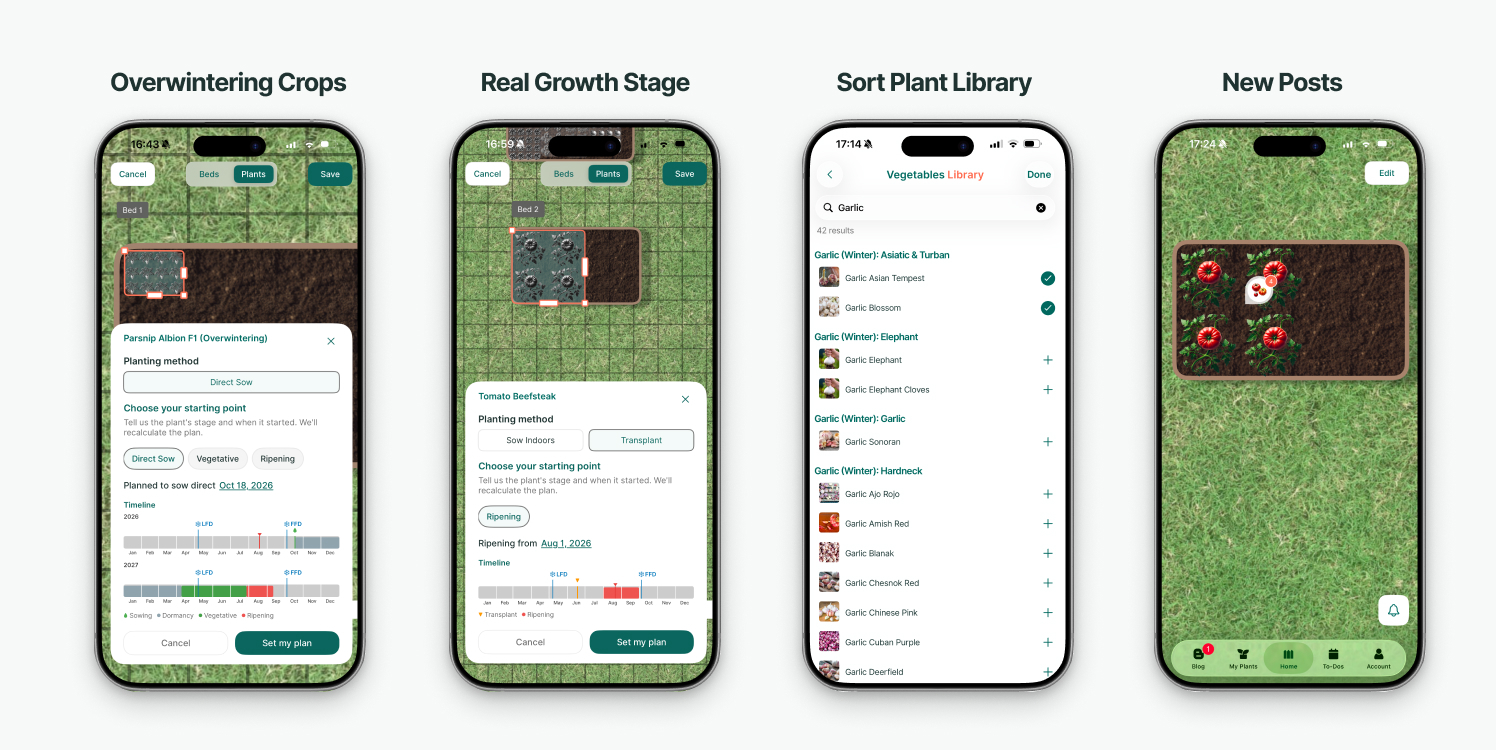
Planting dates in Florida depend on where you live, so a general list only goes so far. easyDacha is a gardening app that calculates exact planting dates from your ZIP code and local frost dates. You draw your bed on a garden map, add plants, and the app handles spacing and builds a task list for the next two weeks. Download easyDacha and map your winter bed.
What NOT to do
Do not plant everything at once. Staggered rounds give you harvest all winter.
Do not crowd greens. Lettuce and kale need 8 to 12 inches each.
Do not wait too long to sow carrots. They take 70 to 120 days to harvest.
Do not copy a northern calendar. Florida runs on the opposite schedule.
When your winter garden slows down
If growth stalls, check three things. Check sun first, since winter days are shorter and a shaded bed may get too little light. Check spacing, because crowded plants stay small. Check watering. Cool weather means the soil dries slower, so overwatering is easy.
Start your Florida winter bed
Winter is the best time to garden in much of Florida. easyDacha, a vegetable garden app, gives you planting dates for your ZIP code and a care plan for each plant. Try easyDacha and plan your bed.
FAQ
What vegetables grow best in a Florida winter garden?
Lettuce, kale, arugula, radish, beets, carrots, bunching onions, Swiss chard, and snow or English peas all do well, according to the UF/IFAS planting guide.
When should I plant a winter vegetable garden in Florida?
In Central and South Florida, most cool-season crops go in from September or October through February. Peas go in from November to February.
How much space do I need for a winter garden?
A 4 by 4 foot (1.2 by 1.2 m) bed holds lettuce, kale, roots, and quick crops if you plan it in blocks.
Does it freeze in Florida in winter?
Occasionally in Central Florida and rarely in South Florida, according to UF/IFAS Extension. Keep a row cover on hand for cold nights.
Can I grow tomatoes in winter in Florida?
In South Florida, yes. The UF/IFAS guide lists planting from August to February. Tomatoes need 18 to 32 inches between plants.
Is there an app that gives Florida planting dates?
Yes. easyDacha is a gardening app and garden planner app. It uses your ZIP code and local frost dates to calculate planting dates and build a task list.