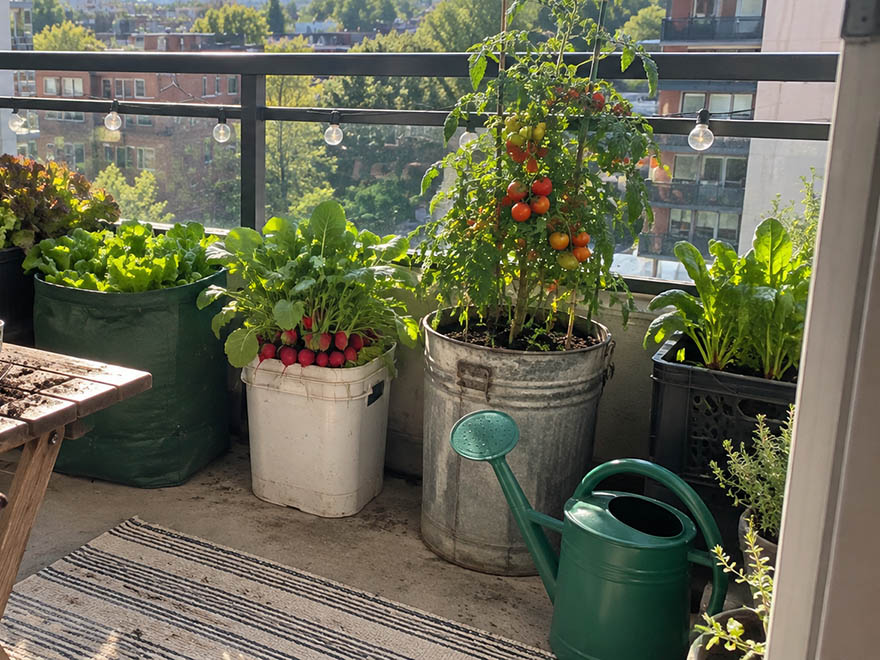
You want to grow your own food, but you have a small balcony, a few dollars, and no idea where to start. Maybe last year you spent money on plants that died. The good news is simple. You can grow vegetables at home with limited resources, and the trick is picking the right crops and skipping the expensive gear.
TL;DR: To grow vegetables at home with limited resources, start with fast, forgiving crops like lettuce, radishes, bush beans, and leafy greens in cheap 1 to 5 gallon containers, in a spot that gets at least 6 hours of sun.
The easiest vegetables to grow with limited space
Start with crops that grow fast and forgive mistakes. These are the easiest vegetables to grow for beginners with limited space, and most cost only a seed packet.
- Radishes. Ready in about 3 to 4 weeks from seed. The fastest confidence builder there is.
- Leaf lettuce and salad greens. Cut-and-come-again greens are ready in about 30 days. They handle less sun than most crops.
- Bush beans. No trellis needed. They crop heavily in a small footprint.
- Kale and Swiss chard. Tough, productive, and they keep giving for months.
- Green onions and herbs. Basil, parsley, and chives grow in tiny pots on a windowsill.
- Cherry tomatoes. One plant in a 5 gallon pot feeds a household of snackers.
Skip the hard stuff for now. Cauliflower, celery, and head lettuce test even experienced growers, so leave them for later seasons.
What you actually need (and what you can skip)
You need far less than the garden stores suggest. Focus your limited resources on three things: containers, soil, and light.
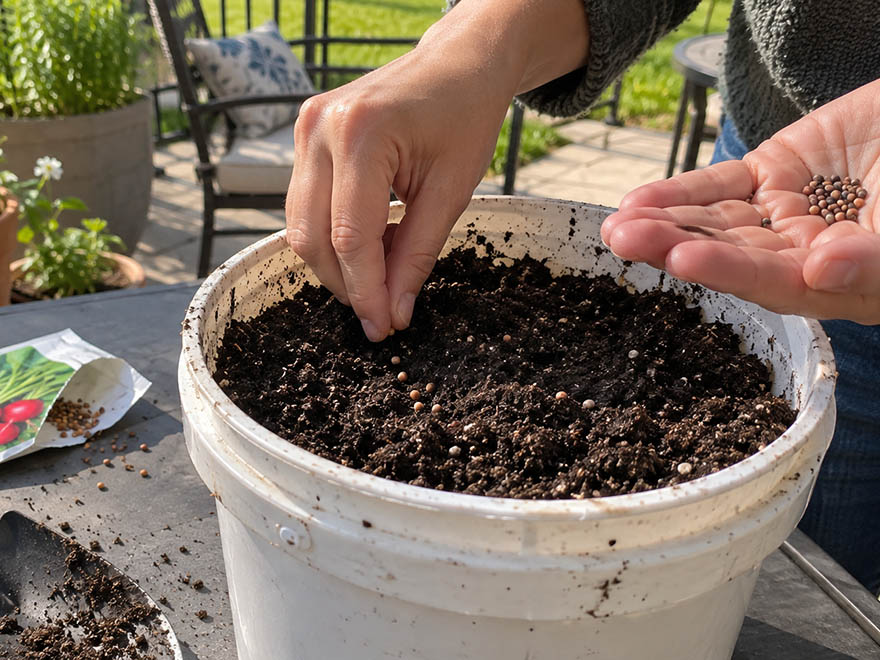
Containers. Almost anything with drainage holes works. A recycled bucket, a nursery pot, or a fabric grow bag all do the job. Match the pot to the crop. Lettuce and radishes are happy in a 1 to 2 gallon pot about 6 to 8 inches deep. Bush beans want a 5 gallon container. Cherry tomatoes need at least 5 gallons to root well.
Soil. Do not dig up backyard dirt for pots. It packs down and drains poorly. Use a bagged potting mix, or stretch your budget by blending one part garden soil, one part compost, and one part perlite or coarse sand. One bag fills several small pots.
Light. Most vegetables need full sun, which means 6 to 8 hours a day. Greens are the exception and grow in 3 to 5 hours. Watch your space for a day and note where the sun lands. Our guide to garden sun mapping shows how to read your light before you plant.
How to grow vegetables at home with limited resources
Direct sow the easy crops right into their pots. Radishes, lettuce, beans, and greens all sprout well from seed, so you save the cost of buying transplants. This is why they are the easiest vegetables to grow from seed for beginners. If a batch fails to sprout, our seed starting troubleshooting guide covers the common causes.
Sow a small pinch of seed, then thin the weakest seedlings once they have two true leaves. Water when the top inch of soil feels dry, not on a fixed schedule. Small pots dry out fast in summer, so check daily in hot weather.
Feed lightly. Container mixes run low on nutrients after a few weeks. A diluted liquid feed every two weeks keeps plants producing. Our simple fertilizer plan for flowering vegetables covers timing for fruiting crops like tomatoes.
Why small-space growing works so well
A small garden is easier to manage than a big one, not harder. You water less, weed almost never, and you can move pots to chase the sun. Fewer plants also means fewer problems to track.
Succession sowing multiplies a tiny space. When you pull a batch of radishes, sow more in the same pot the same day. A single 2 gallon container can produce several rounds of greens in one season. Our succession planting guide shows how to keep the harvest coming.
Best for which plants
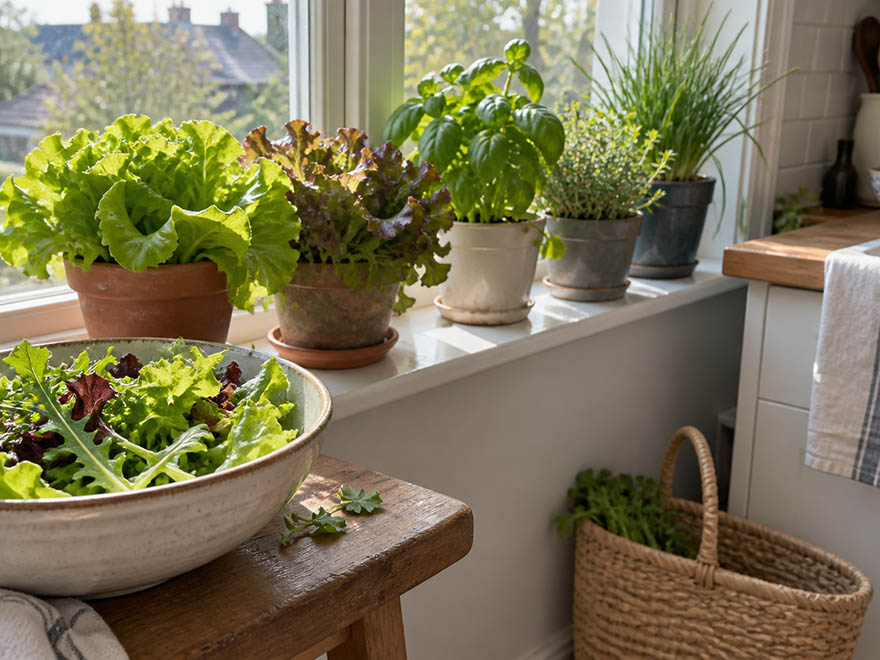
- Tiny pots and windowsills (1 gallon or less). Herbs, green onions, leaf lettuce, radishes.
- Medium pots (2 to 3 gallons). Swiss chard, kale, bush beans, spinach.
- Large pots (5 gallons and up). Cherry tomatoes, peppers, compact cucumbers. Our simple guide to growing peppers suits a big sunny pot.
- Low-light spots (3 to 5 hours sun). Lettuce, spinach, arugula, and other greens.
If you are brand new to this, our step-by-step guide for your first vegetable garden pairs well with this crop list.
Plan your first crops in the right order
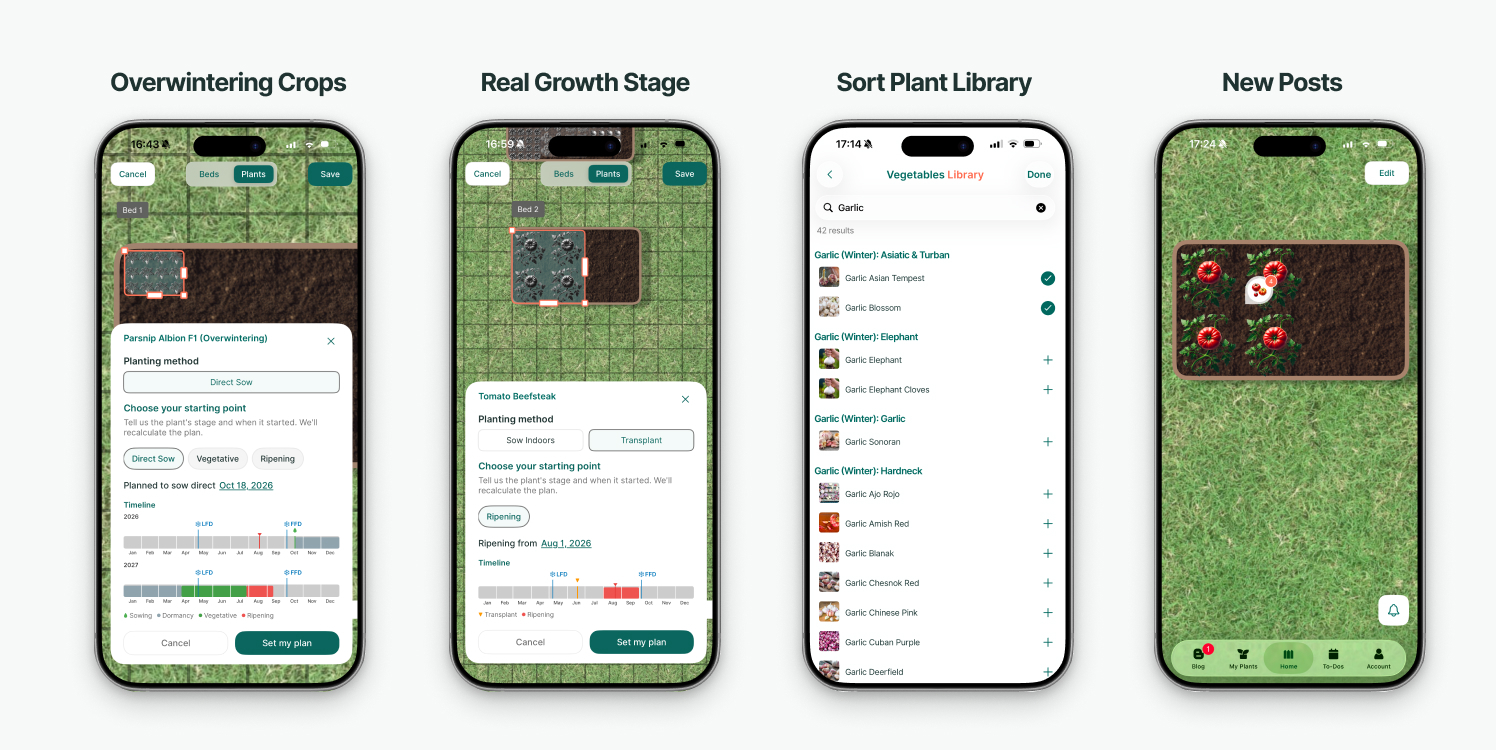
The hardest part of growing food with limited resources is not the planting. It is knowing what to plant when, so a $3 seed packet does not go to waste on the wrong date. That is where a garden planner app earns its keep.
easyDacha builds a personalized care plan from your ZIP code. It calculates your exact sowing and transplanting dates for your area. It sets up a two-week task list tied to your actual pots, and tracks the seeds you already own so you never double-buy. Draw your containers on the garden map and spacing is handled for you.
Try easyDacha, the vegetable garden app that plans your season in about 60 seconds. Cancel anytime.
FAQ
What is the easiest vegetable to grow from seed for beginners?
Radishes are the easiest vegetable to grow from seed for beginners. They sprout in a few days and are ready to pull in about 3 to 4 weeks. Leaf lettuce is a close second and grows in as little as 3 hours of sun.
Can I grow vegetables at home with limited space and no yard?
Yes. You can grow vegetables at home with limited resources using pots on a balcony, patio, or sunny windowsill. Match the pot size to the crop, use bagged potting mix, and give the plants at least 6 hours of sun for fruiting crops.
How much sun do vegetables need in containers?
Most vegetables need 6 to 8 hours of direct sun a day. Leafy greens like lettuce and spinach are the exception and grow well in 3 to 5 hours. Track your light for a day before you decide what to plant.
What is the cheapest way to start a vegetable garden?
Direct sow easy crops from seed into recycled containers with drainage holes. Seeds cost a fraction of transplants, and buckets or grow bags cost little or nothing. Spend your money on good potting mix, which matters most.
Is there an app that helps you grow vegetables with limited space?
Yes. easyDacha is a garden planner app that builds a plan for your exact location and your containers. It tells you what to plant, when to plant it, and what to do each week, which removes the guesswork for small-space growers.