
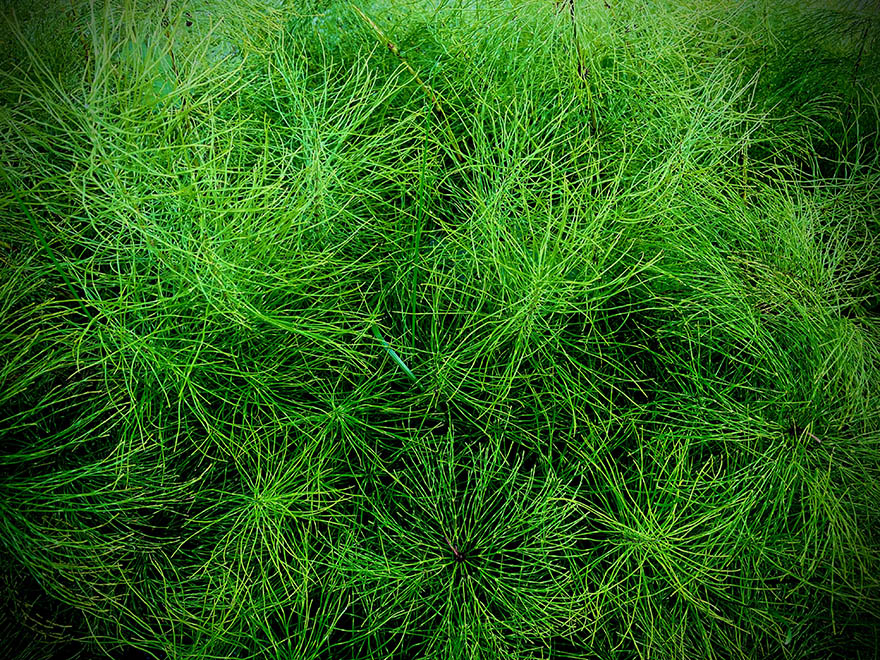
Every summer, same white film on squash and cucumber leaves. Powdery mildew. Horsetail is loaded with natural silicon that hardens cell walls so fungi can't penetrate. Silicon reinforces plant tissue, makes stems stiffer, leaves tougher, and makes plants more resistant to fungal disease and heat stress. Horsetail (Equisetum) is the richest natural source of bioavailable silicon you can find growing wild. It is a weed in most of the US. Boil the shoots, dilute, and pour it on your garden. Free fungal defense from a plant most people try to kill.
TL;DR: Pack a 1-quart (1-liter) jar with fresh horsetail shoots. Boil in 1 quart of water for 10 minutes. Strain. Use 1.5 cups of the concentrate per 1 gallon (3.8 liters) of water (1:10 ratio). Drench the soil or spray foliage every 2 to 3 weeks. Strengthens cell walls, improves disease resistance, and helps phosphorus uptake. One batch of concentrate makes about 2.5 gallons of spray.
The recipe
You need
- Fresh horsetail shoots (Equisetum arvense), enough to fill a 1-quart jar. Forage from wet areas: ditch banks, stream edges, pond margins. Or use half a cup (15 to 20 g) of dried horsetail herb from a health food store.
- Water: 1 quart (1 liter) for boiling, plus water for diluting (about 1 gallon per 1.5 cups of concentrate)
- A pot for boiling
- A fine strainer or cheesecloth
- A watering can or spray bottle
Do it
- Fill a 1-quart (1-liter) jar loosely with fresh horsetail shoots. Chop them roughly to expose more surface area.
- Dump the chopped shoots into a pot and add 1 quart (1 liter) of water.
- Bring to a boil. Reduce heat and simmer for 10 minutes. The water will turn yellowish-green.
- Remove from heat. Let it cool for 30 minutes.
- Strain through cheesecloth or a fine strainer. Squeeze the shoots to extract all the liquid. Discard the plant material (compost it).
- You now have about 1 quart of horsetail concentrate. It looks like pale tea.
- Dilute at a 1:10 ratio: pour 1.5 cups (360 ml) of concentrate into a watering can or bucket, then add water to fill 1 gallon (3.8 liters). Stir. One batch of concentrate makes about 2.5 gallons of spray.
Use the diluted solution within 2 days. The concentrate (before diluting) can be stored in a sealed jar in the fridge for up to 1 week.
How to use it
Soil drench (main method):
Pour about 1 quart (1 liter) of the diluted solution at the base of each plant. The silicon absorbs through the roots and gets deposited in cell walls throughout the plant over the following 1 to 2 weeks. Soil drenching is the most effective delivery method because roots absorb silicic acid (the soluble form of silicon) efficiently.
Apply every 2 to 3 weeks during the growing season. Start when plants are established (past the transplant recovery stage) and continue through fruit development.
Foliar spray (secondary method):
Spray the diluted solution onto leaves as a fine mist. Foliar silicon creates a physical barrier on leaf surfaces that makes it harder for fungal spores to penetrate. This is particularly useful during wet, humid weather when fungal disease pressure is high. Spray in the morning so leaves dry before evening.
Best timing by season:
Start drenching in late spring once plants are actively growing. Apply every 2 to 3 weeks through summer. The last application should be 2 to 3 weeks before the first expected frost. Silicon takes time to integrate into cell walls, so consistent, early application is better than heavy, late application.
Which plants benefit most
Silicon benefits all plants, but some show dramatic improvement.
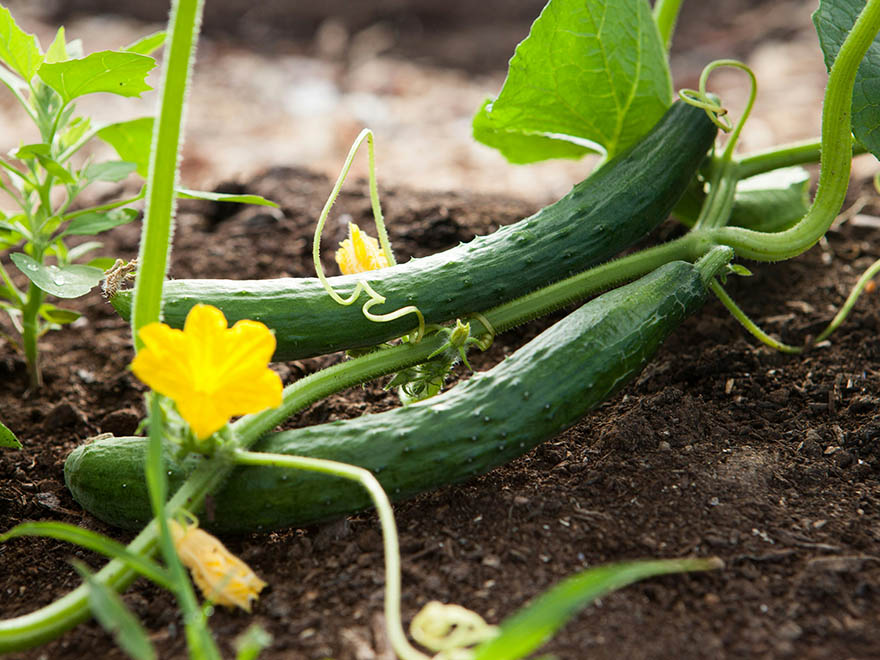
Best response: Cucumbers. Cucumber cell walls are naturally thin, which makes them vulnerable to powdery mildew and heat stress. Silicon thickens the epidermal cells and can restart a fruiting flush in cucumbers that have hit a mid-season plateau. If your cucumbers stop producing in July, a horsetail drench can push a second wave of fruit.
Best response: Tomatoes. Silicon-reinforced cell walls resist fungal penetration, which reduces susceptibility to late blight and other foliar diseases. It also stiffens stems, reducing the need for heavy staking. Combine with iodine-milk spray during blight season for layered protection.
Strong response: Peppers and eggplant. Same nightshade family benefits. Silicon helps peppers hold fruit without stem breakage and reduces sunscald on exposed fruit by toughening the skin.
Strong response: Squash and zucchini. Powdery mildew is the #1 problem in squash. Silicon on the leaf surface makes infection harder. It does not replace milk spray for powdery mildew, but it stacks with it.
Good response: Strawberries, roses, and ornamentals prone to fungal disease. Silicon strengthens leaf tissue and reduces black spot, rust, and powdery mildew severity.
Moderate response: Leafy greens, beans, and root crops. These benefit from silicon but show less dramatic improvement because their disease pressures are different.
Not needed for: Grasses (already high in silicon naturally), established trees, and perennials that are not showing disease or stress symptoms.
Why it works
Horsetail accumulates silicon at concentrations of 10 to 25% dry weight. That is higher than almost any other land plant. When you boil the shoots, the silicon dissolves into the water as silicic acid, the form that plant roots absorb.
Once inside the plant, silicon gets deposited in cell walls as amorphous silica. Think of it as microscopic glass beads embedded in the cell structure. This does three things:
Physical barrier: The silicified cell walls are harder for fungal hyphae to penetrate. Powdery mildew, late blight, downy mildew, and other surface-infecting fungi all have to drill through the cell wall to get inside the plant. Silicon makes that wall thicker and harder. Studies on cucumbers and tomatoes show 30 to 60% reduction in powdery mildew severity with regular silicon application.
Heat and drought tolerance: Silicon reduces water loss through leaves by partially occluding stomatal openings during extreme heat. Plants with adequate silicon wilt later and recover faster when temperatures spike. This is particularly valuable for cucumbers and peppers, which suffer visible stress above 90 °F (32 °C).
Phosphorus uptake: Silicon in the soil facilitates the release of bound phosphorus. In acidic soils, phosphorus locks onto iron and aluminum compounds. Silicon competes for those binding sites, freeing phosphorus for root uptake. This is an indirect but real benefit. Your bone meal or phosphorus amendments work better in silicon-rich soil.
The boiling step is important. Silicon in raw horsetail is mostly insoluble silica. Heat converts it to soluble silicic acid. A cold-water soak extracts only a fraction of the silicon that boiling does. Ten minutes of simmering is the minimum for effective extraction.
What NOT to do
Do not skip boiling. Cold steeping horsetail in water extracts very little silicon. The heat breaks down the plant tissue and converts insoluble silica to soluble silicic acid. A 10-minute simmer is the minimum. Cold horsetail tea is mostly flavored water.
Do not boil for more than 20 minutes. Extended boiling can break down some of the beneficial organic compounds in the extract. Ten to fifteen minutes is the sweet spot.
Do not use horsetail from roadsides or chemically treated areas. Horsetail is a hyperaccumulator. It absorbs heavy metals from contaminated soil. Harvest from clean areas away from roads, parking lots, and industrial sites.
Do not plant horsetail in your garden. This is worth repeating. Horsetail rhizomes grow 6 to 8 feet underground and spread aggressively. Once established, it is nearly impossible to remove. Always harvest from wild patches. Never transplant roots into your property.
Do not apply undiluted concentrate. The concentrate from boiling is roughly 10x working strength. Always dilute into 2.5 gallons (10 liters) before applying. Undiluted concentrate can temporarily shift soil pH and deliver too much silicon at once, potentially interfering with iron uptake.
Do not expect instant results. Silicon integrates into cell walls over 1 to 2 weeks. You will not see tougher stems or better disease resistance the next day. The benefit is cumulative. Start early in the season and apply consistently.
FAQ
Where can I find horsetail growing wild?
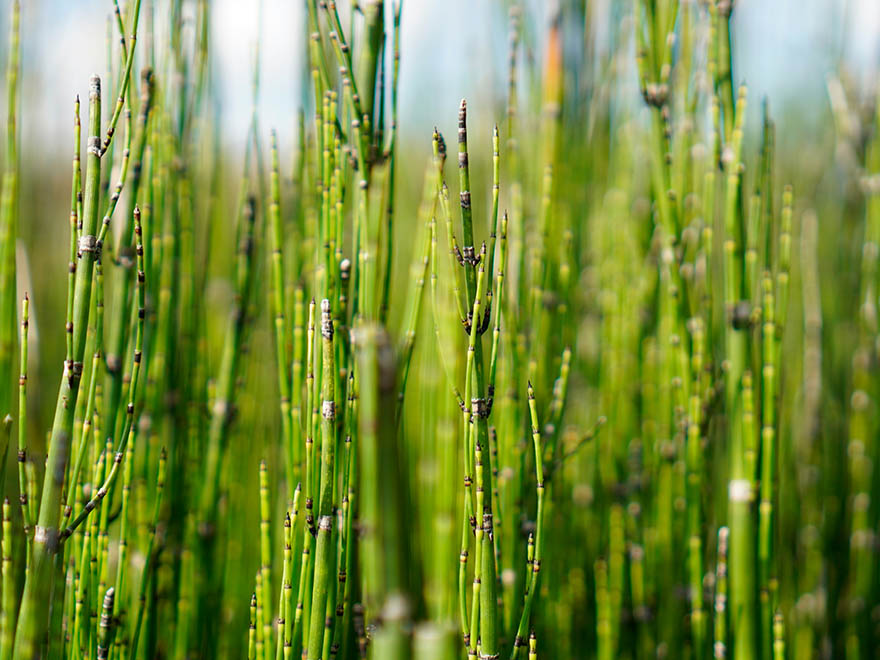
Horsetail (Equisetum) grows in every US state. Look near water: stream banks, drainage ditches, wet meadows, edges of ponds and lakes, and along railroad tracks. It thrives in moist, slightly acidic soil. The green vegetative shoots appear in late spring and persist through fall. They are thin, jointed, hollow stems 1 to 3 feet tall with whorls of needle-like branches at each joint. Harvest the green summer shoots (June through August) when silicon content is highest. Avoid the brown, asparagus-like spore cones that appear in early spring. Do not transplant the roots into your garden. Horsetail rhizomes grow 6 to 8 feet deep and spread aggressively. Once established, it is nearly impossible to remove.
Can I buy dried horsetail instead of foraging?
Yes. Dried horsetail herb is sold at health food stores and online, often marketed as an herbal tea or supplement. Brands like Frontier Co-op, Starwest Botanicals, and Alvita sell it. Use half a cup (15 to 20 g) of dried herb per quart of water, same boiling method. A 1 lb bag costs $10 to $15 and lasts a full season.
Does horsetail spray prevent powdery mildew?
It reduces severity but does not eliminate it completely. The silicon deposited on leaf surfaces makes it harder for mildew spores to penetrate, but it is not a fungicide. For active powdery mildew, combine horsetail drench with milk spray applied to the foliage. Silicon strengthens the defense; milk disrupts the fungus directly.
How often should I apply horsetail decoction?
Every 2 to 3 weeks during the growing season. Silicon accumulation in cell walls is gradual and cumulative. Consistent application through the season gives better results than one heavy application. Start when plants are established after transplanting and continue through fruit development.
Is horsetail decoction safe for organic gardens?
Yes. Horsetail decoction is approved for organic use under most certification standards. It is a plant extract with no synthetic additives. The National Organic Program (NOP) does not restrict plant-based teas and decoctions.
Can I use horsetail decoction on seedlings?
Wait until seedlings have 4 to 6 true leaves and are in their final containers or transplanted. Very young seedlings do not benefit much from silicon because their cell walls are still developing rapidly. Start once the plant is established and actively growing.
Is there a gardening app that schedules plant-strengthening treatments?
Yes. The easyDacha garden planner app tracks growth stages and schedules feeding and protection tasks for each plant. Download at easydacha.com/download.
The weed that toughens your whole garden

Horsetail grows in every ditch and drainage swale in America, and most people spray it with herbicide. Instead, harvest a jar of it, boil for 10 minutes, and pour the liquid on your garden. The silicon in those prehistoric stems reinforces cell walls in your tomatoes, cucumbers, and peppers. Tougher walls mean less disease, less heat stress, and better phosphorus uptake. Free, renewable, and growing right down the road.
The easyDacha gardening app schedules plant-strengthening treatments by growth stage so your plants get silicon when they need it most.
Try easyDacha app →. The garden planner app that plans your season in 60 seconds. Cancel anytime.
Related reading on easydacha.com
- How to Make Iodine-Milk Spray Against Late Blight (Tomato and Potato Recipe) — iodine-milk disrupts blight zoospores on leaves. Horsetail silicon strengthens the cell walls underneath. Layer both for best protection.
- How to Use Milk Spray Against Powdery Mildew (It Actually Works) — milk spray kills mildew on contact. Silicon from horsetail makes leaf surfaces harder for mildew to colonize. Different mechanisms, complementary tools.
- How to Make Bioavailable Phosphorus Fertilizer from Bones (Citric Acid Method) — silicon in the soil frees bound phosphorus for root uptake. Apply horsetail drench alongside bone-citrate phosphorus for better absorption.
- Simple Fertilizer Plan for Flowering Vegetables — the overall feeding schedule. Horsetail decoction slots in as a biweekly supplement alongside your NPK plan.
- Starting Cucumbers Indoors: Beginner Guide — cucumbers benefit most from silicon. Full growing guide with notes on when mid-season fruiting stalls.
- Soil Acidity (pH): What It Is, How to Change It — silicon interacts with soil pH and phosphorus availability. Understand your soil pH before adding amendments.