
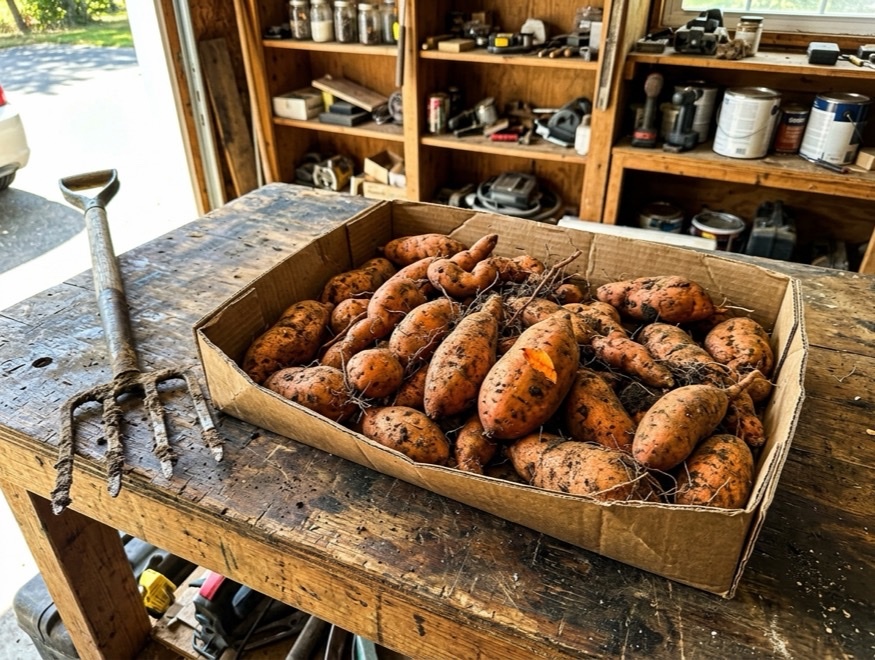
You dug a bucket of sweet potatoes, cooked one that night, and it tasted flat. Another batch rotted in the pantry by December. The missing step is curing. Learning how to cure sweet potatoes takes a few days of warmth and humidity, and it changes both flavor and storage life.
TL;DR: To cure sweet potatoes, keep unwashed roots at 80 to 85°F (27 to 29°C) and 85 to 95% humidity for 4 to 7 days. Start within a day of digging. Then store them at 55 to 60°F (13 to 16°C).
Why curing matters
Curing heals small cuts and scrapes in the skin. It also turns part of the starch into sugar, so the roots get sweeter. Uncured roots taste bland and spoil sooner.
Wounds are the entry point for storage rot, so the healing step protects your harvest. Do it right after digging, before you store anything.
How to cure sweet potatoes, step by step
Do not wash the roots. Brush off loose soil with your hands and leave the rest. Water and scrubbing open the skin to rot.
Start within 24 hours. Move roots to a warm place the same day or the next day after digging.
Hold the right conditions. Aim for 80 to 85°F (27 to 29°C) and 85 to 95% humidity. Keep this up for 4 to 7 days. Roots with heavy skin damage can take up to 10 days.
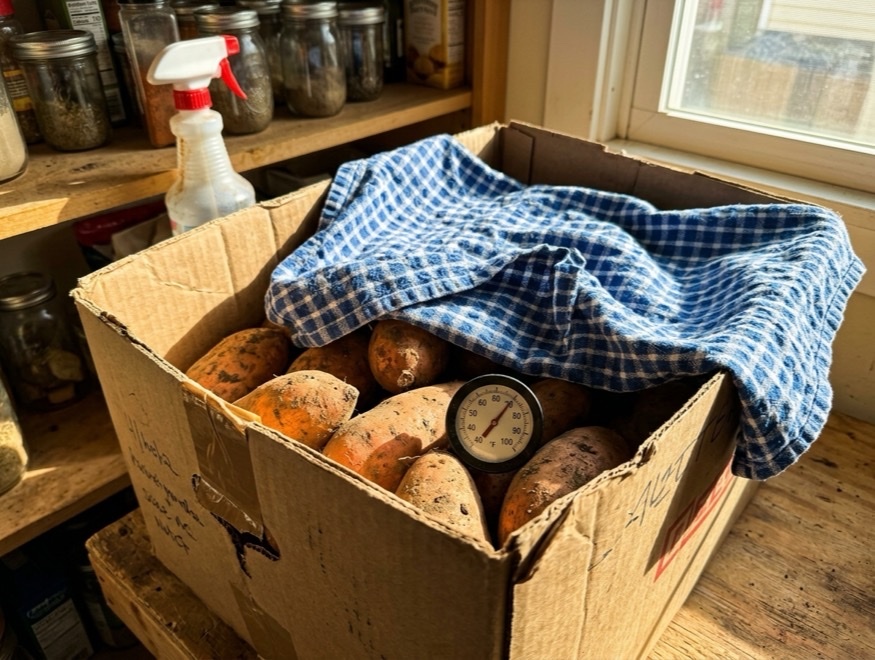
Where to cure at home. Use the warmest room in the house. Put roots in a cardboard box or crate and cover them loosely with a damp cloth to hold humidity. A small thermometer inside the box tells you if the room is warm enough.
Slow option. At ordinary room warmth, curing takes about 14 days. Below 70°F (21°C) no curing happens at all, so a cool basement or garage will not work.
After curing: how to store sweet potatoes
Move cured roots to a dark, ventilated spot at 55 to 60°F (13 to 16°C) with 85 to 90% humidity. A cool closet or a basement corner often fits.
Never store them below 50°F (10°C). Never put them in the refrigerator. Cold damages the roots and shortens storage life. Flavor often keeps improving for weeks after curing.
Check the stash every couple of weeks and remove any soft roots right away. For roots that bruised while digging, eat them first or try some of these ways to preserve vegetables besides freezing.
What goes wrong, and how to fix it
If cold nights hit before you dig, roots left in cold soil can show surface pitting and rot more easily. Harvest before nighttime lows drop below 50°F (10°C). Do not cure outdoors in cool fall weather. If you cure in a greenhouse or tunnel, add heat when nights fall below 50°F (10°C).
Soft rot shows up as watery, soft decay with a sweet, fermented smell, or gray mold with black spores. It enters through wounds. Dig carefully, start curing quickly, and keep crates and tools clean.
If you see soft spots during curing, take that root out. One rotten root can spoil its neighbors.
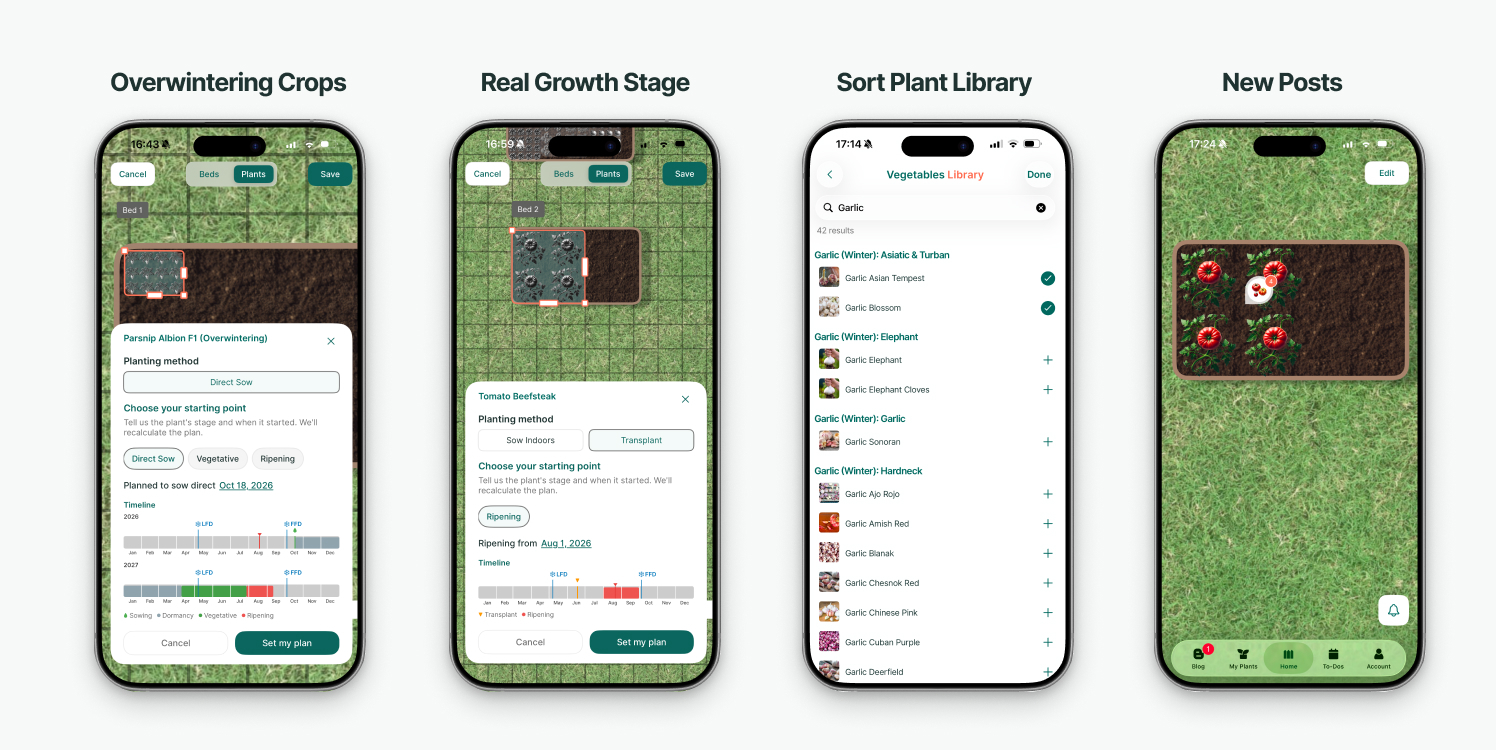
Sweet potatoes are a long crop, and harvest day has a clock on it. easyDacha builds a full care plan for each plant on your garden map, from planting to harvest cleanup. Enter your ZIP code and the app uses your local frost dates to plan your season, then lists the next two weeks of tasks. It works much like a personalized garden planting schedule. Try easyDacha →
What NOT to do
Do not wash roots before curing. Moisture and scrubbing invite rot.
Do not cure in a cool place. Below 70°F (21°C) nothing happens.
Do not refrigerate. Cold injury ruins texture and flavor.
Do not skip curing. Uncured roots taste starchy and keep poorly.
Best for which varieties
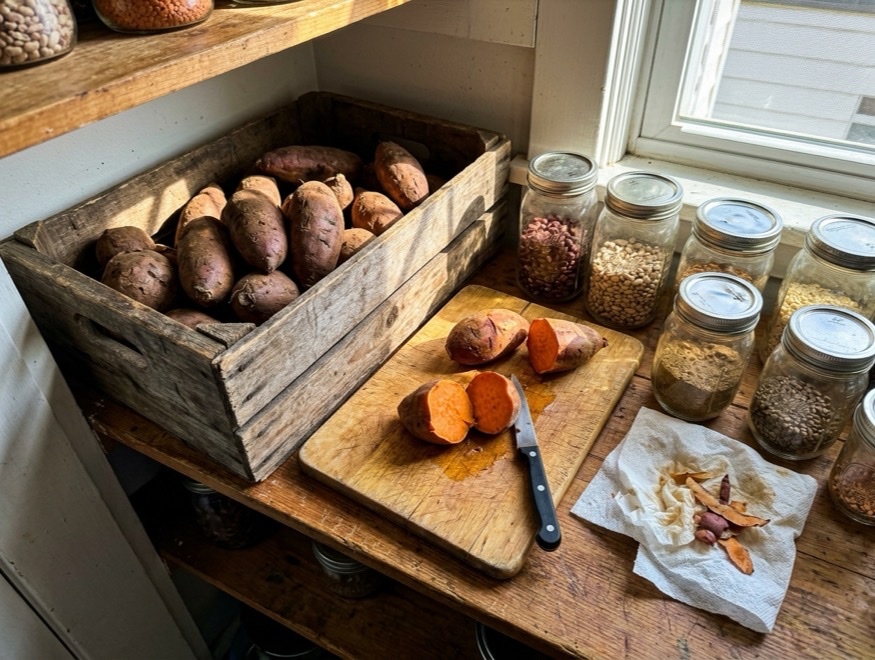
Curing works for every sweet potato type, including orange, white, and purple roots. The same temperature and humidity apply to all.
Some varieties resist soft rot better than others. For example, Beauregard has good resistance. If you grow sweet potatoes, you grow one of the vegetables that are difficult to grow but worth it. Curing is the step that makes the effort pay off.
The idea is the same as drying onions and garlic for storage: heal the outside first, then store. And if frost threatens other crops at the same time, see how to save green tomatoes before frost.
Get Sweet Potatoes Right From Slip to Storage
The curing window opens the day you dig, so timing matters. easyDacha, the garden planner app built around your beds and your ZIP code, keeps the whole season on one schedule. Open the app and your next two weeks of tasks are ready.
FAQ
How long do you cure sweet potatoes?
Cure sweet potatoes for 4 to 7 days at 80 to 85°F (27 to 29°C) and 85 to 95% humidity. Heavily skinned roots can take up to 10 days. At ordinary room warmth, plan on about 14 days.
How do you cure sweet potatoes at home without a special room?
Use the warmest room in the house. Put unwashed roots in a box and cover them with a damp cloth to keep humidity high. Check the temperature with a thermometer.
How do you store sweet potatoes after curing?
Store cured sweet potatoes in a dark, ventilated place at 55 to 60°F (13 to 16°C) and 85 to 90% humidity. Do not refrigerate them and do not let them drop below 50°F (10°C).
Do I wash sweet potatoes before curing?
No. Brush off loose dirt only. Washing and scrubbing damage the skin and let rot in.
Why are my sweet potatoes not sweet?
Most likely they were not cured, or were cured too cool. Curing turns part of the starch into sugar. Flavor keeps improving for several weeks after curing.
Is there an app that helps plan sweet potato harvest and curing?
Yes. easyDacha is a gardening app that builds a care plan for each plant, using planting and frost dates from your ZIP code. Your tasks for the next two weeks are always in the app.